Posts Tagged ‘Loire’
Jaune and jauneish
Vin de France 2011, 3.11, Bertin-Delatte ($38.25, private import, 6 bottles/case)
Founded in 2008, the three-hectare estate is based in Rablay-sur-Layon. This 100% Chenin Blanc is from organically farmed young vines. The grapes, which normally would have been used for the flagship L’Échalier bottling, are harvested by hand and gently pressed. Barrel-fermented and -matured. The barrels were not topped up and a veil of yeast formed on the surface, much like on a vin jaune. This one-off experiment spent five years in the barrel. Unfiltered and unfined. Sulphur is minimal. Three barrels (800 bottles) were made; that and the last two digits of the vintage explain the name. 13.5% ABV. Quebec agent: WINO.
Typically oxidized nose of nutty yellow fruit but maybe not as complex or opulent as a good vin jaune’s. Lovely on the palate: sleek textured, lightly oxidized, clean fruited and minerally with great acidity, freshness and length. “Très chenin” and “great Chenin character” note other tasters. More than just a curiosity. (Buy again? Yes.)

Côtes du Jura 2009, Vin Jaune, Domaine Pignier ($102.10/620 ml, private import, 6 bottles/case)
Founded in the 13th century and in the hands of the Pignier family since 1794, the estate is located in the commune of Montaigu in the southern Jura. 100% Savagnin from biodynamically farmed vines rooted in clayey calcareous marl with Lias slate. Manually harvested. Fermented and matured in untopped-up oak barrels under a yeast veil for seven years. No added yeast. No chaptalization or racking. Bottled according to the lunar calendar. 13.5% ABV. Quebec agent: WINO.
On the nose, it’s a beautiful, subtle mix of nuts, yellow fruit, straw and white minerals. In the mouth, it’s a perfect balance between the pure fruit, fine acidity and imposing minerality. Not as oxidized as some but elegant, “accessible” and “super fresh.” (Buy again? If feeling flush, yes.)
MWG July 13th tasting: flight 9 of 9
Cab Franc three ways
Though they don’t come from a wine-making family, brothers Fabien and Cyril Boisard founded Domaine du Mortier in 1996 when they both were in their teens. Their holdings comprise around 12 hectares of vineyards in Saint-Nicolas-de-Bourgueil and a recently acquired three hectares in Bourgueil. Farming is organic-leaning-biodynamic, harvesting is by hand and none of the wines is chaptalized.
Saint-Nicolas-de-Bourgueil 2015, Les Sables, Domaine du Mortier ($27.23, private import, 12 bottles/case)
100% Cabernet Franc from seven parcel of mostly young vines in sandy soil. Whole-bunch fermentation takes place in 70 hl concrete vats. Lees from earlier vintages are used to start the fermentation. Pump-overs with minimum oxygen uptake are performed for five or 10 minutes a day. Matured on the lees for about six months. Unfiltered and unfined. A tiny amount of sulphur (16 mg/l) is added at bottling. 12.27% ABV. Quebec agent: WINO.
Red and black berries, coffee, dried meat, slate, pepper, distant barnyard. Medium-bodied and so very drinkable. A mouthful of tart fruit, dark minerals, lively acidity, super-supple tannins. Dry and wonderfully pure. Nothing deep or complex (a function of soil and vine age), just good, clean fun. The easiest-drinking Cabernet Franc I’ve encountered in a coon’s age. (Buy again? Done!)

Saint-Nicolas-de-Bourgueil 2014, Dionysos, Domaine du Mortier ($32.89, private import, 6 bottles/case)
100% Cabernet Franc from 30-year-old vines rooted in gravel over tuffeau. Manually harvested. Gently destemmed, gently pressed and given around 25 days’ maceration on the skins. Barrel-fermented using indigenous yeasts. Matured eight months in old oak barrels. 13.35% ABV. Quebec agent: WINO.
Darker nose of red berries and slate with meat and vegetal notes. Full and round in the mouth, packed with remarkably juicy fruit. Firm tannins bestow a velour-like texture, bright acidity a bit of a bite. The bedrock minerality rumbles through the long, spicy finish. The winemakers feel this often needs a couple of years before it hits its stride and drinks well for six to eight years beyond that. (Buy again? Yes.)
Vin de France 2014, 180 jours, Domaine du Mortier ($63.79, private import, 6 bottles/case)
VdF because the brothers feel it wouldn’t be accepted by the AOC authorities and because it leaves them free to supplement Saint-Nicolas grapes with fruit from their holdings in Bourgueil. Cabernet Franc from 60- to 70-year-old vines in tuffeau. Whole-bunch fermented and macerated in old barrels for 180 days, with the barrel being tightly closed, not topped-up and turned once daily during fermentation; after 180 days, the barrel is taken apart so the wine and skins can be transferred to the press. After pressing, the wine is matured in new barrels for another 180 days. Unfiltered and unfined. No added sulphur. 13.5% ABV. Due to the small quantities made, the wine is normally sold only at the winery, a limit of 12 bottles per customer is imposed and, reportedly, none is exported. Bravo to Martin Landry for scoring a few cases for Quebec. Quebec agent: WINO
Much darker and denser than its flightmates. Complex, funky nose: old wood, dark fruit and minerals, “animale,” “green olives,” “the stuff you scoop out of a squash” and more. Rich and dark yet somehow fresh. So complex and layered, so plush and chewy. Superbly structured with velvety tannins, glowing acidity and mineral depth. Great length. Complete, elegant, accessible. A big wine but so not the overextracted monster I was fearing it would be. Just wow. (Buy again? Just yes.)
MWG July 13th tasting: flight 7 of 9
Gamay de soif
Touraine 2015, Gamay, Domaine Courtault Tardieux ($22.45, private import, 12 bottles/case)
After stints as a university student and briefly as a social worker, winemaker Simon Tardieux, who had spent time as a teenager working at the late, lamented Clos Roche Blanche, teamed up with Alain Courtault, a neighbour who had vines and was converting to organic agriculture. Located due east of the Thésée post office and less than a mile from the Cher river, the 15-hecatre estate specializes in vins de soif, thirst quenchers made from Cabernet Franc, Côt, Gamay, Pineau d’Aunis and Sauvignon Blanc. This 100% Gamay comes from organically farmed 50-year-old vines. Manually harvested. Whole-bunch maceration and fermentation took place in stainless steel tanks with indigenous yeasts. A small amount of sulphur dioxide was added at bottling. Bottled in March 2016. 12% ABV. Quebec agent: WINO.
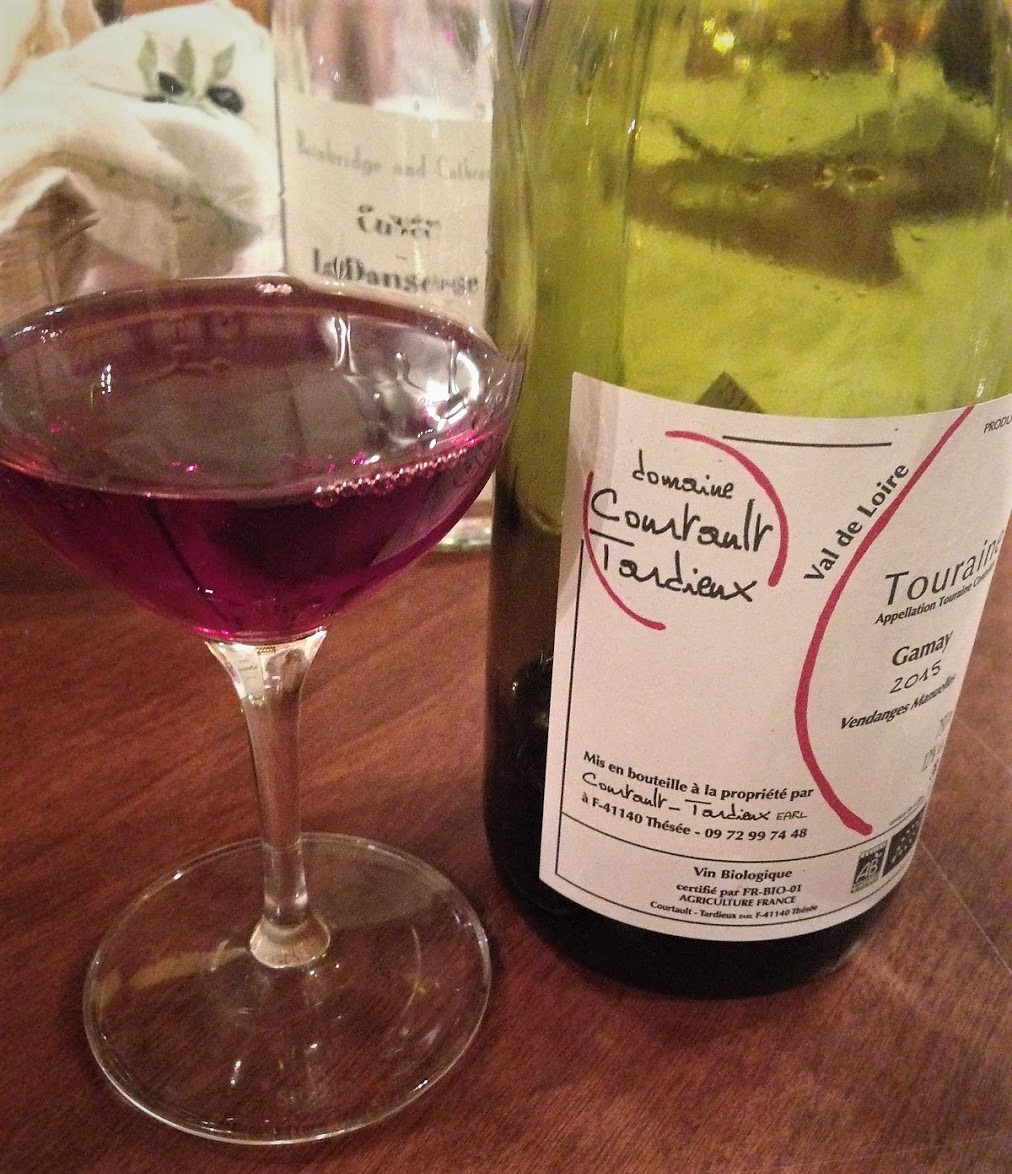
Light, winey, floral nose showing some sour berries and leaves and background funk. Light- to medium-bodied, gauzy tannined and acid bright. Not as plush-fruity as, say, a Morgon, but remarkably minerally and fluid, especially on the mid-palate. A faint lactic note on the finish prompts “cherry yogurt” from one of the assembled. Fresh, clean, tasty and so, so drinkable. Definitely a Gamay but definitely not a Beaujolais. (Buy again? Um, it’s irresistible.)
MWG July 13th tasting: flight 6 of 9
Winey dancer
Vin de France 2015, La Danseuse, Bainbridge and Cathcart ($32.34, private import, 6 bottles/case)
British expat Tony Bainbridge and his American wife Julie worked in wine and ESL in Burgundy before moving to the Loire, where Tony initially held a job at Domaine Mosse. In 2007, with the help of Ali and Rob Cathcart, the couple acquired 4.2 hectares of vineyards in Faye d’Anjou and Chavagnes les Eaux. Total production is around 6,500 bottles. This rosé sparkler is 100% Grolleau from organically farmed grapes. The grapes are manually harvested, given a short maceration on the skins and fermented with indigenous yeasts. Fermentation continues in the bottles, which are riddled and eventually disgorged. Unfiltered, unfined and, like all the estate’s wines, bottled in a clear champagne bottle and closed with a crown cap. The name (“the dancer”) refers to the barrel of wine that, back in the day, a vigneron would set aside for his mistress. 11.5% ABV. Quebec agent: WINO.
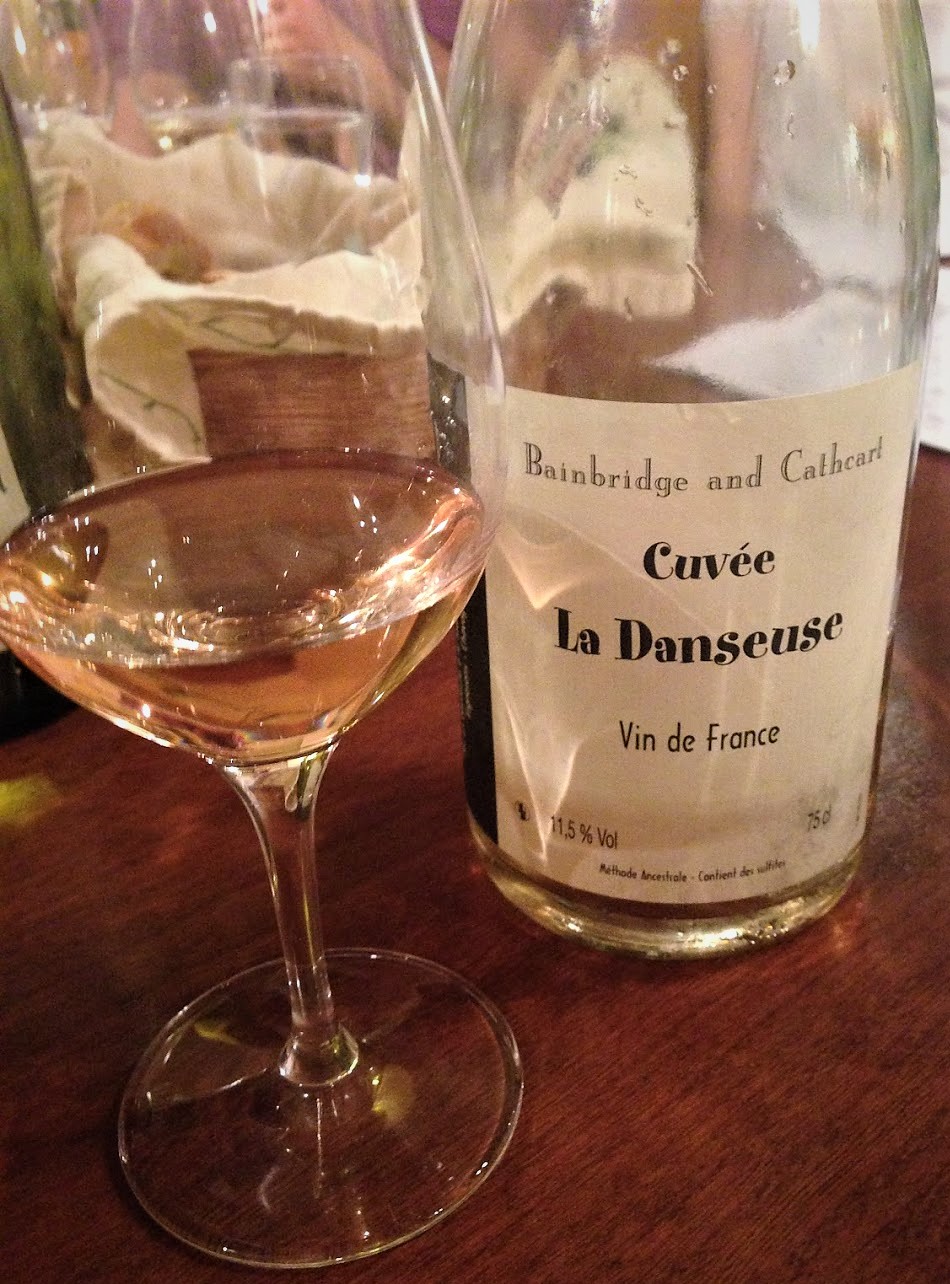
Delightful nose of strawberry pastry, “rugelach” (per another taster), a touch of arugula and yeast. Clean and dryish in the mouth, with bright-verging-on-tart acidity cutting any residual sugar. Tiny prickly bubbles add texture and lift. The load of minerals makes the wine taste more white than red, despite the beguiling strawberry overtones. Some caramel cream creeps in on the finish. Fresh, lip-smacking and super-drinkable. (Buy again? Yep.)
MWG July 13th tasting: flight 4 of 9
Character analysis
Vin de France 2015, Kharaktêr, Domaine Le Briseau ($42.25, private import, 6 bottles/case)
After abandoning an estate in Vouvray, the late Christian Chaussard met and married Natalie Gaubicher and, with her, set up shop in the Jasnières/Coteaux-du-Loir region, first by founding a small négociant firm (Nana Vins et Cie) and then by acquiring vineyards of their own. The farming is biodynamic and the wine-making tends natural. 100% Chenin Blanc from organically and biodynamically farmed 50-year-old vines in the Jasnières AOC. Manually harvested. The grapes are gently pressed. The juice is clarified by settling and racking. Vinified with indigenous yeasts and bacteria. Malolactic fermentation is allowed. Matured nine months in stainless steel tanks. Lightly filtered. No added anything except a tiny shot of sulphur dioxide at bottling. 13.5% ABV. Quebec agent: WINO.

Draws-you-in nose of maple réduit*, corn silk, poached quince, “grapefruit,” chalk, linden flowers, a touch of honey and, eventually, “pancake batter.” Very dry. The mouth-filling flavours echo the nose. There’s a certain weightiness to the wine yet it’s fleet on its feet due to the faint spritz, sleek but sustained acidity and flood of minerals. Lovely bitter notes join the fruit on the long, saline finish. Improves with time in the glass so carafing is probably in order. (Buy again? Yes, though not without wishing it were $7-10 cheaper.)
*réduit is maple sap that has been reduced in an evaporator but is only about halfway to maple syrup. It can, among other things, be added to drinks and used as a cooking medium (e.g. Martin Picard’s exquisite lobster poached in réduit). For more information, consult your local sugar shack operator or the Au Pied de Cochon Sugar Shack Cookbook.
MWG July 13th tasting: flight 3 of 9
Chenintastic
The first in a series of notes from a recent mostly new arrivals tasting that featured several impressive wines purchased abroad and shared by travelling Mo’ Wine Group members.
Saumur 2010, Entre Deux Voyes, Le P’tit Domaine (ca. $30, importation valise)
Based in Varrains and Ecoert certified in 2012, the tiny estate (around two hectares of vines) is owned and operated by Richard Desouche, the manager at Château de Chaintres. It makes three wines: two reds and a white. This 100% Chenin Blanc, the fifth vintage of the wine, comes from organically farmed old vines rooted in clayey-calcareous soil. Fermented with indigenous yeasts in stainless steel tanks. Matured in old barrels. 12% ABV.
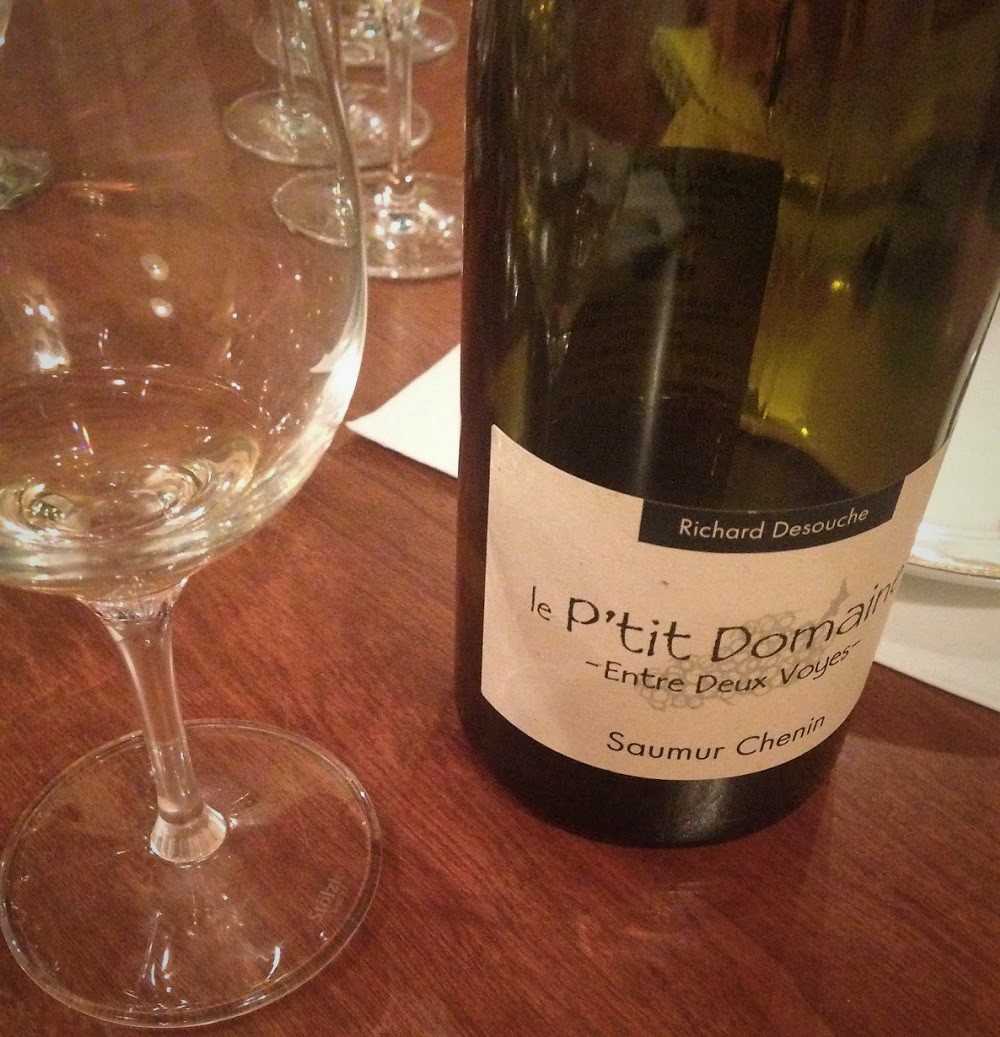
Intriguingly evolved nose of quartz dust, ham fat, lemon and hazelnut. Medium-bodied and ever so faintly spritzy. Ripe, almost sweet-seeming, but actually dry and very saline. The level of extract gives the wine a certain density and a bordering-on-waxy texture, a prefect foil for the trenchant acidity and super minerality. “Like a green apple with salt,” notes one taster. The depth and breath are sustained through the very long, bitter-, lemon- and almond-noted finish. A treat. (Buy again? If only…)
MWG June 22nd tasting: flight 1 of 7
Cabgamay Franc
Santa Ynez Valley 2015, Cabernet Franc, Coquelicot Vineyard, Lo-Fi Wines ($44.95, private import, 6 bottles/case)
100% Cabernet Franc from organically farmed vines in the Coquelicot vineyard (fluvial sandy loam and gravel) near Solvang. Manually harvested. The whole clusters – neither destemmed nor crushed – were placed in a vat, which was filled with carbon dioxide gas and covered. Once a day for 14 days, the free-run juice was pumped over, then the vat was covered and gassed again. When alcoholic fermentation (with indigenous yeasts) was complete, the wine was pressed into tanks, settled and racked into neutral barrels (85% in 228-litre French oak barriques, 15% in a 600-litre demi-muid) for eight months’ maturation. Underwent full malolactic fermentation. Racked twice prior to bottling. Unfiltered and unfined. A small shot of sulphur dioxide was added at bottling. 12.2% ABV. Quebec agent: La QV.
Earthy, slightly jammy red fruit with hints of sandalwood and black olive. Dark-fruity and Asian-spicy in the piehole, the brighter colours darkened by an earthy substratum. Structured – if that’s the word for such a fuzzy wine – by smooth acidity and stealth tannins that make their presence felt only on the long, leathery/earthy finish. However original and interesting an interpretation of Cabernet Franc this may be, the QPR – as with so many California wines in Quebec – is seriously out of whack. (Buy again? Irrespective of price, sure.)

Saint-Nicolas de Bourgueil 2015, Hurluberlu, Sébastien David ($27.30, private import, 12 bottles/case)
100% organically and biodynamically farmed Cabernet Franc. Manually harvested, fermented with indigenous yeasts. Vinified Beaujolais style – using carbonic maceration – and given a very short maturation in tanks, with bottling occurring early in the new year following harvest. Unfiltered. No added sulphur. 12% ABV. Quebec agent: La QV.
Red fruity, cedary and a little poopy. From a hot vintage so richer, rounder, more extracted and conventional, less “like health juice” than some earlier versions. Still refreshing due to its bright acidity, supple tannins and pure fruit. Good, ultradrinkable juice, just a little less special than before. The shapely clear glass bottle is a beaut, especially in magnums. (Buy again? Sure.)
Coteaux Bourguignons 2015, Gamay, Domaine Bouillot Salomon ($29.95, private import, 12 bottles/case)
100% Gamay from biodynamically farmed vines rooted in clayey-calcareous soil. Manually harvested. Non-interventionist wine-making with no added anything, including sulphur. Matured in stainless steel and cement tanks. 12% ABV. Quebec agent: La QV.
Attractive nose of slightly candied red berries, spice, cola and background barnyard. A bit spritzy (carafing would have eliminated the gas). Fleet, fresh, fruity and dry with bright verging on tart acidity and a rumbling mineral bass line. The longish finish brings an appetizing bitter note. Would be interesting to taste this alongside some cru Beaujolais; I suspect the difference in terroirs would be noticeable. (Buy again? Yes.)
MWG June 8th tasting: flight 5 of 6
Notes from the edges
Vin de Sologne 2014, Quartz, Domaine Étienne Courtois ($39.25, private import, 6 bottles/case)
Located in the Sologne, Étienne and his father Claude make wines exclusively using ancestral methods and sometimes run afoul of authorities. Farming is strictly organic and biodynamic. This 100% Sauvignon Blanc comes from 15-year-old vines. Manually harvested, destemmed and gently pressed. Fermented (with indigenous yeasts) and matured in oak barrels for 12 to 24 months. 11.7% ABV. Quebec agent: La QV.
Striking, complex nose of turpentine, “eucalyptus,” “wild ginger,” California bay leaf, dried lemon, quartz crystals and parafin. A core of fruit (“candied lemon”) and more (“braised fennel”) wrapped in salt, energized by bright acidity. Good balance and length and real mineral depth. “The best Sauvignon Blanc I’ve ever had,” declares one taster. That said, I don’t imagine most people tasting it double-blind would guess it’s a Sauvignon Blanc. Whatever. It’s spellbinding. (Buy again? Oh, yes.)

Bourgogne Aligoté 2015, Troma-Onirique, François Écot ($38.15, private import, 12 bottles/case)
Based in Mailly-le-Château in the Yonne department of northeastern Burgundy, François Écot not only runs, with his American wife, a natural wine agency in New York City, he makes wines using grapes from an abandoned one-hectare vineyard that he resurrected. This 100% Aligoté, however, comes from purchased biodynamically and organically farmed (though not certified) grapes. Manually harvested. Vinified and matured eight months in foudres, fûts and amphorae. No added anything, including sulphur. Unfiltered and unfined. 12.5% ABV. Quebec agent: La QV.
The nose prompts comments along the lines of chalk quarry, “match stick,” “waxy” and lemon juice. A sip reveals a rich and minerally wine with a mouthfeel as much like a Chardonnay’s as an Aligoté’s. There’s some surprisingly juicy fruit, bright but smooth acidity, impressive purity and depth and a long, minerally finish. It’s still a surprise to see a $40 price tag on an Aligoté, but that’s what the top wines go for these days. And this is definitely a top wine. (Buy again? Yes.)
Coteaux Bourguignons 2015, Pinot Beurot, Domaine Bouillot Salomon ($32.20, private import, 12 bottles/case)
This admirable northern Rhône estate recently acquired 2.7 hectares of vineyards west of Dijon. 100% Pinot Beurot (aka Pinot Gris) from biodynamically farmed vines rooted in clayey-calcareous soil. Manually harvested. Non-interventionist wine-making with no added anything, including sulphur. Matured in stainless steel and cement tanks. 13.5% ABV. Quebec agent: La QV.
Pear, minerals and more than a hint of reduction, which other tasters describe as “durian” and “cow piss and camomile.” Smooth, round and dry in the mouth. Soft acidity enlivens the verging-on-unctuous texture and brings welcome freshness. There’s a certain minerality and some white spice and butter on the long finish. Not a wine that will have Alsace quaking in its boots but more than just a curiosity. Carafe it at least a couple of hours before serving if drinking now or hide it in the cellar for a two or three years. (Buy again? Sure.)
MWG June 8th tasting: flight 4 of 6
So similar, so different
Stellenbosch 2014, Chenin Blanc, Organic, Reyneke ($26.60, 13123608)
100% Chenin Blanc from biodyanmically farmed vines around 45 years old and rooted in granitic loam over clay. Manually harvested. Whole-cluster pressed. The must was allowed to settle then fermented with indigenous yeasts in 300-litre second-fill French oak barrels and a 2,500-litre foudre. Matured on its lees for 10 months then racked into a stainless steel tank for another month. Reducing sugar: 1.9 g/l. 13% ABV. Quebec agent: Univins.
Intriguing, even mysterious nose of white spice, chalk, lemon, roasted white meat and “garum.” In the mouth, it’s round from start to finish, honeyed yet dry, packed with ripe fruit and minerals. A stream of acidity adds backbone and life. Faint bitter saline notes mark the nicely sustained finish. One of those wines that seems as Old World as New, this had several fans around the table. While I found it a little two-dimensional, especially in comparison to its flightmate, I’ll readily admit those dimensions are lovely. (Buy again? Sure.)

Jasnières 2015, Sec, Domaine de la Roche Bleue ($27.90, 12856228)
100% Chenin Blanc from organically farmed 10- to 25-year-old vines planted in clayey, flinty topsoil over a limestone base. Manually harvested. Whole-cluster pressed. The must was allowed to settle, then fermented (slowly due to the cool cellar temperatures) with indigenous yeasts, 60% in fourth- to sixth-fill barrels (wine from older vines) and 40% in stainless steel tanks (wine from younger vines). Matured four months in sixth-fill barrels. Reducing sugar: 3.0 g/l. 13% ABV. Quebec agent: Boires.
Complex, winey nose of linden flowers, “sake,” quince, lime and, eventually honey. Sleek and spicy on the palate, alive with acidity. The tart fruit (citrus and stone mainly) is dusted with chalk and gunflint. Sugar levels notwithstanding, this seems significantly drier – not to mention leaner, more crystalline and better delineated – than the Reyneke. Pure, long and delicious. (Buy again? Yes.)
MWG May 18th tasting: flight 3 of 6
Red bubble
Vin de France 2015, La Bulle Rouge, Les Capriades ($35.25, private import, 12 bottles/case)
Based in the Loire Valley’s Touraine region, Les Capriades founder and co-owner, Pascal Potaire, is considered the king of pet nats (short for pétillants naturels, natural sparkling wines produced using the ancestral method). This red example is a blend of juice from three varieties of organically farmed red-fleshed Gamay – Gamay de Bouze, Gamay de Chaudenay and Gamay Fréaux – explaining the cuvée’s former name, BCF. 11% ABV and I’m guessing somewhere around 10 g/l of residual sugar. Quebec agent: Glou.

Medium red with scarlet glints and fast-disappearing shocking pink foam. The nose is a swirl of raspberry vinegar, burnt hair, burnt sugar, lipstick, chocolate, pink blossoms and spice. A sip reveals a soft-sparkled wine that’s fresh, fruity and definitely not dry. Sleek acidity, a mineral underlay and a lingering bitterness counteract the sweetness to some degree. “Raspberry freezee” concludes one taster. A tad richer than but otherwise not dissimilar to a Bugey-Cerdon, which can be had for about $12 less. (Buy again? Maybe.)
MWG April 21st tasting: flight 3 of 6

 Brett happens