Posts Tagged ‘Mid-priced’
Rosé de beauté
 Corse Calvi 2016, Rosé, Pumonte, Domaine d’Alzipratu ($31.75, 12829182)
100% Sciacarello from vines planted on the high granitic slopes of the Pumonte lieu-dit on the Île de Beauté. No pesticides or herbicides are used. Manually harvested. Half the wine is made using the saignée method and the other half is direct-pressed. Fermented with selected indigenous yeasts in temperature-controlled stainless steel tanks. Lightly filtered before bottling. 13.5% ABV. Quebec agent: oenopole.
Pink grapefruit, sun-baked rock, faint dried herbs and a whiff of vodka-marinated cherries, becoming more effusive as its breathes, gaining floral and spice notes. Slightly oily – or maybe honeyed – in the mouth. The subtle, elegant fruit (strawberry, peach, grapefruit) is set against a backdrop of quartzy minerals. Dry but not bone-dry, with acidity that keeps things fresh but doesn’t draw attention to itself. Turns aromatic at the back of the palate. A stream of bitterness and astringency surfaces on the long finish, while umami, cherry and seashells linger. Impressive. Not an aperitif wine: a rosé gastronomique if ever there were one. Revisited the next day, the tail end of the bottle tasted flat and alcoholic, so maybe not a keeper. (Buy again? Yes, especially as I missed out on the Fiumeseccu.)
Francs et graves
Côtes de Bordeaux Francs 2014, Emilien, Château le Puy ($28.15, 00709469)
A blend of Merlot, Cabernet Sauvignon and Carménère (typically 85%, 14% and 1% respectively) from biodynamically and organically farmed 50-year-old vines. The grapes are fully destemmed. Fermentation in open, temperature-controlled vats with indigenous yeasts and no chaptalization lasts two to four weeks. Matured 14 months in large foudres and 11 months in third- to fifth-fill oak casks. Bottled unfiltered with only a small dose of sulphur. Reducing sugar: 1.9 g/l. 12.5% ABV. A few 500 ml bottles of the 2012 can also be found ($20.75, 00896399). Quebec agent: A.O.C.
Intriguing nose that gets the aroma-namers going: plum, “edamame,” “nigella,” “pickled turnip juice.” Medium-bodied. The pure fruit and graphite underlay are nicely structured by fine, firm tannins and bright acidity. Finishes long and clean with faint notes of tobacco and spice. This perennial favourite is true to form in 2014: a savoury, refreshing, eminently drinkable wine that everybody always enjoys. The QPR is high on this one. (Buy again? Yep.)

Graves 2015, Clos 19 Bis/Vincent Quirac ($31.05, private import, 6 bottles/case)
Founded in the late 2000s, the tiny (1.5 hectare) estate makes a Sauternes and a red Graves. The latter is a blend of Merlot (around 50%), Cabernet Franc and Cabernet Sauvignon from organically farmed vines averaging 40 years old and rooted in gravelly soil over a clayey-calcareous base. Manually harvested. The varieties are vinified separately. The Merlot is cold-macerated before fermentation for a week, the Cabernets are directly fermented. Fermentation at low temperatures with indigenous yeasts, punch-downs and pour-overs (using buckets, not pumps) lasts 10 days. The wine is then left on it skins for another eight to 10 days. 12.5% ABV. Quebec agent: Vini-Vins.
Cherry, cassis, “cocoa powder and ashes” and a strong whiff of volatile acidity. Quite disjointed in the mouth, with a harsh verging on acrid note, a problem that airing and swirling didn’t resolve. Bears little resemblance to the fresh, clean, juicy-fruited, mineral-laden, roundly structured, medium-bodied wine enjoyed a few days earlier. Clearly defective and, as such, a disappointment. (Buy again? Based on the earlier bottle, yes.)
MWG June 22nd tasting: flight 6 of 7
Rosés de Provence
Coteaux d’Aix-en-Provence 2016, Château Vignelaure ($24.50, 12374149)
Grenache (40%), Cabernet Sauvignon (30%) and Syrah (30%) from organically farmed vines averaging 25 years old and rooted in pebbly clayey-calcareous soil. Manually harvested. Saignée method after two hours’ maceration for the Grenache; direct pressing for the Cab and Syrah. The must is chilled to 10°C and allowed to settle for 48 hours. Fermented at low temperature (17°C) and matured in stainless steel tanks except for 7% of the Cab, which is aged in a 400-litre new oak barrel. Maturation on the lees with regular stirrings lasts three months. Reducing sugar: <1.2 g/l. 13% ABV. Quebec agent: LBV International.
Rubber bands, straw, yogurt, background minerals and a hint of chile; look for it and you’ll find some stone fruit and red berries. Clean, pure and very dry on the palate, with low-key fruit, good acidity, a long bitter-edged, pink grapefruity finish and a lingering pastry note. Not particularly complex – and not quite the equal of the impressive 2014 – but tasty enough. (Buy again? Sure.)

Bandol 2016, Rosé, Domaine du Gros ’Noré ($32.25, 12931021)
Mourvèdre (50%), Cinsault (35%) and Grenache (15%) from vines averaging 30 years old. Farming is organic though not certified as such. Manually harvested. The Cinsault and Grenache are macerated 24 hours at 10°C, then pressed. The juice is combined with direct-pressed Mouvèdre juice and fermented. Reducing sugar: 2.1 g/l. 13.5% ABV. Quebec agent: oenopole.
Saltine crackers, “far-away Creamsicle” and lipstick give way to garrigue and minerals. “Fresh and dewy” in the mouth. Veils more than layers of fruit, sleek acidity, mineral depth and a a long, faintly bitter finish. “A bit more moreish than the Vignelaure,” notes one taster. Drinkable indeed. Will almost certainly gain complexity and presence with a year or two in the cellar. (Buy again? Yes.)
Côtes de Provence 2015, Rosé, Cuvée Clarendon, Domaine Gavoty ($27.65, 11231867)
This saignée method rosé is a blend of Grenache (70%), Cinsault (15%) and Syrah (15%) from vines rooted in clay and limestone. The grapes, which were vinified separately, were macerated in a vat for three to six hours. The free-run juice was drawn off and combined with the first-pressing juice, chilled and racked into stainless steel tanks for temperature-controlled (17°C) fermentation, which lasted two to four weeks. The various batches were sampled and selected in January 2016 and blended, with the best lots set aside for the Clarendon. Reducing sugar: 2.7 g/l. 13% ABV. Quebec agent: Vini-Vins.
Closed, minerally nose that, with coaxing, gives up notes of flan and red berries. Sweeter and flabbier than its flightmates, though improving with time in the glass. Fruitier too, bringing nectarine and strawberry to mind. A stronger acidic and mineral backbone would be welcome. Decent finish. Maybe time in the cellar or a carafe will help? At this point, not up to earlier vintages. (Buy again? Maybe.)
MWG June 22nd tasting: flight 3 of 7
Two misses and a hit
Bandol 2016, Blanc, Domaine de l’Olivette ($26.05, 10884559)
Clairette (80%), Rolle (aka Vermentino, 10%) and Ugni Blanc (aka Trebbiano, 10%). Manually harvested. After destemming, the grapes are cold-macerated on their skins, then pressed. Fermentation in oak vats is at low temperatures for about two weeks. The resulting wine is chilled and allowed to clarify by settling. Reducing sugar: 2.2 g/l. 13% ABV. Quebec agent: Vins de Châteaux.
Complex nose: “sweaty” (per another taster) with notes of fired minerals, dried flowers (linden), almond pastry cream, “straw fruit,” “celery salt” and more. Rich and round in the mouth and “a bit reductive.” The combination of highish extract and lowish acidity means the wine comes across as lethargic, a little flabby, “kind of flat” and “gassy.” The appealing nose and minerality aside, not a strong showing. A disappointment then, especially as I and others in the group have enjoyed earlier vintages. (Buy again? Meh.)

Bandol 2015, Blanc, Domaine la Suffrene ($26.45, 11903491)
A 50–50 blend of Clairette and Ugni Blanc from vines averaging 35 to 40 years old. Manually harvested. To increase flavour extraction, the crushed grapes are kept on their skins for 12 hours at 8°C before pressing. After clarification by settling, the juice is fermented in stainless steel tanks for around 15 days at around 19°C, then racked into other tanks for fining and maturation. Filtered before bottling. Reducing sugar: 1.8 g/l. 13.5% ABV. Quebec agent: Les Sélections Vin-Coeur.
Lemon and peach blossom, apple and honey. Rich on the palate but more fluid than the Olivette. Quite dry and minerally though turning fruitier on the long finish. Soft-glow acidity and a lingering bitterness complete the picture which, unfortunately, became less interesting as the wine breathed and warmed. Again, a wine that doesn’t seem equal to earlier vintages. (Buy again? Maybe.)
Bandol 2016, Blanc, Domaine du Gros’Noré ($34.00, 12206989)
A 70-30 blend of Ugni Blanc and Clairette from organically (uncertified) farmed vines averaging 30 years old. The must is macerated on the skins for 24 hours, then fermented at low temperatures with indigenous yeasts. Sees only stainless steel until bottling. Unfiltered and unfined. 13.5% ABV. Quebec agent: oenopole.
Lovely, wafting nose of white grapefruit, fired quartz, lemon flower and a “kaffir-like herbaceous note.” Clean and fluid with smooth acidity. Very minerally, especially on the finish. Dry, layered, long and savoury. “Apple seed bitterness” linger. Became better as it warmed and breathed. We have a winner. Try this with the winemaker’s recommended pairing: grilled mussels with rosemary (Buy again? Yep.)
MWG June 22nd tasting: flight 2 of 7
Chenintastic
The first in a series of notes from a recent mostly new arrivals tasting that featured several impressive wines purchased abroad and shared by travelling Mo’ Wine Group members.
Saumur 2010, Entre Deux Voyes, Le P’tit Domaine (ca. $30, importation valise)
Based in Varrains and Ecoert certified in 2012, the tiny estate (around two hectares of vines) is owned and operated by Richard Desouche, the manager at Château de Chaintres. It makes three wines: two reds and a white. This 100% Chenin Blanc, the fifth vintage of the wine, comes from organically farmed old vines rooted in clayey-calcareous soil. Fermented with indigenous yeasts in stainless steel tanks. Matured in old barrels. 12% ABV.
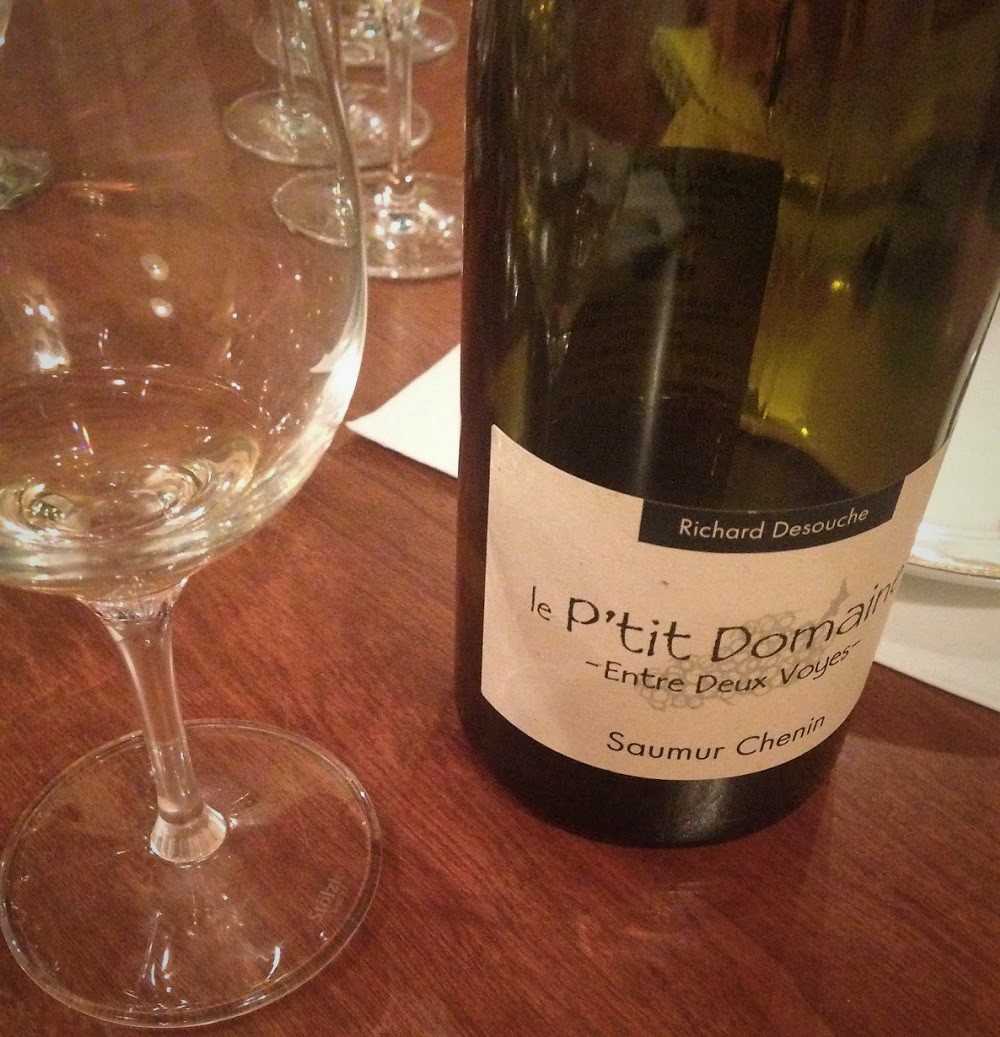
Intriguingly evolved nose of quartz dust, ham fat, lemon and hazelnut. Medium-bodied and ever so faintly spritzy. Ripe, almost sweet-seeming, but actually dry and very saline. The level of extract gives the wine a certain density and a bordering-on-waxy texture, a prefect foil for the trenchant acidity and super minerality. “Like a green apple with salt,” notes one taster. The depth and breath are sustained through the very long, bitter-, lemon- and almond-noted finish. A treat. (Buy again? If only…)
MWG June 22nd tasting: flight 1 of 7
Notes from the edges
Vin de Sologne 2014, Quartz, Domaine Étienne Courtois ($39.25, private import, 6 bottles/case)
Located in the Sologne, Étienne and his father Claude make wines exclusively using ancestral methods and sometimes run afoul of authorities. Farming is strictly organic and biodynamic. This 100% Sauvignon Blanc comes from 15-year-old vines. Manually harvested, destemmed and gently pressed. Fermented (with indigenous yeasts) and matured in oak barrels for 12 to 24 months. 11.7% ABV. Quebec agent: La QV.
Striking, complex nose of turpentine, “eucalyptus,” “wild ginger,” California bay leaf, dried lemon, quartz crystals and parafin. A core of fruit (“candied lemon”) and more (“braised fennel”) wrapped in salt, energized by bright acidity. Good balance and length and real mineral depth. “The best Sauvignon Blanc I’ve ever had,” declares one taster. That said, I don’t imagine most people tasting it double-blind would guess it’s a Sauvignon Blanc. Whatever. It’s spellbinding. (Buy again? Oh, yes.)

Bourgogne Aligoté 2015, Troma-Onirique, François Écot ($38.15, private import, 12 bottles/case)
Based in Mailly-le-Château in the Yonne department of northeastern Burgundy, François Écot not only runs, with his American wife, a natural wine agency in New York City, he makes wines using grapes from an abandoned one-hectare vineyard that he resurrected. This 100% Aligoté, however, comes from purchased biodynamically and organically farmed (though not certified) grapes. Manually harvested. Vinified and matured eight months in foudres, fûts and amphorae. No added anything, including sulphur. Unfiltered and unfined. 12.5% ABV. Quebec agent: La QV.
The nose prompts comments along the lines of chalk quarry, “match stick,” “waxy” and lemon juice. A sip reveals a rich and minerally wine with a mouthfeel as much like a Chardonnay’s as an Aligoté’s. There’s some surprisingly juicy fruit, bright but smooth acidity, impressive purity and depth and a long, minerally finish. It’s still a surprise to see a $40 price tag on an Aligoté, but that’s what the top wines go for these days. And this is definitely a top wine. (Buy again? Yes.)
Coteaux Bourguignons 2015, Pinot Beurot, Domaine Bouillot Salomon ($32.20, private import, 12 bottles/case)
This admirable northern Rhône estate recently acquired 2.7 hectares of vineyards west of Dijon. 100% Pinot Beurot (aka Pinot Gris) from biodynamically farmed vines rooted in clayey-calcareous soil. Manually harvested. Non-interventionist wine-making with no added anything, including sulphur. Matured in stainless steel and cement tanks. 13.5% ABV. Quebec agent: La QV.
Pear, minerals and more than a hint of reduction, which other tasters describe as “durian” and “cow piss and camomile.” Smooth, round and dry in the mouth. Soft acidity enlivens the verging-on-unctuous texture and brings welcome freshness. There’s a certain minerality and some white spice and butter on the long finish. Not a wine that will have Alsace quaking in its boots but more than just a curiosity. Carafe it at least a couple of hours before serving if drinking now or hide it in the cellar for a two or three years. (Buy again? Sure.)
MWG June 8th tasting: flight 4 of 6
White orange
Vipavska Dolina 2015, Bela, Burja ($37.60, private import, 6 bottles/case)
A blend of Istrian Malvasia (30%), Welschriesling (30%), Ribola Gialla (30%) and unspecified other varieties from biodynamically farmed vines grown in the Vipava Valley and ranging from 25 to 75 years in age. Macerated on the skins for eight days before pressing. Fermented with indigenous yeasts in stainless steel tanks. Matured in 25 to 50 hl Slavonian oak barrels. 13.5% ABV. Quebec agent: La QV.
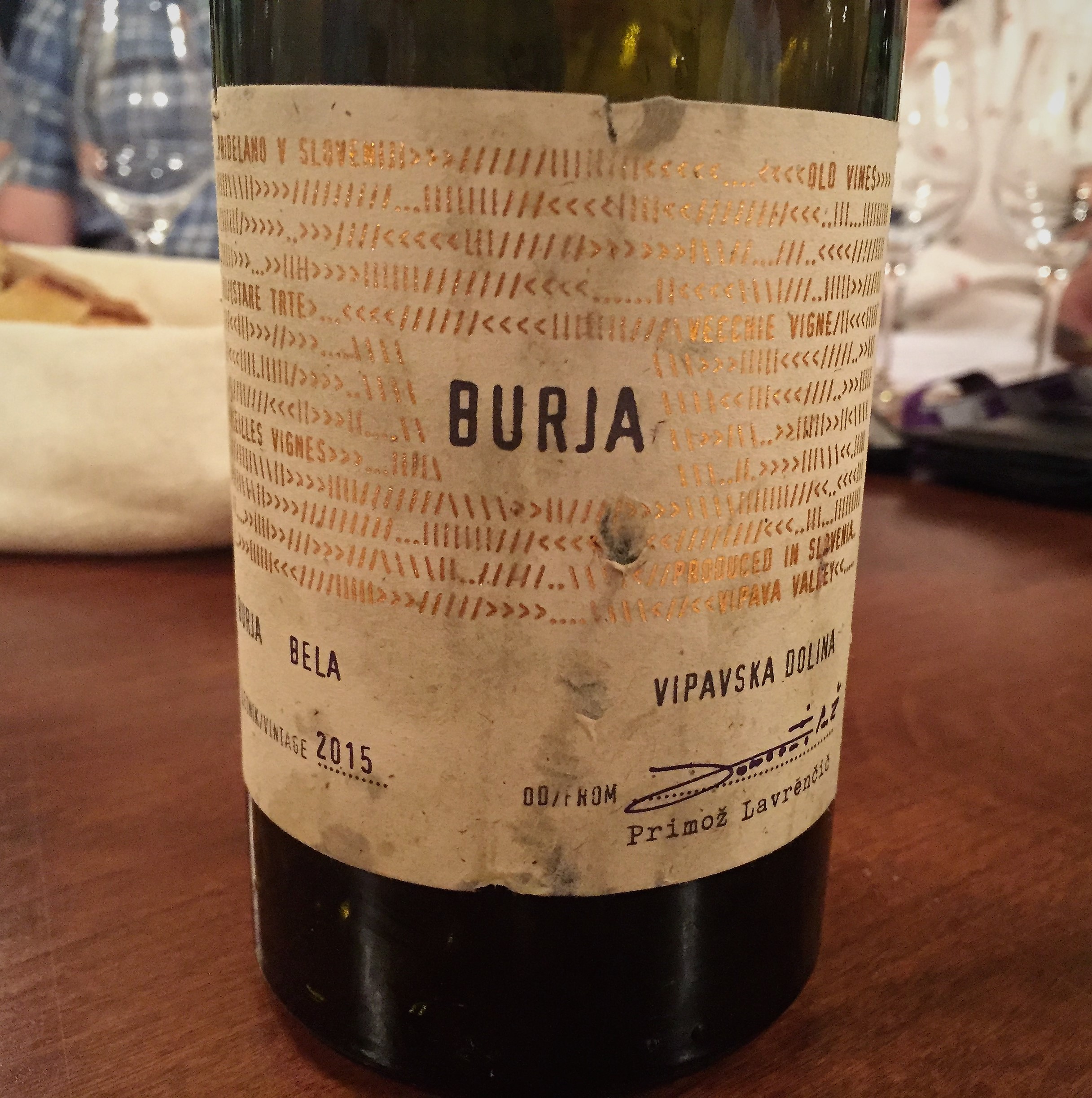
To all appearances, not an orange wine; the skin contact may add complexity and depth but the colour is lighter and more golden than, say, the Konkret Weiss, the nose is aromatic without being particularly estery/phenolic and if tannins are to be found, they escaped my notice. So, what are the aromatics? Preserved lemon, white pepper, quartz, maybe a floral note. In the mouth, the wine is very dry and savoury. The fruit takes a back seat to the minerals and a surprisingly intense salinity while sleek if sustained acidity counters the oily texture. The finish is long and vapourous. A food wine if ever there were one and probably a bottle that won’t suffer from a few years in the cellar. (Buy again? Yes.)
MWG June 8th tasting: flight 2 of 6
Meinklangers
The Mo’ Wine Group’s latest agency tasting was led by La QV’s head honcho Cyril Kérébel. The wine-up featured a particularly high proportion of whites, all with great minerality and a saline edge, as well as a wowser rosé and a handful of super-drinkable reds. We began with a trio of new-to-most whites from one of our favourite producers.
Burgenland 2015, Burgenlandwhite, Meinklang ($23.00, private import, 12 bottles/case)
A blend of Grüner Veltliner (50%), Welschriesling (40%) and Muscat Ottonel (10%) from biodynamically farmed vines. Manually harvested. Fermented (with indigenous yeasts) and matured in stainless steel tanks. Screwcapped. Residual sugar: 4.9 g/l. 12% ABV. Quebec agent: La QV.
Hay, straw, white flowers, chalk, distant “chives” and dried orange peel. Round in the mouth, the acidity smooth, the texture verging on waxy. The upfront fruit and underlying minerals give ways to a long savoury, saline finish with a lingering white pepper note. “Building spiciness underneath rosewater,” proclaims one taster. A perfect summer white is the general consensus. (Buy again? Yep.)

Somló 2015, H15, Meinklang ($37.65, private import, 6 bottles/case)
100% Hárslevelü from biodynamically farmed vines grown at the base of the extinct Somló (pronounced shom-low) volcano in southwest Hungary, not far from the Austrian border. The must is passed through a coarse filter before fermentation. The wine-making – which takes place at the estate’s Burgenland winery – is non-interventionist, with no additions except, possibly, a tiny squirt of sulphur at bottling. Matured in stainless steel tanks and old oak barrels for 12 months. Residual sugar: 4.2 g/l. 12% ABV. Quebec agent: La QV.
Complex, aromatic nose dominated by honey, spice and yellow fruit. Dense and weighty (not heavy) on the palate, the fruit wrapped around a softly glowing core of acidity. The complex of flavours turns impressively savoury/salty/sweaty on the mid-palate. Very long. Less tense and minerally, more stone-fruity and unctuous than some earlier vintages but no less engaging. (Buy again? Yep.)
Burgenland 2014, Konkret Weiss, Meinklang ($65.75, private import, 6 bottles/case)
A field blend of three Gewürztraminers, specifically Red Traminer, Yellow Traminer and plain old Gewürztraminer. Macerated on the skins for 21 days. Vinified in egg-shaped concrete tanks. No added anything, including sulphur. Residual sugar: 1.6 g/l. 12% ABV. Quebec agent: La QV.
For once, an orange wine that actually has an orange cast. One taster describes the complex nose of gardenia, cedar, spice and a funky whiff as “like the old lady in front of me on the bus, eating a grapefruit.” Dazzlingly complex and layered on the palate. Rich yet fluid. Dry but not austerely so. Structured by bright acidity and light tannins. The endless finish is awash in umami. (Buy again? Yep, wincing only slightly at the price.)
And Cyril shared some good Meinklang news with us: the SAQ will be including their impressive “Graupert” Pinot Gris in its Opération vins oranges release this fall and will also be carrying their fine ancient grains beer.
MWG June 8th tasting: flight 1 of 6
A global quartet of organic Pinot Noirs
Patagonia 2015, Pinot Noir, Barda, Bodega Chacra ($29.65, 11517515)
Located in the Rio Negro region of northern Patagonia, the estate was founded by Piero Incisa della Rocchetta, the grandson of the creator of Sassacaia. All its vines are ungrafted and biodynamically farmed. 100% Pinot Noir from the estate’s youngest vines, planted in 1990. Low-temperature fermentation with indigenous yeasts took place in cement tanks. Matured 10 months in French oak barrels. Unfiltered. Reducing sugar: 2.0 g/l. 13% ABV. Quebec agent: Réserve et Sélection/Trialto.
Classic nose of red berries, spice and a hint of vanilla caramel. Fruit forward but medium-bodied and balanced, with bright acidity, light tannins and a raw youthful astringency on the strong finish. Not what you’d call deep but easy enough to drink and something of a crowd-pleaser. (Buy again? If in the mood for a civilized New World Pinot, sure.)
Niagara Peninsula 2012, Pinot Noir, Réserve du Domaine, Domaine Queylus ($47.25, 12456494)
The estate is owned by a consortium of Quebecers (including Champlain Charest) and managed by Thomas Bachelder, who also serves as head winemaker. 100% organically farmed Pinot Noir from the Twenty Mile Bench and Lincoln Lakeshore sub-appellations. The grapes were picked by hand, sorted and destemmed but not crushed. A short cold maceration was followed by fermentation with indigenous yeasts. The fermented wine stayed on its skins for several days, then was pressed. Matured 16 to 20 months in French old barrels, a third of which were new. 5,300 bottles made. Reducing sugar: 1.8 g/l. 13% ABV. Quebec agent: Vins Philippe Dandurand.
Smoke and sweat then sandalwood with fruit and oak in the background. The palate is a suave mix of rich fruit, moderate tannins, sleek acidity and a minerally/tarry depth. Unfortunately, the oak becomes obvious on the finish, masking the beautiful fruit and robbing the wine of refreshment. While another year or two in the bottle may rectify that, for now I prefer the 2014 Tradition bottling ($31.00, 13276137), even without taking the Réserve’s somewhat wacky QPR into account. (Buy again? Maybe.)

Willamette Valley 2014, Pinot Noir, Red Cap, Montinore Estate ($29.50, 13186609)
100% biodynamically farmed Pinot Noir from various vineyards. At least some of the manually harvested grapes were given a cold soak. Fermented with indigenous yeasts. Spent ten months in French and Hungarian oak barrels, around 20% of which new. Reducing sugar: 3.4 g/l. 13.5% ABV. Quebec agent: La QV.
Cranberry, black raspberry, spice and sawed wood. Medium-bodied. The texture is more velvety than silky, the fruit pure, the oak in the background. Round tannins frame while sleek acidity nips on the long finish. Not particularly deep but, hey, it’s under $30. Several in the group bought earlier vintages of this when it was a private import; opened last year, a 2011, like this a bit rustic in its youth, had evolved into a silky Pinot Noir with definite Burgundian qualities. (Buy again? Yes.)
Bourgogne 2015, Garance, Domaine Montanet-Thoden ($34.75, private import, 12 bottles/case)
The eight-hectare estate was founded in 1990 by Catherine Montanet (of Domaine de la Cadette) and Tom Thoden. The original vineyards were part of Cadette’s holdings that had a higher proportion of clay and thus produced distinctive wines. Cadette’s oenologist and Catherine’s son, Valentin, now makes the wines. 100% Pinot Noir from a organically farmed two-hectare plot of vines between 20 and 25 years old. Manually harvested. Whole-cluster fermentation with indigenous yeasts takes place in temperature-controlled wood vats, initially with punch-downs and later with pump-overs. After about two weeks, the wine is pressed and transferred to large barrels until fermentation is finished. Matured in used 228-litre barriques (80%) and 114-litre feuillettes (20%). Unfined. 12.5% ABV. Quebec agent: oenopole.
Initially shy nose of red fruit and papier d’Arménie. Becomes more expressive with time in the glass, gaining red berry, leafmould, cola and spice notes. In the mouth, it’s medium-bodied, fluid and very dry. The tart red fruit is underlain with minerals, balanced by lithe tannins and lifting acidity. A faint, spicy bitterness lingers. Remarkably pure, this wine pushes all the Burgundy lover’s buttons, so it’s not surprising that local restaurateurs quickly snapped up the entire shipment. Accessible now but probably singing in one or two years. (Buy again? If only I could…)
MWG May 18th tasting: flight 6 of 6
Pairing Melon with Burgs
Vin de France 2015, Melon, Domaine de la Cadette ($28.80, private import, 12 bottles/case)
100% Melon de Bourgogne (aka Muscadet) from organically farmed 25- to 30-year-old vines in the Bourgogne-Vézeley appellation (despite its name, the grape isn’t one of Burgundy’s permitted varieties, which explains the VDF designation). Manually harvested. Whole-cluster pressed. Fermented with indigenous yeasts, matured six months in stainless steel tanks and bottled unfined with only a tiny shot of sulphur dioxide. 12% ABV. Quebec agent: oenopole.
Lemon, chalk and the faintest hint of grass. Wonderfully clean, round and fresh. Fruitier than your average Muscadet. Less crystalline too, though with the grape’s trademark mineral substrate. Soft acidity gives it a glow. Straightforward, long and pure. “I like the lingering sourness,” notes one taster. Me too. (Buy again? Oh, yes.)

Bourgogne-Vézelay 2015, La Châtelaine, Domaine de la Cadette ($29.35, 11094621)
100% Chardonnay from organically farmed 25-year-old vines rooted in clay and limestone. Manually harvested. Gently pressed. Fermented with indigenous yeasts and matured 14 months on the fine lees. Lightly filtered. Sees only stainless steel until bottlng. Reducing sugar: 2.7 g/l. 12.5% ABV. Quebec agent: oenopole.
Lemon, oats, quartz, white flowers – typical, wot? Clean and fresh but less overtly fruity than the Melon. More minerally though. The stuffing and bright acidity are well balanced, the finish long and clean. Even at this early point, one of the best vintages of this wine I’ve tasted, with the potential to improve over the short and medium term. (Buy again? Yes.)
Bourgogne-Vézelay 2015, La Piècette, Domaine de la Cadette ($31.25, 11589691)
100% Chardonnay from organically farmed 20- to 30-year-old vines in several parcels. The hand-picked whole clusters are gently pressed. The must is transferred to 228-litre barrels (called pièces) for six months’ alcoholic and malolactic fermentation (no added yeasts or bacteria). Matured 11 months on the lees. Lightly filtered. Reducing sugar: 2.3 g/l. 12.5% ABV. Quebec agent: oenopole.
Initially reticent nose of butter and faint vanilla, opening to lemon and quartzy chalk. Rich but not happy. There’s bright acidity, entwined minerals and oak, a certain depth and, disconcertingly, a “weird sweetish taste” that lasts through the long finish and makes the wine taste not so much off as unsettled. A taster notes that a recently opened six-year-old bottle was “amazing,” supporting the impression that the 2015 is a wine that will benefit enormously from a few years in the cellar. (Buy again? A bottle or two to lay down.)
MWG May 18th tasting: flight 2 of 6

 Brett happens