Posts Tagged ‘Natural wine’
Orange anarchy
Based in Šentjur, in eastern Slovenia, about 20 km northwest of Zagreb, Aci Urbajs became interested in wine-making in 1969 when, as a boy, he worked in a vineyard his parents had acquired. In 1987, he received, as a present for graduating from university, a small vineyard on the Rifnik hill, where unearthed Roman artifacts pointed to a long wine-making tradition on the site. A disciple of organic farming from early on, he was soon attracted to biodynamics and joined the Slovenian Demeter association in 1999. In the cellar, his approach is resolutely minimalist: spontaneous fermentation, no racking, no filtering, no fining. Two lines of wines are made: one with a small amount of added sulphur (20 to 30 g/l vs. the allowed 250 g/l), the other a “natural” line with no added sulphur. Chardonnay, Kerner, Pinot Gris, Welschriesling, Blaufränkisch and Pinot Noir are grown. Production is tiny, only a few thousand bottles a year.
Posavje 2012, Organic Anarchy, Aci Urbajs ($59.25, private import, 6 bottles/case)
A blend of Chardonnay, Kerner and Laški Rizling (“Italian Riesling” aka Welschriesling) from vines planted in 1988 and rooted in marble-rich soil. Two weeks’ maceration on the skins. Fermented in open barrels using indigenous yeasts. Matured one year (in used barrels, I’d guess). Unfiltered and unfined. No added sulphur. Vegan-friendly. 12.5% ABV. Quebec agent: Vadim Fonta.
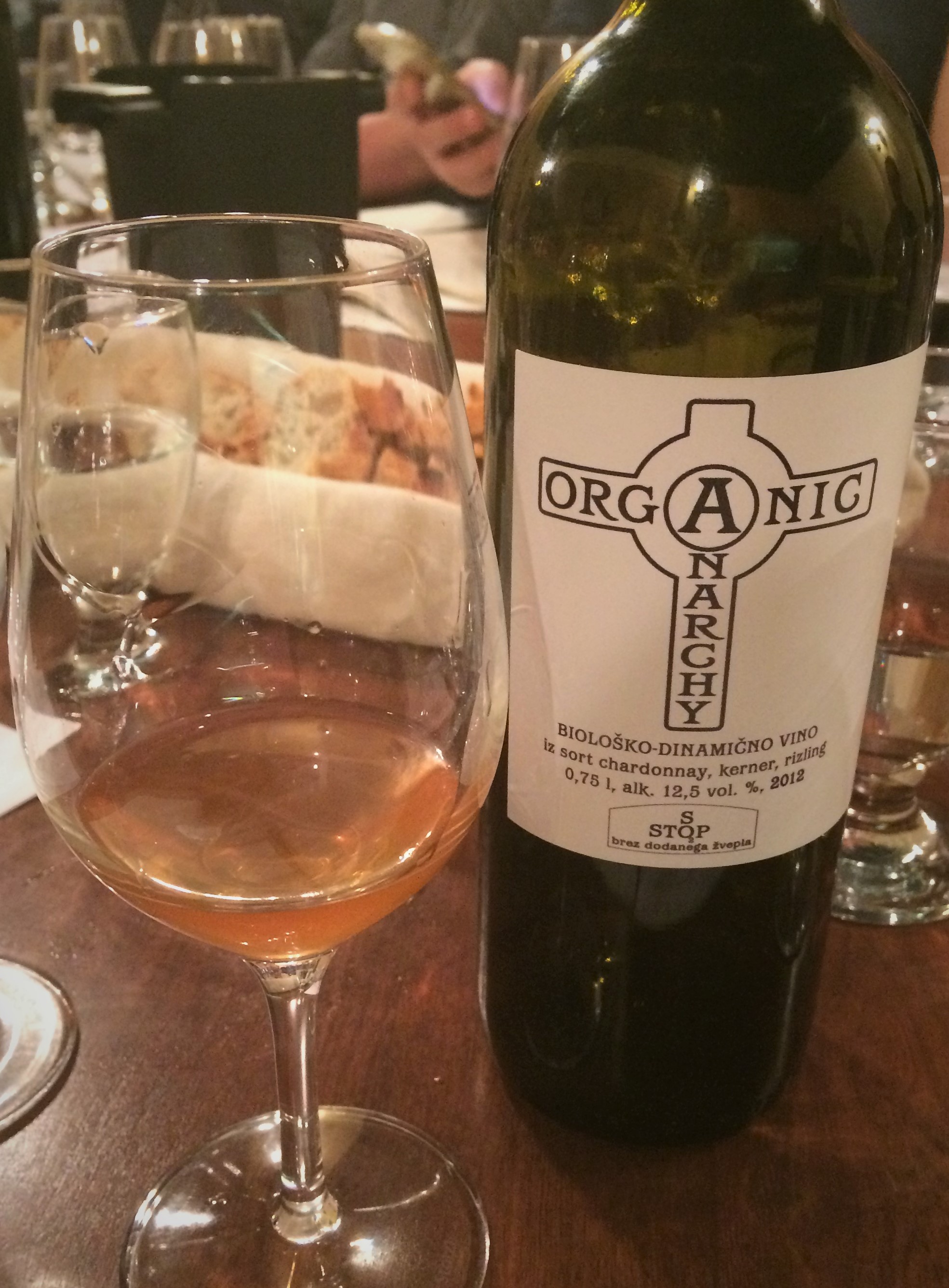
Hazy orange. Surprising, evolving nose: spicy, “kind of soapy,” “lit cigar,” dried orange peel and a hint of honey, among other things. Medium-bodied. Surprisingly fresh and vibrant for a five-year-old orange wine. The mineral-dusted fruit (stone fruit mainly) is almost sweet and yet so savoury. A hint of botrytis only increases the already complex set of flavours and aromas. Tingling acidity and a tannic rasp turn the silky texture a little raw-silky. The long finish is marked by pepper and nut notes. The way the wine developed in the glass suggests carafing an hour or two may be a good idea. Very impressive. I look forward to encounters with Urbajs’s other wines. (Buy again? The high price notwithstanding, yes, a bottle to savour at leisure.)
MWG October 13th tasting: flight 4 of 9
Orange crush
Located in Šempas in the western Vipava valley, about 20 kilometres east of Gorizia on the Italian border, the family-run Batič estate can trace its roots back to the late 16th century. It is known locally for its organically grown fruits and increasingly for its wines made from local and international varieties.
Primorska 2015, Zaria, Batič ($44.75, private import, 6 bottles/case)
A blend of Pinela (55%), Zelen (20%) Rebula (aka Ribolla Gialla, 5%), Vitovska (3%), Rumeni Mušat (aka Muscat Blanc à Petits Grains, 2%) and Chardonnay (1%) from biodynamically farmed vines planted in 1982 and rooted in marl soil of the Zaria vineyard. Manually harvested. Spontaneous co-fermentation on the skins in non-temperature-controlled open vats. Matured in Solvenian oak barrels. Unfiltered, unfined. No added sulphur. 13% ABV. Quebec agent: Vadim Fonta.

Hazy orange-bronze. A whiff of volatile acidity gives way to white spice, “cake,” yeast, minerals, peach and orange aromas. Lighter-bodied than expected (based on the appearance and nose) yet also very present. Complex and intensely flavoured with fruit, spice and minerals vying for attention. Light tannins and bright acidity give it some bite. The long, saline finish brings a hint of nuttiness and “lingering tortillas.” Characterful, engaging, satisfying, food-friendly and relatively affordable: what’s not to like? (Buy again? Yep.)
MWG October 13th tasting: flight 3 of 9
Primo Malvasia
Uroš Klabjan’s eponymous estate is located on the Istrian peninsula in Slovenia just south of the Italian border and three kilometres inland from the Gulf of Trieste. The around 10 hectares of vineyards are devoted mainly to indigenous varieties, primarily Malvasia and Refosco. Most of the vines are several decades old though one plot of ungrafted Malvasia is well past the 100-year mark. The estate is certified organic and the wine-making practices are traditional and non-interventionist. Annual production is typically in the 30,000-bottle range.
Primorska 2013, Malvazija Maceracija, Klabjan ($53.00, private import, 6 bottles/case)
As far as I can tell, Klabjan makes two Malvasias: the fresh and easy-going white label and this, the more savoury and complex black label. 100% Malvasia from dry-farmed old vines. Manually harvested. Macerated 10 days on the skins. Spontaneous fermentation. Underwent malolactic fermentation. Matured 30 months on the lees in oak barrels. Unfiltered and unfined. No added sulphur (total sulphites: 35 mg/l). Vegan-friendly. 14% ABV. Quebec agent: Vadim Fonta.

Hazy straw-bronze. Inexhaustibly protean nose of orange, apple, apricot, “rye whisky” and hints of vanilla and smoke that eventually heads into earthy mushroom territory. Smooth textured and possessed of a certain weight, layered and enveloping. The complex set of flavours echoes the nose and adds lees and minerals. Luminous acidity throws it all in relief, a effect sustained through the very long finish. Perfectly accessible now but also capable of ageing for years. Vibrant and engaging, this spellbinding wine was a favourite of just about everyone around the table. Despite the high price, we would have taken a couple of cases had any been available. (Buy again? Gladly. And I’ll make a beeline for any Klabjan wines I run across in the future.)
MWG October 13th tasting: flight 2 of 9
Ontario’s red grape?
Niagara Peninsula 2015, Cabernet Franc, Sans Soufre, Norman Hardie ($35.00 at the winery)
100% Cabernet Franc from organically farmed vines. Manually harvested. Fully destemmed. Fermented with indigenous yeasts in one-ton fermenters. Pressed in a basket press. Matured 10 months in 225-litre French oak barrels. Unfiltered and unfined. No added sulphur. 12.5% ABV.
Entertaining nose: a mix of dark fruit (cherry, blackberry) and umami (meat, mushroom) that prompts peanut gallery descriptors like “floral,” “spices,”“earthy,” “kelp” and “creosote.” Medium-bodied and fluid. Seems sweet on entry but turns appetizingly dry. Full of crunchy ripe fruit framed by soft tannins and enlivened by a stream of acidity. The complex of flavours includes minerals and herbal notes but absolutely no greenness. Finishes long and clean. So fresh, so drinkable. Enjoyable now and over the next two or three years if not longer. (Buy again? Yes.)

Canada 2015, Cabernet Franc, The Old Third ($55.00 at the winery, around $34 on preorder)
100% Cabernet Franc from the estate’s organically farmed Closson Road terrace vineyard in Prince Edward County. Fermented in stainless steel tanks with indigenous yeasts, then racked into French oak barrels, where it matured for about a year and a half. Unfiltered, unfined and minimally sulphured. Bottled in July 2017. 12.5% ABV.
Raspberry and black currants along with “black tea,” “pencil shavings,” “nut cake” and “prune.” Richer, rounder and denser than its flightmate, velour to Hardie’s satin. The ripe fruit is structured by smooth tannins and smooth acidity. Balanced, layered, long and full of potential: a complete wine. If there’s an issue now, it’s that the wine is a bit monolithic and the oak a little too obvious – nothing four or five years in the cellar won’t take care of. Late spring frost made 2015 a difficult vintage for many Prince Edward County producers though not for The Old Third and that’s totally apparent here. (Buy again? Yes, especially at the preorder price.)
World-class wines like these make a convincing argument that Cabernet Franc is Ontario’s red grape.
MWG September 28th tasting: flight 6 of 7
Vibrant, tasty, companionable
Adelaide Hills 2016, Skin n’ Bones Pinot Noir, BK Wines ($38.00, importation valise)
100% Pinot Noir from organically farmed vines grown in the cool-climate Lenswood subregion of the Adelaide Hills of South Australia. Manually harvested. After sorting, 70% of the clusters were left whole and 30% destemmed. All the fruit was then placed in French oak barrels (10% new, 90% neutral), leaving a generous amount of head space to be filled by the carbon dioxide gas resulting from fermentation. The barrels were sealed and the wine was allowed to spontaneously ferment and macerate for 100 days, after which the barrels were broken apart and the wine pressed. Bottled unfiltered and unfined. 12.8% ABV. Represented in western Canada by Calgary-based Crush Imports.
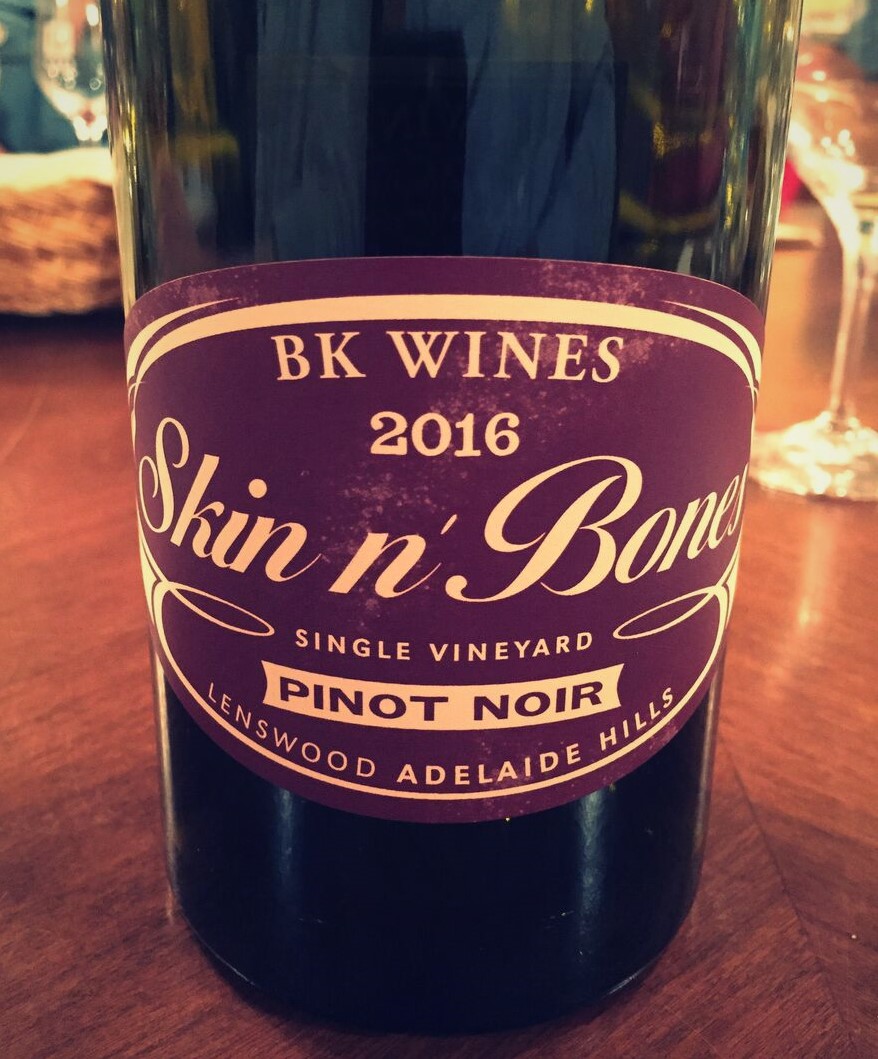
Fragrant, engaging nose: raspberry and cherry along with sandalwood, cedar, “tomato sauce” and graphite. Light- to medium-bodied. Juicy but not a bomb. Actually, there’s lots of detail, great precision and real energy. The sweet silky fruit is framed by fresh acidity and light though very present tannins. Chewing reveals unsuspected depth and structure. The spice-overtoned finish is clean and well sustained. A vibrant, tasty, companionable Pinot Noir that, while accessible now, has the potential to develop over the next few years. (Buy again? Yep.)
Based on this and the same estate’s Savagnin, some enterprising agency needs to be bringing these wines into Quebec.
MWG September 28th tasting: flight 5 of 7
A serious vin plaisir
TN 2015, Tinto Natural, Partida Creus ($27.45, private import, 6 bottles/case)
A blend of biodynamically farmed Merlot, Cabernet Sauvignon and Garrut (aka Mourvèdre). Very little technical information to be found on this but André “Vinealis” Papineau describes Partida Creus as one of the most natural winemakers around, so manual harvesting, fermentation with indigenous yeasts, non-interventionist wine-making and no filtering, fining or added sulphur. 13.5% ABV. Quebec agent: Vinealis.

Red berries, slate, peppery spice and some background funk. Medium-bodied and quite dry, though, as André notes, there’s some “sucrosité” on the attack as well as a hint of carbon dioxide. In contrast to other red quaffers from, say, the Loire valley, there’s a solar quality to the fruit. Fresh acidity adds buoyancy while the fine, tight tannins turn a little raspy on the long finish. Built around a core of red cherry but as savoury as it is fruity: a serious vin plaisir as it were. Quite popular with the assembled masses. (Buy again? Yep.)
WMG September 14th tasting: flight 5 of 9
Natural Catalans
BN 2015, Blanco Natural, Partida Creus ($27.45, private import, 6 bottles/case)
A skin-contact white made from biodynamically farmed Macabeo (90%) and Cartoixa Vermell (10%). Fermented with indigenous yeasts. Unfiltered and unfined. No added sulphur. 10.5% ABV. Quebec agent: Vinealis.
Bronze to the eye. Engaging nose of hayloft, dried white fruit, sawed wood, apricot skin and lees. Smooth and buoyant on the attack. Layers of flavour, only one or two of which are fruit. Broad and long though not remarkably deep. A light tannic astringency adds some structure to the finish. So savoury. A very good orange wine at a very good price. (Buy again? Yes.)


Côtes Catalanes 2015, L’Année blanc, Les Clos Perdus ($26.85, private import, 12 bottles/case)
Macabeu (aka Macabeo, 65%), Grenache Gris (30%) and Muscat (5%) from biodynamically farmed grapes. Manually harvested. Fermented with indigenous yeasts. Matured in stainless steel and barrels. Undergoes malolactic fermentation. Sulphur use is minimal. 13.5% ABV. Quebec agent: Vinealis.
Delicious nose. Blast of minerals, especially granite (“presque pétrole” notes André), along with orchard fruit (yellow apple in particular), a hint of funk and eventually “honey” and white meat notes. The ripe fruit and dense, almost oily texture come with compensating acidity. Finishes long and strong with a mix of spice and minerals. A serious, savoury wine that delivers considerable bang for the buck. (Buy again? Yes.)
The return of a favourite
 Emilia Rosso 2015, Trebbiolo, La Stoppa ($24.85, 11896501)
A blend of Barbera (60%) and Bonarda (40%) from organically farmed vines ranging up to 25 years old. Fermented with indigenous yeasts. Matured five months in stainless steel. Unfiltered and unfined. A small squirt of sulphur dioxide is added at bottling. Reducing sugar: 1.5 g/l. 13% ABV. Quebec agent: oenopole.
Black raspberry candy, plum, earth, cedar sawdust, leather, slate and a whiff of distant barnyard. Medium-bodied. An almost imperceptible spritziness is apparent after a bite of something acidic. The ripe fruit seems sweet on entry, an impression soon shredded by the trenchant acidity, light but drying tannins and savoury flavours. Spice, dried herbs and minerals colour the mildly astringent finish. Perhaps a tad lighter and less rustic than the classic 2014 but still authentic, food-friendly* and fun. (Buy again? Yep.)
*As I said about the 2014: “Virtually begs for casual fare – think pizza, sausages, grilled pork – and can handle tomato with aplomb. Just don’t serve it too warm.” My bottle made a perfect pairing for cubed pork shoulder browned in olive oil and stewed with a whack of smothered onions, garlic, dried chile, white wine and San Marzano tomatoes, with cooked black-eyed peas added for the last half hour of simmering.
Champagne naturally
Champagne, Fidèle, Vouette et Sorbée ($87.47, private import, 6 bottles/case)
This is nearly all 2014 except for a dollop (about 5%) of reserve wine from a solera-type system started in 2001. A blanc de noirs: 100% Pinot Noir from 30-year-old biodynamically farmed vines from several parcels but all rooted in Kimmeridgian marl. The manually harvested grapes are gently pressed. The free-run juice is transferred to 400-litre oak casks for fermentation (with indigenous yeasts) and maturation. Undergoes malolactic fermentation. Indigenous yeasts are used for primary and secondary fermentation. Matured 10 months in used Meursault barrels. The bottled wine is aged on its lees on lattes and riddled on racks for around 15 months. No dosage. Sulphur dioxide is added to the incoming grapes but not at bottling. 12% ABV. Quebec agent: Rézin.
A white wine but with a rosé cast. Intriguing nose of distant strawberry, fired minerals and “garlic brioche.” Fine, non-aggressive bubbles, pure fruit, silky acidity and an unmissable mineral depth. Long flavourful finish with lingering rhubarb crème brûlée. Absolutely not an aperitif wine, rather one to open ahead of time, maybe even carafe, and drink with food. (Buy again? Yes.)

Champagne, Extra Brut, Blanc d’Argile, Vouette et Sorbée ($114.58, private import, 3 bottles/case)
A blanc de blancs: 100% Chardonnay from biodyanmically farmed vines planted in 2000 in a single plot. The vines – massale cuttings from Jacques Sélosse and Vincent Dauvissat – were planted “wild” (directly in the unprepared clay and Kimmeridgian limestone soil). Manually harvested. Fermented and sparkled with indigenous yeasts. The still wine is matured 18 months on the lees in oak casks. Undosed. 12% ABV. Quebec agent: Rézin.
Dried apple, yeast, icing sugar and a faint, nougaty oxidative note. Fine, caressing bubbles. Smooth, caressing acidity. Browning apple upfront, apple Danish and salty seashells on finish. Still a baby. Clean, tonic and bracing, this cuvée lives up to its reputation of being a Chablis with bubbles. As a group, champagne is arguably the most overpriced wine in the world; that said, this delivers exceptional if relative QPR. (Buy again? Yes.)
The first time I tasted them, Vouette et Sorbée’s champagnes did not impress. Subsequent encounters, which have mostly involved bottles laid down a few years, have been much more positive and I now rank the house among my favourite producers.
MWG August 11th tasting: flight 9 of 9
The Dovecote and the Boar
Rosso Toscano 2010, Colombaia ($36.73, private import, 6 bottles/case)
The estate’s name translates as dovecote. This is a blend of Sangiovese (80%), Malvasia Nera (10%), Colorino (5%) and Canaiolo (5%) from biodynamically farmed 40-year-old vines planted in fossil-rich clay soil. Manually harvested. Macerated on the skins and fermented with indigenous yeasts in concrete tanks. Matured 18 months in 26-hectolitre Slavonian oak botti. Unfiltered and unfined. A tiny dose of sulphur dioxide is added at bottling. 13% ABV. Quebec agent: Rézin.
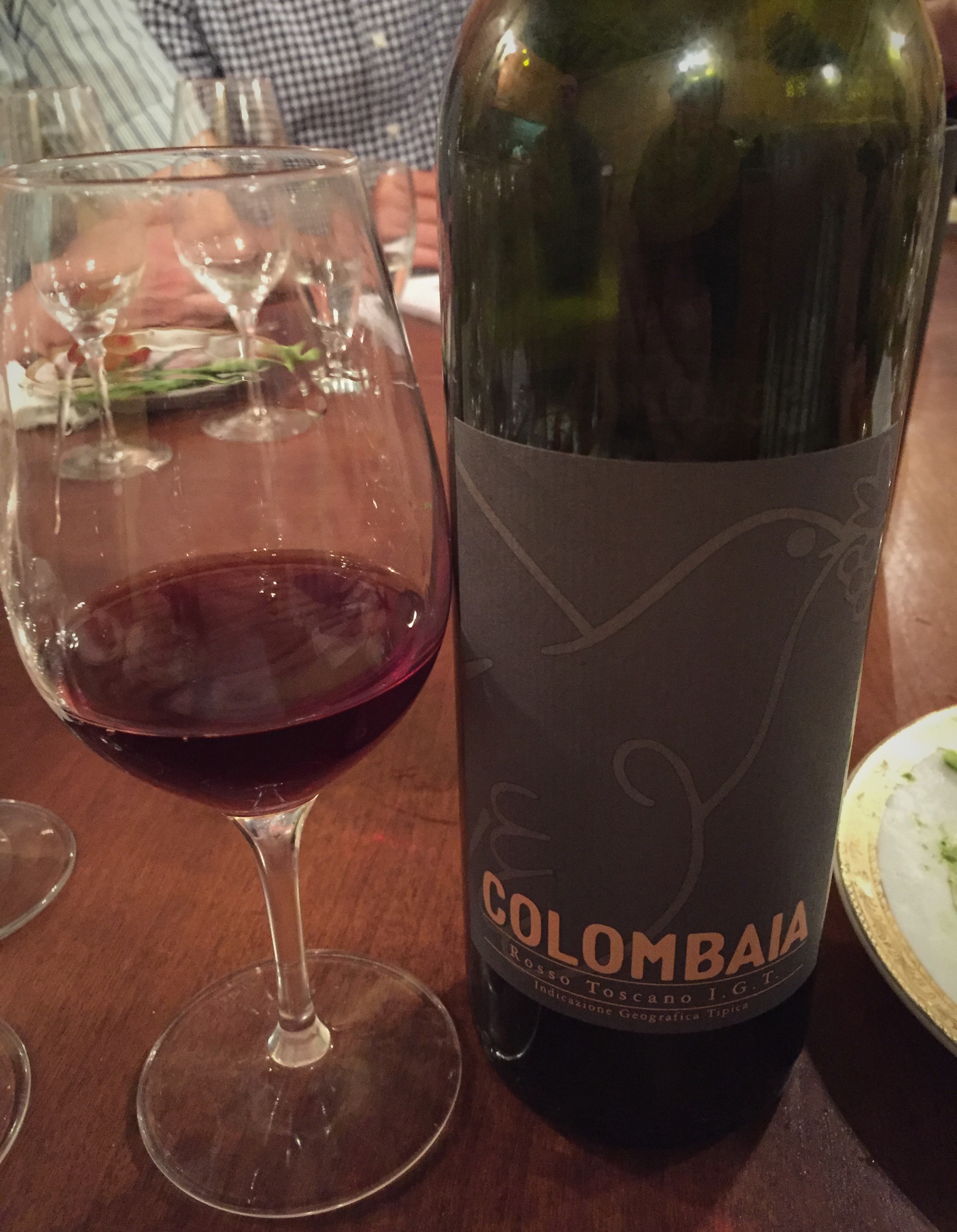
Initially odd nose (“a weird mix of bubblegum and asphalt”) that eventually settled down into a classic bouquet of cherry, black cherry, tar, leather, “rose,” ink, beet and sawed wood. Medium-bodied and fluid in the mouth. The ripe fruit floats on a steady stream of smooth acidity while the supple, resolving tannins have enough torque to give some grain to the otherwise silky texture. A faint rumbling of minerals is joined by incipient tertiary notes on the long finish. Well balanced, true to the grape, speaking of its place and probably at or near peak. Roasted boar, anyone? (Buy again? Yep.)
MWG August 11th tasting: flight 8 of 9

 Brett happens