Posts Tagged ‘Sparklers’
Greek winery tour: Tselepos (Arcadia)
[Hover over pics to display captions and credits; click to embiggen.]
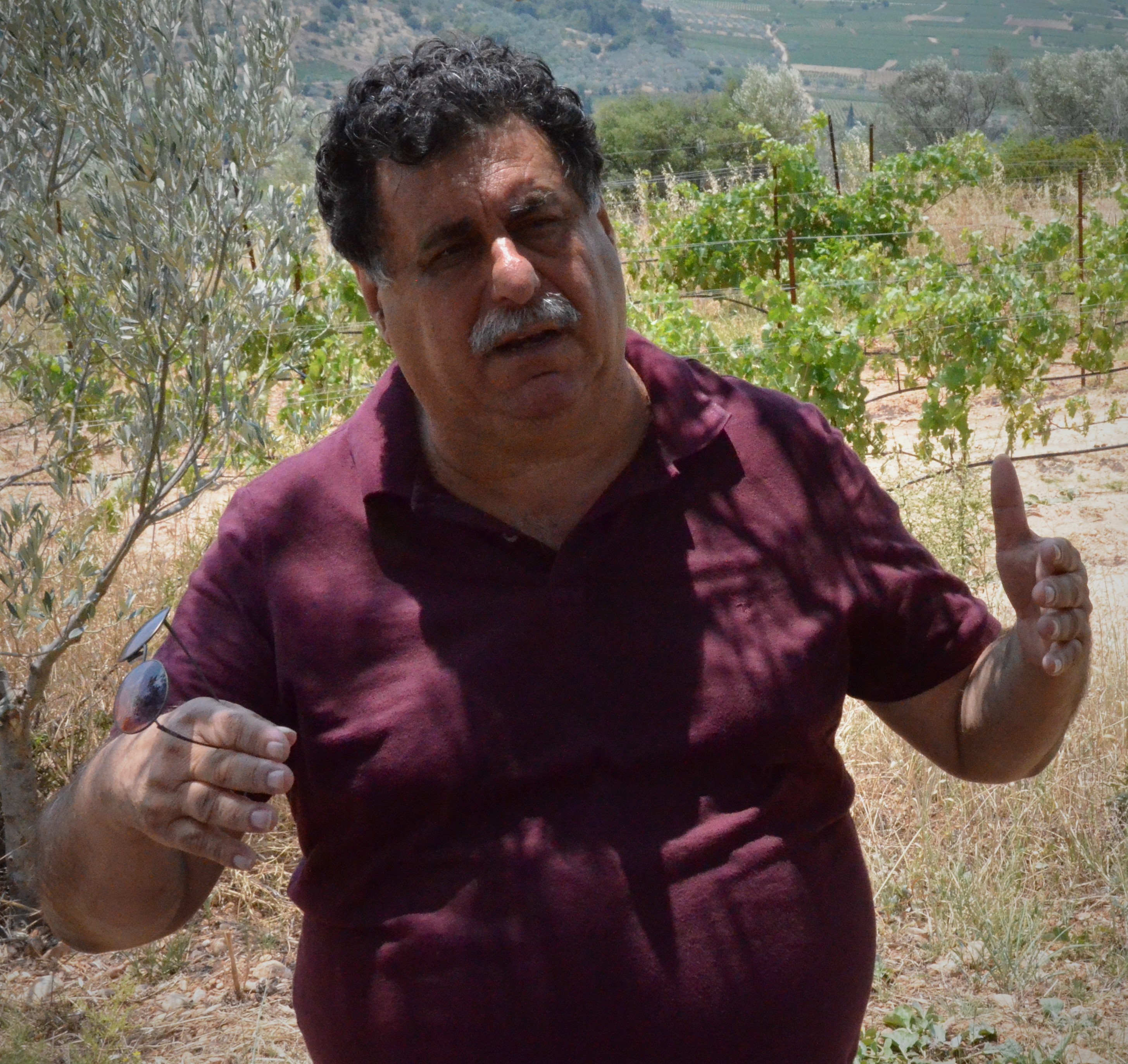 One of the leaders of the Greek wine renaissance and the modern day king of the ancient Moscofilero variety, Yiannis Tselepos is a phenomenon. A Cypriot by birth, he studied oenology at the Université de Bourgogne in Dijon and, after graduating, spent a couple of years working at several Burgundy estates. He then moved to Arcadia in the eastern Peloponnese, where he found employment as a consulting oenologist, married a local girl, Amelia, and with her founded the eponymous winery. The Tseleposes currently own two estates and have an interest in a third.
Located in Rizes, central Arcadia, Ktima Tselepos is the larger and older of the two estates, dating back to 1999. It sits on a plateau on the eastern flank of Mount Parnon. While the main buildings are surrounded by 30 hectares of vineyards, the estate’s holdings actually total some 240 hectares.  The soil here tends to shale and rocky clay and the average elevation is 750 metres, helping ensure the all-important wide difference in day and night temperatures. The handsome winery is built in the traditional local architectural style; less flashy and touristy than some, it feels like a facility whose main vocation is wine production. Although around two-thirds of its output is devoted to Moscofiliero, the estate makes a wide range of wines, from sparklers to still dry reds and whites to sweet wines, from international as well as local grape varieties. With a total annual production of 350,000 bottles, half of which is exported, this is no small operation.
 In 2003, Tselepos acquired a second property, Ktima Driopi, an 8.5-hecatre plot of 50-year-old vines rooted in steep clay soil in Kousti, near Nemea, about an hour’s drive to the north-northwest. The estate specializes in Agiorgitiko, another ancient indigenous variety. A small winery has since been built to handle the estate’s output. The estate’s striking labels, as classy as its wines, feature a dormant tree in silhouette.
Tselepos’s latest project is a joint venture with the Chryssou family on Santorini. The Chryssous provide the grapes (from 12 hectares of ungrafted 50- to 100-year-old vines in Pyrgos and Emporio) while Yannis provides the wine-making expertise. Dubbed Canava Chryssou Tselepos Santorini, the estate currently produces around 12,000 bottles a year of a single wine, a 100% Assyrtiko.
At all three estates, the viticultural practices are enlightened without being full-bore organic. In Arcadia, the vines are trained on wires, a virtual necessity in the region’s humid climate. On arid, wind-blasted, sun-stroked Santorini, the vines are coaxed into nest-like spirals that lie close to the ground, the better to protect the fruit and preserve precious water. Irrespective of the estate, the grapes are manually harvested in the cool of the early morning and transported to the winery in small crates.  Though the facilities are outfitted with state-of-the-art equipment, Yiannis views technology as limited to a supporting role. “Good technology makes for good wine, but only the right vineyard will yield a great wine,” he says.
One aspect of this balancing act between technology and terroir was the focus of an interesting exchange during our technical tasting. A member of our party, a professional sommelier with an impressively acute palate, wondered why Tselepos used selected instead of indigenous yeasts since, he felt, the former scalp and compress wines. Yiannis countered with “I have 17 families besides my own who depend on the winery’s success. I’m not going to put their livelihoods at risk.”
I can see both sides of the argument. Obviously, indigenous yeasts – the yeasts native to a place – are a factor in terroir. And many other winemakers have shown that fine wines can reliably be made using them. So it seems a little paradoxical that the winery, which proudly describes its central wine-making philosophy as “to grow Greek varieties within their specific native ecosystem” and which, as the following notes show, does indeed make terroir-expressive wines, doesn’t go all the way down the terroir path.
Then again, Yiannis is clearly more than just a winemaker. He’s also a successful businessman, a player in the local community and a standard bearer for the wines of his region and country. His Moschofileros and Agiorgitikos are widely viewed as models for what the grapes can achieve. His Mantinias have almost single-handedly put that appellation on the map. One of the reasons this has happened is the wines’ consistency. Why, then, tinker with a winning formula? Why introduce another variable into the process? Why do anything that could undermine the livings of so many and the reputations of a business and a region?
More than just a winemaker? Yes. But still a winemaker at heart, as the following story shows. At one point, Yiannis told us how he came to chose oenopole to represent his wines in Quebec. One day this Greek-Canadian showed up, introduced himself as Theo Diamantis and explained that he was setting up an agency dedicated to selling “real,” terroir-driven wines with a high drinkability quotient, wines made not by industrial producers but by vignerons. Which was why he wanted Tselepos in the portfolio. “It was the first time anybody called me a vigneron,” Yiannis beamed, “and it was all I needed to know. I was ready right then to sign on the dotted line.”
You’ll find my notes on all the day two wines after the jump. For details about where we stayed and ate and what we ate and saw, including some of Tselepos’s vineyards, see the Day Two report on carswelliana.
INTRODUCTION
PAPAGIANNAKOS (ATTICA)
♦ TSELEPOS (ARCADIA)
MERCOURI (ELIS)
TETRAMYTHOS (ACHAEA)
THYMIOPOULOS (MACEDONIA)
ARGYROS (SANTORINI)
Spark plug
Twenty-Mile Bench VQA 2014, Limestone Ridge Riesling, Spark, Tawse Winery ($24.00, 13216880)
100% Riesling from organically and biodynamically farmed vines in the Limestone Ridge vineyard parts of which were planted as far back as 1999. Manually harvested. Whole-cluster pressed. Fermented in stainless steel tanks. Sparkled using the traditional method. Residual sugar: 12 g/l. 12% ABV. Quebec agent: Delaney Vins & Spiritueux.
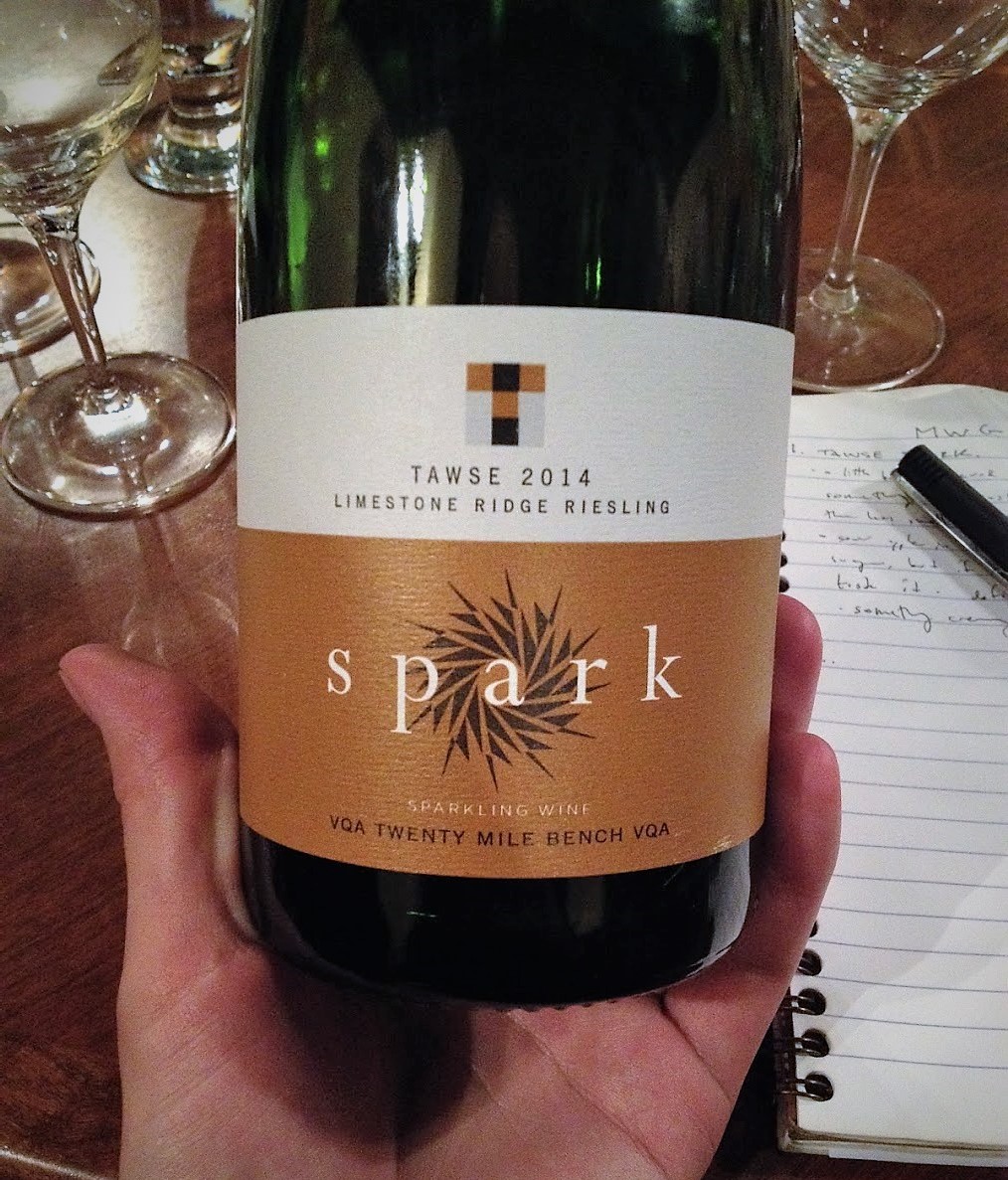
Very pale gold with sunshine glints and a fine bead. Straightfoward nose of apple/pear, lemon zest, lees, pastry cream and pie crust. In the mouth, the mix of fruit (mostly sour apple) and chalk is buoyed by soft fine bubbles. A touch of residual sugar is checked by zingy acidity, which in turn is softened by the light sweetness. Dry and clean on the finish with a lingering briny note. Fresh and uncomplicated, this would make a fine aperitif or summer deck wine. Not exactly a hit with the assembled tasters but I found it bright, bracing, sui generis and enjoyable. (Buy again? Yes, especially at the LCBO, where it runs $20.95.)
MWG February 17, 2017, tasting: flight 1 of 6
Odd couple
As is the Mo’ Wine Group’s longstanding tradition, our first tasting after the holidays focused on inexpensive and affordable bottles.
Vino da Tavola 2014, Il Brut and the Beast, Valli Unite ($25.35, private import, 6 bottles/case)
Based in Costa Vescovato in southern Piedmont, Valli Unite is a 35-year-old organic cooperative whose members grow local grape varieties as well as grains, fruits, vegetables and livestock. Accurate information on this wine is hard to find. It’s not listed on the coop’s website and online reviewers tend to be all over place about its constituent grape varieties, production method (some say it’s a filtered Charmat-method sparkler) and stopper (some say it’s a cork). For all I know, there may be more than one bottling. This much seems clear: the wine we tasted was made from Cortese and may also contain some Favorita. The biodynamically farmed grapes were manually harvested. The wine was fermented with indigenous yeasts and bottled unfiltered and unfined. No sulphur was added during the wine-making process. The fizz is the result of natural, in-bottle fermentation. Vegan-compatible. Crown cap. 13% ABV. Quebec agent: La QV.
Pale straw. Hazy in all the glasses though the last glass or two also contained a lot of brown-coloured lees. Interesting, leesy nose of lemon, sour apple, chalk and “bonbon de banane.” Soft but ticklish effervescence. There’s some fruit on the attack (one taster described it as “fruité austère”), lots of chalky minerals and fair acidity. A lactic note sounds on the long finish. Somehow the elements don’t coalesce into a whole and, as the wine breathes, the alcohol becomes noticeable and the wine seems “oxidized” and a bit “flat.” Not the hit that the 2011 was. I suspect our just-off-the-boat bottle was travel-shocked or otherwise upset. (Buy again? To give it another chance in a few months, yes.)
Crémant d’Alsace, Extra Brut, Paul-Édouard, Domaine Bott-Geyl ($26.00, 13032845)
A blend of Pinot Blanc (50%), Chardonnay (30%) and Pinot Noir (20%). The hand-picked grapes are purchased from growers, all of whom are converting to organic practices. This traditional-method sparkler was matured in the bottle for 24 months before disgoring. Reducing sugar: 5.1 g/l. 12.5% ABV. Quebec agent: LVAB.
Straw heading toward bronze with a fine bead and next to no foam. Outgoing nose eliciting descriptors like white strawberry, honey, acacia, stone fruit and, surprisingly but accurately, jalapeño. Round and rich in the mouth. The bubbles are low-key, the ripe fruit has a slightly honeyed quality, the minerals are dusty. Soft acidity and hints of lemon provide some welcome freshness. A whiff of yeasty brioche colours the long finish. Impeccable though not what you’d call lively. (Buy again? Personally, I’d go for something tenser but several tasters were quite taken with this.)
MWG January 12, 2017, tasting: flight 1 of 7
Gamay/Poulsard, Gewürz, Gamay
Cerdon, Méthode Ancestrale, Demi-sec, Gérald Dubreuil ($30.00, private import, 6 bottles/case)
An ancestral method sparkler made from Gamay and Poulsard. The estate uses no pesticides, favours green cover over herbicides and turns to fungicides only on an as-needed basis. Immediately after harvest, the grapes are pressed and the must is fermented in tanks with indigenous yeasts. When the alcohol level reaches about 6%, the wine is chilled to near freezing, then filtered and bottled. Fermentation resumes as the wine warms, with the by-product carbon dioxide creating the sparkle. Residual sugar: 55 g/l. 8% ABV. Quebec agent: Mon Caviste.
Exuberantly fruity nose of “strawberry and strawberry greens” with a bit of black pepper. In the mouth, it’s smooth and softly effervescent, full of tart fruit, dusty minerals and bright acidity but no tannins to speak of. Not exactly dry but far from sweet. Long. A fun summer sipper that can also work as an aperitif, accompany lightly sweetened fruit-based desserts and pair beautifully with mild- to medium-hot Punjabi dishes. Would love to try the “sec,” which has 20% less residual sugar. (Buy again? Irrespective of price, yes, though maybe not when I can get single bottles of the excellent Renardat-Fâche for $6 less.)
Alsace 2012, Gewürztraminer, Tradition, Domaine Pfister ($39.00, private import, 6 bottles/case)
100% Gewürztraminer from two parcels in the Silberberg lieu-dit. 12.5% ABV. Quebec agent: Mon Caviste.
Classic nose and palate, marked by rose, litchi, candied orange peel and white spice. Technically a demi-sec but quite light on its feet and not too sweet. Stone fruit and minerals add complexity to the palate, with soft-glow acidity deftly balancing the residual sugar. The clean, faintly honeyed finish has Gewürztraminer’s telltale bitter edge. Impressive for its purity, balance and pleasurability though the price of admission seems a tad high. (Buy again? Sure.)
Coteaux Bourguignons 2014, Philippe Gavignet ($31.00, private import, 6 bottles/case)
The Coteaux Bourguignons AOC replaced the Bourgogne Grand Ordinaire AOC in 2011. The estate is based in Côtes-de-Nuits. 100% Gamay from 40-year-old vines; farming is close to organic. The juice is macerated on the skins for four or five days. Fermentation in tanks is followed by 12 months’ maturation. 12% ABV. Quebec agent: Mon Caviste.
Served last in the tasting after all the champagnes and a semi-sweet Gewürztraminer, which didn’t make sense until we took a sip and found it woke up the palate like a slap to the face. Red and black berries, minerals and a whiff of sap. Medium-bodied yet fleshy/chewy. Clean and bright fruit with darker mineral shadings. Lively acidity, light but firm tannins (had I not been told otherwise, I would have guessed there was some Pinot Noir in the blend). So focused and energetic. One of the most vibrant Gamays I’ve tasted in ages. (Buy again? Absolutely.)
MWG November 10, 2016, tasting: flight 9 of 9
A Crémant de la Loire and a Prosecco
Crémant de la Loire, Symphonie de la Désoucherie, Domaine de la Désoucherie ($26.00, private import, 6 bottles/case)
A traditional method sparkler made from a 50-50 blend of Menu Pineau (aka Arbois) and Chardonnay from Cheverny. 12% ABV. Quebec agent: Mon Caviste.
Quiet nose showing hints of apple, yeast and lees and a floral note. Softly effervescent. More minerally than fruity, with brilliant acidity and an intriguing bitterness on the long finish. Not remarkably complex but very tasty and so refreshing. (Buy again? Yes.)
Prosecco, Amor, Canto alla Moraia ($29.00, private import, 6 bottles/case)
100% Glera from organically farmed vines. The estate is based in Tuscany but, per appellation rules, the grapes for this wine were grown in the Veneto and Friuli-Venezia Giulia regions. The grapes are direct-pressed and the juice immediately separated from the skins. After alcoholic fermentation, the wine is translated to airtight stainless steel tanks for low-temperature secondary fermentation using the Charmat method. Under three bars of pressure. Flip-top stopper. Residual sugar: 14 g/l. 11% ABV. Quebec agent: Mon Caviste.
Hazy light straw and a fine bead. Savoury nose marked by floral, jalapeño, honey and “peaty” aromas but not a lot of fruit. Light, bright and flavourful in the mouth with a fine, tickling fizz, browning apple and pear, a dusting of chalky minerals and a long, faintly sour-edged finish. Drier than the residual sugar level might lead you to believe. Fresh and appetizing. (Buy again? Yes, though I wouldn’t complain if it cost a few dollars less.)
MWG November 10, 2016, tasting: flight 8 of 9
A trio from Dehours & Fils
Based in Mareuil-le-Port, Dehours & Fils was founded in 1930 by Ludovic Dehours, who eventually handed the reins to his son Robert. Financial partners took over following Robert’s early death. The estate returned to family control in 1996 and is now run by Robert’s son, Jérôme. Around 14 hectares of vines produce some 80,000 bottles in an average year. Pinot Meunier features prominently in many of the wines.
Champagne, Brut, Grande Réserve, Dehours & Fils ($57.00, private import, 6 bottles/case)
The house’s flagship bottling. 100% Pinot Meunier in this batch though the wine usually has some Chardonnay and Pinot Noir blended in. Made with the addition of reserve wine from a solera dating back to 1998, which constitutes about 10% of the final blend. Residual sugar: 6 g/l. 12% ABV. Quebec agent: Mon Caviste.
Fine persistent bead. Complex nose with scents of “green,” “lit match,” “herbes de Provence” and dried apple. Clean, fresh, minerally and not fruit forward. Brilliant, incisive acidity. Considerable depth and length for a wine at this price point. An aperitif champagne par excellence. (Buy again? Gladly.)
Champagne 2009, Rosé, Brut, Cuvée Œil de Perdrix, Dehours & Fils ($74.00, private import, 6 bottles/case)
Mostly Pinot Meunier with a dollop of old-vine Chardonnay that was fermented in barriques. Matured four years. 12% ABV. 1,825 bottles made. Quebec agent: Mon Caviste.
Faint beigey pink with salmon glints. Fine bead but not much foam. Umami-ish nose of Dutch rusk and red berries. Sleek, elegant, savoury, balanced and dry, with a long minerally finish. “The un-rosé rosé” noted one taster. Pretty fabulous. (Buy again? Def.)
Champagne 2007, Extra Brut, Maisoncelle, Dehours & Fils ($91.00, private import, 6 bottles/case)
100% Pinot Noir from the Maisoncelle lieu-dit; the vines were planted in the early 1970s. Fermented and matured in barrels. 12% ABV. Quebec agent: Mon Caviste.
Pale gold with darker gold glints. Complex and savoury: pork ramen, apple, peach, gooseberry… Finely balanced between ripe fruit, complex minerality and sleek acidity. Rich, deep and perfectly proportioned. Long and delicious. Du grand as they say around here. (Buy again? Yes.)
MWG November 10, 2016, tasting: flight 5 of 9
A vintage blanc de blancs from Diebolt-Vallois
Champagne 2007, Blanc de Blancs, Diebolt-Vallois ($78.00, private import, 6 bottles/case)
100% Chardonnay from older vines in Cuis (60%), Chouilly and Épernay and young vines in Cramant, where the house is based. The grapes from each parcel were vinified separately and only the first-pressed juice was used. Fermented in temperature-controlled tanks. Underwent malolactic fermentation. Dosage: 6 to 8 g/l. 12.5% ABV. Quebec agent: Mon Caviste.
Straw-coloured with gold glints, a fine bead and not much foam. Intriguing, savoury nose of candied apple, sage-like herbs, brioche and a floral note. So elegant and balanced on the palate, the ripe fruit (pear, apple, lemon and maybe lime) nicely restrained and mineral-laced, the acidity soft yet sustained. The long finish is marked by a faint pithy bitterness, a touch of honey and an elusive quality that another taster likened to “mineral water.” My first encounter this house; I look forward to the next. (Buy again? Yes.)
MWG November 10, 2016, tasting: flight 4 of 9
Two black and white blends from Legouge-Copin
Champagne, Brut, Réserve, Legouge-Copin ($59.00, private import, 6 bottles/case)
Chardonnay (usually from more than one vintage) and Pinot Noir (usually from more than one vintage). 12% ABV. Quebec agent: Mon Caviste.
Pale gold with sunshine yellow glints, little foam and a fine bead. Faintly oxidized nose of lanolin, oatmeal, lemon, chalk and bread. In the mouth, it’s rich yet dry, with tiny bubbles, racy acidity and good minerality. Finishes clean and long. In short, a fleet and appetizing wine. The bottle opened on New Year’s eve was even more singular and impressive and made a fine accompaniment to New Brunswick sturgeon caviar and crème fraîche-smeared blinis. (Buy again? Definitely.)
Champagne 2006, Brut, Blancs et Noirs, Legouge-Copin ($61.00, private import, 6 bottles/case)
Chardonnay, Pinot Noir and Pinot Meunier. 12% ABV. Quebec agent: Mon Caviste.
Pale straw with light gold glints. Lots of foam. The umami-rich nose brings candied apple, nougat and brioche to mind. Rich, round, smooth, fluid and elegant on the palate, notable for its lifting effervescence, soft-glow acidity and “seaweed” overtone. The long finish brings a faint bitter note. The bottle opened on New Year’s eve seemed classic if a little more conventional than the Brut Réserve. (Buy again? Yes, though the Brut Réserve is more my style.)
MWG November 10, 2016, tasting: flight 3 of 9
Sparkling PN rosés from Alsace and Champagne
Crémant d’Alsace, Brut, Rosé, Domaine Pfister ($39.00, private import, 6 bottles/case)
100% Pinot Noir. No technical information is to be found about this traditional method sparkler, which is absent from the producer’s website and little mentioned on the Web. 12.5% ABV. Quebec agent: Mon Caviste.
Pale coppery pink with a very fine bead. Leesy nose of red berries, faint orange peel and “a hint of sweet prosciutto” (per another taster). In the mouth, it’s very dry and glowingly acidic. The subtle fruit allows the mineral underlay to come clearly through. The bitter-edged finish is nicely sustained. Serious without being severe and standing up to comparison with its more prestigious flightmate. Probably excellent with food. (Buy again? Yes.)
Champagne, Brut, Rosé, Prestige, Pierson-Cuvelier ($53.00, private import, 6 bottles/case)
100% Pinot Noir. The colour for this traditional method sparkler comes from maceration on the skins; no other technical information is to be found. 12% ABV. Quebec agent: Mon Caviste.
Two shades darker than the Pfister with bigger bubbles and lots of foam. Outgoing nose of brioche and raspberry. Rounder, fruitier (red berries, pomegranate) and less dry than the crémant with zingy acidity and a pronounced mineral component. Enjoyable enough but a little overshadowed by the other sparkling rosés in the tasting. (Buy again? Maybe.)
MWG November 10, 2016, tasting: flight 2 of 9
Tasting champagnes with Pascal Doquet (4/4)
Champagne 2005, Premier Cru, Vertus, Pascal Doquet ($82.25, 13142551)
A new addition to the SAQ’s Doquet lineup. 100% Chardonnay from organically farmed vines from vineyards in Vertus (rich, deep clay over chalk). Fermented with indigenous yeasts. Bottled unfiltered in April 2006. Aged 125 months on lattes. Dosage (with rectified grape must): 4.5 g/l. Disgorged in September 2016. Reducing sugar: 5.5 g/l. 12.5% ABV. Quebec agent: oenopole.
Straw coloured with electrum and bronze glints, tiny bubbles and persistent foam. Complex nose of fresh and fallen apples, miso ramen, lees, lemon and a corporal note. So elegant in the mouth. Acid bright on entry and quite substantial. There’s real depth and great poise. Long on flavour (minerals, apple tart, lemon) and feel. Drinking beautifully though still quite young. (Buy again? Gladly.)
Champagne 2005, Grand Cru, Extra Brut, Le Mesnil sur Oger, Pascal Doquet ($98.00, 11787291)
100% Chardonnay from organically farmed old vines from vineyards in Le Mesnil sur Oger (poor clay over chalk). Fermented with indigenous yeasts, 45% in oak fûts and 55% in stainless steel tanks. Underwent malolactic fermentation. Bottled unfiltered in April 2006. Aged 96 months on lattes. Dosage (with rectified grape must): 4.5 g/l. Disgorged in April 2015. Reducing sugar: 5.3 g/l. 12.5% ABV. Quebec agent: oenopole.
The colour of drying hay with white gold glints. Layered, savoury nose of oyster crackers, shrimp shells, lemon, apple, lees, flint and chalk. Rich yet very dry and not exuberantly fruity. Softer effervescence and chalkier minerals than the Vertus. Chewing reveals layers of flavour, depth and complexity. As elegant as it is delicious, this soft-spoken, finely balanced wine has class in spades. If you’re going to drop a C-note on a sparkler, it’s a definite contender. (Buy again? Yes.)

 Brett happens