Posts Tagged ‘Under 13 percent’
Just in time for asparagus season
Wachau 2014, Grüner Veltliner, Terrassen, Nikolaihof ($21.65, 13166181)
Austria’s oldest estate and one of its most storied. This is the first Nikolaihof wine to be sold at the SAQ. 100% Grüner Veltliner from organically and biodynamically farmed estate vines between 10 and 45 years old planted in the Wachau on the south shore of the Danube. Fermented with indigenous yeasts. Alcoholic fermentation and three months’ maturation on the lees took place in very large barrels. Malolactic fermentation was avoided. The wine was later matured in tanks before being lightly filtered (but not fined) and bottled. The only addition was a squirt of sulphur dioxide at bottling. Screwcapped. Reducing sugar: 3.3 g/l. 12.5% ABV. Quebec agent: Ward & associés.

Textbook nose: white pepper, stone, lime (fruit and pith), herb salad, turned earth, sea brine and the faintest hint of honey. Texture somewhere between waxy and buttery. Savoury and quite dry. The fruit and greens are swirled with an intense minerality (quartz, saline). The pervasive acidity is softened by the not inconsiderable extract. The long finish brings a white pepper note and a Szechuan pepper numbingness. Not as crystalline, layered, dimensional or commanding as a top GV but punching well above its weight. A natural with river fish and white meats accompanied by cabbage and, like many GVs, unfazed by asparagus. (Buy again? Yes, though unfortunately there’s not much left in the system.)
Archetypical and atypical
Sancerre 2015, Domaine Vacheron ($36.25, 10523892)
100% Sauvignon Blanc from organically farmed massal selection vines. The grapes are manually harvested and gently pressed. The must is chilled and clarified by settling. Low-temperature (<20°C) fermentation and maturation on the lees take place in stainless steel tanks. Filtered before bottling. Reducing sugar: 3.0 g/l. 12.5% ABV. Quebec agent: Le Maître de Chai.
Textbook Loire Sauvignon Blanc nose: gooseberry, citrus, grass, chalk and flint. Rich bordering on lush, sleek and impressively pure. Fruity upfront with a mineral substrate emerging as the wine moves through the mouth. The considerable extract rounds the bright acidity. Long, lively, saline finish. Initially engaging, the wine’s youthful exuberance comes across as a little caricatural and fatiguing by the end of the glass, a bit like a bouncy puppy or some New Zealand Sauvignon Blancs for that matter. Will be interesting to see what transpires in two or three years. (Buy again? Maybe.)


Sancerre 2013, Constellation du Scorpion, Vincent Gaudry ($41.25, private import, 6 bottles/case)
This is a new name for a bottling formerly called L’Esprit de Rudolph in honour of the founder of biodynamism, Rudolph Steiner. Gaudry is reportedly secretive about his methods and not much technical information about this wine is to be found. 100% Sauvignon Blanc from biodynamically farmed vines rooted in flinty soil. Partially matured in oak barrels. Unfiltered. 13% ABV. Quebec agent: Ward & associés.
Wafting nose of grapefruit, chalk and quartz dust, “pink flowers” and “thyme.” Rainwatery yet also very present. The rich texture is lightened by “lime acidity,” deepened by a chalky underlay. A hint of caramel appears on the long finish. “A Sancerre that wants to be a Chardonnay,” concludes one taster. Subtle and subdued yet complex and delicious says me. (Buy again? Yes.)
MWG April 6th tasting: flight 2 of 7
Off and on
Crémant d’Alsace 2013, Bernhard & Reibel ($25.75, 13133224)
Not listed on the producer’s website, this appears to be a Quebec-only bottling. A blend of organically farmed Chardonnay and Pinot Noir (50-50 per the SAQ, 80-20 per the agency whose technical info for the wine is identical to the producer’s info for the non-vintage crémant with a different label). Manually harvested. Slow pneumatic pressing. The must is fermented with indigenous yeasts. Sparkled using the traditional method. Matured at least one year in the bottle on lattes. Lightly filtered. Reducing sugar: 6.9 g/l. 12% ABV. Quebec agent: Boires.
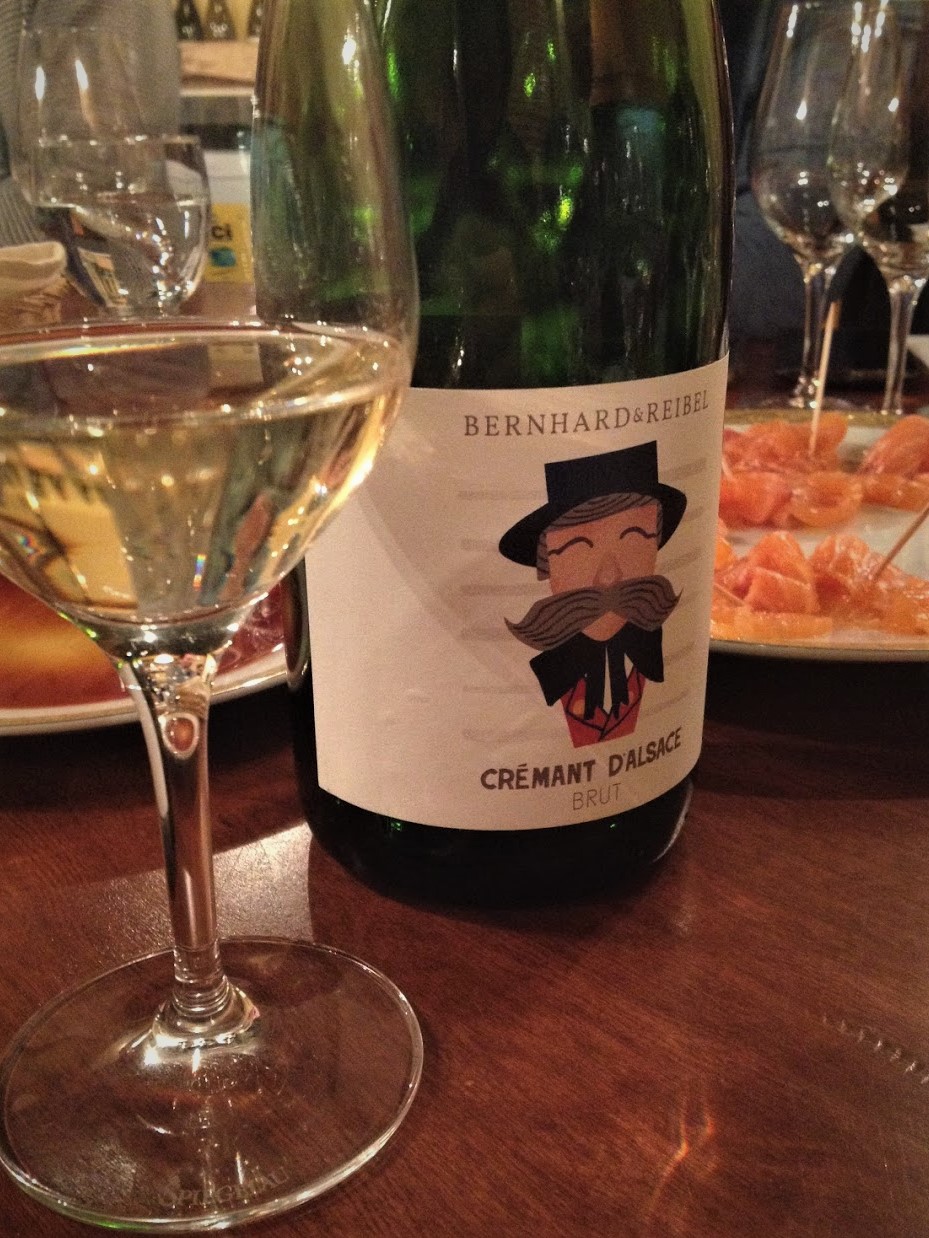
First bottle: Pale gold with fine bubbles. The nose is described variously as “more apple than pear,” “caramel apple,” apple seeds, “sweat or maybe volatile acidity,” chalk, “rancio” and “wet laundry.” In the mouth, the wine is fruity and dry, with good acidity and a fine effervescence. Yet there’s a fuzziness about it, a touch of oxidation and a lingering impression of something a little off. No one is enamoured and one or two perceptive tasters suggest our bottle is defective. Plates of Scottish-Asian gravlax having been set out (thanks, Mike!), we decide to open the backup.
Second bottle: Less gold in colour, the bubbles equally fine. The nose is fresher and fruitier, full of apple, citrus and mineral aromas and a whiff of brioche. On the palate, it’s crisper, cleaner, brighter, more textured and even drier. The racy acidity and mineral substrate last well into the creamy finish. We have a winner. (Buy again? Sure.)
MWG April 6th tasting: flight 1 of 7
Bullish
Based in Calce in the Roussillon, not far from Perpignan, Jean-Philippe Padié farms 15 hectares of vines divided among some 40 parcels. Before creating his eponymous estate in 2003, he worked as vineyard manager at Mas Amiel and Domaine Gauby. The farming is organic leaning biodynamic (though Padié doesn’t bother with certifications) and yields are kept very low. The wine-making is non-interventionist. Am pertty sure this is his first wine to be sold at the SAQ.
Vin de France 2015, Petit Taureau, Domaine Padié ($28.15, 13113215)
A 50-50 blend of Carignan and Syrah from organically farmed vines respectively rooted in limestone and schist. Manually harvested. Destemmed. Fermented with indigenous yeasts. Four-fifths of the wine is matured in concrete tanks, one-fifth in barrels. No additives other than a tiny shot of sulphur dioxide at bottling. Reducing sugar: 1.5 g/l. 12.5% ABV. Quebec agent: Labelle Bouteille.
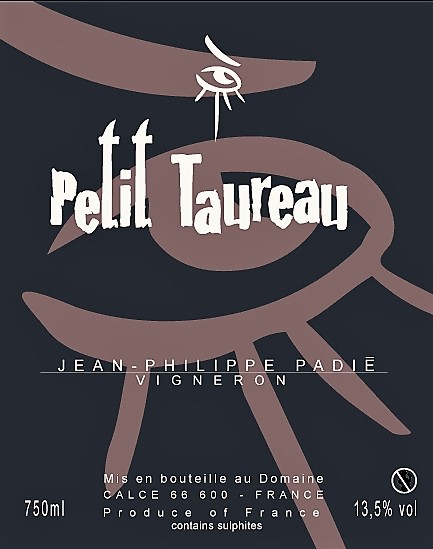
Entrancing nose of red and black fruit, hard candy, sweet spice and flowers against a backdrop of slate, turned earth and leather. Dense with flavour yet medium-bodied and oh, so fluid. Very dry yet full of ripe but not heavy fruit. The sleek acidity and soft tannins come out on the finish, adding a pleasing terminal bite. Black raspberry and peppery spice linger. Fresh + supple + fruity + savoury + low alcohol (12.5% in 2015) = dangerously drinkable. The only possible complaint is the price – relatively high for an easy drinker – but that’s a recurring theme these days (blame the exchange rate, among other things). (Buy again? Def.)
WINO tasting (6/6)
Located between Siena and Arezzo, the 60-hectare Fattoria di Caspri estate has nine hectares of grape vines and seven hectares of olive trees. The estate’s founding dates back nearly to the beginning of the Common Era, when Roman general Casperius Aelianus made it his home. The current main building is a relative youngster, having been built in the 18th century.
Farming has been organic and biodynamic since 2006, when the estate was acquired by its current owners. The soil tends to be light and sandy mixed with decomposed gneiss and a little clay. While the focus is on traditional grape varieties (mainly Sangiovese, Canaiolo Cillegiolo, Trebbiano and Malvasia), the estate also has experimental plots of Syrah, Grenache and Pinot Noir.
The wine-making is identical for all the reds. The manually harvested grapes are fermented in small, non-temperature-controlled conical vats with indigenous yeasts. Total maceration time is three to four weeks. After pressing, the wine is transferred into old barrels for 18 to 20 months’ maturation. The wines are bottled unfiltered and unfined. No sulphur is added.

IGT Toscana Rosso 2013, Rosso di Caspri, Fattoria di Caspri ($31.21, private import, 12 bottles/case)
100% Sangiovese from young vines. 12.3% ABV. 650 cases made. Quebec agent: WINO.
Attractive nose of bitter cherry, fresh herbs, slate, turned earth and a little ash. “Kind of meaty” is the first (and accurate) comment about the flavour of this medium-bodied and very dry wine. Red fruit, tingly acidity and fine astringent tannins made for a somewhat austere if appealingly rustic mouthful. Finishes clean. (Buy again? Sure.)
IGT Toscana Rosso 2013, Poggio Cuccule, Fattoria di Caspri ($41.15, private import, 6 bottles/case)
100% Sangiovese from 45-year-old vines. 125 cases made. 13.1% ABV. Quebec agent: WINO.
Gorgeous, floral nose of cherry, fresh almond and old wood. Medium-bodied. A sip is like biting into a morello cherry. Fresh, fleet, intense and pure. The energy is palpable and the wine seems lit from within by glowing acidity. The tannins are fruit-cloaked. Minerals, wood and earth undertones add depth, not darkness. Finishes long and clean. Stunning Sangiovese. (Buy again? Oh, yes.)
IGT Toscana Rosso 2014, Casperius, Fattoria di Caspri ($67.31, private import, 6 bottles/case)
A blend of Sangiovese and Syrah. 12.7% ABV. Quebec agent: WINO.
Closed nose that with coaxing reveals red fruit, dried herb, violet, leather and mint notes and a whiff of barnyard. In the mouth, it’s fuller-bodied, smoother, rounder and less acidic than its flightmates, though it does share some of the Rosso’s meatiness. Depth, breadth and length it has in spades though it would probably benefit from a year or two to come together. Perhaps a little overshadowed by the Poggio Cuccule, I suspect this would prove wholly satisfactory on its own at dinner. (Buy again? Maybe.)
IGT Toscana 2010, Luna Blu, Fattoria di Caspri ($28.50 in 2013, private import, 6 bottles/case, NLA)
An orange wine made from a 50-50 blend of Trebbiano and Malvasia. Macerated on the skins for four weeks before pressing. Matured in small wood barrels. No filtering, fining or added sulphur. Under 100 cases made. 13.3% ABV. Quebec agent: La QV at the time, now WINO. The newest vintage is slated to arrive later this spring.

Bronze with a rosé cast. Sultry nose of “elderflower,” sawdust and hints of apricot skin and dried tangerine peel. Rich and smooth in the mouth, bright acidity notwithstanding. Fruity yet dry, the flavours tending to citrus and spice with a mineral undercurrent. Faint tannins add a little grit to the otherwise sleek texture. Long. As mentioned in my October 2013 tasting note, the winemaker has stated that the wine would be at its apogee in 2017. In the event, while it may not be the deepest, most structured or even most involving orange wine, it is definitely a pleasure to drink. Paired beautifully with a selection of cheeses from Yannick, especially a raw-milk L’Étivaz. (Buy again? Moot. But I’m looking forward to the new vintage.)
MWG March 23rd tasting: flight 6 of 6
WINO tasting (4/6)
Based in Curtil-Vergy, between Nuits-Saint-Georges and Vosne-Romanée, Bertrand Machard de Gramont founded his eponymous estate in 1983. In 2004, he was joined by his daughter Axelle, who has since taken the reins and converted the estate to organic farming. A replanting of the long-abandoned Vallerots terraces in 2001 raised the total surface area to six hectares. Besides the five wines we tasted, the estate makes an Aligoté, a Vosne-Romanée and occasional other bottlings.
The wine-making is the same for all the red cuvées. The manually harvested grapes are destemmed and crushed. Two weeks’ fermentation with indigenous yeasts is followed by 18 to 20 months’ maturation in 228-litre used oak barrels. The wines are bottled unfiltered and unfined. Sulphur use is kept to a minimum.
Bourgogne 2014, Les Grands Chaillots, Bertrand Machard de Gramont (c. $40.00, private import, 6 bottles/case, NLA)
100% Pinot Noir from 27-year-old vines. 12.5% ABV. Quebec agent: WINO.
Attractive nose of crushed red berries, earth, slate and gentian. Light- to medium-bodied and silky textured. Ça pinote, though with a lactic edge. The tannins are lacy and the acidity comes with a bit of a bite. The long drying finish shows some spice. Pure and elegant if less dimensional than its flightmates. (Buy again? Sure.)
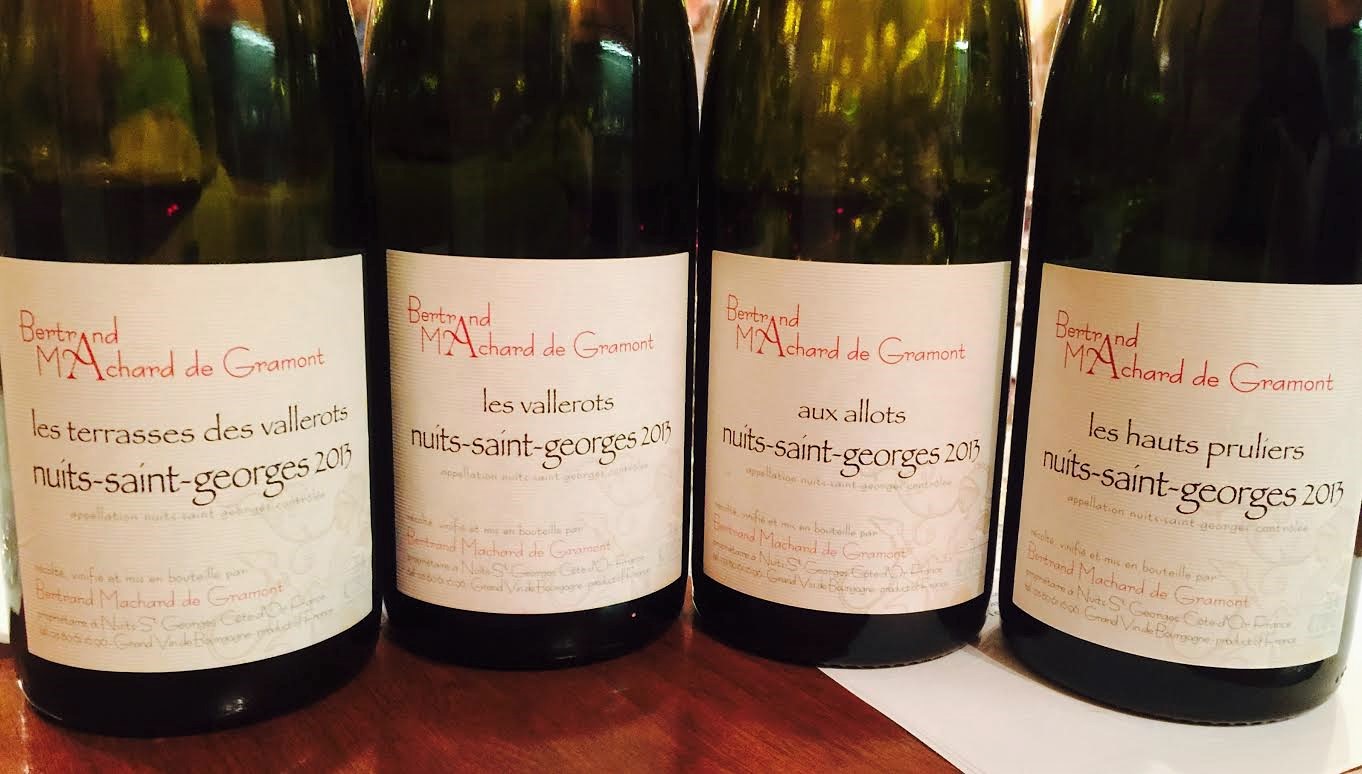
Nuits-Saint-Georges 2013, Les Terrasses des Vallerots, Bertrand Machard de Gramont 2013 ($70.58, private import, 6 bottles/case)
100% Pinot Noir from a two-hectare parcel of 12-year-old vines rooted in clay and limestone. 13% ABV. Quebec agent: WINO.
Complex, savoury nose of spice, candied berries, sweat, “orange papaya,” drying leaves and more. Pure and delicate, beautifully balanced between ripe fruit, sourish acidity and supple tannins. Finishes long and clean. Not remarkably deep but the clarity is impressive. Very approachable. (Buy again? Sure.)
Nuits-Saint-Georges 2013, Les Vallerots, Bertrand Machard de Gramont ($81.74, private import, 6 bottles/case)
100% Pinot Noir from 39-year-old vines in a half-hectare parcel located above the terrasses. 13% ABV. Quebec agent: WINO.
As above though somewhat closed and showing hints of dried mint and “orange oil.” Richer and deeper than the Terrasses. Given a tart edge by sleek acidity, the gorgeous fruit glows against a mineral/earth backdrop. Pliant tannins provide just enough structure. A spice note chimes on the persistent finish. Lovely. (Buy again? Yes.)
Nuits-Saint-Georges 2013, Aux Allots, Bertrand Machard de Gramont ($85.57, private import, 6 bottles/case)
100% Pinot Noir from 80-year-old vines rooted in deep clay and limestone at the bottom of the slope near Vosne-Romanée. 13% ABV. Quebec agent: WINO.
Slightly candied red berries, spice, slate, oak smoke and a floral note make for a classic Burgundian nose. In the piehole it’s verging on voluptuous: a medium-bodied, fluid mouthful of spicy fruit, airframe tannins and silky acidity. Darker and deeper currents lurk below the sleek surface. An elegant wine whose energy and presence last through the long, clean finish. Of the five BMdG wines, this was the favourite of nearly everyone around the table, including Martin. (Buy again? Would love to.)
Nuits-Saint-Georges 2013, Les Hauts Prûliers, Bertrand Machard de Gramont ($89.14, private import, 6 bottles/case)
100% Pinot Noir from 48-year-old vines planted in thin soil in a 1.5-hecatre plot on a steep slope above the Prûliers premier cru. 13% ABV. Quebec agent: WINO.
Complex, savoury, earthy nose dominated by leafmould, cherry, spice and a “peat thing, like Scotch peat.” Medium-bodied and fluid. Cherry, slate and old wood – the dominant flavours – are carried on a stream of acidity while firm tannins provide texture as well as a structural framework. Finishes as impressively as it starts. A beautifully structured wine of great precision and depth and the one most in line with a conventional NSG (or, as Martin put it, a wine with “une austerité que je retrouve chez Gouges.”). Though far from rebarbative at this stage, it will benefit from five to 10 years in the cellar. (Buy again? If I had the bucks and patience, yes.)
MWG March 23rd tasting: flight 4 of 6
WINO tasting (3/6)
Located in the commune of Montaigu in the southern Jura, the estate now known as Domaine Pignier was created by monks in the 13th century and acquired by the Pignier family in 1794. It was certified biodyanmic in the early 2000s. The focus is on the vineyards, with a minimalist approach in the cellar (no added anything except occasionally minute amounts of sulphur).
Crémant du Jura, Rosé, Domaine Pignier ($36.46, private import, 6 bottles/case)
100% Pinot Noir from biodynamically framed vines. Manually harvested. Briefly macerated and fermented using a pied de cuve starter. The base wine is matured six months in oak barrels, then sparkled using the traditional method, with no dosage. No added sulphur. The bottles are aged on lattes for 12 months. 12.5% ABV. Quebec agent: WINO.
Deep salmon pink with pink foam and fine bubbles. Intriguing nose: strawberry cheese danish, “cheese rind,” prosciutto, “baker’s yeast” and more. Dry and buoyant on the palate. Though there’s a soft-glowing core of red berries, the fruit is ethereal, haunting more than inhabiting a matix of minerals that prompted descriptors like “saline” and “seaweed.” Long savoury finish. Lovely. (Buy again? Yes.)


Côtes du Jura 2014, Trousseau, Les Gauthières, Domaine Pignier ($57.33, private import, 6 bottles/case)
100% Trousseau from biodynamically farmed, massal propagated vines. Yields are kept very low (25 hl/ha). The manually harvested grapes are destemmed, macerated and fermented using a pied de cuve starter and manual punch-downs and pump-overs during an entire lunar cycle. Matured 12 months in oak barrels of various sizes. Unfiltered. Bottled by gravity and with no added sulphur on a fruit day (per the lunar calendar). 11.5% ABV. Quebec agent: WINO.
Morello cherry, hard red candy, dried leaves, limestone, eventually tomato and “umami.” More like cranberry in the mouth with charcoal overtones. Medium-bodied and satin-textured. Chewing brings out the fruit and reveals dimension and complexity. The fine tannins add a mild astringency to the long, vapourous finish with its faint almond note and Szechuan pepper-like numbingness. Accessible but young and best cellared for five or 10 years. Way pricey but one of the most beautiful Trousseaus I’ve tasted. (Buy again? Yes.)
MWG March 23rd tasting: flight 3 of 6
WINO tasting (2/6)
Muscadet-Côtes de Grandlieu 2013, Les Hautes Noëlles, Domaine Les Hautes Noëlles ($36.46, private import, 6 bottles/case)
Founded in 1930, the estate, which has some 25 hectares of vines, is located in St-Léger-les-Vignes. 100% Melon de Bourgogne from organically farmed vines more than 80 years old and rooted in sand and clay on mica schist. Production is limited to 2,000 bottles a year. The grapes are picked by hand and macerated briefly before pneumatic pressing. The must is clarified by settling. Fermentation (with indigenous yeasts at c. 18°C) and maturation (c. 12 months on the lees with regular stirring) take place in oak barrels, a quarter of which are new. Sulphur use is kept to a minimum. 12% ABV. Quebec agent: WINO.
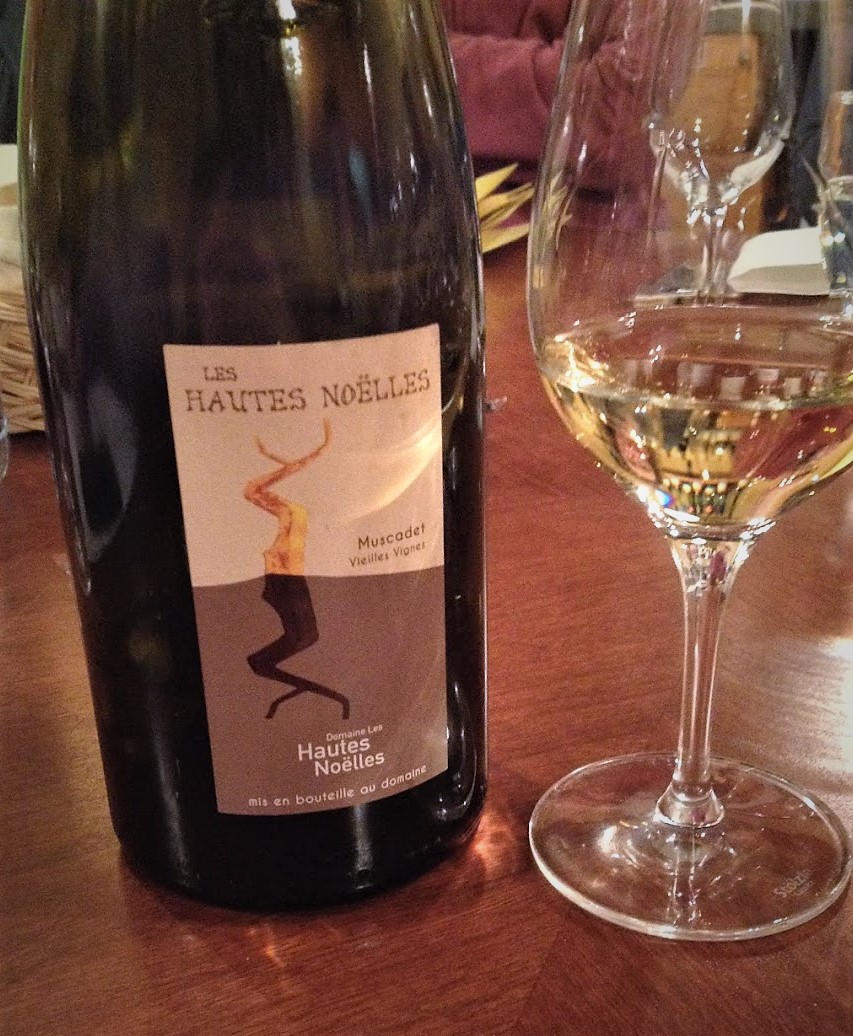
Multi-faceted nose with scents of apple, “strudel dough” (per another taster), faint marzipan, quartz, dried banana, lemon and more. Rich, fluid, complex, layered and dry. The initial fruit makes room for minerals (“chalk grotto” my note arcanely reads), while sleek acidity lends a soft glow. Honey, “ginger” and faint bitter notes colour the impressively sustained finish. A delicious, absorbing wine quite unlike any other Muscadet I’ve tasted. Would make an interesting ringer in a flight of Chenins or Chardonnays with some age on them. (Buy again? Yes.)
Tasted at Moleskine the following evening, the estate’s 2014 “Les Parcelles” bottling ($20.50, WINO, 12 bottles/case) was crisp, clean and appetizing though far more conventional.
MWG March 23rd tasting: flight 2 of 6
WINO tasting (1/6)
The Mo’ Wine Group’s latest agency tasting was led by the affable Martin Landry from WINO. Around three years old, the agency specializes in wines that are, at a minimum, organic or biodyamic and often “natural.” You’ll find them on the lists at many of the city’s hipper restaurants and wine bars, including Diplomat, Pullman, Rouge Gorge and Moleskine (to name a few recent sightings).
We got things rolling with a classy sparkler from Limoux.
Blanquette de Limoux 2015, Monsieur S./Étienne Fort ($25.33, private import, 12 bottles/case)
Fort is a barely 30-something vigneron who works the family’s two hectares of vines at the Château Saint Salvadou in Bourliège in the Aude department. In 2011, he decided to stop selling his fruit to the local co-op and to start making his own wines. The grapes for this 100% Mauzac come from organically and biodynamically farmed, 30-year-old vines rooted in deep clayey limestone. Manually harvested. Made without additives of any kind. Fermented in stainless steel. Sparkled using the traditional method. Matured 12 months on the lees. Undosed, unfined, unfiltered. Spent 12 months in the bottle on lattes. 12% ABV. Quebec agent: WINO.
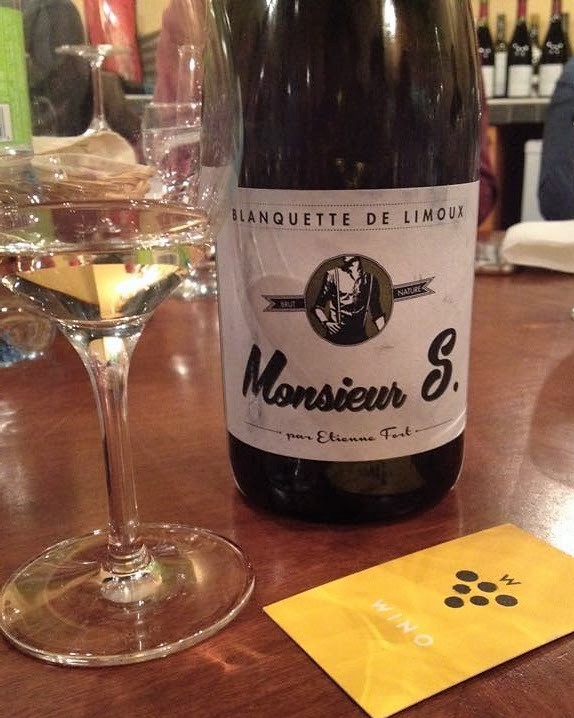
Yeasty, leesy nose with quartz and lemon notes. Tiny, tingling verging on prickly bubbles. Bone dry, crisp and clean. Trenchant and minerally upfront with lemon and gooseberry emerging on the mid-palate. A pithy thread runs throughout. The long, savoury, fairly complex finish has a touch of salinity. This bracing and refreshing sparkler would make a fine aperitif or, as Martin suggested, a dashing companion to oysters on the half shell. (Buy again? Yes.)
MWG March 23rd tasting: flight 1 of 6
Greek winery tour: Tselepos (Arcadia)
[Hover over pics to display captions and credits; click to embiggen.]
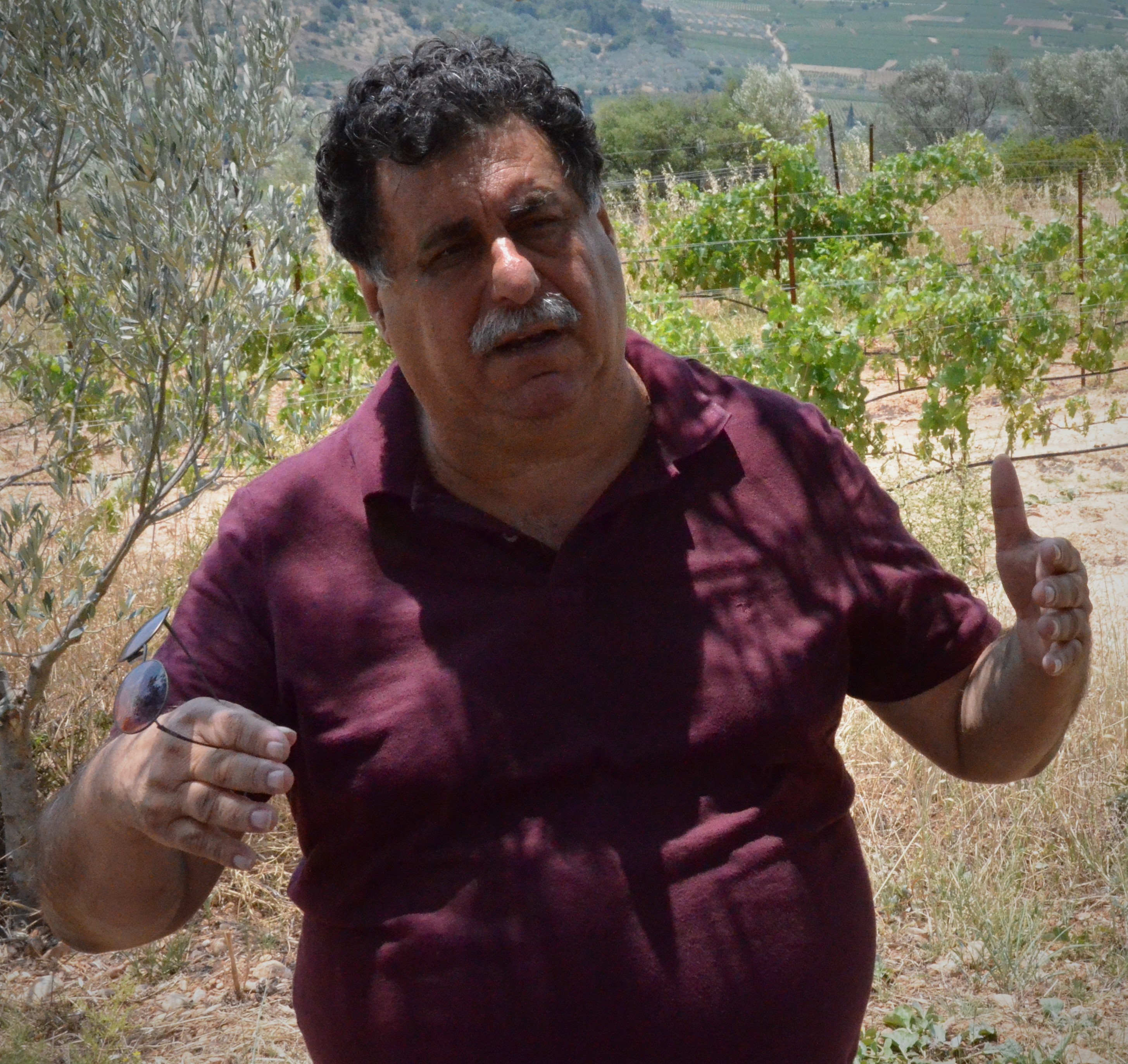 One of the leaders of the Greek wine renaissance and the modern day king of the ancient Moscofilero variety, Yiannis Tselepos is a phenomenon. A Cypriot by birth, he studied oenology at the Université de Bourgogne in Dijon and, after graduating, spent a couple of years working at several Burgundy estates. He then moved to Arcadia in the eastern Peloponnese, where he found employment as a consulting oenologist, married a local girl, Amelia, and with her founded the eponymous winery. The Tseleposes currently own two estates and have an interest in a third.
Located in Rizes, central Arcadia, Ktima Tselepos is the larger and older of the two estates, dating back to 1999. It sits on a plateau on the eastern flank of Mount Parnon. While the main buildings are surrounded by 30 hectares of vineyards, the estate’s holdings actually total some 240 hectares.  The soil here tends to shale and rocky clay and the average elevation is 750 metres, helping ensure the all-important wide difference in day and night temperatures. The handsome winery is built in the traditional local architectural style; less flashy and touristy than some, it feels like a facility whose main vocation is wine production. Although around two-thirds of its output is devoted to Moscofiliero, the estate makes a wide range of wines, from sparklers to still dry reds and whites to sweet wines, from international as well as local grape varieties. With a total annual production of 350,000 bottles, half of which is exported, this is no small operation.
 In 2003, Tselepos acquired a second property, Ktima Driopi, an 8.5-hecatre plot of 50-year-old vines rooted in steep clay soil in Kousti, near Nemea, about an hour’s drive to the north-northwest. The estate specializes in Agiorgitiko, another ancient indigenous variety. A small winery has since been built to handle the estate’s output. The estate’s striking labels, as classy as its wines, feature a dormant tree in silhouette.
Tselepos’s latest project is a joint venture with the Chryssou family on Santorini. The Chryssous provide the grapes (from 12 hectares of ungrafted 50- to 100-year-old vines in Pyrgos and Emporio) while Yannis provides the wine-making expertise. Dubbed Canava Chryssou Tselepos Santorini, the estate currently produces around 12,000 bottles a year of a single wine, a 100% Assyrtiko.
At all three estates, the viticultural practices are enlightened without being full-bore organic. In Arcadia, the vines are trained on wires, a virtual necessity in the region’s humid climate. On arid, wind-blasted, sun-stroked Santorini, the vines are coaxed into nest-like spirals that lie close to the ground, the better to protect the fruit and preserve precious water. Irrespective of the estate, the grapes are manually harvested in the cool of the early morning and transported to the winery in small crates.  Though the facilities are outfitted with state-of-the-art equipment, Yiannis views technology as limited to a supporting role. “Good technology makes for good wine, but only the right vineyard will yield a great wine,” he says.
One aspect of this balancing act between technology and terroir was the focus of an interesting exchange during our technical tasting. A member of our party, a professional sommelier with an impressively acute palate, wondered why Tselepos used selected instead of indigenous yeasts since, he felt, the former scalp and compress wines. Yiannis countered with “I have 17 families besides my own who depend on the winery’s success. I’m not going to put their livelihoods at risk.”
I can see both sides of the argument. Obviously, indigenous yeasts – the yeasts native to a place – are a factor in terroir. And many other winemakers have shown that fine wines can reliably be made using them. So it seems a little paradoxical that the winery, which proudly describes its central wine-making philosophy as “to grow Greek varieties within their specific native ecosystem” and which, as the following notes show, does indeed make terroir-expressive wines, doesn’t go all the way down the terroir path.
Then again, Yiannis is clearly more than just a winemaker. He’s also a successful businessman, a player in the local community and a standard bearer for the wines of his region and country. His Moschofileros and Agiorgitikos are widely viewed as models for what the grapes can achieve. His Mantinias have almost single-handedly put that appellation on the map. One of the reasons this has happened is the wines’ consistency. Why, then, tinker with a winning formula? Why introduce another variable into the process? Why do anything that could undermine the livings of so many and the reputations of a business and a region?
More than just a winemaker? Yes. But still a winemaker at heart, as the following story shows. At one point, Yiannis told us how he came to chose oenopole to represent his wines in Quebec. One day this Greek-Canadian showed up, introduced himself as Theo Diamantis and explained that he was setting up an agency dedicated to selling “real,” terroir-driven wines with a high drinkability quotient, wines made not by industrial producers but by vignerons. Which was why he wanted Tselepos in the portfolio. “It was the first time anybody called me a vigneron,” Yiannis beamed, “and it was all I needed to know. I was ready right then to sign on the dotted line.”
You’ll find my notes on all the day two wines after the jump. For details about where we stayed and ate and what we ate and saw, including some of Tselepos’s vineyards, see the Day Two report on carswelliana.
INTRODUCTION
PAPAGIANNAKOS (ATTICA)
♦ TSELEPOS (ARCADIA)
MERCOURI (ELIS)
TETRAMYTHOS (ACHAEA)
THYMIOPOULOS (MACEDONIA)
ARGYROS (SANTORINI)

 Brett happens