Archive for January 2018
Dufaitre trio
Based in Saint-Étienne-des-Oullières, Laurence and Rémi Dufaitre began working their first hectare of vines in 2001, initially selling the fruit to the local co-op. They started making wine and bottling it under their own label in 2010. Today their holdings, which include the former Domaine de Botheland, total around 12 hectares, one of which is planted to Chardonnay. Inspired by Jules Chauvet and his disciples, especially Jean Foillard, the Dufaitres use organically farmed grapes that undergo carbonic maceration and are given long, naturally low-temperature fermentations with indigenous yeasts. Chaptalization, filtering and fining are strictly avoided. When used, sulphur dioxide is kept to a minimum.

Beaujolais Villages 2016, Prémices, Laurence et Rémi Dufaitre ($28.40, private import, 12 bottles/case)
100% Gamay from 35-year-old vines grown in the granite, sand and gravel soil of a plot named Prémices. Carbonic maceration lasted 16 days. Fermented and matured in concrete tanks. No added sulphur. Bottled in February 2017. 13% ABV. Quebec agent: oenopole.
Cherry, red berries and vine sap with background slate and ink. Fresh and light on the palate, with lovely ripe fruit, bright acidity and light, caressing tannins. Ripe-sweet upfront, drying on the long, savoury, spicy finish with its lingering hint of stem. Straightforward but far from simple, a wine of great purity and finesse. A second encounter, a bottle drunk on its own at dinner, impressed me even more; tasting double-blind and fooled by its raspberry-leaning fruit and peppery spice, I guessed it was carbonic-macerated Grenache. (Buy again? Definitely.)
Brouilly 2016, Laurence et Rémi Dufaitre ($34.75, private import, 12 bottles/case)
100% Gamay from 60- to 65-year-old vines rooted in granite and volcanic soil. Carbonic maceration lasted 18 days. Fermented in concrete tanks. Matured in old 200-litre oak barrels. Bottled in March 2017. 12.5% ABV. Quebec agent: oenopole.
Earthy nose, the fruit overtoned with old wood, spice and a hint of barnyard. In the mouth, the wine is a bit more intense – a bit less vin plaisir – than the Prémices though still on the lighter side of medium-bodied. Veils of fruit, great minerality, buoyant acidity and light tannins hold the attention. As Theo notes, there’s a lovely “clarity [that] comes in the middle of the mouth.” The longest of the three. (Buy again? Yes, though not necessarily in preference to the Côte de Brouilly.)
Côte de Brouilly 2016, Laurence et Rémi Dufaitre ($36.50, private import, 12 bottles/case)
100% Gamay from 50- to 70-year-old vines rooted in granite and volcanic soil. Carbonic maceration lasted 18 days. Fermented in concrete tanks. Matured in used Burgundy barrels. Bottled in March 2017, a month earlier than usual. 12.5% ABV. Quebec agent: oenopole.
A nose similar to the Brouilly’s but deeper, more complex and savoury, with mushroom creeping in and the spice taking on Asian overtones. A medium-bodied mouthful of rich yet crunchy fruit and slate. Finely structured by sleek acidity and supple yet resilient tannins. So pure and elegant, this complete and balanced wine is delicious now but has the wherewithal to age for several years. (Buy again? Yes.)
MWG November 10th tasting: flight 3 of 5
Southern Overnoys
A surprising number of Jura winemakers share family names. The list includes the Benoits (Denis and Paul et fils), the Boilleys (Joël and Luc), the Bulabois (Claude, Georges, Philippe and Régis), the Clavelins (Charles and Hubert et fils), the Puffeneys (Frédéric and Jacques), the Rolets (the eponymous estate and Gérard) and the Tissots (Jean-Louis, Jacques and André et Mireille).
The Overnoys also belong on this list. The wines made by Pupilin-based Pierre Overnoy (and now his former assistant, Emmanuel Houillon) have long been favourites bordering of fetish objects of natural wine geeks. Also based in Pupillin, Domaine Overnoy-Crinquand has a somewhat lower profile but is something of a rising star. Until this fall, however, I didn’t know there was a third Overnoy estate: Domaine Overnoy, which is located further south, in the commune of Orbagna, and is currently run by 20-something Guillaume Overnoy, Pierre’s great nephew.
Actually, Domaine Overnoy is a neighbour of Domaine Labet (both estates are in the Sud-Revermont region) and Julien Labet has been active in introducing the estate to agents he deals with, including oenopole, which is how the wines have made their way to Quebec.
Guillaume took over the 5.5-hectare family estate from his father, Jean-Louis, in 2013. The following year, he began converting it to organic farming, obtaining certification in 2016. While Trousseau is the flagship, wines are made from all five official Jura varieties (the estate has 3 ha of Chardonnay, 1 ha of Savagnin and around 1 ha of red varieties, of which Trousseau comprises 55 ares, the rest being Poulsard and Pinot Noir). The soil tends to grey marl. Harvesting is manual. Wine-making is non-interventionist. Alcoholic and malolactic fermentations are spontaneous. In the cellar, sulphur use is minimal.
All three wines we tasted were from the 2015 vintage. The last few vintages have been difficult in the Jura and 2015 was no exception, the main problems being excessive heat and drought.
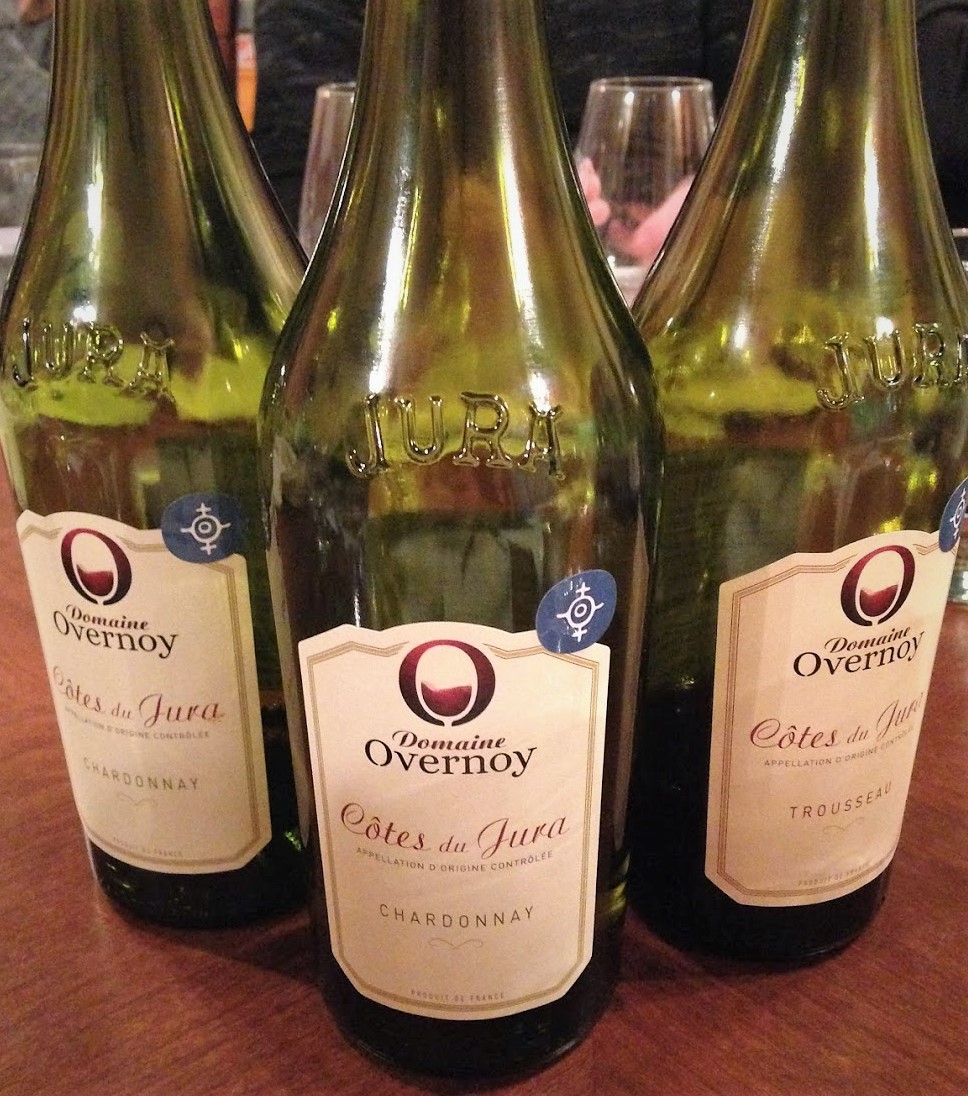
Côtes du Jura 2015, Chardonnay, Perce Neige, Domaine Overnoy ($32.75, private import, 6 bottles/case)
100% Chardonnay from vines in an historic parcel. May be fermented in tanks and may be prevented from undergoing malolactic fermentation. In any case, the winemaker’s aim is for a fresh wine to be drunk young and not necessarily with food. 13% ABV. Quebec agent: oenopole.
Engaging nose of yellow apple and straw with hints of pineapple and white flowers. Medium-bodied. Sweet-seeming on entry but actually quite dry. Ripe but hot heavy, in no small part due to the crisp acidity. The rich mid-palate is underlain with chalky minerals that last well into the long, drying finish. A clean, precise, refreshing wine with “lots of energy.” (Buy again? Yes.)
Côtes du Jura 2015, Chardonnay, Charmille, Domaine Overnoy ($37.25, private import, 6 bottles/case)
100% Chardonnay from the Charmille lieu-dit. Slow alcoholic fermentation (more than 10 months). Underwent malolactic fermentation. Matured in fifth- to sixth-fill fûts. 14.5% ABV. Quebec agent: oenopole.
More minerally, complex and serious than the Perce Neige, with notes of “curry,” “cumin seeds,” browning apple and crushed fresh herbs, especially chamomile. Rich and serious in the mouth (“like a Labet,” notes one taster). Clean and structured, fleet yet complex. There’s a load of minerals and great energy. Keeps its cool despite the alcohol. Savoury and dry, especially on the long finish. My favourite of the three. (Buy again? Def.)
Côtes du Jura 2015, Trousseau, Domaine Overnoy ($38.25, private import, 6 bottles/case)
100% Trousseau. Probably destemmed. Matured in neutral barrels. 13.5% ABV. Quebec agent: oenopole.
Red berries, boudoir, old wood, spice and eventually floral and earth notes. In the mouth, it’s “fruit-forward” and full of “ripe strawberry.” The acidity is pronounced but smooth. Round tannins and dark minerals stay in the background until the finish. While a bit atypical (richer, more fruit-driven and less structured than your average Trousseau, probably due to the vintage), it definitely works as a “vin plaisir.” Not sure it’s a long keeper, though. (Buy again? Yep.)
MWG November 10th tasting: flight 2 of 5
Thirst-quencher
The November agency tasting was led by our good friend, oenopole’s Theo Diamantis. We wet our whistles with a new addition to the agency’s portfolio, its first commissioned product, a made-to-spec beer that had been available only through the private import channel since its launch last spring but can now be purchased at the brewery’s boutique and is about to make the jump to the SAQ.
Bière de soif, Grisette de Dunham, Brasserie Dunham ($10.15, 13593360)
A Belgian-inspired blond ale, specifically a “grisette saison brewed with Barbe Rouge and Cashmere hops and fermented with our saison blend.” Refermented in the bottle. Crown cap. 5.2% ABV. Quebec agent: oenopole.

Hazy yellow-gold with fine bubbles and a compact, long-lasting, lacy white head. The nose is marked by fruity esters with clear citrus, spice, floral and yeast notes. In the mouth, it’s on the lighter side of medium-bodied, dry, smooth and fruity (citrus, stone fruit, faint banana). Mild malt, light hops, crisp but not aggressive acidity and ticklish carbonation mean it’s super refreshing. A fine bitterness colours the clean finish. Very easy drinking, as befits a bière de soif. (Buy again? Def.)
MWG November 10th tasting: flight 1 of 5
Drama queen
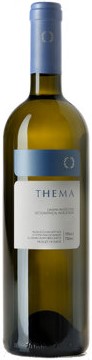 Drama 2016, Thema, Ktima Pavlidis ($21.10, 10701265)
A 50-50 blend of Sauvignon Blanc and Assyrtiko. The grapes are harvested in the cool of the night. Destemmed, lightly crushed and cold-macerated on the skins before slow, gentle pressing. Fermentation takes place in temperature-controlled (18°C) stainless steel tanks. Matured two months on the lees. Reducing sugar: 1.8 g/l. 13% ABV. Quebec agent: Focus Cellars.
The nose and palate seem an accurate reflection of the blend, which is pretty seamless by the way; the Sauvignon contributes vibrant fruit (kiwi, grapefruit, maybe a little peach) and a hint of grassiness, the Assyrtiko minerality, acidity and some welcome austerity. The end result? What might be a juicy New World Sauvignon is brought closer to what you sometimes find in the Loire in a very ripe vintage. Richly textured yet fresh. Fruity yet dry. The clean, fairly long finish brings an intriguing touch of bitterness. While the wine tastes more international than Greek, in its genre it’s pretty hard to beat. You don’t get the dazzle or depth of, say, a top Sancerre, Menetou-Salon, Graves or Pessac-Léognan but neither do you get the Fresca-like excess of many equivalently priced New World Sauvignon Blancs (looking at you, New Zealand). Food pairings? Mezze, simply prepared seafood, white meat with lime. (Buy again? Sure.)
Lumpps in our throats
Givry Premier Cru 2015, A Vigne Rouge, Domaine François Lumpp ($58.75, 13366829)
100% Pinot Noir from a 2.45-hectare vineyard planted in the early 2000s. The soil is mainly limestone and clay. The farming is generally organic though synthetic products are sometimes used if warranted by the weather conditions. Manually harvested. Destemmed. Given five to 10 days’ cold maceration prior to fermentation, which takes place in stainless steel tanks with light punch-downs and lasts around three weeks. Matured in French oak barrels, around 70% of which are new. Racked and filtered before bottling. All wine-making operations are done according to the lunar calendar. 12% ABV. Quebec agent: Réserve & Sélection.
Fairly closed nosed of cherry, slate, spicy oak and dried leaves; it’s very true to type though it doesn’t yet pinote (sing like only Pinot can do). Medium-bodied and satin-textured. The pure fruit seems more cranberry- than cherry-like, partly a function of the tart acidity. The fine tannins show not a trace of greenness. An earthy depth provides ballast that lasts well into the bitter cherry-inflected finish. The combination of richness, structure, energy and precision seems more like a Côte de Beaune’s. It’s a bit austere for now but probably won’t be in a couple of years. (Buy again? Yes.)

Givry Premier Cru 2015, Crausot, Domaine François Lumpp ($59.50, 13061857)
100% Pinot Noir from a 0.92-hectare vineyard planted in the early 1990s. The soil tends to limestone interspersed with fine marl. The wine-making is more or less as for the A Vigne Rouge. 13% ABV. Quebec agent: Réserve & Sélection.
Even more closed and stemmy: oak, coconut and Christmas spice have the upper hand for now. In the mouth, it’s bigger, denser and even more primary. The beautifully pure fruit (mainly cherry) is overtoned with tea and brightened by acidity. The tannins are impressive but tight and unyielding from start through the long finish. “Dries your mouth right up,” notes one taster. Needs five or 10 years to knit together and open up. The $60 question: will the fruit still be vibrant when the tannins finally resolve? Probably but only time will tell. (Buy again? If in a gambling mood.)
MWG October 26th tasting: flight 6 of 6

 Brett happens