Posts Tagged ‘Affordable’
A pair of Pineau d’Aunis blends from the Loir valley
That’s not a typo. The Loir is an indirect tributary of the Loire, running east-northeast of it for much of its length. The best known Loir valley appellation is probably Jasnières.
Coteaux du Vendômois 2014, Vieilles Vignes, Domaine Patrice Colin ($21.55, 11498220)
Pineau d’Aunis (70%), Pinot Noir (20%) and Cabernet Franc (10%) from organically farmed 50- to 90-year-old vines. The manually harvested grapes are destemmed. Maceration and alcoholic fermentation with indigenous yeasts take place in stainless steel tanks and last around 45 days. The estate never chaptalizes. Matured in large barrels for one year. Reducing sugar: 2.3 g/l. 13% ABV. Quebec agent: Le Maître de Chai.
Complex nose of choke cherry, black currant, spice, beet, old wood, “burnt marshmallow” and eventually compost. Medium-bodied, straightforward and juicy in the mouth. Possessed of a slightly velours-like texture, sleek acidity, tea-ish tannins and a light, singing, savoury finish. A mineral vein can be found under the ripe fruit. A bit monochromatic for now, this will probably be even better in a year or three. Popular with many around the table, especially when they learned the price. (Buy again? Sure.)

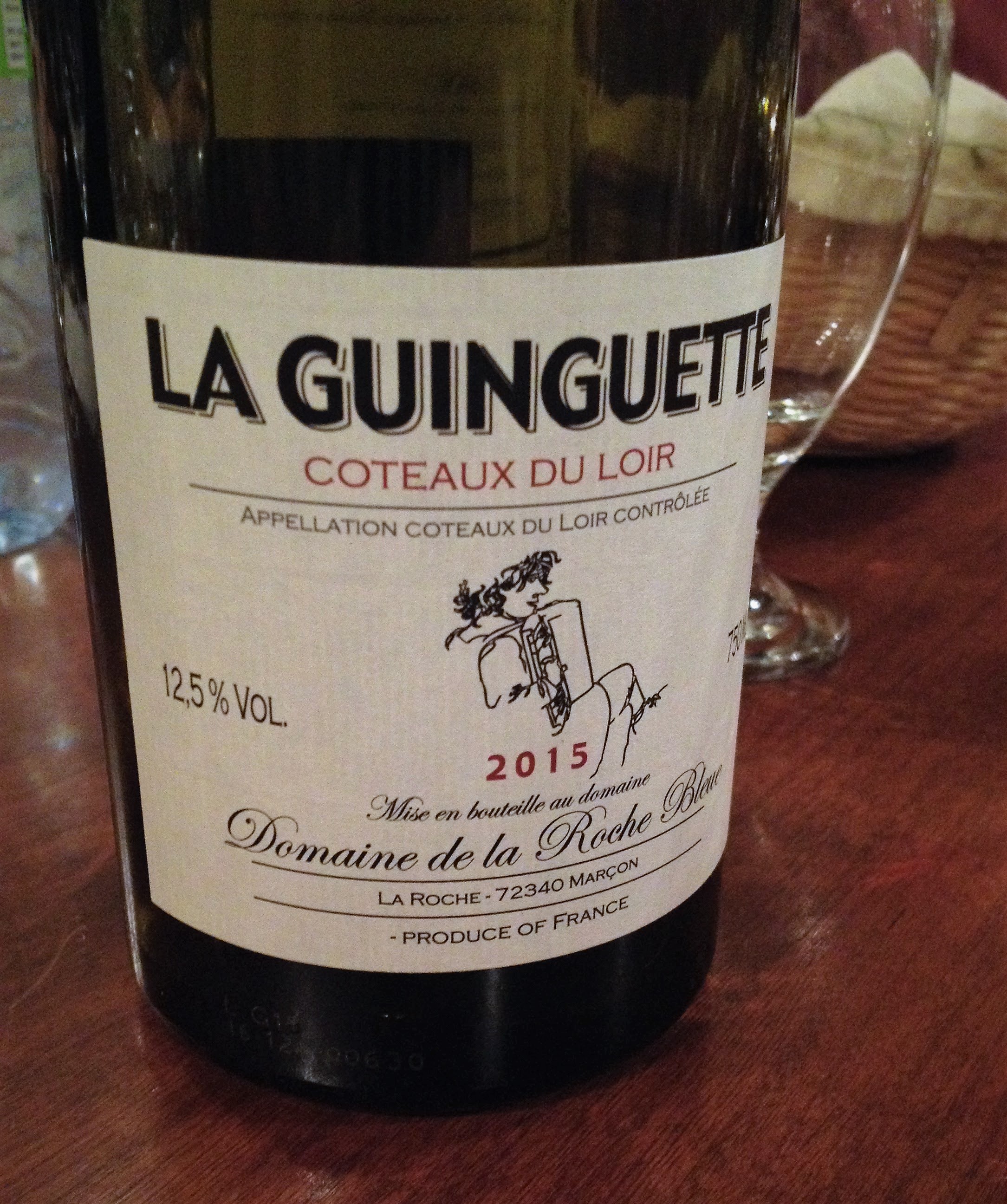
Coteaux du Loir 2015, La Guinguette, Domaine de la Roche Bleue ($26.50, 12856261)
A blend of Pineau d’Aunis (80%) and Gamay (20%) from organically farmed vines more than 30 years old. Manually harvested. The whole grapes undergo semi-carbonic maceration in tanks for 20 days and are fermented with indigenous yeasts in third- to sixth-fill oak barrels. The Pineau is matured in neutral barrels, the Gamy in tanks, both for about three months. Undergoes malolactic fermentation. Bottled unfiltered and unfined. Total added sulphur dioxide: 50 mg/l. 12.5% ABV. Quebec agent: Boires.
Delicious, fragrant nose of slightly candied red berries, slate, spice, herbs and flowers (violet?). On the light side of medium-bodied. Supple and lithe, with lacy tannins and bright acidity. The tangy fruit comes with some crushed stems and leaves. Slatey earth and a touch of peppery spice colour the long, caressing finish. Lighter than both the Colin and the 2014 Guinguette but so easy to drink. For those of us who enjoy tart, fleet, savoury wines, a must. (Buy again? Imperatively.)
MWG February 17, 2017, tasting: flight 4 of 6
Revelatory
MWG member Nick spent the holidays down under. While he didn’t make it to Clare Valley as originally planned, he did bring back a fascinating trio of new vintage, dry Clare Valley Rieslings, which he kindly shared with the group.
Clare Valley 2016, Riesling, Watervale, Gully View Vineyard, Koerner ($27.00, importation valise)
100% Riesling from 17-year-old vines rooted in the red clay and limestone soil of the Gullyview vineyard. Manually harvested in two passes a week apart. The first pass grapes were pressed immediately; the second pass grapes were given 24 hours of skin contact before pressing. In both cases, a small amount of sulphur was added to the press tray. The juice was cold-settled for about a week. Fermentation with indigenous yeasts in ceramic eggs and stainless steel tanks lasted about three weeks. Matured five months on the fine lees. Bottled unfiltered and unfined but with a small squirt of sulphur dioxide. Vegan compatible. Screwcapped. 12% ABV.
Classic, open nose of white flowers, apple, lime, quartz, flint. A sleek textured mouthful of grapefruit and “apricot” that seems almost sweet upfront but proves quite dry. Chewing brings out the crisp acidity and plenty of minerals. Lime, green apple and spice notes and a lingering bitterness mark the finish. A delicious gush on opening, this had lost some of its oomph by the time we got around to it a hour or so later. (Buy again? At least another bottle for research purposes.)
Clare Valley 2016, Riesling, Watervale, Gullyview Vineyard, Adelina ($23.00, importation valise)
No, it’s not a typo; Koerner and Adelina do indeed spell the vineyard name differently. 100% Riesling from vines planted in 1977 and 2001 in red loamy clay over limestone. The grapes were manually harvested and whole cluster-pressed. The juice was cold-settled then fermented in stainless steel tanks with selected yeasts. Fermentation was halted with around 5 g/l of sugar remaining. The wine was then clarified and bottled. Screwcapped. 11.5% ABV. Only about 2,400 bottles made.
Hazy and one of the least coloured wines I’ve seen. Complex nose of white gas, lemon-lime zest, “white lily,” minerals, rainwater and “ground cherry.” Light and fresh in the mouth, fruity yet dry, ethereal yet dimensional. Flavours tend to citrus, green apple and a chalky tutti-fruitiness one taster likens to “love hearts.” Turns savoury on the long, minerally finish. Full of energy and lots of fun. Excellent QPR. (Buy again? Yes.)
Clare Valley 2016, Riesling, Polish Hill, Grosset ($55.00, importaton valise)
The 36th vintage of this wine. 100% Riesling from organically farmed vines in the 8 ha Polish Hill vineyard. The soil is shallow shale and a thin crust of clay marl over slate. Yields are extremely low, giving the equivalent of two bottles per vine. The grapes were hand-picked. A small portion of whole clusters were set aside; the rest of the grapes were crushed and destemmed. The fruit was gently pressed and the free-run juice was chilled to near freezing and allowed to settle and clarify in a tank for five days. Low-temperature fermentation and maturation took place in stainless steel tanks. Blended just before bottling in July 2016. Vegan compatible. Screwcapped. 12.7% ABV. A few bottles of the excellent and more approachable 2012 ($50.00, 10956022) remain at the SAQ. Quebec agent (per the Grosset website): Elixirs.
Closed yet profound nose: lime, chalky quartz, eventually linden flower. Rich, racy, structured, deep and long. The fruit, minerals and acidity are in perfect taut balance. A bone-dry Riesling with every positive quality, including heft and presence. Needs time. Deserves a place alongside such giants as Ostertag’s Muenchberg and Nikolaihof’s Steiner Hund. (Buy again? Yes.)
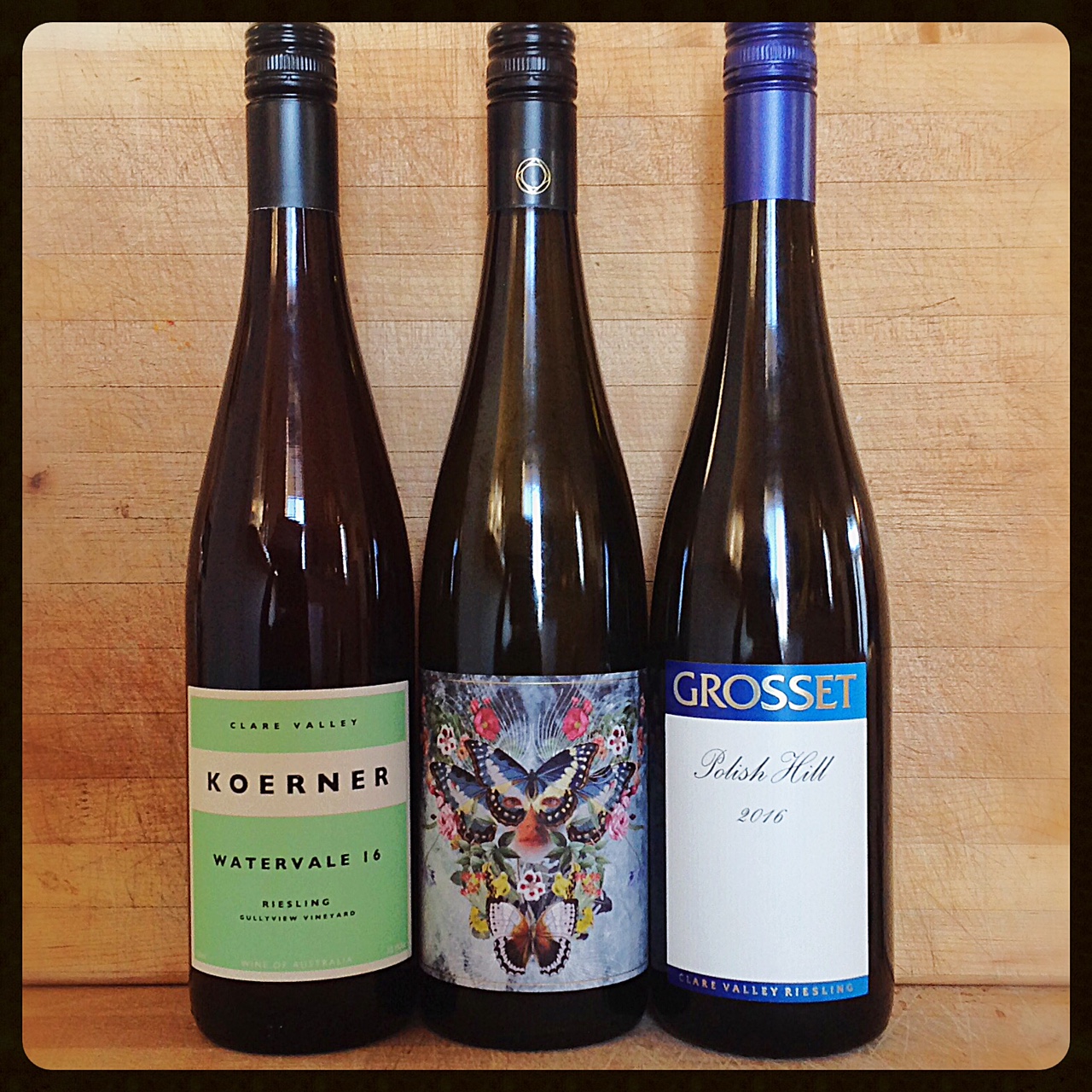
As usual, the wines were served double-blind. While the grape variety was soon deduced, no one guessed the provenance and several tasters were astounded to learn that Australia is producing such engaging, fleet and minerally whites. In short, to quote one taster, “a revelatory flight.”
MWG February 17, 2017, tasting: flight 3 of 6
Spark plug
Twenty-Mile Bench VQA 2014, Limestone Ridge Riesling, Spark, Tawse Winery ($24.00, 13216880)
100% Riesling from organically and biodynamically farmed vines in the Limestone Ridge vineyard parts of which were planted as far back as 1999. Manually harvested. Whole-cluster pressed. Fermented in stainless steel tanks. Sparkled using the traditional method. Residual sugar: 12 g/l. 12% ABV. Quebec agent: Delaney Vins & Spiritueux.
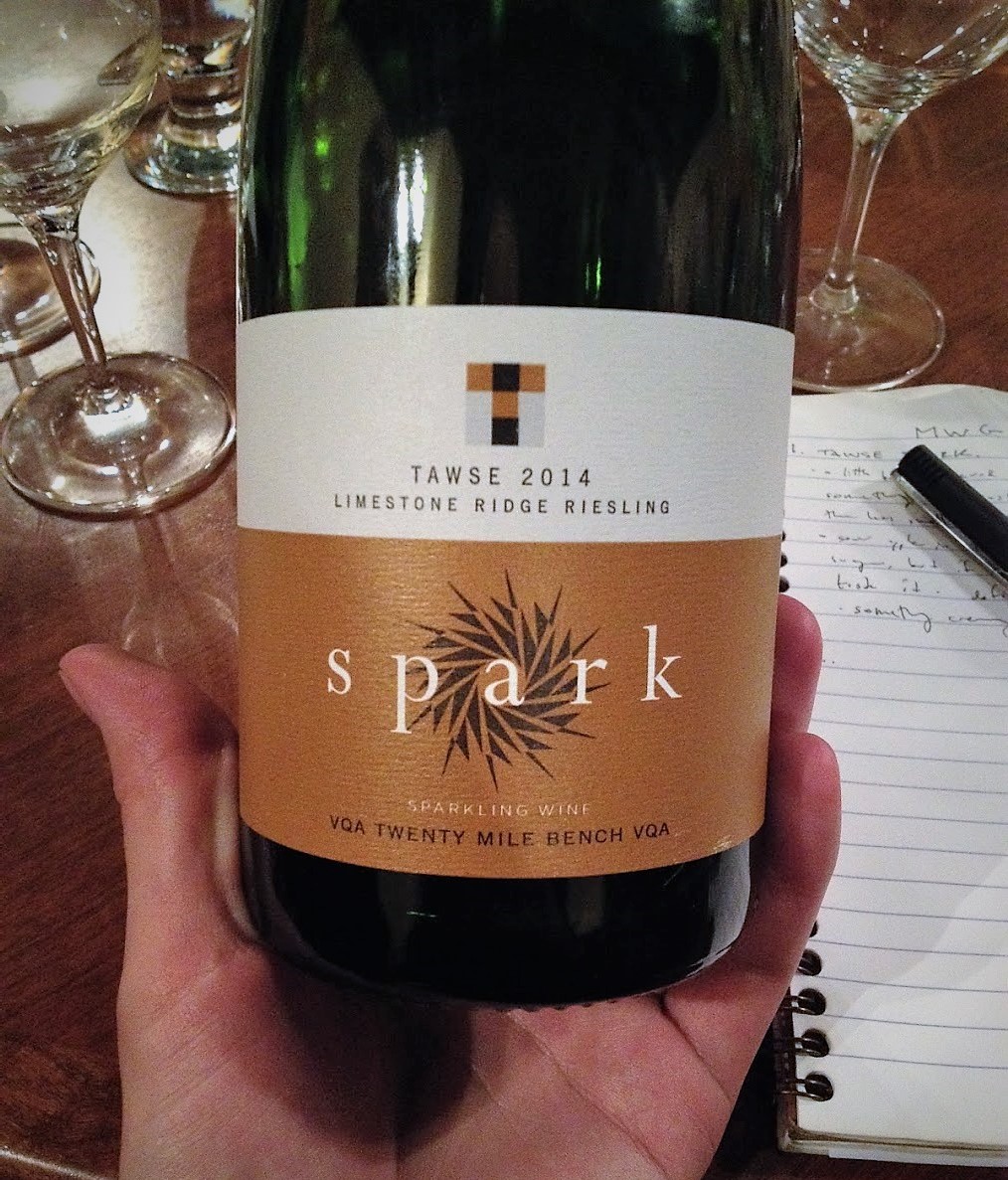
Very pale gold with sunshine glints and a fine bead. Straightfoward nose of apple/pear, lemon zest, lees, pastry cream and pie crust. In the mouth, the mix of fruit (mostly sour apple) and chalk is buoyed by soft fine bubbles. A touch of residual sugar is checked by zingy acidity, which in turn is softened by the light sweetness. Dry and clean on the finish with a lingering briny note. Fresh and uncomplicated, this would make a fine aperitif or summer deck wine. Not exactly a hit with the assembled tasters but I found it bright, bracing, sui generis and enjoyable. (Buy again? Yes, especially at the LCBO, where it runs $20.95.)
MWG February 17, 2017, tasting: flight 1 of 6
Ward & associés tasting (8/9)
IGP Côtes Catalanes 2015, Mon P’tit Pithon, Olivier Pithon ($46.55/1500 ml, private import, 6 bottles/case)
According to David Ward, the cuvée’s name is indeed a play on Monty Python. A blend of Grenache (50%), Syrah (25%) and Mourvèdre (25%) from organically and biodynamically farmed young vines. Manually harvested. The whole clusters are fermented with indigenous yeasts. Maceration time is purposefully kept short. Matured in concrete tanks. Lightly filtered and sulphured at bottling. Reducing sugar: 1.5 g/l. 13% ABV. The 750 ml bottling ($20.70, 12574811) is stocked by the SAQ, though few bottles remain. Quebec agent: Ward & associés.
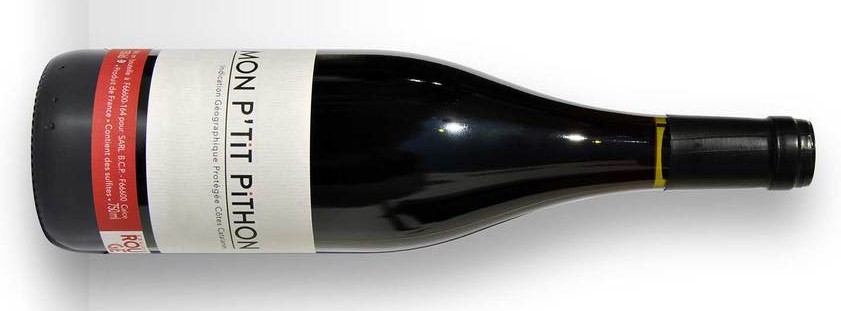
Red berries, Chinese dried plum, spice and slate dust. A medium-bodied mouthful of chiaroscuro fruit, soft acidity, lacy tannins with a lightly astringent edge that provides a welcome touch of gritiness. Fresh, fluid and fleet yet possessed of a certain richness, this easy-drinker seems tailor made for casual fare liked grilled sausages, braised white meats and potluck buffets. Drink lightly chilled. (Buy again? Sure.)
MWG February 2, 2017, tasting: flight 8 of 9
Ward & associés tasting (6/9)
Franken 2015, Kleine Wanderlust, 2Naturkinder ($28.32, private import, 6 bottles/case)
80% Regent and 20% Dornfelder from estate-owned, organically farmed vines around 15 and 30 years old respectively. The former was fermented on the skins for two weeks; the latter was crushed by foot and given semi-carbonic maceration for a week. Underwent malolactic fermentation. Matured on the lees in old oak. No added anything, including sulphur dioxide. Unfiltered and unfined. Bottled in April 2016. 3,000 bottles made. 10.5% ABV. Quebec agent: Ward & associés.

Effusive nose: floral, slate, pink peppercorn, “raspberry-cherry hybrid.” Some rose shows up in the mouth along with a bit of grip on the finish. The fruit is dark and black curranty, the acidity energetic but well integrated. A touch of velours in no way interferes with the wine’s impressive fluidity. Certifiably chuggable. And check out that alcohol level! (Buy again? Yup.)
MWG February 2, 2017, tasting: flight 6 of 9
Ward & associés tasting (5/9)
Burgunland 2015, Gemischter Satz, Alexander Koppitsch ($40.98, private import, 6 bottles/case)
The estate is located in Neusiedl am See, a village and district on the north shore of Lake Neusidel, southeast of Vienna. As implied by the Gemischter Satz moniker (though I don’t believe the wine qualifies for the Weiner Gemischter Satz appellation), this is a field blend of co-planted white varieties, including Grüner Veltliner, Brauner Veltliner, Pinot Blanc, Zimttraube, Ochsenauge, Isabellatraube, Neuburger, Traminer, Muskat and Sauvignon Blanc. Planted in 1934, the vines are estate-owned and biodynamically farmed. Vinified as an orange wine, spending 14 days on the skins. Fermented with indigenous yeasts. Matured in old barriques. Unfiltered and unfined, with no added sulphur. 12.5% ABV. Quebec agent: Ward & associés.
Slightly hazy bronzy rose-gold in the glass. Savoury, spicy and not particularly fruity nose with notes of preserved lemon and browning apple as well as a whiff of volatile acidity. In the mouth, it’s medium weight, fluently acidic, faintly tannic and somewhat inscrutable, like “mineral water” or “weak tea” along with lemon, a suggestion of stone fruit and minerals. Actually quite complex, if subtly so, and long. Smoothed out and unfurled nicely after three hours. Will be interesting to see what gives in three or four years. (Buy again? A bottle gladly.)


Burgunland 2015, Rot No. 7, Alexander Koppitsch ($23.19, private import, 6 bottles/case)
55% Zweigelt, 20% Blaufränkisch, 20% St. Laurent and 5% Syrah from estate-owned, biodyanmically farmed vines. Fermented with indigenous yeasts and matured in large oak barrels and stainless steel tanks. Lightly filtered. Unfined. A tiny amount of sulphur dioxide is added at bottling. Screwcapped. 12% ABV. Quebec agent: Ward & associés.
Outgoing nose of “clove,” “nutmeg,” candied raspberry, “frankincense incense” and a bit of poop. Medium-bodied and satin-textured. The bright supple fruit has a certain sweetness, though the wine is definitely dry, and an umami quality prompt descriptors like “soy sauce.” Sinewy tannins and a dusting of minerals only add to the interest. The finish is long but more felt than tasted. Nothing profound but eminently drinkable and something of a bargain. (Buy again? Yes.)
MWG February 2, 2017, tasting: flight 5 of 9
Ward & associés tasting (2/9)
Located near Bockenheim in the Palatinate, the 20-something Brand brothers took over the estate from their father in 2004. Farming practices, rigorously sustainable since 1994, were certified organic in 2015. The wine-making is non-interventionist.
Pfalz 2015, Riesling trocken, Vom Berg, Weingut Brand ($23.53, private import, 12 bottles/case)
The estate’s entry-level line. 100% Riesling from estate-owned organically farmed vines. Fermented in stainless steel tanks. Screwcapped. 13% ABV. Quebec agent: Ward & associés.
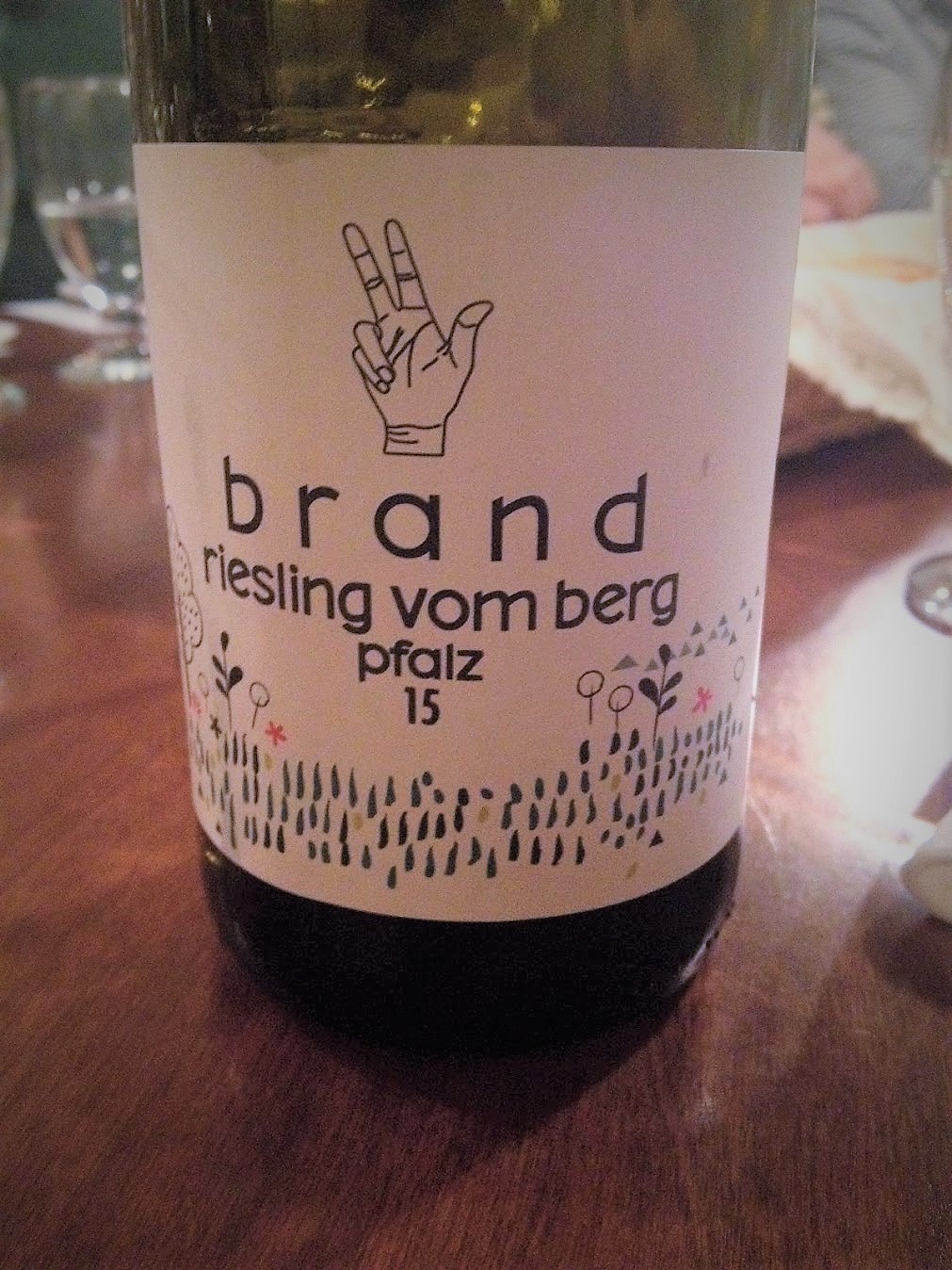
Initially sulphurous nose (not uncommon with screwcapped Rieslings) gives way to slate, lemon-lime and green apple overtoned with honeysuckle. Dry and fruity with nipping acidity, tons of crushed minerals and the faintest hint of caramel. Long, savoury and alive. Like Germany meets Alsace in a glass. Great QPR. Deservedly one of the hits of the tasting. (Buy again? Multiples.)
Pfalz 2015, Weissburgunder trocken, Weingut Brand ($26.37, private import, 12 bottles/case)
Inspired by a similar drawing on the cornerstone of a local church, the front label’s raised hand indicates this is part of the Schwurhand (oath-taking) line of wines made using grapes from the estate’s top vineyards 100% Weissburgunder (aka Pinot Blanc) from organically farmed vines. Manually harvested. Gently pressed and briefly macerated. Fermented with indigenous yeasts. No added anything. Unfiltered and unfined. Screwcapped. 12.5% ABV. Quebec agent: Ward & associés.
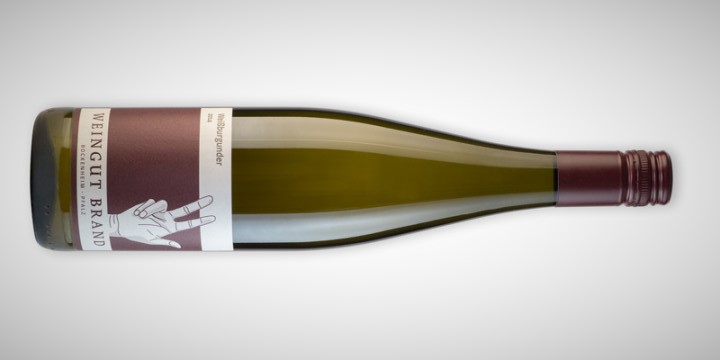
Intriguing nose of chalk, gooseberry/quince, green tea and coriander seed. Equally intriguing in the mouth with a texture that has people grapsing for descriptors like “soft oily velour.” Lactic, bitter and faintly fruity (“like bad plum”) threads intertwine with dusty minerals and soft acidity. A distant mustardy note chimes on the long finish. Complex, savoury and satisfying. If you think Pinot Blanc makes only facile wines, think again. (Buy again? Yes.)
MWG February 2, 2017, tasting: flight 2 of 9
Odd flightfellows
Colline Lucchesi 2013, Palistorti, Tenuta di Valgiano ($29.80, 12767840)
Sangiovese (70%), Merlot (15%) and Syrah (15%) from organically and biodynamically farmed vines around 20 years old. Manually harvested. The sorted grapes are gravity-fed into open wooden vats and crushed by hand or foot. Fermented (with indigenous yeasts, one supposes) and macerated for around two weeks with occasional punch-downs and pump-overs. Racked, settled and gravity-fed into lightly toasted French oak barrels (5% new) for malolactic fermentation and 12 months’ maturation. Blended and transferred into concrete vats for six months’ additional maturation. Unfiltered and unfined. 13% ABV. Quebec agent: Balthazard.
Appealing nose of cherry, tar, turned earth, Asian spices and a fresh, almost ferny note. A medium- to full-bodied mouthful of ripe fruit, bright acidity and firm but not rigid tannins. Despite the superficial sleekness, broad, deep and long. Beautifully balanced and complete, modern yet also terroirtorial. I’m usually unenthusiastic about blends of Sangiovese with international varieties but this is exceptional. It was also the only wine in the tasting that absolutely everyone around the table liked. The price seems more than fair. (Buy again? Yes.)
Swartland 2014, Family Red Blend, A.A. Badenhorst ($40.00, 12275298)
An unorthodox blend – around two-thirds Syrah with Tinta Barroca, Cinsault and Grenache – from estate-grown and purchased grapes. Farming practices are organic or nearly so. Manually harvested. The whole clusters, including stems, are crushed by foot and fermented with indigenous yeasts in concrete and wood tanks with twice-daily punch-downs. Given extended maceration (up to six months) before pressing. Transferred to 4,000-litre barrels for 16 months’ maturation. Blended just before bottling. Sulphur (pre- and post-fermentation) is the only addition. Reducing sugar: 1.4 g/l. 13.5% ABV. Quebec agent: Symbiose.
Complex, warm-climate nose of prune, plum, eucalyptus, black olive, dark minerals and eventually dried herbs. Full-bodied, rich and dense, balanced and savoury. Round tannins and smooth acidity provide sufficient structure. The flavours linger long and tend to the darker side of the spectrum: black fruit, slatey minerals, smoke, leather, compost, animale and a volatile note that puts me in mind of charred eucalyptus but that one taster describes as “electrical tape.” Not quite my style but definitely drinkable and as Old Worldish as New. (Buy again? Would gladly drink if offered but doubt I’d buy a bottle.)
MWG January 12, 2017, tasting: flight 7 of 7
Etna threesome
Etna Rosso 2014, Rossodiverzella, Benanti ($25.10, 11348459)
Nerello Mascalese (85%) and Nerello Cappuccio (15%) from 10- to 60-year-old vines grown in parcels on the northern, southeastern and southwestern slopes of Mount Etna at altitudes varying from 450 to 900 m. Manually harvested. Destemmed. Fermentation and 20- to 21-day maceration with selected yeasts take place in stainless steel vats. Maturation – 80% in stainless steel tanks, 20% in French oak barriques – lasts eight to 10 months. Reducing sugar: 2.3 g/l. 13.5% ABV. Quebec agent: L’Enoteca.
Fragrant nose of red berries, plum and spice with a faint floral perfume. Medium-bodied, fleet and quite dry. The sweet-tart fruit unfurls like veils across the palate. Bright acidity and supple tannins provide a light but present structure. A vein of volcanic minerals runs from the mid-palate into the long, slightly astringent finish. Such an appealing blend of fresh and savoury. (Buy again? Yes.)
Etna Rosso 2013, Graci ($27.80, 13041830)
Nerello Mascalese (100%) grown on the northern-eastern slopes of Mount Etna at an altitude of 600-700 m. Fermentation with indigenous yeasts and maceration on the skins are in concrete tanks and last for around 30 days. Matured 18 months in concrete tanks with spontaneous malolactic fermentation. Reducing sugar: 1.9 g/l. 14% ABV. Quebec agent: Symbiose.
The darker, more minerally nose is marked by old wood, cherry, plum, spice chest and leather aromas. In the mouth, the wine is heftier and headier than the Benanti, the fruit is riper without seeming jammy and the flavours are entertaining. A smooth current of acidity brings welcome freshness while cushy tannins provide torque. The persistent finish has a tarry edge. (Buy again? Sure.)
Etna Rosso 2013, Barone di Villagrande ($28.60, 12988167)
Nerello Mascalese (80%) and Nerello Cappuccio (20%) from organically farmed vines on the southern slopes of Mount Etna. Maceration and fermentation in temperature-controlled tanks lasts six to 10 days. Matured 12 months in 500-litre Etna oak barrels. Altitude: 650-700 m. Reducing sugar: 2.5 g/l. 13.5% ABV. Quebec agent: AOC & cie.
Jammier on the nose, showing the expected cherry and plum along with aromas described as “a bit coffee,” “fruitcake,” “molasses” and “pomegranate.” Bigger, denser and fruitier than its flightmates. Fundamentally dry though the very ripe fruit gives an impression of sweetness. It also drives complexity and depth into the background. A dusty quality colours the mid-palate and lingers into the long finish. May benefit from a few more years in the cellar. At this point too New Worldish and Parkerized for me, though some around the table loved it. (Buy again? Unlikely.)
MWG January 12, 2017, tasting: flight 6 of 7
Loire cousins
Chinon 2014, Expression, Alain Lorieux ($19.85, 00873257)
100% Cabernet Franc from vines rooted in flinty clay. The grapes are destemmed. Macerated and fermented in stainless steel tanks for around five weeks with daily pumpovers. Reducing sugar: 1.8 g/l. 12.5% ABV. Quebec agent: Rézin.
Blackberry, raspberry, hints of ash, leather and greenery. A supple, medium-bodied, oh-so-dry mouthful of sweet-tart fruit, bright acidity and light tannins set against a darker, minerally backdrop. “More leafy” than the Saint Nicolas. Good clean finish that has you aching for another sip. Quaffable in the extreme. (Buy again? Yes.)
Saint-Nicolas-de-Bourgueil 2014, Les Mauguerets – La Contrie, Pascal et Alain Lorieux ($22.45, 00872580)
100% Cabernet Franc from vines rooted in gravelly soil in Les Mauguerets and La Contrie, two adjacent lieux-dits. The gravel retains heat and facilitates ripening. The grapes are destemmed. Macerated and fermented in stainless steel tanks for four to six weeks with daily pump-overs. Reducing sugar: 1.7 g/l. 12.5% ABV. Quebec agent: Rézin.
Faintly funky nose of dark berries, spice and tobacco leaf. Compared with the Chinon, “more earthy” and complex as well as a notch richer, more structured and more dimensional. The fruit is a little sweeter and juicier too and the mineral component is if anything stronger. With its scents of black tea leaves, the long finish only adds to the impression of sauvity. This textbook example of Loire Cab Franc doesn’t shout but has real presence. (Buy again? For sure.)
MWG January 12, 2017, tasting: flight 4 of 7

 Brett happens