Posts Tagged ‘biodynamic’
Ward & associés tasting (8/9)
IGP Côtes Catalanes 2015, Mon P’tit Pithon, Olivier Pithon ($46.55/1500 ml, private import, 6 bottles/case)
According to David Ward, the cuvée’s name is indeed a play on Monty Python. A blend of Grenache (50%), Syrah (25%) and Mourvèdre (25%) from organically and biodynamically farmed young vines. Manually harvested. The whole clusters are fermented with indigenous yeasts. Maceration time is purposefully kept short. Matured in concrete tanks. Lightly filtered and sulphured at bottling. Reducing sugar: 1.5 g/l. 13% ABV. The 750 ml bottling ($20.70, 12574811) is stocked by the SAQ, though few bottles remain. Quebec agent: Ward & associés.
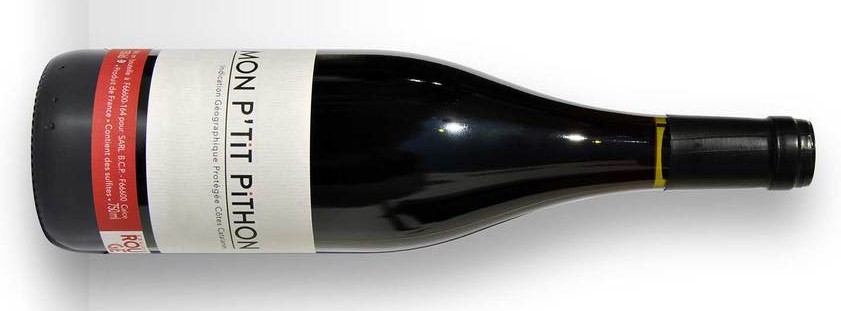
Red berries, Chinese dried plum, spice and slate dust. A medium-bodied mouthful of chiaroscuro fruit, soft acidity, lacy tannins with a lightly astringent edge that provides a welcome touch of gritiness. Fresh, fluid and fleet yet possessed of a certain richness, this easy-drinker seems tailor made for casual fare liked grilled sausages, braised white meats and potluck buffets. Drink lightly chilled. (Buy again? Sure.)
MWG February 2, 2017, tasting: flight 8 of 9
Ward & associés tasting (5/9)
Burgunland 2015, Gemischter Satz, Alexander Koppitsch ($40.98, private import, 6 bottles/case)
The estate is located in Neusiedl am See, a village and district on the north shore of Lake Neusidel, southeast of Vienna. As implied by the Gemischter Satz moniker (though I don’t believe the wine qualifies for the Weiner Gemischter Satz appellation), this is a field blend of co-planted white varieties, including Grüner Veltliner, Brauner Veltliner, Pinot Blanc, Zimttraube, Ochsenauge, Isabellatraube, Neuburger, Traminer, Muskat and Sauvignon Blanc. Planted in 1934, the vines are estate-owned and biodynamically farmed. Vinified as an orange wine, spending 14 days on the skins. Fermented with indigenous yeasts. Matured in old barriques. Unfiltered and unfined, with no added sulphur. 12.5% ABV. Quebec agent: Ward & associés.
Slightly hazy bronzy rose-gold in the glass. Savoury, spicy and not particularly fruity nose with notes of preserved lemon and browning apple as well as a whiff of volatile acidity. In the mouth, it’s medium weight, fluently acidic, faintly tannic and somewhat inscrutable, like “mineral water” or “weak tea” along with lemon, a suggestion of stone fruit and minerals. Actually quite complex, if subtly so, and long. Smoothed out and unfurled nicely after three hours. Will be interesting to see what gives in three or four years. (Buy again? A bottle gladly.)


Burgunland 2015, Rot No. 7, Alexander Koppitsch ($23.19, private import, 6 bottles/case)
55% Zweigelt, 20% Blaufränkisch, 20% St. Laurent and 5% Syrah from estate-owned, biodyanmically farmed vines. Fermented with indigenous yeasts and matured in large oak barrels and stainless steel tanks. Lightly filtered. Unfined. A tiny amount of sulphur dioxide is added at bottling. Screwcapped. 12% ABV. Quebec agent: Ward & associés.
Outgoing nose of “clove,” “nutmeg,” candied raspberry, “frankincense incense” and a bit of poop. Medium-bodied and satin-textured. The bright supple fruit has a certain sweetness, though the wine is definitely dry, and an umami quality prompt descriptors like “soy sauce.” Sinewy tannins and a dusting of minerals only add to the interest. The finish is long but more felt than tasted. Nothing profound but eminently drinkable and something of a bargain. (Buy again? Yes.)
MWG February 2, 2017, tasting: flight 5 of 9
Odd flightfellows
Colline Lucchesi 2013, Palistorti, Tenuta di Valgiano ($29.80, 12767840)
Sangiovese (70%), Merlot (15%) and Syrah (15%) from organically and biodynamically farmed vines around 20 years old. Manually harvested. The sorted grapes are gravity-fed into open wooden vats and crushed by hand or foot. Fermented (with indigenous yeasts, one supposes) and macerated for around two weeks with occasional punch-downs and pump-overs. Racked, settled and gravity-fed into lightly toasted French oak barrels (5% new) for malolactic fermentation and 12 months’ maturation. Blended and transferred into concrete vats for six months’ additional maturation. Unfiltered and unfined. 13% ABV. Quebec agent: Balthazard.
Appealing nose of cherry, tar, turned earth, Asian spices and a fresh, almost ferny note. A medium- to full-bodied mouthful of ripe fruit, bright acidity and firm but not rigid tannins. Despite the superficial sleekness, broad, deep and long. Beautifully balanced and complete, modern yet also terroirtorial. I’m usually unenthusiastic about blends of Sangiovese with international varieties but this is exceptional. It was also the only wine in the tasting that absolutely everyone around the table liked. The price seems more than fair. (Buy again? Yes.)
Swartland 2014, Family Red Blend, A.A. Badenhorst ($40.00, 12275298)
An unorthodox blend – around two-thirds Syrah with Tinta Barroca, Cinsault and Grenache – from estate-grown and purchased grapes. Farming practices are organic or nearly so. Manually harvested. The whole clusters, including stems, are crushed by foot and fermented with indigenous yeasts in concrete and wood tanks with twice-daily punch-downs. Given extended maceration (up to six months) before pressing. Transferred to 4,000-litre barrels for 16 months’ maturation. Blended just before bottling. Sulphur (pre- and post-fermentation) is the only addition. Reducing sugar: 1.4 g/l. 13.5% ABV. Quebec agent: Symbiose.
Complex, warm-climate nose of prune, plum, eucalyptus, black olive, dark minerals and eventually dried herbs. Full-bodied, rich and dense, balanced and savoury. Round tannins and smooth acidity provide sufficient structure. The flavours linger long and tend to the darker side of the spectrum: black fruit, slatey minerals, smoke, leather, compost, animale and a volatile note that puts me in mind of charred eucalyptus but that one taster describes as “electrical tape.” Not quite my style but definitely drinkable and as Old Worldish as New. (Buy again? Would gladly drink if offered but doubt I’d buy a bottle.)
MWG January 12, 2017, tasting: flight 7 of 7
Odd couple
As is the Mo’ Wine Group’s longstanding tradition, our first tasting after the holidays focused on inexpensive and affordable bottles.
Vino da Tavola 2014, Il Brut and the Beast, Valli Unite ($25.35, private import, 6 bottles/case)
Based in Costa Vescovato in southern Piedmont, Valli Unite is a 35-year-old organic cooperative whose members grow local grape varieties as well as grains, fruits, vegetables and livestock. Accurate information on this wine is hard to find. It’s not listed on the coop’s website and online reviewers tend to be all over place about its constituent grape varieties, production method (some say it’s a filtered Charmat-method sparkler) and stopper (some say it’s a cork). For all I know, there may be more than one bottling. This much seems clear: the wine we tasted was made from Cortese and may also contain some Favorita. The biodynamically farmed grapes were manually harvested. The wine was fermented with indigenous yeasts and bottled unfiltered and unfined. No sulphur was added during the wine-making process. The fizz is the result of natural, in-bottle fermentation. Vegan-compatible. Crown cap. 13% ABV. Quebec agent: La QV.
Pale straw. Hazy in all the glasses though the last glass or two also contained a lot of brown-coloured lees. Interesting, leesy nose of lemon, sour apple, chalk and “bonbon de banane.” Soft but ticklish effervescence. There’s some fruit on the attack (one taster described it as “fruité austère”), lots of chalky minerals and fair acidity. A lactic note sounds on the long finish. Somehow the elements don’t coalesce into a whole and, as the wine breathes, the alcohol becomes noticeable and the wine seems “oxidized” and a bit “flat.” Not the hit that the 2011 was. I suspect our just-off-the-boat bottle was travel-shocked or otherwise upset. (Buy again? To give it another chance in a few months, yes.)
Crémant d’Alsace, Extra Brut, Paul-Édouard, Domaine Bott-Geyl ($26.00, 13032845)
A blend of Pinot Blanc (50%), Chardonnay (30%) and Pinot Noir (20%). The hand-picked grapes are purchased from growers, all of whom are converting to organic practices. This traditional-method sparkler was matured in the bottle for 24 months before disgoring. Reducing sugar: 5.1 g/l. 12.5% ABV. Quebec agent: LVAB.
Straw heading toward bronze with a fine bead and next to no foam. Outgoing nose eliciting descriptors like white strawberry, honey, acacia, stone fruit and, surprisingly but accurately, jalapeño. Round and rich in the mouth. The bubbles are low-key, the ripe fruit has a slightly honeyed quality, the minerals are dusty. Soft acidity and hints of lemon provide some welcome freshness. A whiff of yeasty brioche colours the long finish. Impeccable though not what you’d call lively. (Buy again? Personally, I’d go for something tenser but several tasters were quite taken with this.)
MWG January 12, 2017, tasting: flight 1 of 7
Austro-Hungarian
Somló 2015, Somlowhite, Meinklang ($24.55, private import, 12 bottles/case)
A blend of Hárslevelü (50%), Juhfark (20%), Olaszrizling (20%) and Furmint (10%) from organically and biodynamically farmed vines grown at the base of the Somló (pronounced shom-low) volcano in southwest Hungary, not far from the Austrian border. The region’s basalt is weathered and topped with loess and light sand deposits, producing a fertile soil. The winemaking – which takes place at the estate’s Burgenland winery on the Austrian side of the border – is non-interventionist, with no additions except, possibly, a tiny squirt of sulphur at bottling. Screwcapped. 12% ABV. Quebec agent: La QV.
Complex nose: chalky minerals, white peach, lemon/lime zest, quince, gooseberry, straw. A sip reveals a wine with a slightly oily texture, spiced quince, apple and pear flavours, a soft buzz of acidity, threads of minerals and herbs and a white peppery sensation of spicy heat. It’s quite dry, especially on the long finish with its intriguing sour/bitter edge. The bottle opened at home seemed a tad less fiery – though no less enjoyable – than the sample tasted at the Salon des vins d’importation privée. Great with cabbage rolls made from fermented cabbage and Hungarian sausage. (Buy again? Gladly.)
Meinklang makes affordably priced natural wines that are always stable, always clean and always loveable. The estate is one of the most ecological and sustainable in the world. Its packaging is fun. Why, then, are this and the other wines in the line (Grüner Veltliner, Blaufränkisch, Blauburgunder, Zweigelt, Saint Laurent, etc.) not available at the SAQ?
By the way, also poured at the Salon VIP were two Meinklang wines aged in 900-litre concrete eggs: Konkret white (Traminer, I think) and red (Sankt Laurent). Amazing, especially the red. The good news is that La QV say they’re going to start bringing in some of the higher-end Meinklang bottlings, including the Konkret cuvées, some of the stunning monovarietal Hungarian whites and oddities like the Graupert (“unkempt”) Pinot Gris and Zweigelt, which are made from grapes from unpruned, untrained vines.
Morgon, Morgon, not Morgon
Morgon 2014, Côte de Py, Jean Foillard ($41.09, private import, 12 b/c)
100% Gamay from organically farmed vines between ten and 90 years old and grown in manganese-rich schist and granite. Manually harvested. Whole-cluster fermentation lasts three to four weeks. Matured six to nine moths in used oak barrels. No additives of any kind during the wine-making. Unfiltered and unfined. A minimal amount of sulphur dioxide may be added at bottling. 12.5% ABV. Quebec agent: Rézin.
Aromatic, very Gamay nose: slate, “dried leaves” (per another taster), floral notes and a whiff of earthy funkiness along with the expected red berries. Medium-bodied and satin-textured. A touch of sweet red chile savouries the lush fruit. The frame of light tannins, the illuminating acidity and a vein of dark minerals run from start through the nicely sustained finish. Accessible if somewhat monolithic at this stage, it showed best at the end of the tasting, four hours after it was opened and double-decanted. A couple of years or more in the cellar will do a world of good. (Buy again? Done!)
Morgon 2014, Cuvée Corcelette, Jean Foillard ($38.75, 12201643)
100% Gamay from organically farmed vines averaging 80 years old and grown in sandstone soil. Manually harvested. Whole-cluster fermentation lasts three to four weeks. Matured six to nine moths in used oak barrels and a single 30-hl foudre. No additives of any kind during the wine-making. Unfiltered and unfined. A minimal amount of sulphur dioxide may be added at bottling. Reducing sugar: less than 1.2 g/l. Quebec agent: Rézin.
Nose of red berries, faint spice, horse/leather: similar to the Côte de Py though a shade less complex, outgoing and airy. So fresh, pure, savoury and delicious. Ripe fruit, good structure and length, with the minerals most prominent on the finish. Perhaps a little less dense, more rustic and more open than its sibling though also sure to benefit from being left unopened for a year or three. Is there a better Beaujolais at the SAQ? (Buy again? Yes.)
After we’d finished with the Foillards, one of tasters generously offered to open a new arrival he had purchased on his way to the tasting room. I wondered whether its coming after two top Morgons might show it to disadvantage but I needn’t have worried.
Vin de France 2015, Le P’tit Poquelin, Maison B. Perraud ($22.70, 12517998)
100% Gamay from biodynamically farmed 40-year-old vines. Manually harvested. The whole clusters undergo carbonic maceration for 12 days. No additives, including sulphur. Unfiltered and unfined. Reducing sugar: 1.3 g/l. 13% ABV. Quebec agent: Raisonnance.
Appealing nose: floral, slate, berries, sap. A bit of spritz on the palate (carafe the wine for hour an hour if that sort of thing bothers you). On the lighter side of medium-bodied. The sweet fruit has a sour edge and is lightly structured by fine, supple tannins and glowing acidity. Sappy, lip-smacking finish. An easy-drinker with real presence. What it lacks in dimensionality and class compared with the Foillards, it makes up for in immediate appeal. The most successful of the three vintages of this wine that I’ve tasted. (Buy again? Yes.)
MWG October 27, 2016, tasting: flight 5 of 7
Start off?
Montlouis sur Loire, Brut Nature, François Chidaine ($29.35, 11537049)
100% Chenin Blanc from biodynamically farmed vines between 20 and 50 years old. Manually harvested in several passes. The grapes are pneumatically pressed. Alcoholic fermentation with indigenous yeasts takes place in 600-litre demi-muids and can last up to six months. Malolactic fermentation is usually avoided. Sparkled using the traditional method. Undosed. The bottles spend 12 months on lattes. Reducing sugar: 8.2 g/l. 12% ABV. Quebec agent: Le Maître de Chai.
The cork emerges easily and without the expected pop. No foam and only a little fizz are to be seen in the glasses. The nose is complex with notes of sweat, wax, distant fields, citrus and oxidized pear. A sip shows the wine to be barely effervescent and what bubbles there are tiny and tickling. The low level of fizz combines with the extract, smooth acidity and touch of residual sugar to convey an impression of roundness. Quince and pear flavours tinged by browning dominate the palate, while the mineral substrate and a hint of white spice come to the fore on the long finish. Probably a defective bottle but still engaging and delicious. (Buy again? Yes, to see if ours was off or to re-experience it if it wasn’t.)
MWG October 27, 2016, tasting: flight 1 of 7
Best yet
Muscadet-Sèvre et Maine 2014, Granite, Domaine de l’Écu ($23.55, 10282873)
100% Melon de Bourgogne from organically and biodynamically farmed vines 45 to 55 years old growing in stony topsoil and mica granite subsoil. Manually harvested. The winery is gravity fed, so no pumping occurs. Pneumatically pressed. The unclarified must is fermented with indigenous yeasts. Sulphuring is limited to 25 mg added between alcoholic and malolactic fermentation. Matured on the lees in underground concrete tanks for 15 to 18 months. Reducing sugar: 1.4 g/l. 12% ABV. Quebec agent: Raisonnance.
Outgoing nose for a young Écu: lemon fruit and pith, chamomile, minerals, faintest hints of wax, honey and almond essence. In the mouth, it’s fruitier than usual: silky, complex and wonderfully pure, acid bright and bone dry, with real mineral depth and overtones of peach and fresh herbs. The long, long flinty, iodiney finish leaves a white peppery afterbite. This will only improve with a few years in the cellar but, in contrast to most vintages, is beguiling young. Perfect, of course, with raw oysters and moules marinières but has the wherewithal to accompany fine fish and, even, sushi and stinky cheeses. Or see what the winemaker has to say about possible pairings. (Buy again? Imperatively.)
All pastels
Gaillac 2015, Les Greilles, Causse Marines ($23.85, 860387)
A blend of Len de l’El (60%), Mauzac (20%), Ondenc (15%) and Muscadelle (5%) from organically and biodynamically farmed vines averaging 45 years old. Manually harvested. Gently pressed. Fermented with indigenous yeasts in temperature-controlled tanks. Occasionally filtered and/or fined on an as-needed basis. Minimum added sulphur. Reducing sugar: 4.8 g/l. 14% ABV. Quebec agent: Rézin.
Wafting nose: apple-pear sauce, chamomile, limestone, a whiff of alcohol. Round, not bone dry yet not at all heavy – due in no small part to the surprising current of acidity – with a texture between waxy and satiny. The soft, ripe-sweet fruit slow-fades leaving a mid-palate more felt than tasted and a finish with intertwining threads of bitterness, chalk and herbs and spice that, however faintly, bring a high-class white vermouth to mind. The alcohol is detectable but ghostly. A wine with no sharp edges: all pastels and just lovely. (Buy again? Yes.)
Three takes on Pinot Noir
Alsace 2014, Pinot Noir, Vignoble d’E, Domaine Ostertag* (ca. $32, private import, 12 bottles/case)
A preview bottle of a wine that will be available this fall. Part of Ostertag’s Vins de Fruit line, this 100% Pinot Noir is made from grapes from two-decade-old organically and biodynamically farmed vines rooted in gravelly clay near the village of Epfig. Manually harvested. Destemmed. Macerated at 26°C for around 10 days. Fermented with indigenous yeasts and daily pumpovers but without chaptalization. Matured in stainless steel tanks until the end of the spring following the harvest. 12% ABV. Quebec agent: Rézin.
Complex, savoury nose: red berries, bitter almond, fresh and dried herbs, prosciutto. Light- to medium-bodied, fluid and silky. The lean fruit is shaded by dark minerals and structured by bright acidity and supple tannins that turn a little gritty on the sustained finish. Definitely not a Burgundy but definitely a Pinot Noir, and a tasty and pure one at that. An intriguing pairing with a salad of raw rhubarb, fresh raspberries and greens. (Buy again? Yes, though not without wishing it were a few bucks cheaper.)
*I’ve not linked to Ostertag’s website as my Internet security software indicates it has been hacked and launches an Exploit Kit Redirect 5 Web attack. If your device is protected and you’re feeling adventurous, you can visit the site here.
Casablanca 2015, Pinot Noir, Refugio, Montsecano y Copains ($26.05, 12184839)
The estate is a joint venture involving three Chileans and André Ostertag. Two wines, both 100% Pinot Noir from organically and biodyanmically farmed vines, are made. This is the second wine. Manually harvested. Macerated and fermented with indigenous yeasts for 12 to 18 days. One-quarter is matured in 16-hectolitre concrete eggs for 12 to 18 months, three-quarters in stainless steel tanks. Unfiltered and unfined. A tiny amount of volcanic sulphur is added at bottling. Screwcapped. Reducing sugar: 1.4 g/l. 14% ABV. Quebec agent: Rézin.
An initially reductive nose soon gives way to spice, red currant and strawberry-rhubarb.In the mouth, the wine is denser and more fruit-forward than its flightmates though still fluid and supple. Bright acidity and light if rustic tannins add welcome texture. Long, earthy finish. At this stage, benefits from a hour or two’s carafing. (Buy again? Sure.)
Bourgogne 2013, Bedeau, Domaine de Chassorney/Frederic Cossard ($58.42, private import, 6 bottles/case)
100% Pinot Noir from organically farmed vines. The manually harvested whole clusters are sorted and placed in tronconic wood vats, with carbon dioxide being added along the way to prevent oxidation. Once filled, the vats are loosely covered with plastic and left for 40 day’s maceration and fermentation with occasional pumpovers and/or punchdowns (by foot). The grapes are manually shovelled into to a pneumatic press and the press and free-run juice are pumped into a large vat for malolactic fermentation, then racked into oak barrels (30% new) for 12 to 15 months’ maturation. The finished wine is racked into a vat, allowed to rest one month and bottled by gravity. Unfiltered and unfined. Sulphur is used in the vineyard but not in the winery (Cossard even cleans his barrels with ozone), except for a tiny amount of sulphur dioxide added at bottling. 12.5% ABV. Quebec agent: Rézin.
Strawberry, gunflint, background green herbs and leather, then classic Burgundy notes of red berries, spice and cedar. Medium-bodied, svelte and silky. Airframe tannins and bright-but-sleek acidity structure the remarkably pure fruit, while a mineral vein runs well into the long, clean finish. A savoury red Burg with great energy. (Buy again? If feeling flush, yes.)
MWG July 15th tasting: flight 4 of 8

 Brett happens