Posts Tagged ‘Loire’
Archetypical and atypical
Sancerre 2015, Domaine Vacheron ($36.25, 10523892)
100% Sauvignon Blanc from organically farmed massal selection vines. The grapes are manually harvested and gently pressed. The must is chilled and clarified by settling. Low-temperature (<20°C) fermentation and maturation on the lees take place in stainless steel tanks. Filtered before bottling. Reducing sugar: 3.0 g/l. 12.5% ABV. Quebec agent: Le Maître de Chai.
Textbook Loire Sauvignon Blanc nose: gooseberry, citrus, grass, chalk and flint. Rich bordering on lush, sleek and impressively pure. Fruity upfront with a mineral substrate emerging as the wine moves through the mouth. The considerable extract rounds the bright acidity. Long, lively, saline finish. Initially engaging, the wine’s youthful exuberance comes across as a little caricatural and fatiguing by the end of the glass, a bit like a bouncy puppy or some New Zealand Sauvignon Blancs for that matter. Will be interesting to see what transpires in two or three years. (Buy again? Maybe.)


Sancerre 2013, Constellation du Scorpion, Vincent Gaudry ($41.25, private import, 6 bottles/case)
This is a new name for a bottling formerly called L’Esprit de Rudolph in honour of the founder of biodynamism, Rudolph Steiner. Gaudry is reportedly secretive about his methods and not much technical information about this wine is to be found. 100% Sauvignon Blanc from biodynamically farmed vines rooted in flinty soil. Partially matured in oak barrels. Unfiltered. 13% ABV. Quebec agent: Ward & associés.
Wafting nose of grapefruit, chalk and quartz dust, “pink flowers” and “thyme.” Rainwatery yet also very present. The rich texture is lightened by “lime acidity,” deepened by a chalky underlay. A hint of caramel appears on the long finish. “A Sancerre that wants to be a Chardonnay,” concludes one taster. Subtle and subdued yet complex and delicious says me. (Buy again? Yes.)
MWG April 6th tasting: flight 2 of 7
WINO tasting (2/6)
Muscadet-Côtes de Grandlieu 2013, Les Hautes Noëlles, Domaine Les Hautes Noëlles ($36.46, private import, 6 bottles/case)
Founded in 1930, the estate, which has some 25 hectares of vines, is located in St-Léger-les-Vignes. 100% Melon de Bourgogne from organically farmed vines more than 80 years old and rooted in sand and clay on mica schist. Production is limited to 2,000 bottles a year. The grapes are picked by hand and macerated briefly before pneumatic pressing. The must is clarified by settling. Fermentation (with indigenous yeasts at c. 18°C) and maturation (c. 12 months on the lees with regular stirring) take place in oak barrels, a quarter of which are new. Sulphur use is kept to a minimum. 12% ABV. Quebec agent: WINO.
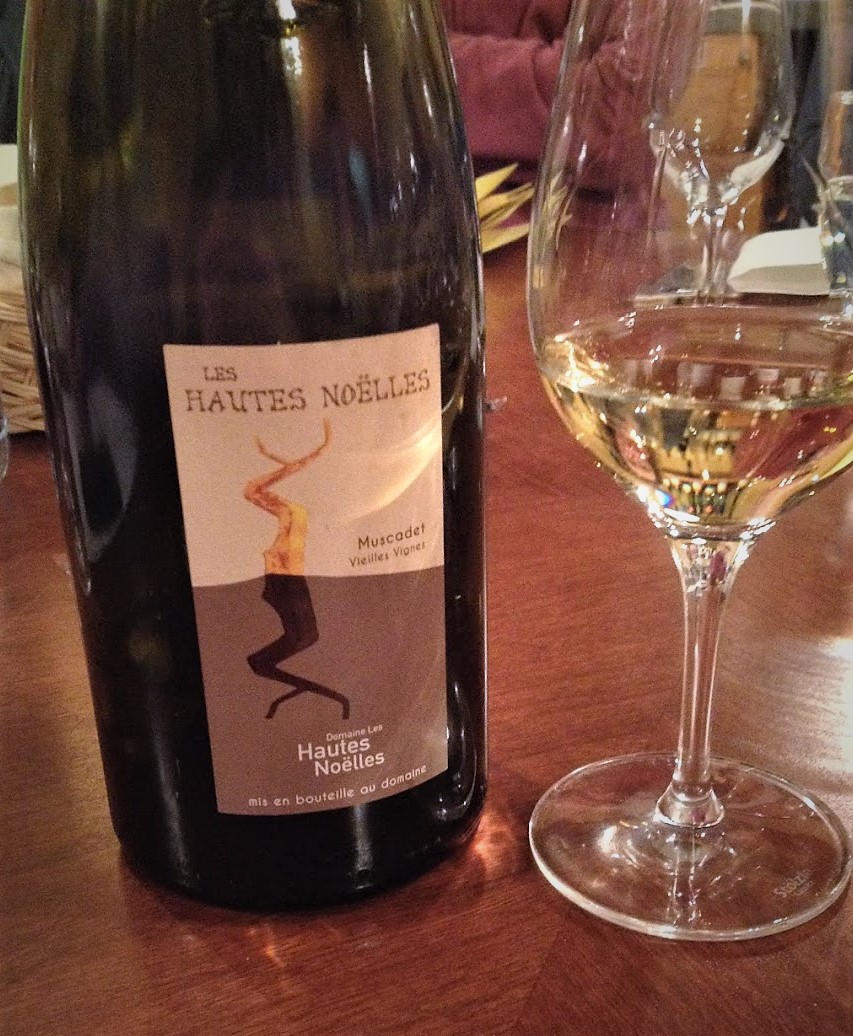
Multi-faceted nose with scents of apple, “strudel dough” (per another taster), faint marzipan, quartz, dried banana, lemon and more. Rich, fluid, complex, layered and dry. The initial fruit makes room for minerals (“chalk grotto” my note arcanely reads), while sleek acidity lends a soft glow. Honey, “ginger” and faint bitter notes colour the impressively sustained finish. A delicious, absorbing wine quite unlike any other Muscadet I’ve tasted. Would make an interesting ringer in a flight of Chenins or Chardonnays with some age on them. (Buy again? Yes.)
Tasted at Moleskine the following evening, the estate’s 2014 “Les Parcelles” bottling ($20.50, WINO, 12 bottles/case) was crisp, clean and appetizing though far more conventional.
MWG March 23rd tasting: flight 2 of 6
A pair of Pineau d’Aunis blends from the Loir valley
That’s not a typo. The Loir is an indirect tributary of the Loire, running east-northeast of it for much of its length. The best known Loir valley appellation is probably Jasnières.
Coteaux du Vendômois 2014, Vieilles Vignes, Domaine Patrice Colin ($21.55, 11498220)
Pineau d’Aunis (70%), Pinot Noir (20%) and Cabernet Franc (10%) from organically farmed 50- to 90-year-old vines. The manually harvested grapes are destemmed. Maceration and alcoholic fermentation with indigenous yeasts take place in stainless steel tanks and last around 45 days. The estate never chaptalizes. Matured in large barrels for one year. Reducing sugar: 2.3 g/l. 13% ABV. Quebec agent: Le Maître de Chai.
Complex nose of choke cherry, black currant, spice, beet, old wood, “burnt marshmallow” and eventually compost. Medium-bodied, straightforward and juicy in the mouth. Possessed of a slightly velours-like texture, sleek acidity, tea-ish tannins and a light, singing, savoury finish. A mineral vein can be found under the ripe fruit. A bit monochromatic for now, this will probably be even better in a year or three. Popular with many around the table, especially when they learned the price. (Buy again? Sure.)

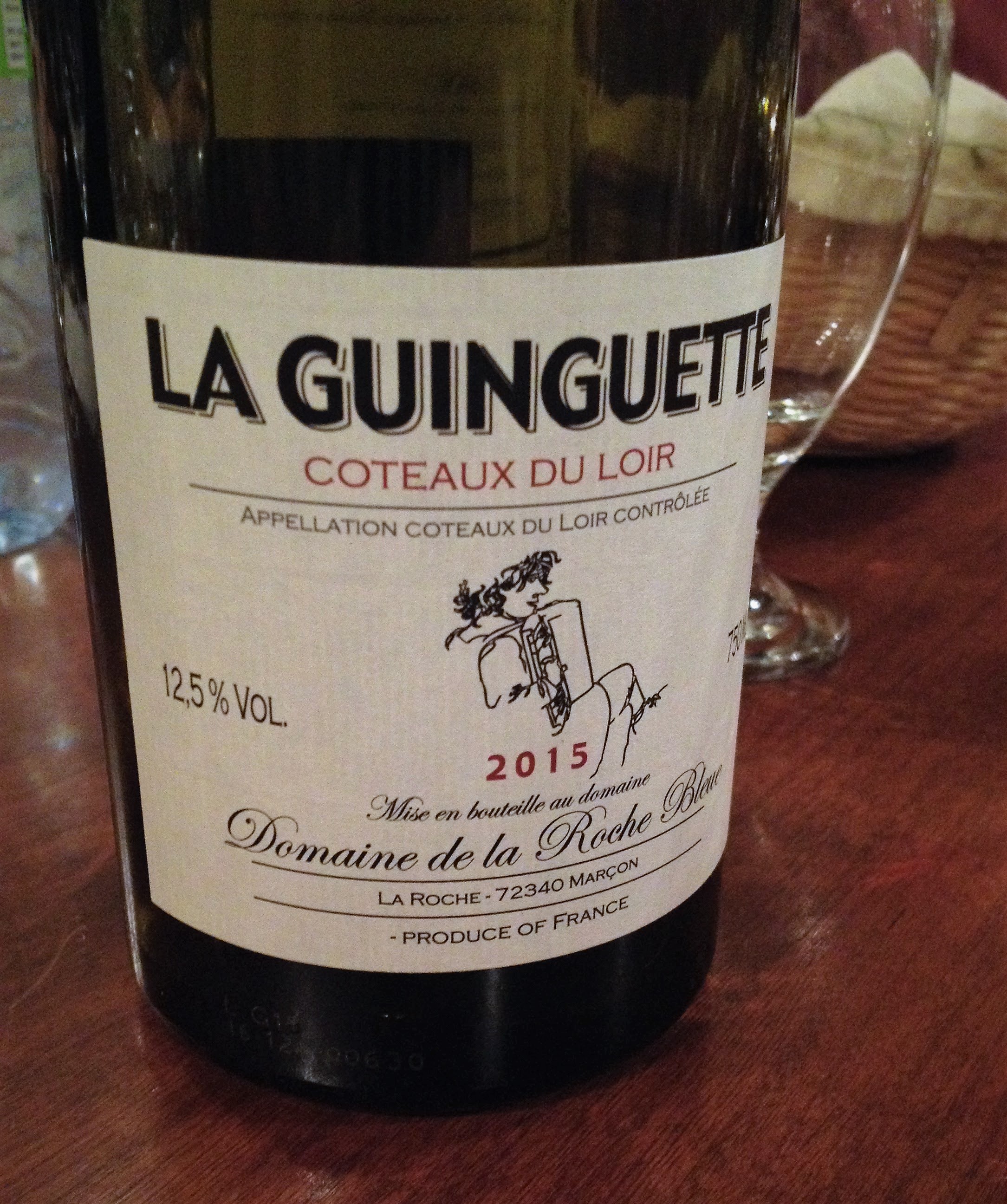
Coteaux du Loir 2015, La Guinguette, Domaine de la Roche Bleue ($26.50, 12856261)
A blend of Pineau d’Aunis (80%) and Gamay (20%) from organically farmed vines more than 30 years old. Manually harvested. The whole grapes undergo semi-carbonic maceration in tanks for 20 days and are fermented with indigenous yeasts in third- to sixth-fill oak barrels. The Pineau is matured in neutral barrels, the Gamy in tanks, both for about three months. Undergoes malolactic fermentation. Bottled unfiltered and unfined. Total added sulphur dioxide: 50 mg/l. 12.5% ABV. Quebec agent: Boires.
Delicious, fragrant nose of slightly candied red berries, slate, spice, herbs and flowers (violet?). On the light side of medium-bodied. Supple and lithe, with lacy tannins and bright acidity. The tangy fruit comes with some crushed stems and leaves. Slatey earth and a touch of peppery spice colour the long, caressing finish. Lighter than both the Colin and the 2014 Guinguette but so easy to drink. For those of us who enjoy tart, fleet, savoury wines, a must. (Buy again? Imperatively.)
MWG February 17, 2017, tasting: flight 4 of 6
Loire cousins
Chinon 2014, Expression, Alain Lorieux ($19.85, 00873257)
100% Cabernet Franc from vines rooted in flinty clay. The grapes are destemmed. Macerated and fermented in stainless steel tanks for around five weeks with daily pumpovers. Reducing sugar: 1.8 g/l. 12.5% ABV. Quebec agent: Rézin.
Blackberry, raspberry, hints of ash, leather and greenery. A supple, medium-bodied, oh-so-dry mouthful of sweet-tart fruit, bright acidity and light tannins set against a darker, minerally backdrop. “More leafy” than the Saint Nicolas. Good clean finish that has you aching for another sip. Quaffable in the extreme. (Buy again? Yes.)
Saint-Nicolas-de-Bourgueil 2014, Les Mauguerets – La Contrie, Pascal et Alain Lorieux ($22.45, 00872580)
100% Cabernet Franc from vines rooted in gravelly soil in Les Mauguerets and La Contrie, two adjacent lieux-dits. The gravel retains heat and facilitates ripening. The grapes are destemmed. Macerated and fermented in stainless steel tanks for four to six weeks with daily pump-overs. Reducing sugar: 1.7 g/l. 12.5% ABV. Quebec agent: Rézin.
Faintly funky nose of dark berries, spice and tobacco leaf. Compared with the Chinon, “more earthy” and complex as well as a notch richer, more structured and more dimensional. The fruit is a little sweeter and juicier too and the mineral component is if anything stronger. With its scents of black tea leaves, the long finish only adds to the impression of sauvity. This textbook example of Loire Cab Franc doesn’t shout but has real presence. (Buy again? For sure.)
MWG January 12, 2017, tasting: flight 4 of 7
A Crémant de la Loire and a Prosecco
Crémant de la Loire, Symphonie de la Désoucherie, Domaine de la Désoucherie ($26.00, private import, 6 bottles/case)
A traditional method sparkler made from a 50-50 blend of Menu Pineau (aka Arbois) and Chardonnay from Cheverny. 12% ABV. Quebec agent: Mon Caviste.
Quiet nose showing hints of apple, yeast and lees and a floral note. Softly effervescent. More minerally than fruity, with brilliant acidity and an intriguing bitterness on the long finish. Not remarkably complex but very tasty and so refreshing. (Buy again? Yes.)
Prosecco, Amor, Canto alla Moraia ($29.00, private import, 6 bottles/case)
100% Glera from organically farmed vines. The estate is based in Tuscany but, per appellation rules, the grapes for this wine were grown in the Veneto and Friuli-Venezia Giulia regions. The grapes are direct-pressed and the juice immediately separated from the skins. After alcoholic fermentation, the wine is translated to airtight stainless steel tanks for low-temperature secondary fermentation using the Charmat method. Under three bars of pressure. Flip-top stopper. Residual sugar: 14 g/l. 11% ABV. Quebec agent: Mon Caviste.
Hazy light straw and a fine bead. Savoury nose marked by floral, jalapeño, honey and “peaty” aromas but not a lot of fruit. Light, bright and flavourful in the mouth with a fine, tickling fizz, browning apple and pear, a dusting of chalky minerals and a long, faintly sour-edged finish. Drier than the residual sugar level might lead you to believe. Fresh and appetizing. (Buy again? Yes, though I wouldn’t complain if it cost a few dollars less.)
MWG November 10, 2016, tasting: flight 8 of 9
Start off?
Montlouis sur Loire, Brut Nature, François Chidaine ($29.35, 11537049)
100% Chenin Blanc from biodynamically farmed vines between 20 and 50 years old. Manually harvested in several passes. The grapes are pneumatically pressed. Alcoholic fermentation with indigenous yeasts takes place in 600-litre demi-muids and can last up to six months. Malolactic fermentation is usually avoided. Sparkled using the traditional method. Undosed. The bottles spend 12 months on lattes. Reducing sugar: 8.2 g/l. 12% ABV. Quebec agent: Le Maître de Chai.
The cork emerges easily and without the expected pop. No foam and only a little fizz are to be seen in the glasses. The nose is complex with notes of sweat, wax, distant fields, citrus and oxidized pear. A sip shows the wine to be barely effervescent and what bubbles there are tiny and tickling. The low level of fizz combines with the extract, smooth acidity and touch of residual sugar to convey an impression of roundness. Quince and pear flavours tinged by browning dominate the palate, while the mineral substrate and a hint of white spice come to the fore on the long finish. Probably a defective bottle but still engaging and delicious. (Buy again? Yes, to see if ours was off or to re-experience it if it wasn’t.)
MWG October 27, 2016, tasting: flight 1 of 7
Majorly Muscadet
Muscadet Sèvre et Maine 2012, Clisson, Famille Lieubeau ($24.95, 12923021)
100% Melon de Bourgogne from organically farmed vines averaging 30 years old and rooted in granite soil in various parcels in the Clisson commune. Manually harvested. Whole-cluster pressed. Fermentation with indigenous yeasts took place in temperature-controlled (20°C) tanks and lasted three weeks. Matured 24 months in tanks on its lees. Reducing sugar: 1.3 g/l. 12% ABV. Quebec agent: Société Clément.
“Shrimp shells” (per another taster), lemon, apple, limestone and, eventually, peat and “celery salt” notes. Rich and round, dry and tart, subdued but revealing layers of flavour. The pure fruit is dusted with minerals while the credible finish has a saline edge and a faint hint of honey or caramel. Very likeable. (Buy again? Yes.)
Muscadet Côtes de Grand Lieu 2014, Clos de la Butte, Domaine de l’Aujardière/Éric Chevalier ($19.05, 12886831)
100% Melon de Bourgogne from 50-year-old vines planted in serpentinite, eclogite and quartz in the La Butte lieu-dit. The grapes are pneumatically pressed and the must transffered into glass-lined tanks. Fermented with indigenous yeasts. Matured eight to 10 months on the lees with regular stirring. Unracked and unfiltered. Reducing sugar: 1.3 g/l. 11.5% ABV. Quebec agent: oenopole.
Similar nose to the Clisson’s but deeper, the shells more oyster-like and showing a distinct white pepper note. Even smoother and rounder on the palate though equally layered and minerally. Crisp acidity keeps things fresh and lively. Hints of butter and caramel colour the long finish. The most middle-of-the-road of the trio, not that there’s anything wrong with that. Great QPR. (Buy again? Yes.)
Muscadet Sèvre et Maine 2014, Le Breil, Complémen’Terre ($30.25, private import, 12 bottles/case, NLA)
Founded in 2013 in Le Pallet, the winery is owned and operated by Marion Pescheux and Manuel Landron, son of legendary Muscadet producer Jo Landron. The couple works according to the lunar calendar. 100% Melon de Bourgogne from organically farmed vines rooted in orthogneiss and quartz. Manually harvested. After pressing, the juice is clarified by settling and fermented with indigenous yeasts. Matured on the fine lines for eight months. Nothing added except, when deemed necessary, a shot of sulphur (35 mg/l maximum). 12% ABV. Quebec agent: oenopole.
Lemon and minerals with hints of butter and eventually pale berries. In the mouth, it’s less rich and more rainwatery than its flightmates. On an equal footing with fired minerals, the subdued fruit is buoyed by soft acidity.. A thread of bitterness spools into the saline finish. Long and elegant if a bit inscrutable. Would love to revisit in a couple of years. (Buy again? If feeling flush, yes.)
MWG September 8, 2016, tasting: flight 2 of 6
Best yet
Muscadet-Sèvre et Maine 2014, Granite, Domaine de l’Écu ($23.55, 10282873)
100% Melon de Bourgogne from organically and biodynamically farmed vines 45 to 55 years old growing in stony topsoil and mica granite subsoil. Manually harvested. The winery is gravity fed, so no pumping occurs. Pneumatically pressed. The unclarified must is fermented with indigenous yeasts. Sulphuring is limited to 25 mg added between alcoholic and malolactic fermentation. Matured on the lees in underground concrete tanks for 15 to 18 months. Reducing sugar: 1.4 g/l. 12% ABV. Quebec agent: Raisonnance.
Outgoing nose for a young Écu: lemon fruit and pith, chamomile, minerals, faintest hints of wax, honey and almond essence. In the mouth, it’s fruitier than usual: silky, complex and wonderfully pure, acid bright and bone dry, with real mineral depth and overtones of peach and fresh herbs. The long, long flinty, iodiney finish leaves a white peppery afterbite. This will only improve with a few years in the cellar but, in contrast to most vintages, is beguiling young. Perfect, of course, with raw oysters and moules marinières but has the wherewithal to accompany fine fish and, even, sushi and stinky cheeses. Or see what the winemaker has to say about possible pairings. (Buy again? Imperatively.)
Fresh, fluent, pure
Another interloper before getting back to the August 12th notes because, at the time of this posting, there appear to be only six bottles of this wine left in the province.
Coteaux du Loir 2014, La Guinguette, Domaine de la Roche Bleue ($26.50, 12856261)
The vintage is shown on the label but, oddly, not on SAQ.com. A blend of Pinot d’Aunis (80%) and Gamay (20%) from organically farmed vines. Manually harvested. The whole grapes undergo semi-carbonic maceration for 10 days and are fermented with indigenous yeasts in third- to sixth-fill oak barrels. Malolactic fermentation then follows. Two-thirds of the wine is transferred to barrels and one-third to tanks for three months’ maturation. Bottled unfiltered and unfined. Total added sulphur dioxide: 50 mg/l. 12.5% ABV. 4,800 bottles made. Quebec agent: Boires.
Cherry preserves, crushed raspberries, sawed wood, leafmould, hints of black pepper and dried rose. Silky-textured and barely medium-bodied. Fruity-sweet on entry but quickly transitioning to a much drier, more peppery mid-palate with sleek acidity, some mineral depth and tannins that, while supple and light, still confer a lingering astringency on the finish. Fresh and fluent and pure, with a quaffability quotient that’s off the charts. Lightly chilled, an ideal accompaniment to herbed sausages, roasted potatoes and sautéed kale with garlic and vinegar. (Buy again? Yep, provided I can find time to schlep out to the Beaubien store again before it sells out.)
The 2015 is reportedly a success. I look forward to tasting it and will keep an eye peeled for Roche Bleue’s old-vine Pinot d’Aunis cuvée, La Belle d’Aunis. Thanks to MWG member Jack for bringing this wine to my attention.
Serious whites
Bourgogne 2013, Les Bigotes, Domaine de Chassorney/Frédéric Cossard ($58.15, private import, 6 bottles/case)
100% Chardonnay from organically farmed vines. The manually harvested whole clusters are sorted and placed directly in a pneumatic press, then slowly and gently pressed. The free-run and pressed juice is transferred to the same vat, then racked into large barrels. Low-temperature (c. 12°C) fermentation with indigenous yeasts lasts three to six months; in some years, malolactic fermentation finishes before alcoholic fermentation does. The wine remains on its lees, with no stirring or racking, until the contents of all barrels are racked into a single vat, allowed to rest one month and then gravity-bottled without filtering or fining. 12.5% ABV. Quebec agent: Rézin.
Surprisingly fresh nose of ripe yellow fruit (“mango skins” per one taster), golden raisins and light brown sugar. Smooth, rich and round in the mouth but in no way heavy, with complex flavours, a mineral matrix and just enough acidity. Good depth and length complete the picture. In short, a textbook white Burgundy whose only downside is its price (Cossard blames it on the cost of grapes and the high overhead associated with his version of natural winemaking), though that’s true for many wines from the region these days. (Buy again? If feeling flush, yes.)
Anjou 2014, Domaine Thibaud Boudignon ($46.64, private import, 6 bottles/case)
Bordeaux native Thibaud Boudignon is head of operations at Château Soucherie. On the side, he makes wine under his own name from two hectares of vineyards in Anjou and Savennières. This 100% organically farmed Chenin Blanc comes from vines averaging a third of a century old and grown in shallow soils on grey schist, ryholite and sand. The grapes are manually harvested and gently pressed. The must is fermented with indigenous yeasts in French and Austrian oak barrels of various volumes. Does not undergo malolactic fermentation. Matured eight to 12 months in second- and third-fill 225-litre barrels and new 500-litre barrels. 13% ABV. Quebec agent: Rézin.
Ashy oak, quince, quartz, chalk dust. Remarkably pure fruit, sleek acidity and crystalline minerality fill the mouth. A saline tang colours the extremely long finish. Quintessential Chenin. A little less dazzling than the 2012, at least for now, but oh, so beautiful and full of potential. (Buy again? Done!)
MWG July 15th tasting: flight 7 of 8

 Brett happens