Posts Tagged ‘Natural wine’
Ward & associés tasting (5/9)
Burgunland 2015, Gemischter Satz, Alexander Koppitsch ($40.98, private import, 6 bottles/case)
The estate is located in Neusiedl am See, a village and district on the north shore of Lake Neusidel, southeast of Vienna. As implied by the Gemischter Satz moniker (though I don’t believe the wine qualifies for the Weiner Gemischter Satz appellation), this is a field blend of co-planted white varieties, including Grüner Veltliner, Brauner Veltliner, Pinot Blanc, Zimttraube, Ochsenauge, Isabellatraube, Neuburger, Traminer, Muskat and Sauvignon Blanc. Planted in 1934, the vines are estate-owned and biodynamically farmed. Vinified as an orange wine, spending 14 days on the skins. Fermented with indigenous yeasts. Matured in old barriques. Unfiltered and unfined, with no added sulphur. 12.5% ABV. Quebec agent: Ward & associés.
Slightly hazy bronzy rose-gold in the glass. Savoury, spicy and not particularly fruity nose with notes of preserved lemon and browning apple as well as a whiff of volatile acidity. In the mouth, it’s medium weight, fluently acidic, faintly tannic and somewhat inscrutable, like “mineral water” or “weak tea” along with lemon, a suggestion of stone fruit and minerals. Actually quite complex, if subtly so, and long. Smoothed out and unfurled nicely after three hours. Will be interesting to see what gives in three or four years. (Buy again? A bottle gladly.)


Burgunland 2015, Rot No. 7, Alexander Koppitsch ($23.19, private import, 6 bottles/case)
55% Zweigelt, 20% Blaufränkisch, 20% St. Laurent and 5% Syrah from estate-owned, biodyanmically farmed vines. Fermented with indigenous yeasts and matured in large oak barrels and stainless steel tanks. Lightly filtered. Unfined. A tiny amount of sulphur dioxide is added at bottling. Screwcapped. 12% ABV. Quebec agent: Ward & associés.
Outgoing nose of “clove,” “nutmeg,” candied raspberry, “frankincense incense” and a bit of poop. Medium-bodied and satin-textured. The bright supple fruit has a certain sweetness, though the wine is definitely dry, and an umami quality prompt descriptors like “soy sauce.” Sinewy tannins and a dusting of minerals only add to the interest. The finish is long but more felt than tasted. Nothing profound but eminently drinkable and something of a bargain. (Buy again? Yes.)
MWG February 2, 2017, tasting: flight 5 of 9
Ward & associés tasting (3/9)
Steirerland Landwein, “Trauben, Liebe und Zeit”, Weiss No. 7, Strohmeier ($50.73, private import, 6 bottles/case)
Trauben, Liebe und Zeit means “grapes, love and time” and is the name given to the estate’s line of natural wines. Mainly Pinot Blanc with some Chardonnay from the 2014 and 2015 vintages. The grapes are estate-grown, organically farmed and manually harvested. Fermented with indigenous yeasts. Matured 11 months in neutral 500-litre barrels. No added anything, including sulphur. Unfiltered and unfined. 11.5% ABV. Quebec agent: Ward & associés.
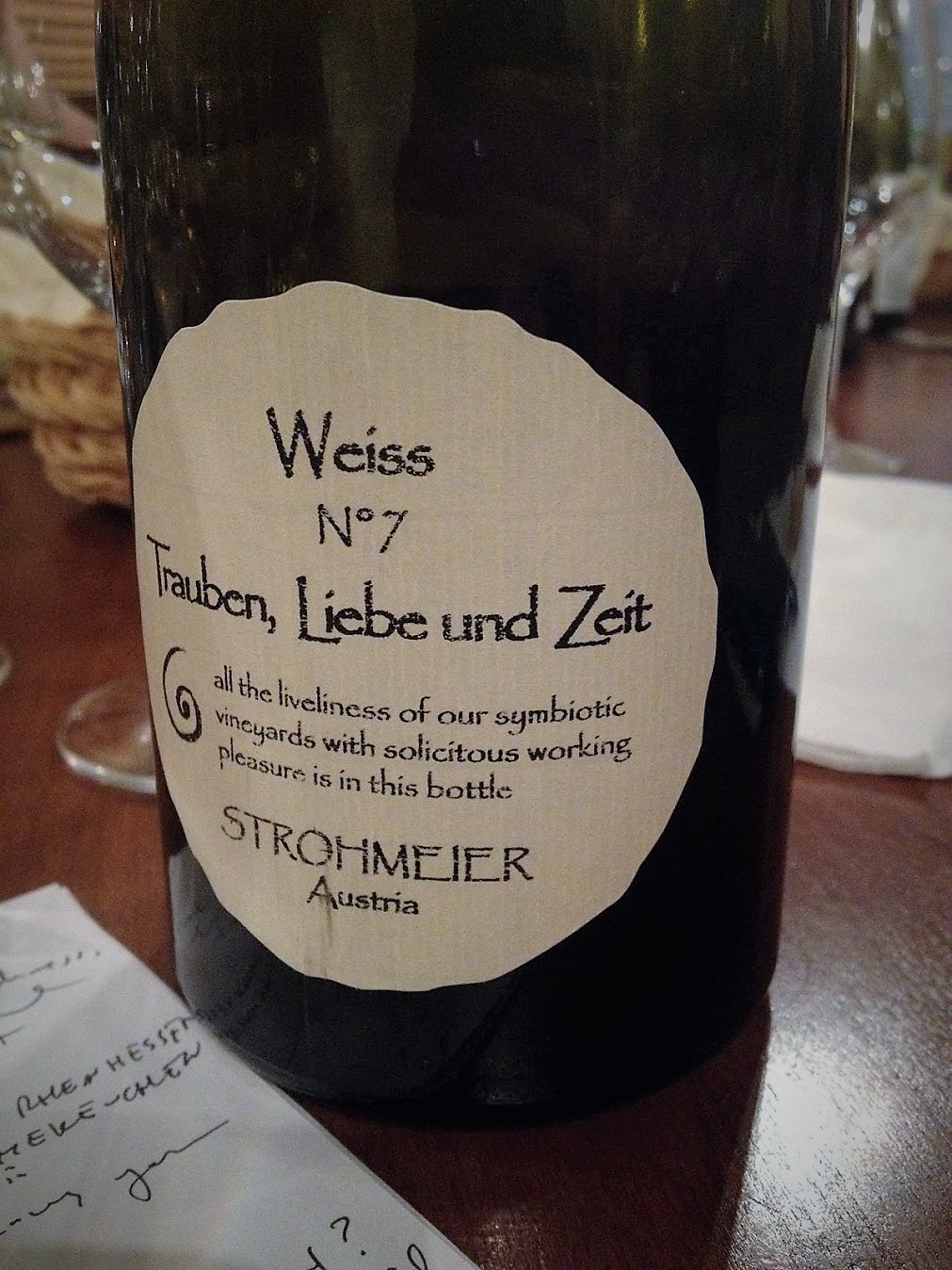
Cloudy light green-gold in the glass. Nose of white pepper, lemon, “sour orange,” lees and more besides. In the mouth, it’s soft textured and a bit spritzy. A wallflower at first though chewing reveals all kinds of complexity – including pear, herbs and chalk – and some depth. Comments from the peanut gallery: “like a gueuze,” “tastes like scrapes” (which, as I learned, are light metal shavings), “stealth acidity.” The long finish is faintly bitter and sour. Unique, fascinating and delicious. I was ready to lay down my money until I saw the price… (Buy again? Only if feeling flush, alas.)
MWG February 2, 2017, tasting: flight 3 of 9
Ward & associés tasting (2/9)
Located near Bockenheim in the Palatinate, the 20-something Brand brothers took over the estate from their father in 2004. Farming practices, rigorously sustainable since 1994, were certified organic in 2015. The wine-making is non-interventionist.
Pfalz 2015, Riesling trocken, Vom Berg, Weingut Brand ($23.53, private import, 12 bottles/case)
The estate’s entry-level line. 100% Riesling from estate-owned organically farmed vines. Fermented in stainless steel tanks. Screwcapped. 13% ABV. Quebec agent: Ward & associés.
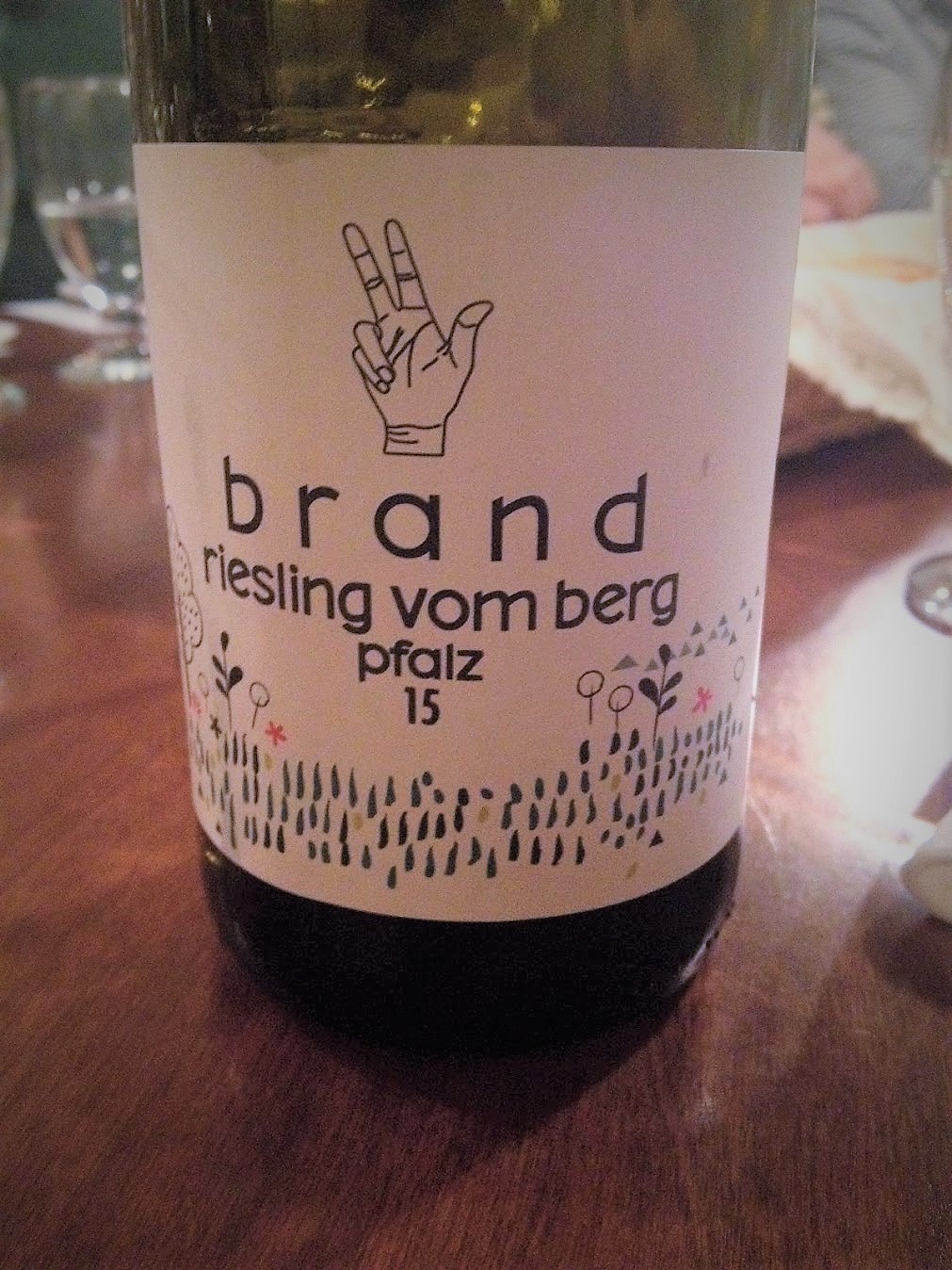
Initially sulphurous nose (not uncommon with screwcapped Rieslings) gives way to slate, lemon-lime and green apple overtoned with honeysuckle. Dry and fruity with nipping acidity, tons of crushed minerals and the faintest hint of caramel. Long, savoury and alive. Like Germany meets Alsace in a glass. Great QPR. Deservedly one of the hits of the tasting. (Buy again? Multiples.)
Pfalz 2015, Weissburgunder trocken, Weingut Brand ($26.37, private import, 12 bottles/case)
Inspired by a similar drawing on the cornerstone of a local church, the front label’s raised hand indicates this is part of the Schwurhand (oath-taking) line of wines made using grapes from the estate’s top vineyards 100% Weissburgunder (aka Pinot Blanc) from organically farmed vines. Manually harvested. Gently pressed and briefly macerated. Fermented with indigenous yeasts. No added anything. Unfiltered and unfined. Screwcapped. 12.5% ABV. Quebec agent: Ward & associés.
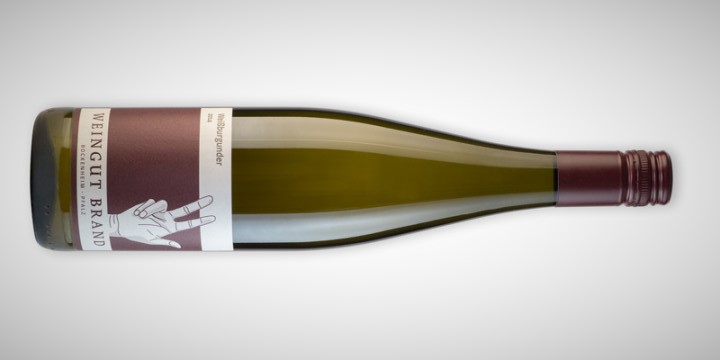
Intriguing nose of chalk, gooseberry/quince, green tea and coriander seed. Equally intriguing in the mouth with a texture that has people grapsing for descriptors like “soft oily velour.” Lactic, bitter and faintly fruity (“like bad plum”) threads intertwine with dusty minerals and soft acidity. A distant mustardy note chimes on the long finish. Complex, savoury and satisfying. If you think Pinot Blanc makes only facile wines, think again. (Buy again? Yes.)
MWG February 2, 2017, tasting: flight 2 of 9
Morgon, Morgon, not Morgon
Morgon 2014, Côte de Py, Jean Foillard ($41.09, private import, 12 b/c)
100% Gamay from organically farmed vines between ten and 90 years old and grown in manganese-rich schist and granite. Manually harvested. Whole-cluster fermentation lasts three to four weeks. Matured six to nine moths in used oak barrels. No additives of any kind during the wine-making. Unfiltered and unfined. A minimal amount of sulphur dioxide may be added at bottling. 12.5% ABV. Quebec agent: Rézin.
Aromatic, very Gamay nose: slate, “dried leaves” (per another taster), floral notes and a whiff of earthy funkiness along with the expected red berries. Medium-bodied and satin-textured. A touch of sweet red chile savouries the lush fruit. The frame of light tannins, the illuminating acidity and a vein of dark minerals run from start through the nicely sustained finish. Accessible if somewhat monolithic at this stage, it showed best at the end of the tasting, four hours after it was opened and double-decanted. A couple of years or more in the cellar will do a world of good. (Buy again? Done!)
Morgon 2014, Cuvée Corcelette, Jean Foillard ($38.75, 12201643)
100% Gamay from organically farmed vines averaging 80 years old and grown in sandstone soil. Manually harvested. Whole-cluster fermentation lasts three to four weeks. Matured six to nine moths in used oak barrels and a single 30-hl foudre. No additives of any kind during the wine-making. Unfiltered and unfined. A minimal amount of sulphur dioxide may be added at bottling. Reducing sugar: less than 1.2 g/l. Quebec agent: Rézin.
Nose of red berries, faint spice, horse/leather: similar to the Côte de Py though a shade less complex, outgoing and airy. So fresh, pure, savoury and delicious. Ripe fruit, good structure and length, with the minerals most prominent on the finish. Perhaps a little less dense, more rustic and more open than its sibling though also sure to benefit from being left unopened for a year or three. Is there a better Beaujolais at the SAQ? (Buy again? Yes.)
After we’d finished with the Foillards, one of tasters generously offered to open a new arrival he had purchased on his way to the tasting room. I wondered whether its coming after two top Morgons might show it to disadvantage but I needn’t have worried.
Vin de France 2015, Le P’tit Poquelin, Maison B. Perraud ($22.70, 12517998)
100% Gamay from biodynamically farmed 40-year-old vines. Manually harvested. The whole clusters undergo carbonic maceration for 12 days. No additives, including sulphur. Unfiltered and unfined. Reducing sugar: 1.3 g/l. 13% ABV. Quebec agent: Raisonnance.
Appealing nose: floral, slate, berries, sap. A bit of spritz on the palate (carafe the wine for hour an hour if that sort of thing bothers you). On the lighter side of medium-bodied. The sweet fruit has a sour edge and is lightly structured by fine, supple tannins and glowing acidity. Sappy, lip-smacking finish. An easy-drinker with real presence. What it lacks in dimensionality and class compared with the Foillards, it makes up for in immediate appeal. The most successful of the three vintages of this wine that I’ve tasted. (Buy again? Yes.)
MWG October 27, 2016, tasting: flight 5 of 7
Ganevat caveat
Vin de France 2014, J’en veux encore !!!, Anne & Jean-François Ganevat ($36.75, 12884190)
The original label, an ink sketch of the backside, from the shoulders to the knees, of a seated young woman wearing only a thong, has been replaced for the Quebec market with a text-only label. An 70-30 blend of Gamay from the Beaujolais and Trousseau from very old Jura vines, hence the vin de France designation. All the grapes are organically farmed, manually harvested and destemmed. Whole grape fermentation (old-fashioned carbonic maceration) is with indigenous yeasts. Matured 10 months in tronconic wood tanks. No fining, filtration or added sulphur. Reducing sugar: < 1.2 g/l. 10.9% ABV per the label, 12% per the SAQ. Quebec agent: Rézin.
Strawberries, dog hair, minerals, eventually spice. A mouthful of sweet-tart red fruit and minerals on the lighter side of medium-bodied. Super-supple tannins (the acidity’s carrying the structure here). Not what you’d call long. Pricey but pure, delicious and so very quaffable. (Buy again? Am not returning our backup bottle, so yes, but only that one.)
Vin de France 2014, Libre-K, Anne & Jean-François Ganevat ($42.00, 12884405)
80% Gamay from Morgon blended with old indigenous varieties from Ganevat’s vineyards in the Jura. Naturally vinified: manally harvested, destemmed grapes; whole-grape fermentation (old-fashioned carbonic maceration) with indigenous yeasts in tronconic vats; 12 month’s maturation in old foudres; no fining, filtration or added sulphur. Reducing sugar: 12.5%. Reducing sugar: 1.2 g/l. Quebec agent: Rézin.
Our first bottle was corked. The backup was clean as a whistle. Savoury/funky nose, the fruit plummier and the minerals slatier than the J’en veux encore. In the mouth, it’s darker, richer and deeper though not particularly fruity. Light but persistent tannins and sleek acidity provide structure. Finishes clean and long. Approachable now but will surely benefit from a few years’ ageing. Not without appeal, but is that enough to justify a $42 price tag (which, as one taster pointed out, is almost exactly the same as for Foillard’s excellent 2014 Morgon “Côte de Py”)? (Buy again? Only if feeling flush.)
While the assembled tasters enjoyed these, no one thought they represented good value. Ten dollars too expensive was the general verdict.
MWG August 12th tasting: flight 5 of 8
Different drummers
Saint-Chinian 2014, Antonyme, Domaine Canet-Valette ($17.80, 11013317)
A 50-50 blend of Mourvèdre and Cinsault from organically farmed vines. Manually harvested. The grapes are destemmed and fermented in tanks for 15 days. The wine is then transferred to other tanks for four months’ maturation. Sees only stainless steel until bottling. Reducing sugar: 2.5 g/l. 13.5% ABV. Quebec agent: Le Maître de Chai.
Slightly candied red and black fruit with faint smoke and animale notes. Medium-bodied. Smooth, dense, fruity and dry but also listless and lacking relief, especially next to the À ma guise. I recall an earlier vintage (the 2006?) being more Beaujolais-like. Admittedly, the context didn’t do the wine any favours and I expect it will show better with food, ideally something red meaty and grilled (I’ll be hanging on to my backup bottle to see). (Buy again? Maybe.)
Vin de France 2014, À ma guise, Domaine Les Terres Promises ($25.87, private import, 6 bottles/case)
The 13-hectare estate, which includes a parcel in the Bandol AOC, is owned and operated by former Parisian political operative and author Jean-Christophe Comor and located in the Var department in the foothills of the Massif de la Saint-Baume near the village of La Roquebrussanne. The farming is organic, the wine-making is non-interventionist and the chai is open to the air. This primeur-style wine is a blend of around a dozen varieties including Carignan, Grenache, Cinsault, Clairette and Carignan Blanc. Unfiltered. No or very little added sulphur. 12.5% ABV. Quebec agent: Le Vin dans les Voiles.
Complex, “natural” nose. Fleet yet mouth-filling. Chewy, juicy red fruit with exuberant acidity, supple tannins, a healthy dose of minerals, a squirt of vine sap and a dusting of earth. Smackingly tart finish. So very drinkable. A joy. (Buy again? Done!)
I first encountered the À ma guise at Satay Bros., where it was being poured by the glass. I liked it enough to have a couple of refills and, a few days later, to trek through the rain on foot and public transit to the middle of nowhere, aka the SAQ’s Futailles Street warehouse, to pick up a case so I could serve it at the tasting. The tasting’s bottle was cloudier than I remembered, a bit funky and not quite as stellar as the Satay Bros. bottle (which may have been open and poured from for a while), though it was still good enough for me to have no trouble selling the remainder of the case. Opened day or two later, a third bottle was verging on vinegar. Such are the vagaries of natural wines. Yet when the wine is on, such are the rewards that we put up with the disappointments.
MWG March 31st tasting: flight 5 of 6
Thinking globally, drinking locally
The MWG’s early March tasting was led by the irrepressible Steve Beauséjour, who daylights as a sales rep of Rézin. To say he outdid himself would be an understatement.
We got things rolling with a stupendous dry white served double-blind from a labelless bottle.
The bouquet is a kaleidoscope of seashells, citrus, oats, limestone, bread, a hint of nuts and more. On the palate, it’s a mouth-watering mix of saline minerals, restrained fruit and trenchant acidity, dazzlingly pure and so dry, especially on the long finish. As bracing and engaging a white as I’ve encountered in a coon’s age.
I happened to be sitting next to two French expats, both of them Loire lovers, and all three of us had the same initial reaction: a faintly oxidized Chenin Blanc from a top Loire producer. As we spent more time with the wine and listened to Steve, doubts began to creep in. “Un chablis peut-être,” hazarded one of the français. Other tasters guessed the Jura, Italy, Austria and South Africa. All were shot down.
“Maybe it’s from Laval,” quipped a taster, throwing up his hands. (Île Jésus’s improbable Château Taillefer-Lafon has become something of a meme for the group.)
“You’re getting warm,” said Steve to the astonishment of everyone.
The wine? A special bottling of Québec 2014, Chardonnay, Les Rosiers, Les Pervenches, the regular bottling of which retailed for $25 during the few weeks it was available. This 100% Chardonnay is made from fruit from organically and biodynamically farmed vines grown near Farnham. The grapes are manually harvested and sorted, vinified naturally (indigenous yeasts, no additives, minimal intervention) and matured in casks. The 24 bottles of this special bottling were filled with wine drawn directly from the cask after one year’s maturation. In contrast to the regular cuvée, the wine is unfined, unfiltered and unsulphured.
If I’ve tasted a better Canadian Chardonnay, I don’t recall it. Truly world-class.
MWG March 12th tasting: flight 1 of 7
Two Pinot Noirs and an interloper
The teaser sent to MWG members prior to the tasting described this flight as “Two light-bodied reds. Same country, same grape variety. No other connections.” The third bottle was a last-minute addition, a new arrival (or maybe a restocking) generously donated by one of the group’s members.
Savoie 2014, Pinot Noir, Cuvée Gastronomie, Jean Perrier et Fils ($17.25, 00856997)
100% Pinot Noir. The grapes are manually harvested and pneumatically pressed. After clarification, thee must is transferred to temperature controlled (20°C) stainless steel tanks for three weeks’ alcoholic fermentation, followed by malolactic fermentation. 12% ABV. Quebec agent: LVAB.
Red berries and stems, slate, spice, earth and a hint of blood. One taster detected “endives.” Light-bodied and quite dry, with clean, bright fruit. Lightly astringent more than tannic. What minerals there are come out on the fair finish. A simple, supple, alpine wine that doesn’t scream Pinot Noir but is fresh and tasty enough. Not a keeper and should be drunk lightly chilled. Would have been a good candidate for the Without All flight. (Buy again? Sure.)
Alsace 2012, Rouge, Domaine Marcel Deiss ($26.35, 12185410)
100% Pinot Noir according to SAQ.com and the domaine’s Quebec agency; others claim it is a Pinot Noir-dominated field blend. Whatever the variety, the grapes come from biodynamically farmed vines. Manually harvested. Fermented with indigenous yeasts and regular punch-downs. Matured 12 months. Sees only stainless steel until bottling. 12% ABV. Quebec agent: A.O.C. & Cie.
Now we’re talking. As the French say, ça pinote! Blossoming nose of “cooked strawberries,” earth, leafmould and mushroom. Medium-bodied. Richer than the Perrier. In fact, denser and deeper than most Alsatian Pinot Noirs of my acquaintance. The fruit is juicy, the acidity smooth, the tannins supple. An earthy bass line rumbles nicely along though there aren’t the kind of high notes and overtones you can get with red Burgundies or Schueller’s sui generis Alsace PNs. Still, I’d gladly buy more of this suavely rustic wine. Carafe an hour or two and serve lightly chilled for best results. (Buy again? Yep.)
Langhe Nebbiolo 2009, Aurelio Settimo ($25.60, 12796616)
100% Nebbiolo from young vines growing in the Barolo appellation. Manually harvested. Fermentation on the skins with frequent punch-downs and pump-overs took place in concrete tanks at around 28°C (not temperature controlled) and lasted eight to ten days. Matured 48 months in concrete tanks. 14% ABV. Quebec agent: Vitis.
A wild mouse of a nose: “molasses banana cake,” kirsch, cut stems, rum-raisin, marzipan, “plasticine.” In the pie-hole, it’s medium-bodied, quite intense and a little alcoholic, a savoury mix of fruit, spice and minerals with lots of tertiary flavours, including an “aftertaste of black tea.” The acidity’s a bit edgy, the airframe tannins are mostly resolved and the finish, with its odd note somewhere between metallic and acrid, is longer than you want it to be. We’ve enjoyed wines from this estate in the past; this one not so much. An off bottle? (Buy again? Based on this bottle, unlikely.)
MWG January 14th tasting: flight 5 of 7
Cause for regret
Bardolino Classico 2014, Tacchetto, Guerrieri Rizzardi ($19.50, 12132465)
Corvina (80%), Merlot (10%) and Rondinella (10%) from vines averaging five to 42 years old and grown in the dry-farmed Tachetto vineyard. The grapes are picked by machine and hand and destemmed. Fermentation at 25-30°C with selected yeasts lasts 10 to 15 days. Matured three to six months off the lees. Sees only stainless steel until bottling. Filtered. Reducing sugar: 3.8 g/l. 13% ABV. Quebec agent: Valmonti.
Lilting nose of funky cherry, fall leaves and sandalwood spice. In the mouth, it’s a featherweight, a caress of faintly sweet-and-sour fruit, fluid acidity and gossamer tannins that lend an ephemeral astringency to the finish. A light wash of mineral and wood flavours adds interest but not enough to stop you from thinking there’s not much there there. Serve lightly chilled. (Buy again? Probably not but… see below.)
While I didn’t taste them side by side, this 2014 initially seemed paler, sweeter and less alluring than the 2013, which I rather liked (“dry, tart, supple tannins, clean finish, moreish” per my May 2015 note). After Sunday dinner, I transferred the remaining wine into a half bottle (filling it right up), corked the bottle and stuck it in the fridge overnight. And lo, the wine was better the next day – slightly rounder and more vibrant, with the morello cherry to the fore – maybe even better enough to convince me to buy a second bottle.
And yet, as enjoyable as this and similar wines can be, I increasingly find drinking them a cause for regret – regret at what might have been. That point was driven home by a bottle of Ca’ de Noci‘s Sottobosco, a “natural” Lambrusco in everything but name, savoured the evening before I opened the Rizzardi. Though similar in weight and application, the Sottobosco delivered energy, refreshment, personality, engagement, charm and satisfaction that made the Bardolino pale in comparison. Imagine what the Tacchetto could be if the vineyard was farmed organically, if the yields were less than 85 hl/ha, if the grapes were picked only by hand, if native yeasts were used for fermentation, if intervention in the cellar was minimized, if the wine was bottled unfiltered and unsulphured. Unfortunately, at this point, imagine is all we can do.

 Brett happens
The horse he rode in on
with 11 comments
Emilia Rosso 2014, Trebbiolo, La Stoppa ($23.10, 11896501)
A blend of Barbera (60%) and Bonarda (40%) from organically farmed three- to 20-year-old vines. Fermented with indigenous yeasts. Matured five months in stainless steel. Unfiltered and unfined. A small squirt of sulphur dioxide is added at bottling. Reducing sugar: 1.5 g/l. 13% ABV. Quebec agent: oenopole.
Some barnyardy funk on opening but also mulberry, raspberry candies, old wood, earth and hints of game and papier d’Arménie. As is sometimes the case with this cuvée, there’s a bit of spritz that mostly dissipates, especially if the wine is carafed. That aside, it’s medium-bodied and very dry, full of tangy fruit, tart acidity and medium tannins with a nice rasp and an appealing astringency that lingers through the minerally finish. Virtually begs for casual fare – think pizza, sausages, grilled pork – and can handle tomato with aplomb. Just don’t serve it too warm. A return to form after the verging on off-dry 2013, this has some of the rustic appeal of the much missed Gutturnio, which cuvée it replaces. (Buy again? In multiples.)
Preparing this note for posting has my mouth watering, so much did I enjoy the wine. Several friends have also expressed delight with the 2014 (“back to being eminently quaffable” to quote one of them). All of which gives the lie to another local blogger’s claim that (translating here and below) “No one could like this. Undrinkable!”, something said blogger knows is untrue as he goes on to cherry-pick Cellartracker comments in support of his position while ignoring the majority of favourable reviews appearing alongside them. (Not that I place stock in scores, but the Cellartracker average is 89 points for the 2013 and 2014 and 87 points for the 2012. Wine Spectator reportedly rated it 89 points. Hardly undrinkable.)
Maybe the wine’s not to the blogger’s taste. Fine: de gustibus non disputandum est. Maybe he doesn’t “get” natural wines. Maybe he is unaware that wines from this area and nearby parts of Piedmont sometimes have – and are prized for – the funky, fizzy qualities he objects to. Maybe his particular bottle was actually defective, a possibility that doesn’t appear to have occurred to him. Or maybe his declaring not just his bottle but every bottle to be a “foul horse,” his suggesting that the winemaker, agent and SAQ were asleep at the switch, his screaming in all caps that the wine should “be withdrawn at once” point to another agenda.
Notwithstanding such irresponsible reporting, the 2014 Trebbiolo has been selling well and is already in low supply at or long gone from stores like the Laurier and Beaubien Sélections, whose customers tend to be more clued-in than others. If you look, you’ll find bottles here and there on the island in addition to the 60 or so on SAQ.com. And if it’s the kind of wine that pushes your buttons, look you should.
Written by carswell
October 7, 2016 at 15:17
Posted in Commentary, Tasting notes
Tagged with Affordable, Emilia-Romagna, food pairings, Natural wine, Organic, QPR winner, Red wine