Posts Tagged ‘No added sulphur’
Meinklangers
The Mo’ Wine Group’s latest agency tasting was led by La QV’s head honcho Cyril Kérébel. The wine-up featured a particularly high proportion of whites, all with great minerality and a saline edge, as well as a wowser rosé and a handful of super-drinkable reds. We began with a trio of new-to-most whites from one of our favourite producers.
Burgenland 2015, Burgenlandwhite, Meinklang ($23.00, private import, 12 bottles/case)
A blend of Grüner Veltliner (50%), Welschriesling (40%) and Muscat Ottonel (10%) from biodynamically farmed vines. Manually harvested. Fermented (with indigenous yeasts) and matured in stainless steel tanks. Screwcapped. Residual sugar: 4.9 g/l. 12% ABV. Quebec agent: La QV.
Hay, straw, white flowers, chalk, distant “chives” and dried orange peel. Round in the mouth, the acidity smooth, the texture verging on waxy. The upfront fruit and underlying minerals give ways to a long savoury, saline finish with a lingering white pepper note. “Building spiciness underneath rosewater,” proclaims one taster. A perfect summer white is the general consensus. (Buy again? Yep.)

Somló 2015, H15, Meinklang ($37.65, private import, 6 bottles/case)
100% Hárslevelü from biodynamically farmed vines grown at the base of the extinct Somló (pronounced shom-low) volcano in southwest Hungary, not far from the Austrian border. The must is passed through a coarse filter before fermentation. The wine-making – which takes place at the estate’s Burgenland winery – is non-interventionist, with no additions except, possibly, a tiny squirt of sulphur at bottling. Matured in stainless steel tanks and old oak barrels for 12 months. Residual sugar: 4.2 g/l. 12% ABV. Quebec agent: La QV.
Complex, aromatic nose dominated by honey, spice and yellow fruit. Dense and weighty (not heavy) on the palate, the fruit wrapped around a softly glowing core of acidity. The complex of flavours turns impressively savoury/salty/sweaty on the mid-palate. Very long. Less tense and minerally, more stone-fruity and unctuous than some earlier vintages but no less engaging. (Buy again? Yep.)
Burgenland 2014, Konkret Weiss, Meinklang ($65.75, private import, 6 bottles/case)
A field blend of three Gewürztraminers, specifically Red Traminer, Yellow Traminer and plain old Gewürztraminer. Macerated on the skins for 21 days. Vinified in egg-shaped concrete tanks. No added anything, including sulphur. Residual sugar: 1.6 g/l. 12% ABV. Quebec agent: La QV.
For once, an orange wine that actually has an orange cast. One taster describes the complex nose of gardenia, cedar, spice and a funky whiff as “like the old lady in front of me on the bus, eating a grapefruit.” Dazzlingly complex and layered on the palate. Rich yet fluid. Dry but not austerely so. Structured by bright acidity and light tannins. The endless finish is awash in umami. (Buy again? Yep, wincing only slightly at the price.)
And Cyril shared some good Meinklang news with us: the SAQ will be including their impressive “Graupert” Pinot Gris in its Opération vins oranges release this fall and will also be carrying their fine ancient grains beer.
MWG June 8th tasting: flight 1 of 6
Red ends
After working with the Les Vignerons d’Estézargues cooperative for several years, Édouard Laffitte, who had no background in farming, decided to set out on his own. Invited by Loïc Roure, then newly settled in the Roussillon, to share the wine-making facilities he had just acquired for his Domaine du Possible, Laffitte began searching for vines, specifically ones growing in north-facing, high-altitude vineyards, the better to make wines that were fresh and not excessively alcoholic. He eventually pieced together 7.7 hectares of parcels in the communes of Lansac (granitic sand), Rasiguères (shale) and Cassagnes (gneiss) to make the Domaine Le Bout du Monde, so named because visitors told him that getting there was like travelling to the end of the earth.
The farming is organic and the vineyards are worked manually. The wines are vinified by soil type with as little intervention as possible (indigenous yeasts, no filtering or fining, no additives). The estate currently makes five reds (Grenache, Carignan and Syrah alone and in blends) and one white (Roussane).

Côtes du Roussillon 2014, Tam-Tam, Domaine Le Bout du Monde ($29.30, private import, 12 bottles/case)
100% Syrah from vines rooted in slate. Vinified in tanks. Given three weeks’ carbonic maceration. 12.5% ABV. Quebec agent: Glou.
Nose: red fruit, spice, cedar, background earth, distant funk. Mouth: Dry, spicy, sawdusty. Lively acidity, supple tannins. Medium body, satiny texture. Pure, straightforward, fruity and enjoyable. (Buy again? Yes.)
Côtes du Roussillon 2014, Hop’là, Domaine Le Bout du Monde ($32.25, private import, 12 bottles/case)
Grenache (40%), Syrah (40%) and Carignan (20%) from vines rooted in gneiss. Vinified in tanks. Given three weeks’ carbonic maceration. 12.5% ABV. Quebec agent: Glou.
Far more savoury nose: black raspberry, leafmould, slate and leather. Medium-bodied and fleet, with bright acidity, springy tannins, lively pure fruit. Clean finish. (Buy again? Yes.)
Côtes du Roussillon 2014, La Luce, Domaine Le Bout du Monde ($43.75, private import, 12 bottles/case)
100% Grenache from 35-year-old vines rooted in gneiss. Vinified in tanks. Given four weeks’ carbonic maceration. 13% ABV. Quebec agent: Glou.
The most complex of the three. Floral, licorice, plum cake, marzipan. Smooth and satiny. Layered berry fruit, wood and minerals. Fine complex tannic structure. Sleek acidity. Long finish with a vaporous note. Gorgeous. Delivers all of the upsides of Grenache and none of the downsides. (Buy again? Yes.)
MWG April 21st tasting: flight 5 of 6
Natural born swillers
Colli Trevigiani 2015, Rosso, Costadilà ($23.75, private import, 12 bottles/case)
Located in Valdobbiandene in the Veneto, Costadilà is best known as a producer of Prosecco. The small estate practices organic polycultural farming, uses only indigenous yeasts and never filters or adds sulphur. This is a blend of Refosco and Merlot. 10.5% ABV (!). Quebec agent: Glou.
Morello cherry, gingerbread, a hint of animale and notes described as “asparagus” and “old leather-bound photo albums.” Medium-bodied, fluid and fresh, full of ripe if tart fruit, brilliant acidity and supple tannins. Finishes long with a faint terminal rasp. Seems tailor-made for salume and stuffed pasta in red sauce. (Buy again? Absolutely.)


Umbria 2015, Il Rossodatavola, Collecapretta ($36.50, private import, 6 bottles/case)
Cantina Collecapretta is located about 20 km north-northwest of Spoleto. Of the estate’s eight hectares, only four are given over to vines, the remainder being planted with olive trees, farro and other ancient grains. In a good year, the wine production totals 8,000 bottles. Farming is organic. The grapes are manually harvested and fermented in open-top cement vats with no temperature control. The wines are matured in glass-lined cement vats and resin tanks before being bottled unfiltered and in accordance with the lunar cycle. No sulphur is added at any point in the process. This red table wine is mostly Sangiovese, maybe with a little Barbera, Merlot, Sagrantino and/or Ciliegiolo. 13.5% ABV. Quebec agent: Glou.
Initially reduced nose of barnyard and seaweed segues into red fruit, red meat and sandalwood. Medium- to full-bodied. Spicy cherry hard candies and a touch of green. Extract, bright acidity and medium tannins are well balanced. A bit bitey on the long finish. Intense, authentic and appealingly rustic. (Buy again? Yep.)
MWG April 21st tasting: flight 4 of 6
Brand new and old
The April 21st tasting featured wines represented in Quebec by Glou and was led by the agency’s prime mover, Jack Jacob. We started with a flight of four fine Alsatians.
Created in 1950 and based in Ergersheim, Domaine Brand sits in the middle of La Couronne d’or, a swath of vineyards stretching from Strasbourg to Marienheim. The estate’s 10 hectares of vineyards are in the communes of Ergersheim, Osthoffen and Wolxheim. Farming has been organic since 2001 and certified biodynamic (Demeter) since 2015.
Current winemaker Philippe Brand took the helm in 2008, following stints at Domaine de Montchovet in Burgundy and wineries in the Peloponnese (Greece) and Barossa Valley (Australia). He soon imposed a regime of non-interventionist wine-making where the only additive, if any, is small amounts of sulphur dioxide. The estate makes a separate line of unsulphured natural wines under the Apollinaire moniker whose labels feature calligrams by the eponymous artist.

Alsace 2013, Riesling, Kefferberg, Brand & Fils ($33.06, private import, 6 bottles/case)
100% Riesling from the Kefferberg vineyard. Manually harvested. The whole clusters are gently pressed. Fermented (with indigenous yeasts) and matured in large barrels. 12.5% ABV. Quebec agent: Glou.
Gold bronze to the eye. Complex nose of apple, pear and chalk with hints of petrol and “Meyer lemon” (quoting another taster). Rich but not heavy in the mouth, the fruit tending toward baked apple. Dry and very minerally. The combination of acidity and minerals lends an almost “tannic bite” to the long finish. (Buy again? Sure.)
Alsace 2015, La Chimère, Charles et Philippe Brand ($34.76, private import, 6 bottles/case)
One of the estate’s Apollinarie wines. 100% Riesling from the Osthoffen vineyard. Manually harvested. The whole clusters are gently pressed. Fermentation with indigenous yeasts and 12 months’ maturation take place in third- and fourth-fill barrels. Unfiltered and unfined. No added sulphur. 13% ABV. Quebec agent: Glou.
Paler. Faintly funky nose of white flowers, lemon peel, flint, barley sugar and a pungent note some described as bubble gum and others as camphor. A bit spritzy on the palate. Less rich and extracted, more crystalline than the Kefferberg. Bone dry (0.5 g/l residual sugar). Lingering green mango. I like. (Buy again? Yes.)
Alsace 2015, Fleurs, Charles et Philippe Brand ($37.64, private import, 6 bottles/case)
One of the estate’s Apollinaire wines. 80% Pinot Gris, 20% Riesling. Manually harvested. The whole clusters are gently pressed. Fermentation with indigenous yeasts and 12 months’ maturation take place in third- and fourth-fill barrels. Unfiltered and unfined. No added sulphur. Residual sugar: 1.0 g/l. 13.5% ABV. Quebec agent: Glou.
Engaging nose of white peach, white spice and slate with honey and lactic notes. Very dry yet with an “implied sweetness.” Buoyant acidity. Faint spritz. Pearish with bergamot overtones. Mineral-rich. Long bitter-edged finish. Complex. Impressive. (Buy again? Gladly. And I’m really looking forward to trying the orange version.)
Alsace 1999, Riesling, Kefferberg, Brand & Fils ($56.34, private import, 6 bottles/case)
100% Riesling from the Kefferberg. Manually harvested. The whole clusters are gently pressed. Fermented (with indigenous yeasts) and matured in large barrels. 12% ABV. Quebec agent: Glou.
A deep bronze colour approaching that of iced tea. Complex, unfathomable nose: dried apple, brown sugar, smoke, hints of petrol and “spicy green” or “dried mint” and more. Equally complex in the mouth, the flavours echoing the nose and resonating on their own. Super dry. Smooth acidity. Considerable depth. Endless finish with, once again, a hint of something camphor-like. The price is more than reasonable for a wine of this age and quality. (Buy again? Oh, yes.)
MWG April 21st tasting: flight 1 of 6
WINO tasting (3/6)
Located in the commune of Montaigu in the southern Jura, the estate now known as Domaine Pignier was created by monks in the 13th century and acquired by the Pignier family in 1794. It was certified biodyanmic in the early 2000s. The focus is on the vineyards, with a minimalist approach in the cellar (no added anything except occasionally minute amounts of sulphur).
Crémant du Jura, Rosé, Domaine Pignier ($36.46, private import, 6 bottles/case)
100% Pinot Noir from biodynamically framed vines. Manually harvested. Briefly macerated and fermented using a pied de cuve starter. The base wine is matured six months in oak barrels, then sparkled using the traditional method, with no dosage. No added sulphur. The bottles are aged on lattes for 12 months. 12.5% ABV. Quebec agent: WINO.
Deep salmon pink with pink foam and fine bubbles. Intriguing nose: strawberry cheese danish, “cheese rind,” prosciutto, “baker’s yeast” and more. Dry and buoyant on the palate. Though there’s a soft-glowing core of red berries, the fruit is ethereal, haunting more than inhabiting a matix of minerals that prompted descriptors like “saline” and “seaweed.” Long savoury finish. Lovely. (Buy again? Yes.)


Côtes du Jura 2014, Trousseau, Les Gauthières, Domaine Pignier ($57.33, private import, 6 bottles/case)
100% Trousseau from biodynamically farmed, massal propagated vines. Yields are kept very low (25 hl/ha). The manually harvested grapes are destemmed, macerated and fermented using a pied de cuve starter and manual punch-downs and pump-overs during an entire lunar cycle. Matured 12 months in oak barrels of various sizes. Unfiltered. Bottled by gravity and with no added sulphur on a fruit day (per the lunar calendar). 11.5% ABV. Quebec agent: WINO.
Morello cherry, hard red candy, dried leaves, limestone, eventually tomato and “umami.” More like cranberry in the mouth with charcoal overtones. Medium-bodied and satin-textured. Chewing brings out the fruit and reveals dimension and complexity. The fine tannins add a mild astringency to the long, vapourous finish with its faint almond note and Szechuan pepper-like numbingness. Accessible but young and best cellared for five or 10 years. Way pricey but one of the most beautiful Trousseaus I’ve tasted. (Buy again? Yes.)
MWG March 23rd tasting: flight 3 of 6
Ward & associés tasting (9/9)
Champagne grand cru 2013, Rosé, Shaman, Marguet ($68.75, private import, 6 bottles/case)
A blend of Chardonnay (71%) and Pinot Noir (29%) from organically and biodynamically farmed vines. The soil is worked with horses and the winery is gravity fed. The wine’s pink colour comes from the addition of five to eight percent still red wine. Bottled in July 2014. Disgorged in March 2016. Dosage: 2.4 g/l. No added sulphur. 12.5% ABV. Quebec agent: Ward & associés.

Dusty rose with salmon-pink glints, little bead or foam. Engaging nose of cherry, red berries and brioche. So fruity and dry, so elegant. The fine effervescence dances on the palate. The pure fruit – wild strawberries? – fades to chalky minerals. The wine’s depth and complexity are appreciable. Finishes clean and long. Great immediate appeal but by no means a floozy. A joy to drink. (Buy again? Yes.)
MWG February 2, 2017, tasting: flight 9 of 9
Ward & associés tasting (6/9)
Franken 2015, Kleine Wanderlust, 2Naturkinder ($28.32, private import, 6 bottles/case)
80% Regent and 20% Dornfelder from estate-owned, organically farmed vines around 15 and 30 years old respectively. The former was fermented on the skins for two weeks; the latter was crushed by foot and given semi-carbonic maceration for a week. Underwent malolactic fermentation. Matured on the lees in old oak. No added anything, including sulphur dioxide. Unfiltered and unfined. Bottled in April 2016. 3,000 bottles made. 10.5% ABV. Quebec agent: Ward & associés.

Effusive nose: floral, slate, pink peppercorn, “raspberry-cherry hybrid.” Some rose shows up in the mouth along with a bit of grip on the finish. The fruit is dark and black curranty, the acidity energetic but well integrated. A touch of velours in no way interferes with the wine’s impressive fluidity. Certifiably chuggable. And check out that alcohol level! (Buy again? Yup.)
MWG February 2, 2017, tasting: flight 6 of 9
Ward & associés tasting (5/9)
Burgunland 2015, Gemischter Satz, Alexander Koppitsch ($40.98, private import, 6 bottles/case)
The estate is located in Neusiedl am See, a village and district on the north shore of Lake Neusidel, southeast of Vienna. As implied by the Gemischter Satz moniker (though I don’t believe the wine qualifies for the Weiner Gemischter Satz appellation), this is a field blend of co-planted white varieties, including Grüner Veltliner, Brauner Veltliner, Pinot Blanc, Zimttraube, Ochsenauge, Isabellatraube, Neuburger, Traminer, Muskat and Sauvignon Blanc. Planted in 1934, the vines are estate-owned and biodynamically farmed. Vinified as an orange wine, spending 14 days on the skins. Fermented with indigenous yeasts. Matured in old barriques. Unfiltered and unfined, with no added sulphur. 12.5% ABV. Quebec agent: Ward & associés.
Slightly hazy bronzy rose-gold in the glass. Savoury, spicy and not particularly fruity nose with notes of preserved lemon and browning apple as well as a whiff of volatile acidity. In the mouth, it’s medium weight, fluently acidic, faintly tannic and somewhat inscrutable, like “mineral water” or “weak tea” along with lemon, a suggestion of stone fruit and minerals. Actually quite complex, if subtly so, and long. Smoothed out and unfurled nicely after three hours. Will be interesting to see what gives in three or four years. (Buy again? A bottle gladly.)


Burgunland 2015, Rot No. 7, Alexander Koppitsch ($23.19, private import, 6 bottles/case)
55% Zweigelt, 20% Blaufränkisch, 20% St. Laurent and 5% Syrah from estate-owned, biodyanmically farmed vines. Fermented with indigenous yeasts and matured in large oak barrels and stainless steel tanks. Lightly filtered. Unfined. A tiny amount of sulphur dioxide is added at bottling. Screwcapped. 12% ABV. Quebec agent: Ward & associés.
Outgoing nose of “clove,” “nutmeg,” candied raspberry, “frankincense incense” and a bit of poop. Medium-bodied and satin-textured. The bright supple fruit has a certain sweetness, though the wine is definitely dry, and an umami quality prompt descriptors like “soy sauce.” Sinewy tannins and a dusting of minerals only add to the interest. The finish is long but more felt than tasted. Nothing profound but eminently drinkable and something of a bargain. (Buy again? Yes.)
MWG February 2, 2017, tasting: flight 5 of 9
Ward & associés tasting (3/9)
Steirerland Landwein, “Trauben, Liebe und Zeit”, Weiss No. 7, Strohmeier ($50.73, private import, 6 bottles/case)
Trauben, Liebe und Zeit means “grapes, love and time” and is the name given to the estate’s line of natural wines. Mainly Pinot Blanc with some Chardonnay from the 2014 and 2015 vintages. The grapes are estate-grown, organically farmed and manually harvested. Fermented with indigenous yeasts. Matured 11 months in neutral 500-litre barrels. No added anything, including sulphur. Unfiltered and unfined. 11.5% ABV. Quebec agent: Ward & associés.
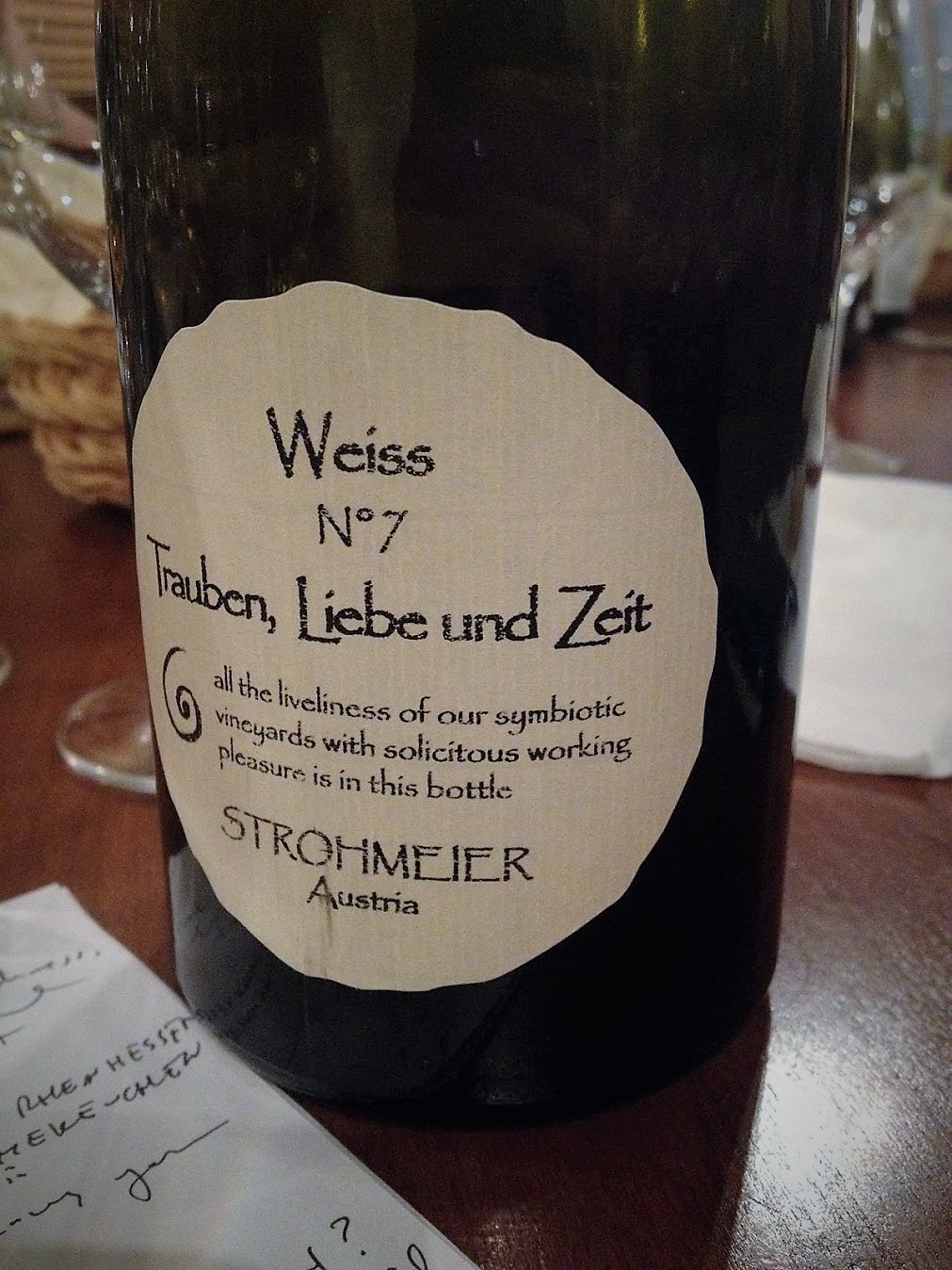
Cloudy light green-gold in the glass. Nose of white pepper, lemon, “sour orange,” lees and more besides. In the mouth, it’s soft textured and a bit spritzy. A wallflower at first though chewing reveals all kinds of complexity – including pear, herbs and chalk – and some depth. Comments from the peanut gallery: “like a gueuze,” “tastes like scrapes” (which, as I learned, are light metal shavings), “stealth acidity.” The long finish is faintly bitter and sour. Unique, fascinating and delicious. I was ready to lay down my money until I saw the price… (Buy again? Only if feeling flush, alas.)
MWG February 2, 2017, tasting: flight 3 of 9
Ward & associés tasting (2/9)
Located near Bockenheim in the Palatinate, the 20-something Brand brothers took over the estate from their father in 2004. Farming practices, rigorously sustainable since 1994, were certified organic in 2015. The wine-making is non-interventionist.
Pfalz 2015, Riesling trocken, Vom Berg, Weingut Brand ($23.53, private import, 12 bottles/case)
The estate’s entry-level line. 100% Riesling from estate-owned organically farmed vines. Fermented in stainless steel tanks. Screwcapped. 13% ABV. Quebec agent: Ward & associés.
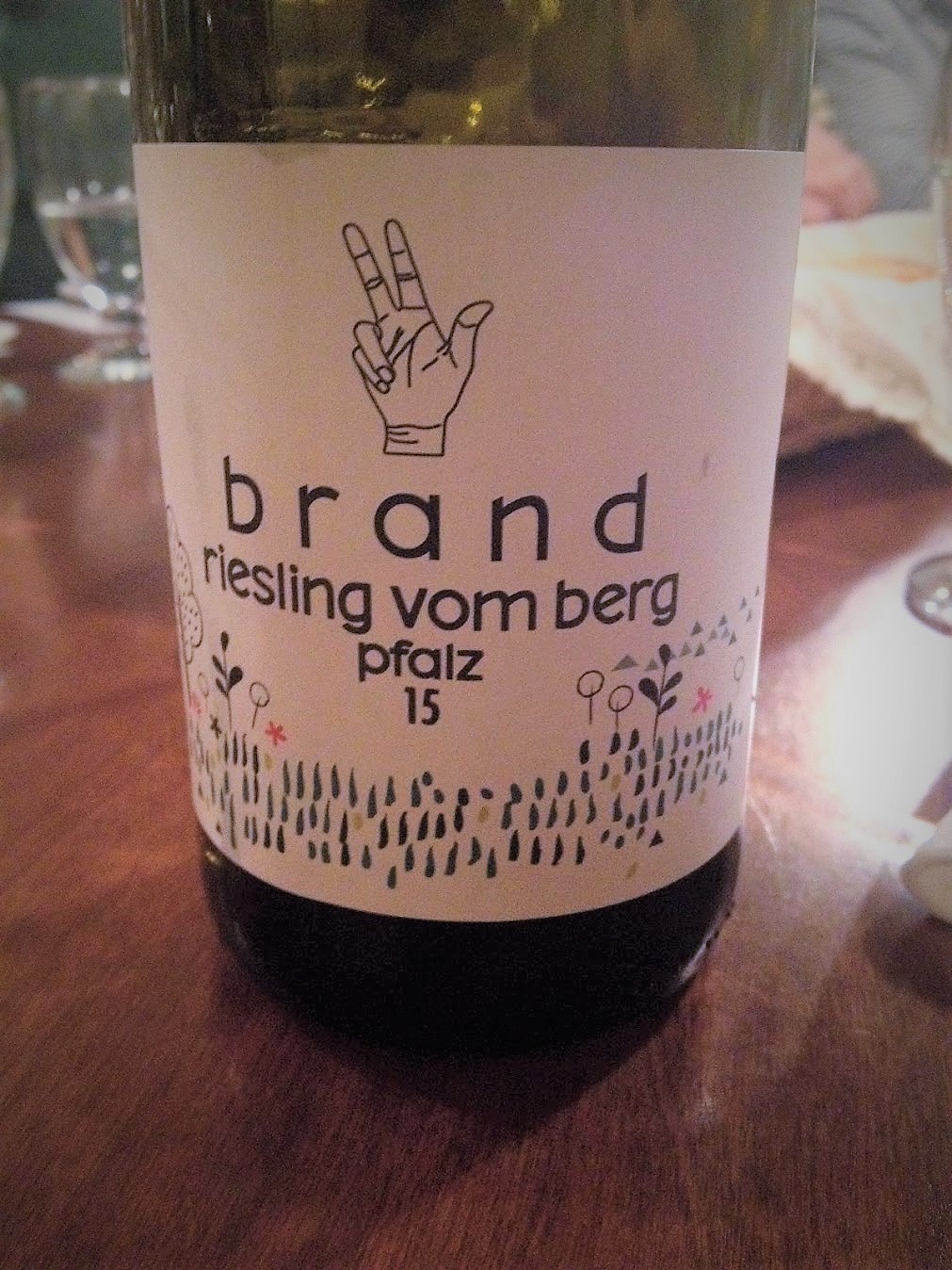
Initially sulphurous nose (not uncommon with screwcapped Rieslings) gives way to slate, lemon-lime and green apple overtoned with honeysuckle. Dry and fruity with nipping acidity, tons of crushed minerals and the faintest hint of caramel. Long, savoury and alive. Like Germany meets Alsace in a glass. Great QPR. Deservedly one of the hits of the tasting. (Buy again? Multiples.)
Pfalz 2015, Weissburgunder trocken, Weingut Brand ($26.37, private import, 12 bottles/case)
Inspired by a similar drawing on the cornerstone of a local church, the front label’s raised hand indicates this is part of the Schwurhand (oath-taking) line of wines made using grapes from the estate’s top vineyards 100% Weissburgunder (aka Pinot Blanc) from organically farmed vines. Manually harvested. Gently pressed and briefly macerated. Fermented with indigenous yeasts. No added anything. Unfiltered and unfined. Screwcapped. 12.5% ABV. Quebec agent: Ward & associés.
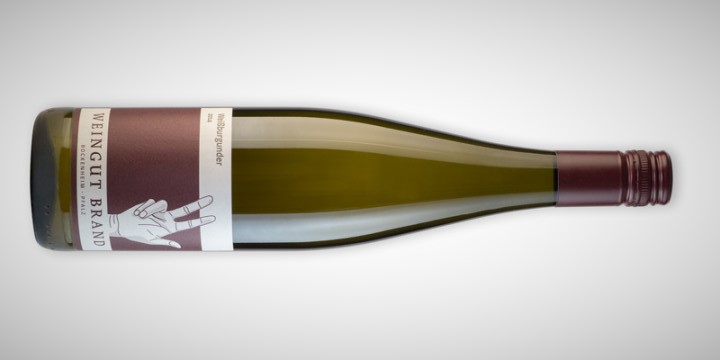
Intriguing nose of chalk, gooseberry/quince, green tea and coriander seed. Equally intriguing in the mouth with a texture that has people grapsing for descriptors like “soft oily velour.” Lactic, bitter and faintly fruity (“like bad plum”) threads intertwine with dusty minerals and soft acidity. A distant mustardy note chimes on the long finish. Complex, savoury and satisfying. If you think Pinot Blanc makes only facile wines, think again. (Buy again? Yes.)
MWG February 2, 2017, tasting: flight 2 of 9

 Brett happens