Posts Tagged ‘Organic’
Ward & associés tasting (5/9)
Burgunland 2015, Gemischter Satz, Alexander Koppitsch ($40.98, private import, 6 bottles/case)
The estate is located in Neusiedl am See, a village and district on the north shore of Lake Neusidel, southeast of Vienna. As implied by the Gemischter Satz moniker (though I don’t believe the wine qualifies for the Weiner Gemischter Satz appellation), this is a field blend of co-planted white varieties, including Grüner Veltliner, Brauner Veltliner, Pinot Blanc, Zimttraube, Ochsenauge, Isabellatraube, Neuburger, Traminer, Muskat and Sauvignon Blanc. Planted in 1934, the vines are estate-owned and biodynamically farmed. Vinified as an orange wine, spending 14 days on the skins. Fermented with indigenous yeasts. Matured in old barriques. Unfiltered and unfined, with no added sulphur. 12.5% ABV. Quebec agent: Ward & associés.
Slightly hazy bronzy rose-gold in the glass. Savoury, spicy and not particularly fruity nose with notes of preserved lemon and browning apple as well as a whiff of volatile acidity. In the mouth, it’s medium weight, fluently acidic, faintly tannic and somewhat inscrutable, like “mineral water” or “weak tea” along with lemon, a suggestion of stone fruit and minerals. Actually quite complex, if subtly so, and long. Smoothed out and unfurled nicely after three hours. Will be interesting to see what gives in three or four years. (Buy again? A bottle gladly.)


Burgunland 2015, Rot No. 7, Alexander Koppitsch ($23.19, private import, 6 bottles/case)
55% Zweigelt, 20% Blaufränkisch, 20% St. Laurent and 5% Syrah from estate-owned, biodyanmically farmed vines. Fermented with indigenous yeasts and matured in large oak barrels and stainless steel tanks. Lightly filtered. Unfined. A tiny amount of sulphur dioxide is added at bottling. Screwcapped. 12% ABV. Quebec agent: Ward & associés.
Outgoing nose of “clove,” “nutmeg,” candied raspberry, “frankincense incense” and a bit of poop. Medium-bodied and satin-textured. The bright supple fruit has a certain sweetness, though the wine is definitely dry, and an umami quality prompt descriptors like “soy sauce.” Sinewy tannins and a dusting of minerals only add to the interest. The finish is long but more felt than tasted. Nothing profound but eminently drinkable and something of a bargain. (Buy again? Yes.)
MWG February 2, 2017, tasting: flight 5 of 9
Ward & associés tasting (4/9)
Moravie 2014, Klasika, Hibernal, Milan Nestarec ($31.33, private import, 12 bottles/case)
100% Hibernal from estate-owned, organically farmed, 14-year-old vines grown in southern Moravia in the Czech Republic. Fermented and matured for 13 months in 600-litre barrels, one-third of which were new. No clarification or filtration. 11.5% ABV. Quebec agent: Ward & associés.

Rich gold-bronze in the glass. Refulgent nose that, notes of “sesame oil” and “dried orange peel” notwithstanding, you could be forgiven for thinking belonged to a sweet Tokaji. Dry and unctuous on the palate, the lively acidity softened by the dense extract. Flavours are a beguiling mix of “canned peaches,” “apricot jam” yellow apple and dusty minerals. Great breadth, good length and not a lot of depth, making this a here-now wine. Unique and memorable, especially for the bouquet. (Buy again? Yes.)
MWG February 2, 2017, tasting: flight 4 of 9
Ward & associés tasting (3/9)
Steirerland Landwein, “Trauben, Liebe und Zeit”, Weiss No. 7, Strohmeier ($50.73, private import, 6 bottles/case)
Trauben, Liebe und Zeit means “grapes, love and time” and is the name given to the estate’s line of natural wines. Mainly Pinot Blanc with some Chardonnay from the 2014 and 2015 vintages. The grapes are estate-grown, organically farmed and manually harvested. Fermented with indigenous yeasts. Matured 11 months in neutral 500-litre barrels. No added anything, including sulphur. Unfiltered and unfined. 11.5% ABV. Quebec agent: Ward & associés.
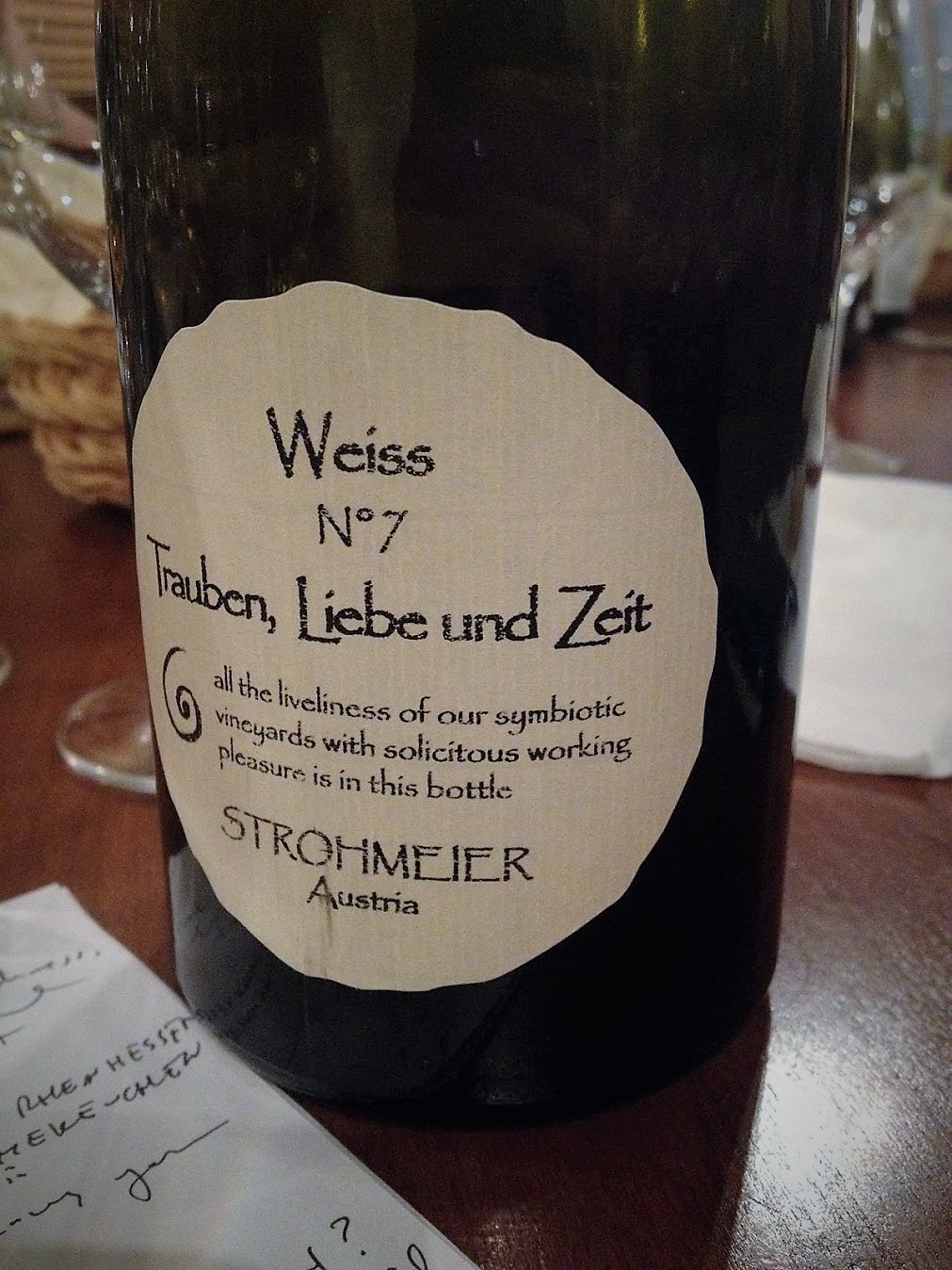
Cloudy light green-gold in the glass. Nose of white pepper, lemon, “sour orange,” lees and more besides. In the mouth, it’s soft textured and a bit spritzy. A wallflower at first though chewing reveals all kinds of complexity – including pear, herbs and chalk – and some depth. Comments from the peanut gallery: “like a gueuze,” “tastes like scrapes” (which, as I learned, are light metal shavings), “stealth acidity.” The long finish is faintly bitter and sour. Unique, fascinating and delicious. I was ready to lay down my money until I saw the price… (Buy again? Only if feeling flush, alas.)
MWG February 2, 2017, tasting: flight 3 of 9
Ward & associés tasting (2/9)
Located near Bockenheim in the Palatinate, the 20-something Brand brothers took over the estate from their father in 2004. Farming practices, rigorously sustainable since 1994, were certified organic in 2015. The wine-making is non-interventionist.
Pfalz 2015, Riesling trocken, Vom Berg, Weingut Brand ($23.53, private import, 12 bottles/case)
The estate’s entry-level line. 100% Riesling from estate-owned organically farmed vines. Fermented in stainless steel tanks. Screwcapped. 13% ABV. Quebec agent: Ward & associés.
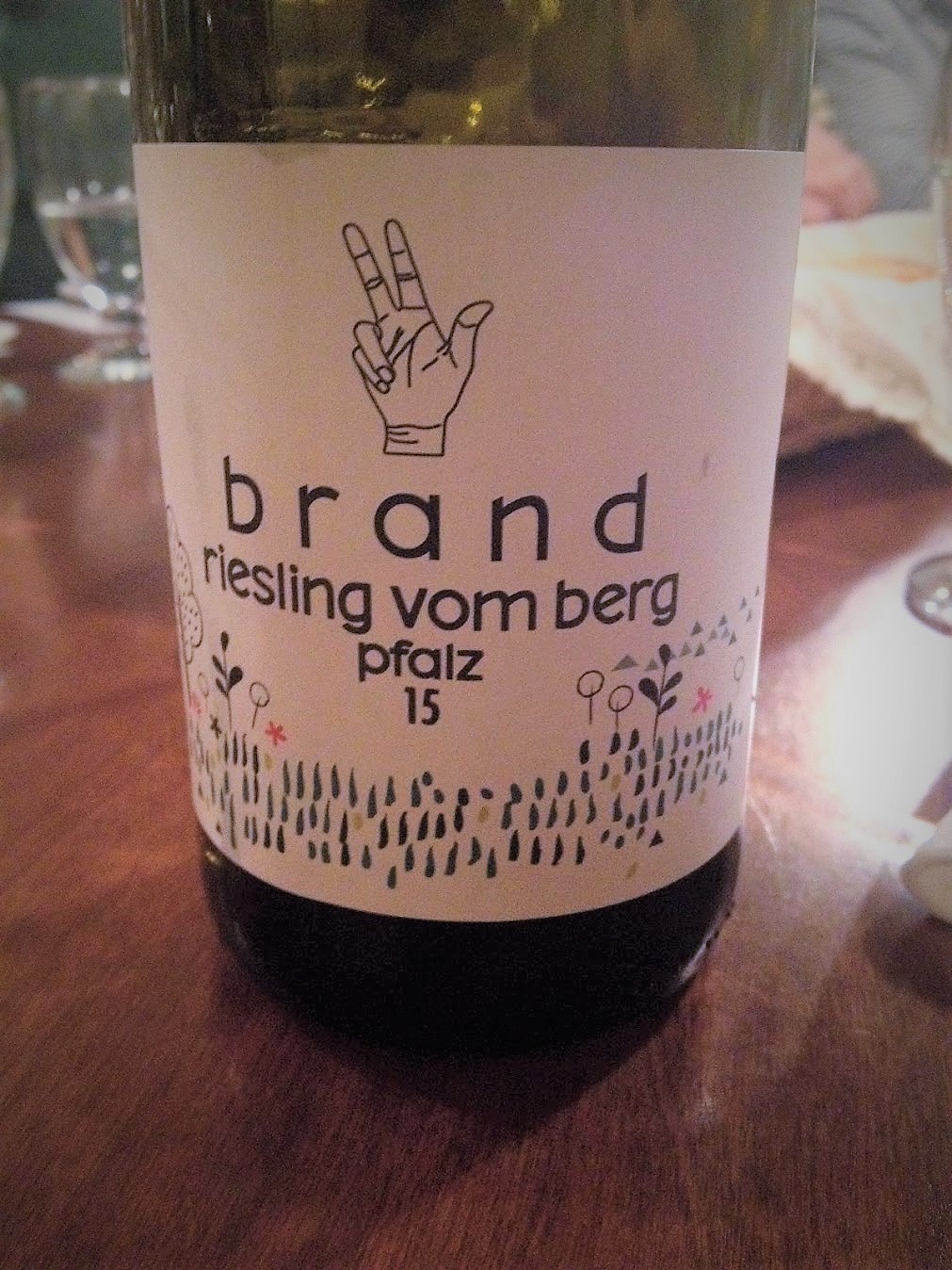
Initially sulphurous nose (not uncommon with screwcapped Rieslings) gives way to slate, lemon-lime and green apple overtoned with honeysuckle. Dry and fruity with nipping acidity, tons of crushed minerals and the faintest hint of caramel. Long, savoury and alive. Like Germany meets Alsace in a glass. Great QPR. Deservedly one of the hits of the tasting. (Buy again? Multiples.)
Pfalz 2015, Weissburgunder trocken, Weingut Brand ($26.37, private import, 12 bottles/case)
Inspired by a similar drawing on the cornerstone of a local church, the front label’s raised hand indicates this is part of the Schwurhand (oath-taking) line of wines made using grapes from the estate’s top vineyards 100% Weissburgunder (aka Pinot Blanc) from organically farmed vines. Manually harvested. Gently pressed and briefly macerated. Fermented with indigenous yeasts. No added anything. Unfiltered and unfined. Screwcapped. 12.5% ABV. Quebec agent: Ward & associés.
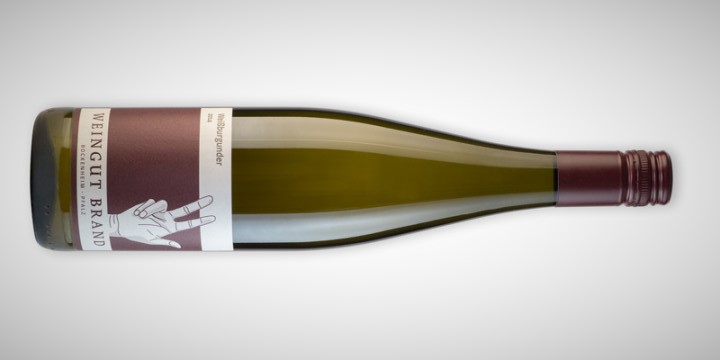
Intriguing nose of chalk, gooseberry/quince, green tea and coriander seed. Equally intriguing in the mouth with a texture that has people grapsing for descriptors like “soft oily velour.” Lactic, bitter and faintly fruity (“like bad plum”) threads intertwine with dusty minerals and soft acidity. A distant mustardy note chimes on the long finish. Complex, savoury and satisfying. If you think Pinot Blanc makes only facile wines, think again. (Buy again? Yes.)
MWG February 2, 2017, tasting: flight 2 of 9
Ward & associés tasting (1/9)
In early February, David Ward paid the Mo’ Wine Group a visit to present some of his eponymous agency’s new arrivals. “Drinkability first” is the agency’s credo and all the wines poured emphatically met that criterion. The tasting also featured winemakers, grapes and even regions that most of us had little if any experience with. No surprise then that a large order followed. Note that while some of the wines are still available, others are in very short supply.
We began with one of the less unconventional wines in the lineup.
Bourgogne Aligoté 2015, Sarnin-Berrux ($32.89, private import, 12 bottles/case)
With the exception of one cuvée, all Sarnin-Berrux wines are made from purchased grapes. The firm works closely with the growers, insisting on organic methods and often picking the grapes themselves. The wine-making is non-interventionist and based on the lunar calendar. The grapes for this 100% Aligoté are manually harvested. After slow pneumatic pressing, the must is clarified by settling. Fermentation with indigenous yeasts lasts four to six months. Unfiltered and unfined. No additives other than a tiny shot of sulphur. 11.5% ABV. Quebec agent: Ward & associés.

Somewhat muted nose: faint lemon/citronella, quartz and “pear flower.” Quite dry and buttery textured with lively but not trenchant acidity. Russet apples and honey up front, minerals (flint and chalk) on the finish. A white pepper note – as much a sensation as a flavour – lingers. Subtly complex and very civilized. If only it were a few dollars less. Then again, Ente’s 2014 Bourgonge Aligoté currently lists for $33 at the SAQ while De Villaine’s 2014 Bouzeron Aligoté runs a buck shy of $40, so maybe it’s not so pricey after all. (Buy again? Hmm…)
MWG February 2, 2017, tasting: flight 1 of 9
Odd flightfellows
Colline Lucchesi 2013, Palistorti, Tenuta di Valgiano ($29.80, 12767840)
Sangiovese (70%), Merlot (15%) and Syrah (15%) from organically and biodynamically farmed vines around 20 years old. Manually harvested. The sorted grapes are gravity-fed into open wooden vats and crushed by hand or foot. Fermented (with indigenous yeasts, one supposes) and macerated for around two weeks with occasional punch-downs and pump-overs. Racked, settled and gravity-fed into lightly toasted French oak barrels (5% new) for malolactic fermentation and 12 months’ maturation. Blended and transferred into concrete vats for six months’ additional maturation. Unfiltered and unfined. 13% ABV. Quebec agent: Balthazard.
Appealing nose of cherry, tar, turned earth, Asian spices and a fresh, almost ferny note. A medium- to full-bodied mouthful of ripe fruit, bright acidity and firm but not rigid tannins. Despite the superficial sleekness, broad, deep and long. Beautifully balanced and complete, modern yet also terroirtorial. I’m usually unenthusiastic about blends of Sangiovese with international varieties but this is exceptional. It was also the only wine in the tasting that absolutely everyone around the table liked. The price seems more than fair. (Buy again? Yes.)
Swartland 2014, Family Red Blend, A.A. Badenhorst ($40.00, 12275298)
An unorthodox blend – around two-thirds Syrah with Tinta Barroca, Cinsault and Grenache – from estate-grown and purchased grapes. Farming practices are organic or nearly so. Manually harvested. The whole clusters, including stems, are crushed by foot and fermented with indigenous yeasts in concrete and wood tanks with twice-daily punch-downs. Given extended maceration (up to six months) before pressing. Transferred to 4,000-litre barrels for 16 months’ maturation. Blended just before bottling. Sulphur (pre- and post-fermentation) is the only addition. Reducing sugar: 1.4 g/l. 13.5% ABV. Quebec agent: Symbiose.
Complex, warm-climate nose of prune, plum, eucalyptus, black olive, dark minerals and eventually dried herbs. Full-bodied, rich and dense, balanced and savoury. Round tannins and smooth acidity provide sufficient structure. The flavours linger long and tend to the darker side of the spectrum: black fruit, slatey minerals, smoke, leather, compost, animale and a volatile note that puts me in mind of charred eucalyptus but that one taster describes as “electrical tape.” Not quite my style but definitely drinkable and as Old Worldish as New. (Buy again? Would gladly drink if offered but doubt I’d buy a bottle.)
MWG January 12, 2017, tasting: flight 7 of 7
Etna threesome
Etna Rosso 2014, Rossodiverzella, Benanti ($25.10, 11348459)
Nerello Mascalese (85%) and Nerello Cappuccio (15%) from 10- to 60-year-old vines grown in parcels on the northern, southeastern and southwestern slopes of Mount Etna at altitudes varying from 450 to 900 m. Manually harvested. Destemmed. Fermentation and 20- to 21-day maceration with selected yeasts take place in stainless steel vats. Maturation – 80% in stainless steel tanks, 20% in French oak barriques – lasts eight to 10 months. Reducing sugar: 2.3 g/l. 13.5% ABV. Quebec agent: L’Enoteca.
Fragrant nose of red berries, plum and spice with a faint floral perfume. Medium-bodied, fleet and quite dry. The sweet-tart fruit unfurls like veils across the palate. Bright acidity and supple tannins provide a light but present structure. A vein of volcanic minerals runs from the mid-palate into the long, slightly astringent finish. Such an appealing blend of fresh and savoury. (Buy again? Yes.)
Etna Rosso 2013, Graci ($27.80, 13041830)
Nerello Mascalese (100%) grown on the northern-eastern slopes of Mount Etna at an altitude of 600-700 m. Fermentation with indigenous yeasts and maceration on the skins are in concrete tanks and last for around 30 days. Matured 18 months in concrete tanks with spontaneous malolactic fermentation. Reducing sugar: 1.9 g/l. 14% ABV. Quebec agent: Symbiose.
The darker, more minerally nose is marked by old wood, cherry, plum, spice chest and leather aromas. In the mouth, the wine is heftier and headier than the Benanti, the fruit is riper without seeming jammy and the flavours are entertaining. A smooth current of acidity brings welcome freshness while cushy tannins provide torque. The persistent finish has a tarry edge. (Buy again? Sure.)
Etna Rosso 2013, Barone di Villagrande ($28.60, 12988167)
Nerello Mascalese (80%) and Nerello Cappuccio (20%) from organically farmed vines on the southern slopes of Mount Etna. Maceration and fermentation in temperature-controlled tanks lasts six to 10 days. Matured 12 months in 500-litre Etna oak barrels. Altitude: 650-700 m. Reducing sugar: 2.5 g/l. 13.5% ABV. Quebec agent: AOC & cie.
Jammier on the nose, showing the expected cherry and plum along with aromas described as “a bit coffee,” “fruitcake,” “molasses” and “pomegranate.” Bigger, denser and fruitier than its flightmates. Fundamentally dry though the very ripe fruit gives an impression of sweetness. It also drives complexity and depth into the background. A dusty quality colours the mid-palate and lingers into the long finish. May benefit from a few more years in the cellar. At this point too New Worldish and Parkerized for me, though some around the table loved it. (Buy again? Unlikely.)
MWG January 12, 2017, tasting: flight 6 of 7
Catalonian orphan
Empordà 2015, Sauló, Espelt Viticultors ($15.15, 10856241)
A 50-50 blend of Liedoner Negre (aka Grenache) and Carinyena (aka Carignan) from organically farmed vines rooted in weathered granite soil in the southern foothills of the Albera Massif, just south of the French border and just inland from the Mediterranean. The grapes from each parcel are vinified separately and given 36 hours’ cold maceration before fermentation in stainless steel temperature-controlled tanks. Lightly filtered before bottling. Reducing sugar: 2.6 g/l. 14.5% ABV. Quebec agent: Le Marchand de Vin, one of whose reps attended the tasting and comped this bottle (merci, Simon!).
Raspberry (a bit candied), peppery spice and a hint of plum. Full-bodied and fruit-driven. The fruit is very ripe and sweet seeming (one taster notes “raspberry jam on the finish”) but the wine is fundamentally dry. A healthy shot of acidity and raspy tannins provide just enough structure, a dark undercurrent adds a little intrigue. Slate and earth linger on the drying finish. A crowd-pleaser whose candour and sunny disposition go a long way toward making up for any lack of nuance or depth. Fans of fruit-forward wines in the mood for something different should put this QPR winner on their shopping list. The label is a delight. (Buy again? Sure, especially to take to a party or barbecue where a highfalutin wine wouldn’t be appropriate.)
MWG January 12, 2017, tasting: flight 5 of 7
Greek trio
Crete 2015, Vilana, Lyrarakis ($14.05, 11607553)
100% Vilana from vineyards in Alagni, central Crete, south-southeast of Heraklion. Manually harvested. Half the grapes were whole-cluster pressed; the other half were destemmed and cold-macerated on the skins for several hours. Fermentation took place in temperature-controlled (17-19°C) stainless steel tanks. Screwcapped. Reducing sugar: 1.9 g/l. 12.5% ABV. Quebec agent: Focus Cellars.
Chalk, quartz, matches and a hint of dried herbs. Clean, light and smooth in the mouth, with citrusy, Sauvignon Blanc-like fruit, good acidity and a decently long, clean, minerally finish. Certainly drinkable but also somewhat simple and a bit anonymous. Would like to taste the more upscale bottling. (Buy again? Maybe.)
Patras 2015, Roditis, Tetramythos Winery ($15.80, 12484575)
100% Roditis from organically farmed vines in limestone-soil vineyards located about 10 km south and 800 metres above the Gulf of Corinth. The manually harvested grapes are destemmed and pneumatically pressed. The must is gravity-fed into small, temperature-controlled stainless steel tanks for fermentation (with indigenous yeasts) and maturation. Reducing sugar: 1.9 g/l. 12% ABV. Quebec agent: oenopole.
Expressive nose of candied white berries, quartz dust and a hint of jalapeño. The fruity extract and lemon overtones notwithstanding, minerally – even rainwatery – on the palate, an impression only heightened by the brisk acidity. Ripe-sweet upfront, dry on the long, saline finish. Direct and to the point. Experience shows this really comes into its own with a selection of meze or a grilled porgy. (Buy again? Yes.)
Markopoulo 2015, Savatiano, Vieilles Vignes, Domaine Papagiannakos ($16.55, 11097451)
100% Savatiano from unirrigated 50-year-old vines in rocky, limestone soil a few kilometres east of Athens airport. Manually harvested. Fermented with selected yeasts in temperature-controlled (16-18°C) stainless steel tanks. Matured on the lees for three months. Reducing sugar: 2.0 g/l. 12.5% ABV. Quebec agent: oenopole.
The nose’s combination of floral notes, sandy beach, lemon curd and white peach is unique. Lemon with hints of tropical fruit, a mineral substrate and bright but unaggressive acidity mark the palate. A bitter thread weaves through the long finish. Probably the most versatile of the trio. As the 2008 Estate bottling tasted last summer showed, Savatiano is capable of improving with age. (Buy again? Yes, including a couple of bottles to cellar for five or six years.)
MWG January 12, 2017, tasting: flight 2 of 7
Odd couple
As is the Mo’ Wine Group’s longstanding tradition, our first tasting after the holidays focused on inexpensive and affordable bottles.
Vino da Tavola 2014, Il Brut and the Beast, Valli Unite ($25.35, private import, 6 bottles/case)
Based in Costa Vescovato in southern Piedmont, Valli Unite is a 35-year-old organic cooperative whose members grow local grape varieties as well as grains, fruits, vegetables and livestock. Accurate information on this wine is hard to find. It’s not listed on the coop’s website and online reviewers tend to be all over place about its constituent grape varieties, production method (some say it’s a filtered Charmat-method sparkler) and stopper (some say it’s a cork). For all I know, there may be more than one bottling. This much seems clear: the wine we tasted was made from Cortese and may also contain some Favorita. The biodynamically farmed grapes were manually harvested. The wine was fermented with indigenous yeasts and bottled unfiltered and unfined. No sulphur was added during the wine-making process. The fizz is the result of natural, in-bottle fermentation. Vegan-compatible. Crown cap. 13% ABV. Quebec agent: La QV.
Pale straw. Hazy in all the glasses though the last glass or two also contained a lot of brown-coloured lees. Interesting, leesy nose of lemon, sour apple, chalk and “bonbon de banane.” Soft but ticklish effervescence. There’s some fruit on the attack (one taster described it as “fruité austère”), lots of chalky minerals and fair acidity. A lactic note sounds on the long finish. Somehow the elements don’t coalesce into a whole and, as the wine breathes, the alcohol becomes noticeable and the wine seems “oxidized” and a bit “flat.” Not the hit that the 2011 was. I suspect our just-off-the-boat bottle was travel-shocked or otherwise upset. (Buy again? To give it another chance in a few months, yes.)
Crémant d’Alsace, Extra Brut, Paul-Édouard, Domaine Bott-Geyl ($26.00, 13032845)
A blend of Pinot Blanc (50%), Chardonnay (30%) and Pinot Noir (20%). The hand-picked grapes are purchased from growers, all of whom are converting to organic practices. This traditional-method sparkler was matured in the bottle for 24 months before disgoring. Reducing sugar: 5.1 g/l. 12.5% ABV. Quebec agent: LVAB.
Straw heading toward bronze with a fine bead and next to no foam. Outgoing nose eliciting descriptors like white strawberry, honey, acacia, stone fruit and, surprisingly but accurately, jalapeño. Round and rich in the mouth. The bubbles are low-key, the ripe fruit has a slightly honeyed quality, the minerals are dusty. Soft acidity and hints of lemon provide some welcome freshness. A whiff of yeasty brioche colours the long finish. Impeccable though not what you’d call lively. (Buy again? Personally, I’d go for something tenser but several tasters were quite taken with this.)
MWG January 12, 2017, tasting: flight 1 of 7

 Brett happens