Posts Tagged ‘QPR winner’
Mercourial
Letrini 2015, Domaine Mercouri ($21.65, 11885537)
A blend of Refosco (85%) and Mavrodaphne (15%) from estate vines. Fermented with selected yeasts. Matured 12 months in second-, third- and fourth-fill French oak barrels (mainly Allier). 35,000 bottles made. Residual sugar: 1.6 g/l. 13.5% ABV. Quebec agent: oenopole.

Blackberry, plum, cinnamon, sawed wood and a faint whiff of kirsch against a slate backdrop. A very full medium-bodied. Fruit (riper and denser than the 2014‘s) cloaks the sleek acidity and lithe tannins, which asset themselves only on the lightly astringent finish. A slim thread of oaky vanilla-caramel runs throughout while spice overtones and lingers. An elegant and satisfying wine with few peers at the price point. The integrity and balance point to a certain ageing potential. Paired beautifully with Greek-style roasted pork chops and potatoes. (Buy again? Yes, including a few bottles to hide away for five to 10 years.)
Greek winery tour: Mercouri (Elis)
[Hover over pics to display captions and credits; click to embiggen.]
 In so many ways – historically, climatically, viticulturally, architecturally, culturally, even scenically – the Mercouri Estate stands apart from the other wineries we visited and quite possibly from all wineries in Greece.
Created in 1864 by merchant Theodoros Mercouri, the estate is one of the oldest in the country. Wine-growing began in 1870, when Refosco vines imported from northeast Italy, where Mercouri had trade ties, were planted. The resulting wine soon gained a reputation and was not only consumed locally but also exported on ships that docked at the estate. Such was its renown that the Refosco grape came to be called Mercoureiko in Elis (aka Ilia). New wine-making facilities were built in 1930. Production more or less ceased between World War II and 1985, when Vasilis and Christos Kanellakopoulos, the fourth generation of the family, began revitalizing the estate and its wines. These days, Vasilis’s two sons are taking the helm, Dimitris as the oenologist and Labis looking after the business and marketing side of things. To all appearances, the estate’s future is in good hands.
 Set like an emerald on a small bay to the west of Korakochori, the estate enjoys a unique micro-climate. The Ionian Sea has a tempering effect and, as rain clouds in Greece tend to travel from west to east, the average annual precipitation and relative humidity are higher than in the rest of the Peloponnese, though paradoxically the summer and fall are drier than areas further east, a boon for grape health and harvest. The danger of frost is very low.
The mix of grape varieties grown in the 40 hectares of vineyards is as unparalleled as it is cosmopolitan, and includes the Greek Agiorgitiko, Assyrtiko, Avgoustiatis, Korinthiaki, Malvasia, Mavrodaphne, Rhoditis and Robola as well as the extra-Hellenic Mourvèdre, Negroamaro, Ribolla Gialla, Syrah and Viognier. The winery also reportedly has or has had experimental plots of Albariño, Cabernet Franc, Cabernet Sauvignon, Grenache, Merlot, Sangiovese and Sauvignon Blanc.
Several of the buildings, including ones still in use, are little changed from when they were constructed in the late 19th and early 20th centuries. Many are built from local stone. Several have steeply pitched tiled roofs. Parts of the winery have been preserved as if in amber, with the original furnishings, paintings and equipment intact.  Walking through the front door is like stepping back in time, a feeling only increased by a visit to the estate’s small museum with its collection of old presses, tools and photographs, among other things.
While Greece is rightly seen as a meeting place between the western and eastern Mediterranean cultures, the estate feels closer to the west than the east, seems to have one foot in Greece and the other foot in Italy. Take the grape varieties, for example. Take the now abandoned owner’s mansion, which is depicted on the label of the estate’s flagship reds and wouldn’t be out of place in Brindisi or Bari. The Italian feel even extends to the park-like grounds. With its lush foliage, huge trees, expanses of lawn, gentle inclines and pristine shore, the landscape is uniquely pastoral and bucolic.
However present the past may be at Mercouri, the wine-making is resolutely modern, which is not surprising for an estate that has been crafting wines from local and foreign varieties for close to a century and a half. Even the wine labels seem to express this embrace of new and old; the flagship dry whites, Lampadias rosé and Antares red feature reproductions of colourful stylized or abstract paintings; the flagship reds’ labels are far more traditional; the newer reds’ labels live in both eras, with modern typography and an old photograph of young members of the family. The kicker is that all the bottlings, whether old or new and especially the reds, are among the most elegant Greek wines I’ve tasted.
You’ll find my notes on all the Mercouri wines after the jump. For details about where we stayed and ate and what we ate and saw, see the Day Three report on carswelliana.
INTRODUCTION
PAPAGIANNAKOS (ATTICA)
TSELEPOS (ARCADIA)
♦ MERCOURI (ELIS)
TETRAMYTHOS (ACHAEA)
THYMIOPOULOS (MACEDONIA)
ARGYROS (SANTORINI)
Dãoist
Dão 2011, Quinta da Falorca ($19.45, 11895381)
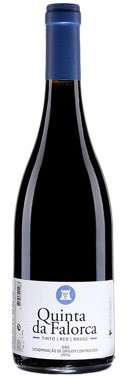 Contrary to what SAQ.com and the Quebec agent claim, this is the estate’s basic Dão and not the Touriga Nacional bottling. A blend of Touriga Nacional (60%), Alfrocheiro (15%), Tinta Roriz (aka Tempranillo, 10%), Jaen (aka Mencia, 10%) and Rufete (5%) from estate-owned vines on the granite banks of the Dão River. Manually harvested. Destemmed. Gently pressed. Fermented in temperature-controlled (26-28°C) tanks. Matured in French oak barrels and stainless steel tanks. Reducing sugar: 2.2 g/l. 14% ABV. Quebec agent: Balthazard.
Winey, peppery, stemmy, earthy nose dominated by plum and cassis aromas. In the mouth, it’s full-bodied but not weighty, possessed of a fundamentally fluid texture. Most apparent up front, the ripe fruit soon gives way to more savoury flavours (old oak, dark minerals, leather, dried mushroom, dusting of black pepper) and is elegantly structured, the acidity bright and sleek, the tannins slender yet firm, the alcohol heady, not hot. The long finish brings a woody/stemmy aftertaste and a faint numbing quality. Quite fresh for a six-year-old wine, this has several years of life ahead of it. It smoothed and opened with a half hour’s exposure to air, so carafing is advised. (Buy again? Yes, including a couple of bottles to lay down for four to five years.)
Stone wine
Robola de Céphalonie 2015, Vino di Sasso, Domaine Sclavos ($26.95, 12485877)
100% Robola from organically and biodynamically farmed, ungrafted old vines on the Ionian island of Cephalonia. Vino di sasso means “wine of stone,” a reference to the island’s rocky cliffs and outcrops and the vineyard, composed mainly of calcerous pebbles at an elevation ranging up to 850 metres. The manually harvested grapes are directly pressed. The must is fermented at low temperatures with indigenous yeasts and matured eight months on the lees. Sees only stainless steel until bottling. Bottled unfiltered, unfined and with only a tiny squirt of sulphur dioxide. Reducing sugar: 1.4 g/l. 12.5% ABV. Quebec agent: oenopole.

Limestone dust, dried hay, yellow apple, faint peach, dried herbs, almonds and smoke. A striking combination of minerality and richness. Bone dry. Seems built around an acid-mineral core. A saline current runs under the ethereal orchard fruit and tangs the long, fruity, almondy, smoky finish. A unique, fascinating wine, more enigmatic and involving than the 2014. The price of admission is more than fair. (Buy again? Yes, including a couple of bottles to cellar for a year or two.)
Just in time for asparagus season
Wachau 2014, Grüner Veltliner, Terrassen, Nikolaihof ($21.65, 13166181)
Austria’s oldest estate and one of its most storied. This is the first Nikolaihof wine to be sold at the SAQ. 100% Grüner Veltliner from organically and biodynamically farmed estate vines between 10 and 45 years old planted in the Wachau on the south shore of the Danube. Fermented with indigenous yeasts. Alcoholic fermentation and three months’ maturation on the lees took place in very large barrels. Malolactic fermentation was avoided. The wine was later matured in tanks before being lightly filtered (but not fined) and bottled. The only addition was a squirt of sulphur dioxide at bottling. Screwcapped. Reducing sugar: 3.3 g/l. 12.5% ABV. Quebec agent: Ward & associés.

Textbook nose: white pepper, stone, lime (fruit and pith), herb salad, turned earth, sea brine and the faintest hint of honey. Texture somewhere between waxy and buttery. Savoury and quite dry. The fruit and greens are swirled with an intense minerality (quartz, saline). The pervasive acidity is softened by the not inconsiderable extract. The long finish brings a white pepper note and a Szechuan pepper numbingness. Not as crystalline, layered, dimensional or commanding as a top GV but punching well above its weight. A natural with river fish and white meats accompanied by cabbage and, like many GVs, unfazed by asparagus. (Buy again? Yes, though unfortunately there’s not much left in the system.)
The difference a day makes
Crete 2014, Kotsifali, Lyrarakis ($13.75, 10703818)
100% Kotsifali from unirrigated vines rooted in loamy sandy soil in the Alagni region of central Crete. Manually harvested. Fermentation with selected yeasts and on the skins in temperature-controlled (24-27°C) tanks lasted 10 days. Screwcapped. Reducing sugar: 2.2 g/l. 13% ABV. Quebec agent: Focus Cellars.
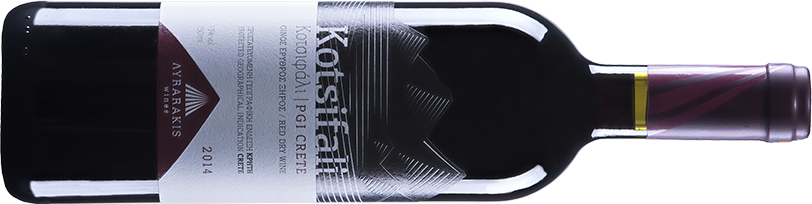
Day one: Popped (well, twisted) and poured, the wine was dull, hard and one-dimensional, seemingly incapable of providing pleasure. After a couple of glasses, the remainder was transferred to a half-bottle, sealed and stuck in the fridge.
Day two: The wine is transformed. Engaging, surprisingly complex, not exuberantly fruity nose of plum, blackberry, spice and ashy earth with dried herb, raw meat and floral notes. In the mouth, it’s savoury, dry and medium- to full-bodied. The ripe but not sweet fruit and dark minerals are structured by soft tannins and smooth acidity. The fair finish brings a wood note, a whiff of alcohol and a lingering taste of sour bitter plum. Honest and enjoyable. Not only is it off the beaten path, it’s one of the better wines in its price range. (Buy again? Yes, though there’s not much left in the system.)
Greek winery tour: Tselepos (Arcadia)
[Hover over pics to display captions and credits; click to embiggen.]
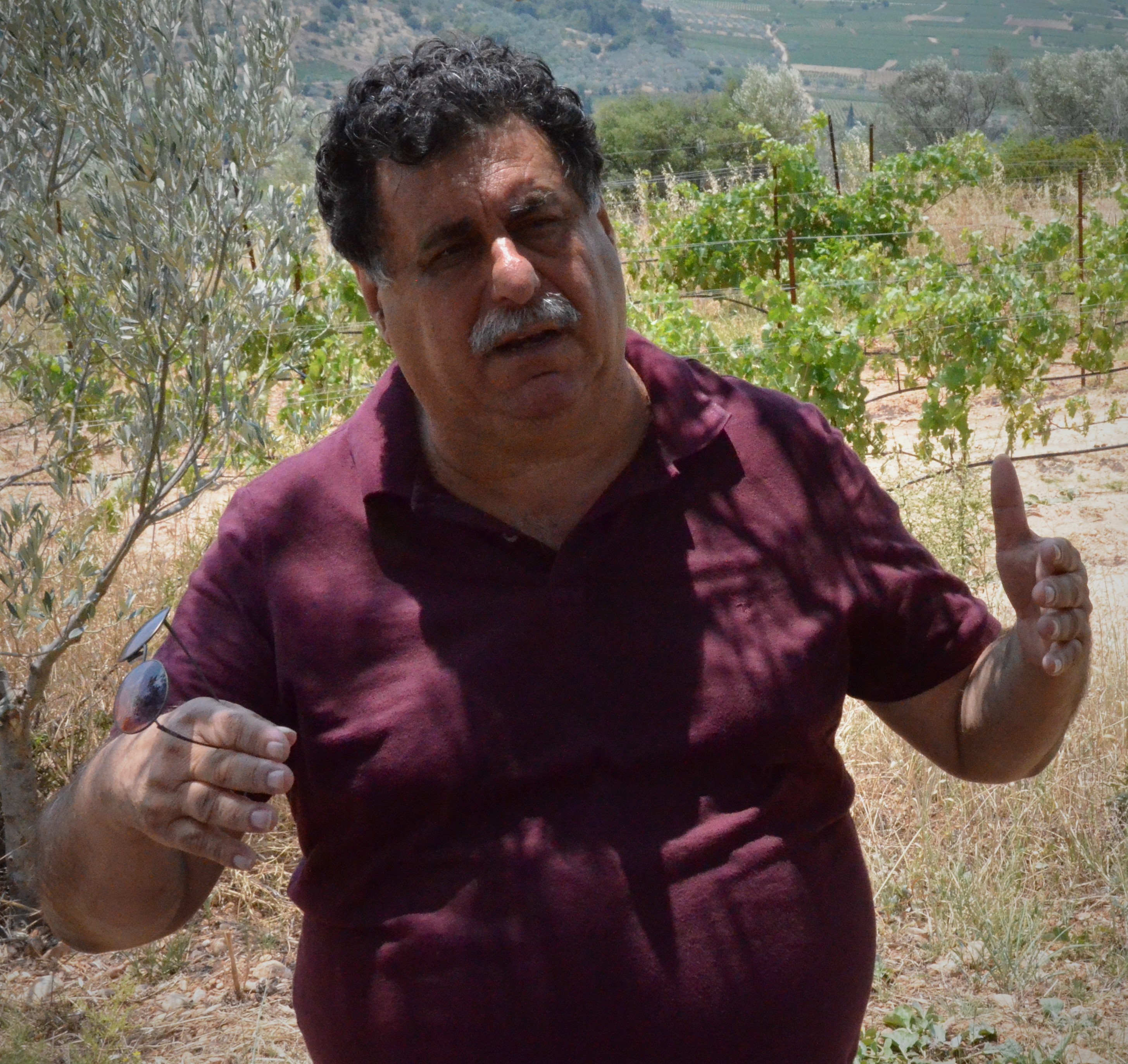 One of the leaders of the Greek wine renaissance and the modern day king of the ancient Moscofilero variety, Yiannis Tselepos is a phenomenon. A Cypriot by birth, he studied oenology at the Université de Bourgogne in Dijon and, after graduating, spent a couple of years working at several Burgundy estates. He then moved to Arcadia in the eastern Peloponnese, where he found employment as a consulting oenologist, married a local girl, Amelia, and with her founded the eponymous winery. The Tseleposes currently own two estates and have an interest in a third.
Located in Rizes, central Arcadia, Ktima Tselepos is the larger and older of the two estates, dating back to 1999. It sits on a plateau on the eastern flank of Mount Parnon. While the main buildings are surrounded by 30 hectares of vineyards, the estate’s holdings actually total some 240 hectares.  The soil here tends to shale and rocky clay and the average elevation is 750 metres, helping ensure the all-important wide difference in day and night temperatures. The handsome winery is built in the traditional local architectural style; less flashy and touristy than some, it feels like a facility whose main vocation is wine production. Although around two-thirds of its output is devoted to Moscofiliero, the estate makes a wide range of wines, from sparklers to still dry reds and whites to sweet wines, from international as well as local grape varieties. With a total annual production of 350,000 bottles, half of which is exported, this is no small operation.
 In 2003, Tselepos acquired a second property, Ktima Driopi, an 8.5-hecatre plot of 50-year-old vines rooted in steep clay soil in Kousti, near Nemea, about an hour’s drive to the north-northwest. The estate specializes in Agiorgitiko, another ancient indigenous variety. A small winery has since been built to handle the estate’s output. The estate’s striking labels, as classy as its wines, feature a dormant tree in silhouette.
Tselepos’s latest project is a joint venture with the Chryssou family on Santorini. The Chryssous provide the grapes (from 12 hectares of ungrafted 50- to 100-year-old vines in Pyrgos and Emporio) while Yannis provides the wine-making expertise. Dubbed Canava Chryssou Tselepos Santorini, the estate currently produces around 12,000 bottles a year of a single wine, a 100% Assyrtiko.
At all three estates, the viticultural practices are enlightened without being full-bore organic. In Arcadia, the vines are trained on wires, a virtual necessity in the region’s humid climate. On arid, wind-blasted, sun-stroked Santorini, the vines are coaxed into nest-like spirals that lie close to the ground, the better to protect the fruit and preserve precious water. Irrespective of the estate, the grapes are manually harvested in the cool of the early morning and transported to the winery in small crates.  Though the facilities are outfitted with state-of-the-art equipment, Yiannis views technology as limited to a supporting role. “Good technology makes for good wine, but only the right vineyard will yield a great wine,” he says.
One aspect of this balancing act between technology and terroir was the focus of an interesting exchange during our technical tasting. A member of our party, a professional sommelier with an impressively acute palate, wondered why Tselepos used selected instead of indigenous yeasts since, he felt, the former scalp and compress wines. Yiannis countered with “I have 17 families besides my own who depend on the winery’s success. I’m not going to put their livelihoods at risk.”
I can see both sides of the argument. Obviously, indigenous yeasts – the yeasts native to a place – are a factor in terroir. And many other winemakers have shown that fine wines can reliably be made using them. So it seems a little paradoxical that the winery, which proudly describes its central wine-making philosophy as “to grow Greek varieties within their specific native ecosystem” and which, as the following notes show, does indeed make terroir-expressive wines, doesn’t go all the way down the terroir path.
Then again, Yiannis is clearly more than just a winemaker. He’s also a successful businessman, a player in the local community and a standard bearer for the wines of his region and country. His Moschofileros and Agiorgitikos are widely viewed as models for what the grapes can achieve. His Mantinias have almost single-handedly put that appellation on the map. One of the reasons this has happened is the wines’ consistency. Why, then, tinker with a winning formula? Why introduce another variable into the process? Why do anything that could undermine the livings of so many and the reputations of a business and a region?
More than just a winemaker? Yes. But still a winemaker at heart, as the following story shows. At one point, Yiannis told us how he came to chose oenopole to represent his wines in Quebec. One day this Greek-Canadian showed up, introduced himself as Theo Diamantis and explained that he was setting up an agency dedicated to selling “real,” terroir-driven wines with a high drinkability quotient, wines made not by industrial producers but by vignerons. Which was why he wanted Tselepos in the portfolio. “It was the first time anybody called me a vigneron,” Yiannis beamed, “and it was all I needed to know. I was ready right then to sign on the dotted line.”
You’ll find my notes on all the day two wines after the jump. For details about where we stayed and ate and what we ate and saw, including some of Tselepos’s vineyards, see the Day Two report on carswelliana.
INTRODUCTION
PAPAGIANNAKOS (ATTICA)
♦ TSELEPOS (ARCADIA)
MERCOURI (ELIS)
TETRAMYTHOS (ACHAEA)
THYMIOPOULOS (MACEDONIA)
ARGYROS (SANTORINI)
Buxom blend
Epanomi 2016, Estate White, Ktima Gerovassiliou ($18.65, 10249061)
The village of Epanomi is located about 25 km southeast of Thessaloniki in central Macedonia. A 50-50 blend of Malagousia and Assyrtiko from estate-grown vines After a brief maceration, the grapes are pressed and the juice is fermented in temperature-controlled (18-20°C) stainless steel tanks. Does not undergo malolactic fermentation. 12.5% ABV. Quebec agent: Le Maître de Chai.
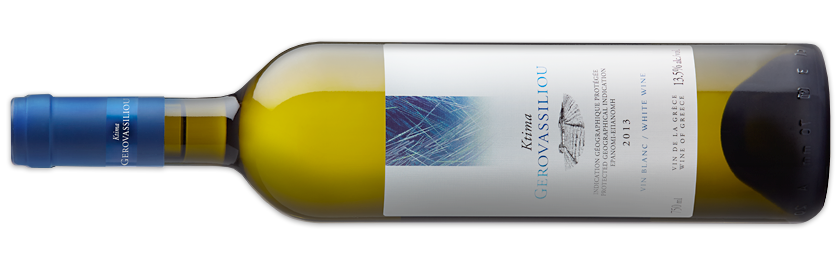
Redolent of flowers, fruit and something green: jasmine, orange blossom, grapefruit, lime, stone fruit, lemon grass and maybe a little kiwi and mint. Round in the piehole, fresh with aromatic fruit and bright acidity. A minerally vein runs well into the long finish where it’s joined by an appealing salty bitterness. The Malagousia’s exuberance makes this seem less dry than it actually is, while the Assyrtiko’s acidity and minerals provide welcome structure. Fans of New Zealand Sauvignon Blanc looking to broaden their horizons should make a bee line. Food-friendly by nature, this made a fine match for herb-roasted salmon with a squeeze of lemon. (Buy again? Sure.)
Bargain Barolo
Barolo 2012, Riva del Bric, Paolo Conterno ($41.50, 10860223)
100% Nebbiolo from youngish vines (around 20 years old). Manually harvested. On arrival at the winery, the grapes are crushed, destemmed and transferred to tanks for two to three weeks’ maceration and fermentation. Matured 30 to 36 months in 35-hectolitre French oak barrels and six to 12 months in the bottle. Reducing sugar: 1.6 g/l. 14.5% ABV. Quebec agent: Sélections Fréchette.

Cherry, sawdust, kirsch, rose water and eventually hints of leafmould, candied violets and truffle. On the fuller side of medium-bodied. Very dry. The sweet fruit cloaks the fine but firm tannins though it can’t hide the astringent undertow. Bright acidity adds sheen to the velours-like texture while spice and floral notes overtone the long finish. A step up from most Langhe offerings, this is like mainlining Nebbiolo. Impressive QPR. Accessible for a five-year-old Barolo but still primary and best cellared for a couple of years or carafed for an hour or two. (Buy again? Sure.)
My bottle was a generous gift from a Mo’ Wine Group member. Merci Julien !
Not your ordinary Agiorgitiko
Peloponnese 2015, Agiorgitiko, Domaine Tetramythos ($16.90, 12178957)
100% Agiorgitiko from organically farmed vines grown at elevations between 400 and 1,000 metres near the village of Ano Diakopto, Achaea, overlooking the Gulf of Corinth. The grapes are fully destemmed, then macerated and fermented with indigenous yeasts for around two weeks in stainless steel tanks. Matured five months in 5,000-litre barrels. Unfiltered and unfined. Reducing sugar: 2.2 g/l. 14% ABV. Quebec agent: oenopole.

Plum and elderberry (fruit and flowers) against a backdrop of old wood and slate dust. In the mouth, it’s medium-bodied, supple and lean, with tart fruit, blazing acidity (surprising for this grape) and lithe tannins. An underlay of earth, wood and minerals provides savour while a hint of bitter chocolate and spice adds interest to the long finish with its lingering note of black currant tea. More akin to an alpine wine (think Savoie) or maybe a Piedmont red (Barbera?) than to your typical sun-drenched Agiorgitiko. The freshness and balance make this a versatile food partner. As is often the case with Tetramythos wines, it benefits from a hour’s carafing. And don’t serve it too chilled, just a few degrees under room temperature. (Buy again? Yes.)

 Brett happens