Posts Tagged ‘Red wine’
Ward & associés tasting (8/9)
IGP Côtes Catalanes 2015, Mon P’tit Pithon, Olivier Pithon ($46.55/1500 ml, private import, 6 bottles/case)
According to David Ward, the cuvée’s name is indeed a play on Monty Python. A blend of Grenache (50%), Syrah (25%) and Mourvèdre (25%) from organically and biodynamically farmed young vines. Manually harvested. The whole clusters are fermented with indigenous yeasts. Maceration time is purposefully kept short. Matured in concrete tanks. Lightly filtered and sulphured at bottling. Reducing sugar: 1.5 g/l. 13% ABV. The 750 ml bottling ($20.70, 12574811) is stocked by the SAQ, though few bottles remain. Quebec agent: Ward & associés.
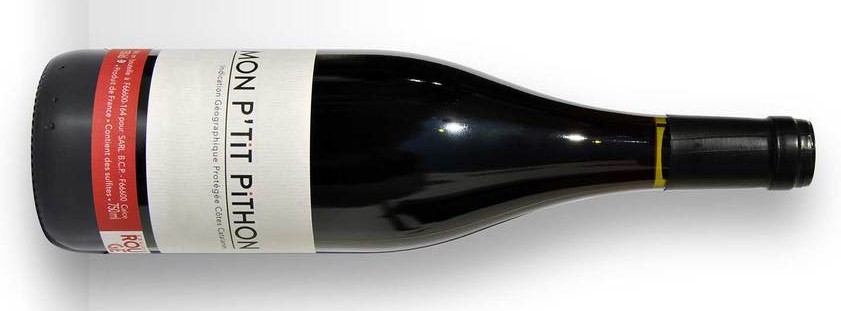
Red berries, Chinese dried plum, spice and slate dust. A medium-bodied mouthful of chiaroscuro fruit, soft acidity, lacy tannins with a lightly astringent edge that provides a welcome touch of gritiness. Fresh, fluid and fleet yet possessed of a certain richness, this easy-drinker seems tailor made for casual fare liked grilled sausages, braised white meats and potluck buffets. Drink lightly chilled. (Buy again? Sure.)
MWG February 2, 2017, tasting: flight 8 of 9
Ward & associés tasting (7/9)
Badischer Landwein 2013, Tschuppen, Weingut Ziereisen ($65.78/1500 ml, private import, 6 bottles/case)
100% Blauer Spätburgunder (aka Pinot Noir) from estate-owned, organically farmed 15- to 25-year-old vines rooted in limestone soil. Manually harvested. Spontaneous fermentation and maceration lasted six to eight weeks and were followed by gentle pressing. The must was transferred to used 225-litre German wood barrels (30% new) for 22 months’ maturation on the lees with occasional racking. Unfiltered and unfined. The first screwcapped magnum I’ve encountered. 12.5% ABV. Quebec agent: Ward & associés.
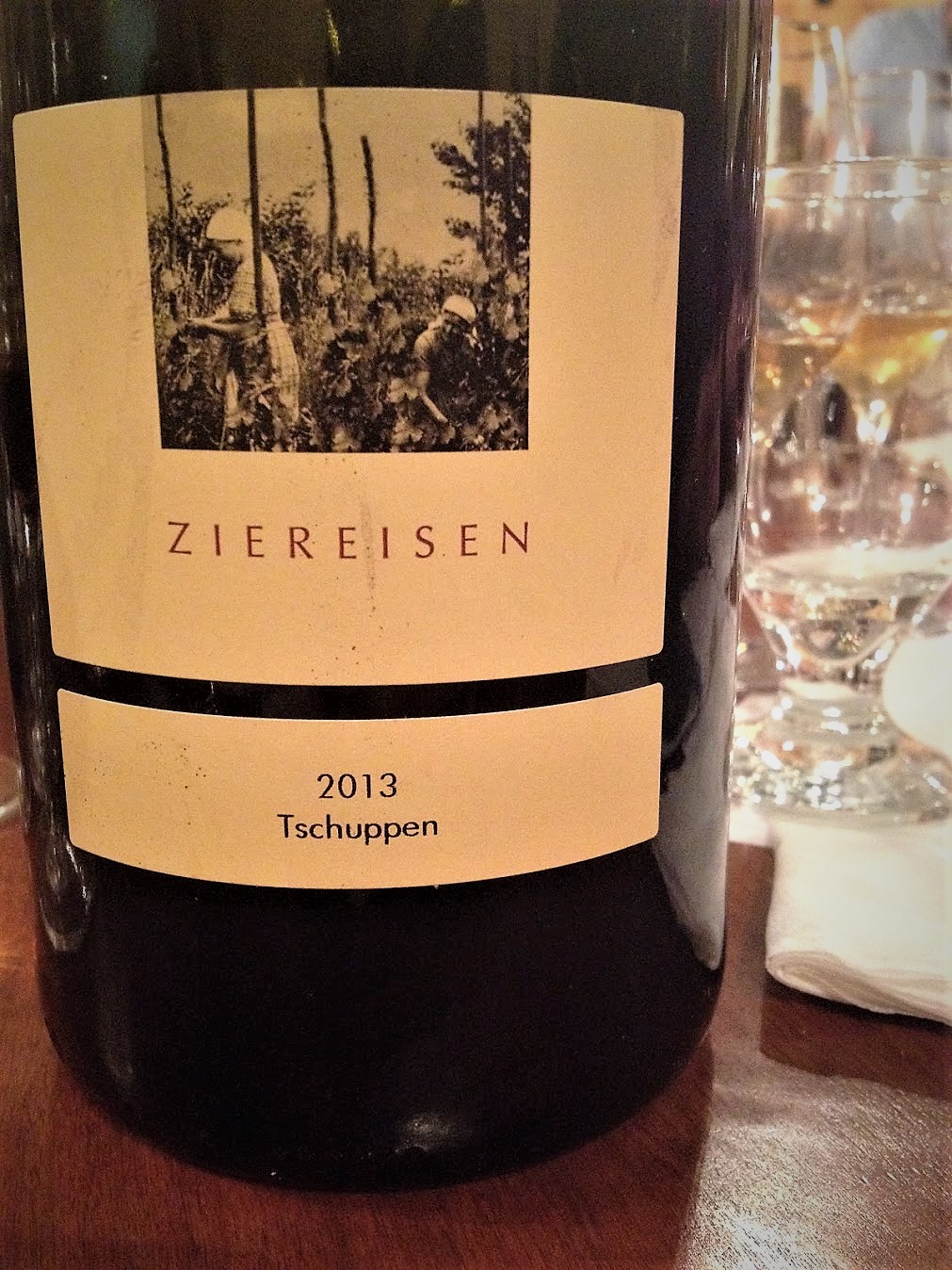
Complex nose: cherry, “purple Popsicle,” “Swiss chard and arugula,” slate, dried rose, a dash of kirsch, distant lime and even celery salt. A dry, medium-bodied red with a silky surface, sleek acidity, fruit-cloaked tannins, underlying minerals and a long, lightly astringent finish. Neither Burgundian nor New Worldish but, in its weight, structure and blend of red berry and earth flavours, definitely Pinot Noir. Impressive QPR. Another hit of the tasting – the group ordered two cases on the spot. (Buy again? Yes.)
MWG February 2, 2017, tasting: flight 7 of 9
Ward & associés tasting (6/9)
Franken 2015, Kleine Wanderlust, 2Naturkinder ($28.32, private import, 6 bottles/case)
80% Regent and 20% Dornfelder from estate-owned, organically farmed vines around 15 and 30 years old respectively. The former was fermented on the skins for two weeks; the latter was crushed by foot and given semi-carbonic maceration for a week. Underwent malolactic fermentation. Matured on the lees in old oak. No added anything, including sulphur dioxide. Unfiltered and unfined. Bottled in April 2016. 3,000 bottles made. 10.5% ABV. Quebec agent: Ward & associés.

Effusive nose: floral, slate, pink peppercorn, “raspberry-cherry hybrid.” Some rose shows up in the mouth along with a bit of grip on the finish. The fruit is dark and black curranty, the acidity energetic but well integrated. A touch of velours in no way interferes with the wine’s impressive fluidity. Certifiably chuggable. And check out that alcohol level! (Buy again? Yup.)
MWG February 2, 2017, tasting: flight 6 of 9
Ward & associés tasting (5/9)
Burgunland 2015, Gemischter Satz, Alexander Koppitsch ($40.98, private import, 6 bottles/case)
The estate is located in Neusiedl am See, a village and district on the north shore of Lake Neusidel, southeast of Vienna. As implied by the Gemischter Satz moniker (though I don’t believe the wine qualifies for the Weiner Gemischter Satz appellation), this is a field blend of co-planted white varieties, including Grüner Veltliner, Brauner Veltliner, Pinot Blanc, Zimttraube, Ochsenauge, Isabellatraube, Neuburger, Traminer, Muskat and Sauvignon Blanc. Planted in 1934, the vines are estate-owned and biodynamically farmed. Vinified as an orange wine, spending 14 days on the skins. Fermented with indigenous yeasts. Matured in old barriques. Unfiltered and unfined, with no added sulphur. 12.5% ABV. Quebec agent: Ward & associés.
Slightly hazy bronzy rose-gold in the glass. Savoury, spicy and not particularly fruity nose with notes of preserved lemon and browning apple as well as a whiff of volatile acidity. In the mouth, it’s medium weight, fluently acidic, faintly tannic and somewhat inscrutable, like “mineral water” or “weak tea” along with lemon, a suggestion of stone fruit and minerals. Actually quite complex, if subtly so, and long. Smoothed out and unfurled nicely after three hours. Will be interesting to see what gives in three or four years. (Buy again? A bottle gladly.)


Burgunland 2015, Rot No. 7, Alexander Koppitsch ($23.19, private import, 6 bottles/case)
55% Zweigelt, 20% Blaufränkisch, 20% St. Laurent and 5% Syrah from estate-owned, biodyanmically farmed vines. Fermented with indigenous yeasts and matured in large oak barrels and stainless steel tanks. Lightly filtered. Unfined. A tiny amount of sulphur dioxide is added at bottling. Screwcapped. 12% ABV. Quebec agent: Ward & associés.
Outgoing nose of “clove,” “nutmeg,” candied raspberry, “frankincense incense” and a bit of poop. Medium-bodied and satin-textured. The bright supple fruit has a certain sweetness, though the wine is definitely dry, and an umami quality prompt descriptors like “soy sauce.” Sinewy tannins and a dusting of minerals only add to the interest. The finish is long but more felt than tasted. Nothing profound but eminently drinkable and something of a bargain. (Buy again? Yes.)
MWG February 2, 2017, tasting: flight 5 of 9
Odd flightfellows
Colline Lucchesi 2013, Palistorti, Tenuta di Valgiano ($29.80, 12767840)
Sangiovese (70%), Merlot (15%) and Syrah (15%) from organically and biodynamically farmed vines around 20 years old. Manually harvested. The sorted grapes are gravity-fed into open wooden vats and crushed by hand or foot. Fermented (with indigenous yeasts, one supposes) and macerated for around two weeks with occasional punch-downs and pump-overs. Racked, settled and gravity-fed into lightly toasted French oak barrels (5% new) for malolactic fermentation and 12 months’ maturation. Blended and transferred into concrete vats for six months’ additional maturation. Unfiltered and unfined. 13% ABV. Quebec agent: Balthazard.
Appealing nose of cherry, tar, turned earth, Asian spices and a fresh, almost ferny note. A medium- to full-bodied mouthful of ripe fruit, bright acidity and firm but not rigid tannins. Despite the superficial sleekness, broad, deep and long. Beautifully balanced and complete, modern yet also terroirtorial. I’m usually unenthusiastic about blends of Sangiovese with international varieties but this is exceptional. It was also the only wine in the tasting that absolutely everyone around the table liked. The price seems more than fair. (Buy again? Yes.)
Swartland 2014, Family Red Blend, A.A. Badenhorst ($40.00, 12275298)
An unorthodox blend – around two-thirds Syrah with Tinta Barroca, Cinsault and Grenache – from estate-grown and purchased grapes. Farming practices are organic or nearly so. Manually harvested. The whole clusters, including stems, are crushed by foot and fermented with indigenous yeasts in concrete and wood tanks with twice-daily punch-downs. Given extended maceration (up to six months) before pressing. Transferred to 4,000-litre barrels for 16 months’ maturation. Blended just before bottling. Sulphur (pre- and post-fermentation) is the only addition. Reducing sugar: 1.4 g/l. 13.5% ABV. Quebec agent: Symbiose.
Complex, warm-climate nose of prune, plum, eucalyptus, black olive, dark minerals and eventually dried herbs. Full-bodied, rich and dense, balanced and savoury. Round tannins and smooth acidity provide sufficient structure. The flavours linger long and tend to the darker side of the spectrum: black fruit, slatey minerals, smoke, leather, compost, animale and a volatile note that puts me in mind of charred eucalyptus but that one taster describes as “electrical tape.” Not quite my style but definitely drinkable and as Old Worldish as New. (Buy again? Would gladly drink if offered but doubt I’d buy a bottle.)
MWG January 12, 2017, tasting: flight 7 of 7
Etna threesome
Etna Rosso 2014, Rossodiverzella, Benanti ($25.10, 11348459)
Nerello Mascalese (85%) and Nerello Cappuccio (15%) from 10- to 60-year-old vines grown in parcels on the northern, southeastern and southwestern slopes of Mount Etna at altitudes varying from 450 to 900 m. Manually harvested. Destemmed. Fermentation and 20- to 21-day maceration with selected yeasts take place in stainless steel vats. Maturation – 80% in stainless steel tanks, 20% in French oak barriques – lasts eight to 10 months. Reducing sugar: 2.3 g/l. 13.5% ABV. Quebec agent: L’Enoteca.
Fragrant nose of red berries, plum and spice with a faint floral perfume. Medium-bodied, fleet and quite dry. The sweet-tart fruit unfurls like veils across the palate. Bright acidity and supple tannins provide a light but present structure. A vein of volcanic minerals runs from the mid-palate into the long, slightly astringent finish. Such an appealing blend of fresh and savoury. (Buy again? Yes.)
Etna Rosso 2013, Graci ($27.80, 13041830)
Nerello Mascalese (100%) grown on the northern-eastern slopes of Mount Etna at an altitude of 600-700 m. Fermentation with indigenous yeasts and maceration on the skins are in concrete tanks and last for around 30 days. Matured 18 months in concrete tanks with spontaneous malolactic fermentation. Reducing sugar: 1.9 g/l. 14% ABV. Quebec agent: Symbiose.
The darker, more minerally nose is marked by old wood, cherry, plum, spice chest and leather aromas. In the mouth, the wine is heftier and headier than the Benanti, the fruit is riper without seeming jammy and the flavours are entertaining. A smooth current of acidity brings welcome freshness while cushy tannins provide torque. The persistent finish has a tarry edge. (Buy again? Sure.)
Etna Rosso 2013, Barone di Villagrande ($28.60, 12988167)
Nerello Mascalese (80%) and Nerello Cappuccio (20%) from organically farmed vines on the southern slopes of Mount Etna. Maceration and fermentation in temperature-controlled tanks lasts six to 10 days. Matured 12 months in 500-litre Etna oak barrels. Altitude: 650-700 m. Reducing sugar: 2.5 g/l. 13.5% ABV. Quebec agent: AOC & cie.
Jammier on the nose, showing the expected cherry and plum along with aromas described as “a bit coffee,” “fruitcake,” “molasses” and “pomegranate.” Bigger, denser and fruitier than its flightmates. Fundamentally dry though the very ripe fruit gives an impression of sweetness. It also drives complexity and depth into the background. A dusty quality colours the mid-palate and lingers into the long finish. May benefit from a few more years in the cellar. At this point too New Worldish and Parkerized for me, though some around the table loved it. (Buy again? Unlikely.)
MWG January 12, 2017, tasting: flight 6 of 7
Catalonian orphan
Empordà 2015, Sauló, Espelt Viticultors ($15.15, 10856241)
A 50-50 blend of Liedoner Negre (aka Grenache) and Carinyena (aka Carignan) from organically farmed vines rooted in weathered granite soil in the southern foothills of the Albera Massif, just south of the French border and just inland from the Mediterranean. The grapes from each parcel are vinified separately and given 36 hours’ cold maceration before fermentation in stainless steel temperature-controlled tanks. Lightly filtered before bottling. Reducing sugar: 2.6 g/l. 14.5% ABV. Quebec agent: Le Marchand de Vin, one of whose reps attended the tasting and comped this bottle (merci, Simon!).
Raspberry (a bit candied), peppery spice and a hint of plum. Full-bodied and fruit-driven. The fruit is very ripe and sweet seeming (one taster notes “raspberry jam on the finish”) but the wine is fundamentally dry. A healthy shot of acidity and raspy tannins provide just enough structure, a dark undercurrent adds a little intrigue. Slate and earth linger on the drying finish. A crowd-pleaser whose candour and sunny disposition go a long way toward making up for any lack of nuance or depth. Fans of fruit-forward wines in the mood for something different should put this QPR winner on their shopping list. The label is a delight. (Buy again? Sure, especially to take to a party or barbecue where a highfalutin wine wouldn’t be appropriate.)
MWG January 12, 2017, tasting: flight 5 of 7
Loire cousins
Chinon 2014, Expression, Alain Lorieux ($19.85, 00873257)
100% Cabernet Franc from vines rooted in flinty clay. The grapes are destemmed. Macerated and fermented in stainless steel tanks for around five weeks with daily pumpovers. Reducing sugar: 1.8 g/l. 12.5% ABV. Quebec agent: Rézin.
Blackberry, raspberry, hints of ash, leather and greenery. A supple, medium-bodied, oh-so-dry mouthful of sweet-tart fruit, bright acidity and light tannins set against a darker, minerally backdrop. “More leafy” than the Saint Nicolas. Good clean finish that has you aching for another sip. Quaffable in the extreme. (Buy again? Yes.)
Saint-Nicolas-de-Bourgueil 2014, Les Mauguerets – La Contrie, Pascal et Alain Lorieux ($22.45, 00872580)
100% Cabernet Franc from vines rooted in gravelly soil in Les Mauguerets and La Contrie, two adjacent lieux-dits. The gravel retains heat and facilitates ripening. The grapes are destemmed. Macerated and fermented in stainless steel tanks for four to six weeks with daily pump-overs. Reducing sugar: 1.7 g/l. 12.5% ABV. Quebec agent: Rézin.
Faintly funky nose of dark berries, spice and tobacco leaf. Compared with the Chinon, “more earthy” and complex as well as a notch richer, more structured and more dimensional. The fruit is a little sweeter and juicier too and the mineral component is if anything stronger. With its scents of black tea leaves, the long finish only adds to the impression of sauvity. This textbook example of Loire Cab Franc doesn’t shout but has real presence. (Buy again? For sure.)
MWG January 12, 2017, tasting: flight 4 of 7
Sweet thang
Primitivo di Manduria 2013, Campo Marina, Luccarelli ($21.55, 13083933)
100% Primitivo from bush vines averaging 20 to 40 years old. The grapes are destemmed and crushed, then macerated and fermented in stainless steel tanks with regular pump-overs for eight to 10 days. When malolactic fermentation is finished, the wine is matured in used American and French oak barrels for eight to 10 months. Reducing sugar: 13.1 g/l. 14% ABV. Quebec agent: Vignôme.
The bottle my glass came from had been opened and recorked about 24 hours earlier. Dark and somewhat raisiny nose. Full-bodied and mouth-filling. Chock-a-block with ultra-ripe fruit (plum, blackberry, fig), round if rustic tannins, surprisingly good acidity, a fairly long finish and a certain, well, if not minerally depth then ballast. Oh, and it’s quite sweet. Actually, the residual sugar levels are about three times the maximum for what is considered a dry wine. While it’s not a style I find appealing, this isn’t as off-putting as such wines can be. It may be sweet but it isn’t full-on cloying. It may be heady but it’s not hot. There’s nothing port-like about it. And it doesn’t taste confected, unlike several popular New World reds with similar sugar levels (Ménage à Trois or Apothic Red, for example). Drinkers in search of big, bold fruit, who aren’t allergic to some sugar in their “dry” wines and for whom refreshment isn’t a primary concern can buy with confidence. Me? I’ll give it a pass. (Buy again? Nope.)
Top sub-$15 red at the SAQ?
Dâo 2014, Duque de Viseu, Quinta dos Carvalhais/Sogrape ($14.05, 00546309)
Touriga Nacional (55%), Tinta Roriz (aka Tempranillo, 32%), Alfrocheiro (7%) and Jaen (aka Mencia, 6%). The grapes were destemmed, gently crushed and gravity-fed into temperature-controlled stainless steel vats. Alcoholic fermentation, with regular pump-overs, lasted about six days. After pressing, the wine was transferred to stainless steel vats for malolactic fermentation. Half the finished wine was matured in used French oak barrels, the other half in stainless steel tanks, both for 12 months. Micro-oxygenation is practised. Reducing sugar: 1.7 g/l. 13% ABV. Quebec agent: Charton Hobbs.
Intriguing nose: plum, dark berries, fallen leaves, a kischy high note, a hint of rubber and a faint vegetal streak, all of which are echoed on the palate. In the piehole, it’s medium-bodied, full of ripe but not heavy fruit with a slatey substrate, lively acidity and smooth tannins that show some astringent mettle on a credibly long, spice-scented finish. Very drinkable and food friendly (even with white meats, even with non-Portuguese fare), neither industrial nor soulless. This fluent wine is certainly one of the top sub-$15 reds at the SAQ. (Buy again? Sure.)

 Brett happens