Posts Tagged ‘Red wine’
Northern exposure
Terre Siciliane 2015, Versante Nord, Eduardo Torres Acosta ($35.00, 13387380)
Nerello Mascalese with 20% other varieties, including Nerello Capuccio and possibly Alicante Bouschet and Grenache from vines in two co-planted parcels (Pietramarina and Crasa, totalling 1.5 ha) at 550 to 750 metres in elevation on the north-facing side of Mount Etna, hence the bottling’s name. The vines average 45 to 50 years old, with the oldest being about 80. The manually harvested grapes were transported to Arianna Occhipinti’s winery in Vittoria. Some clusters were destemmed, others left whole. Fermented with indigenous yeasts and macerated on the skins for 15 days in a cement tank with no temperature control. Matured 16 months in 750-litre Slavonian oak botti. Minimally sulphured. The 2015 is the second vintage of the wine. Total production: 6,000 bottles. 13.5% ABV per the label, 12% ABV per the SAQ. Quebec agent: oenopole.
The expected cherry and plum plus cedar, blood and stone. No more than medium-bodied. Structured by silky acidity and gossamer tannins, the fruit seems shot through with minerals. The sustained finish brings a light astringency and a dusty aftertaste. So pure and savoury, so effortlessly complex. A pleasure to drink. (Buy again? Yes.)

Terre Siciliane 2015, Pirrera, Eduardo Torres Acosta ($59.00, 13387371)
The blend is similar to the Versante Nord but with 90% Nerello Mascalese. All grapes come from the high-altitude (850 metres) Pirrera vineyard on the north slope of Mount Etna, which had been abandoned until Acosta began rehabilitating it. The vines average 50 years old and the soil is sandy with volcanic ash and stones. The wine-making was identical to that for the Versante Nord. The 2015 is the second vintage of the wine. Total production: 1,100 bottles. 13.5% ABV per the label, 12% ABV per the SAQ. Quebec agent: oenopole.
Inexhaustible nose of spice, cedar, old wood, forest floor, background dried cherry, floral and balsamic notes and more. Richer than the Versante but still medium-bodied and silky. There’s a pure core of fruit, racy but integrated acidity, an airframe tannic structure, minerals galore, a feathery astringency and a very long, subtly inflected cherry marzipan finish. More serious than its flightmate yet still so fresh. A flawless, complex, engaging, delicious wine. (Buy again? Yes.)
Soon after the wines’ release, a MWG member who was wondering which if any to buy asked a well-regarded SAQ wine advisor for input. The advisor said he was enamoured with the Versante Nord but felt the Pirrera wasn’t worth the extra outlay. The member bought some of the Versante and gave the Pirrera a pass. At the tasting a few days later, our experience was more the opposite: both wines were delightful but the Pirrera was the standout. The member made a beeline to the SAQ and scored a couple of bottles.
MWG September 28th tasting: flight 7 of 7
Ontario’s red grape?
Niagara Peninsula 2015, Cabernet Franc, Sans Soufre, Norman Hardie ($35.00 at the winery)
100% Cabernet Franc from organically farmed vines. Manually harvested. Fully destemmed. Fermented with indigenous yeasts in one-ton fermenters. Pressed in a basket press. Matured 10 months in 225-litre French oak barrels. Unfiltered and unfined. No added sulphur. 12.5% ABV.
Entertaining nose: a mix of dark fruit (cherry, blackberry) and umami (meat, mushroom) that prompts peanut gallery descriptors like “floral,” “spices,”“earthy,” “kelp” and “creosote.” Medium-bodied and fluid. Seems sweet on entry but turns appetizingly dry. Full of crunchy ripe fruit framed by soft tannins and enlivened by a stream of acidity. The complex of flavours includes minerals and herbal notes but absolutely no greenness. Finishes long and clean. So fresh, so drinkable. Enjoyable now and over the next two or three years if not longer. (Buy again? Yes.)

Canada 2015, Cabernet Franc, The Old Third ($55.00 at the winery, around $34 on preorder)
100% Cabernet Franc from the estate’s organically farmed Closson Road terrace vineyard in Prince Edward County. Fermented in stainless steel tanks with indigenous yeasts, then racked into French oak barrels, where it matured for about a year and a half. Unfiltered, unfined and minimally sulphured. Bottled in July 2017. 12.5% ABV.
Raspberry and black currants along with “black tea,” “pencil shavings,” “nut cake” and “prune.” Richer, rounder and denser than its flightmate, velour to Hardie’s satin. The ripe fruit is structured by smooth tannins and smooth acidity. Balanced, layered, long and full of potential: a complete wine. If there’s an issue now, it’s that the wine is a bit monolithic and the oak a little too obvious – nothing four or five years in the cellar won’t take care of. Late spring frost made 2015 a difficult vintage for many Prince Edward County producers though not for The Old Third and that’s totally apparent here. (Buy again? Yes, especially at the preorder price.)
World-class wines like these make a convincing argument that Cabernet Franc is Ontario’s red grape.
MWG September 28th tasting: flight 6 of 7
Vibrant, tasty, companionable
Adelaide Hills 2016, Skin n’ Bones Pinot Noir, BK Wines ($38.00, importation valise)
100% Pinot Noir from organically farmed vines grown in the cool-climate Lenswood subregion of the Adelaide Hills of South Australia. Manually harvested. After sorting, 70% of the clusters were left whole and 30% destemmed. All the fruit was then placed in French oak barrels (10% new, 90% neutral), leaving a generous amount of head space to be filled by the carbon dioxide gas resulting from fermentation. The barrels were sealed and the wine was allowed to spontaneously ferment and macerate for 100 days, after which the barrels were broken apart and the wine pressed. Bottled unfiltered and unfined. 12.8% ABV. Represented in western Canada by Calgary-based Crush Imports.
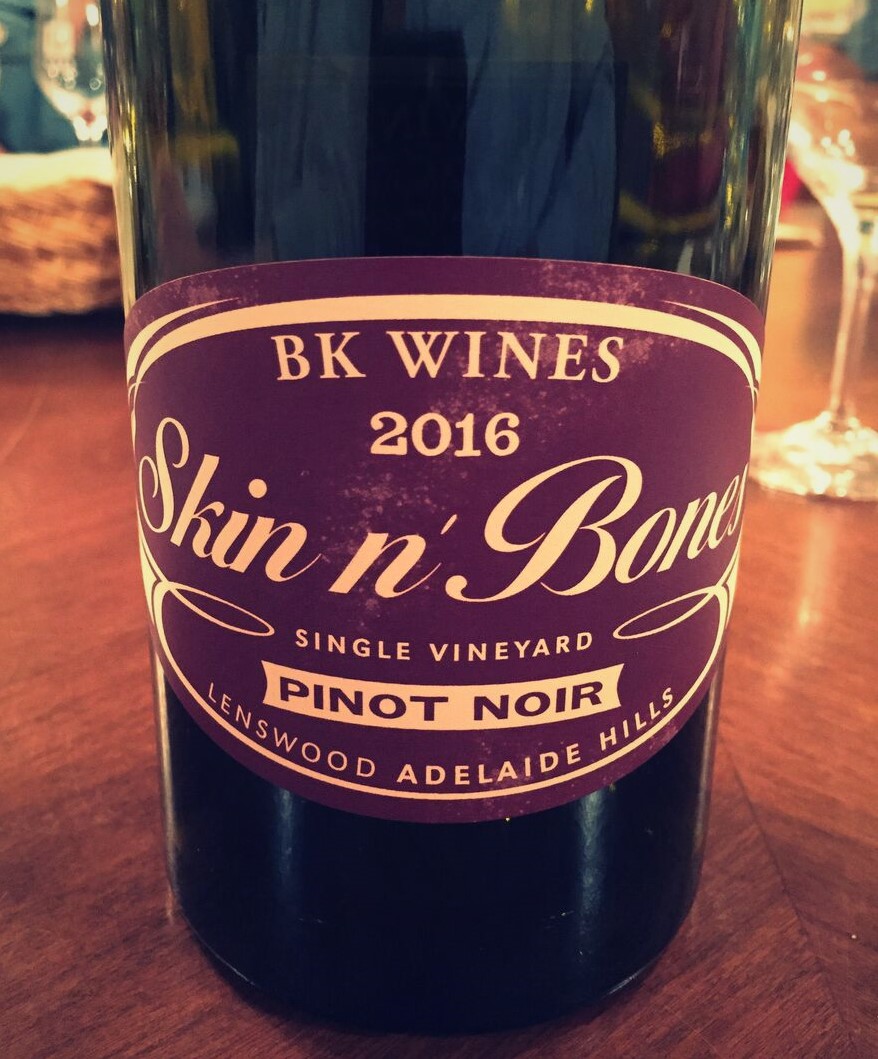
Fragrant, engaging nose: raspberry and cherry along with sandalwood, cedar, “tomato sauce” and graphite. Light- to medium-bodied. Juicy but not a bomb. Actually, there’s lots of detail, great precision and real energy. The sweet silky fruit is framed by fresh acidity and light though very present tannins. Chewing reveals unsuspected depth and structure. The spice-overtoned finish is clean and well sustained. A vibrant, tasty, companionable Pinot Noir that, while accessible now, has the potential to develop over the next few years. (Buy again? Yep.)
Based on this and the same estate’s Savagnin, some enterprising agency needs to be bringing these wines into Quebec.
MWG September 28th tasting: flight 5 of 7
The best moment of the day is now
Vermouth, Dry Red, Fontalia ($19.75, private import, 6 bottles/case)
A red vermouth from the Priorat region, south of Barcelona. Made by Cellers De Bellmunt Del Priorat. Flavoured with 38 botanicals and matured in oak barrels for eight months. 15% ABV. Quebec agent: Vinealis.
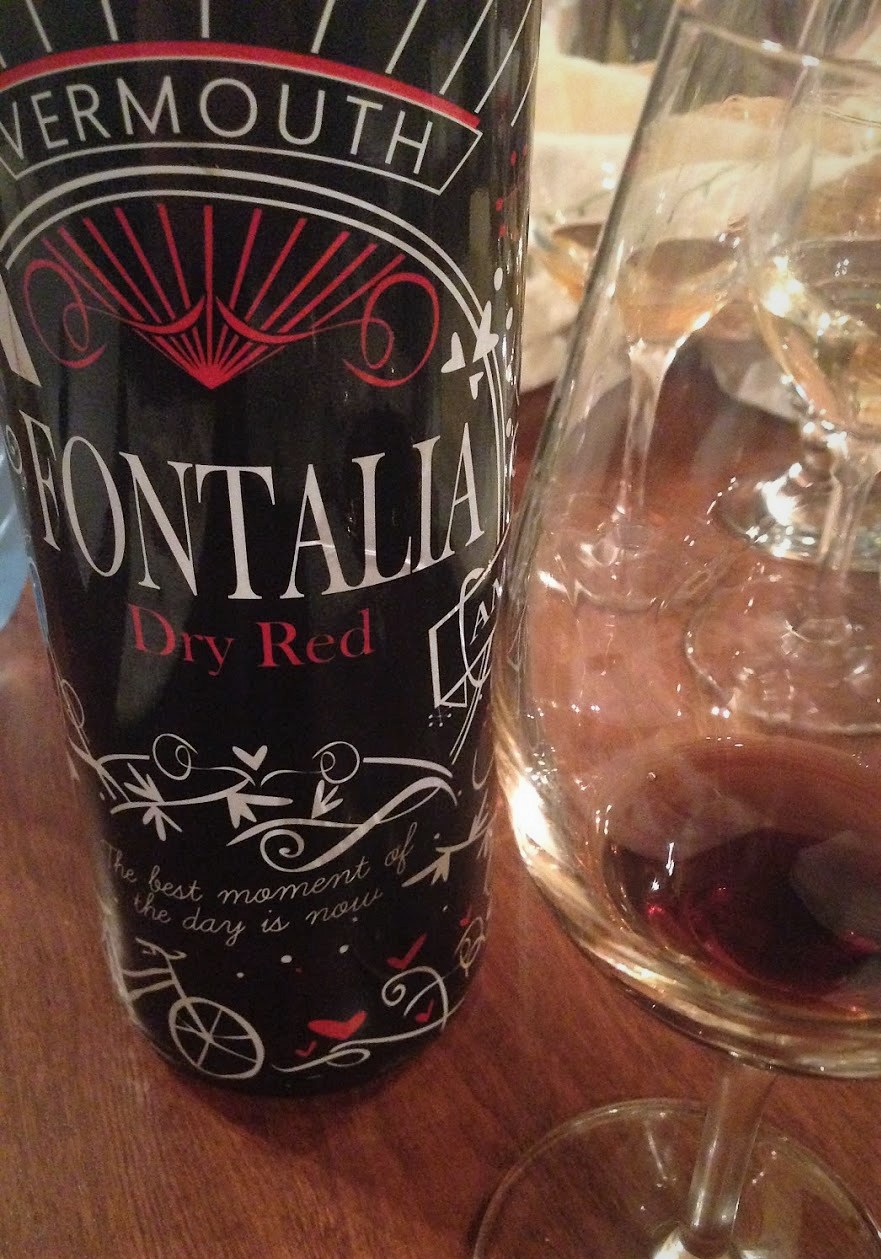
Such a complex nose: dried and fresh fruit, spice (cinnamon, clove, pepper), citrus peel, incense, a hint of caramel and more. The flavours echo the nose. Surprisingly fleet and, while sweet, far from cloying due partly to the bright acidity. The spice-laden finish has an appealing bitter edge. Clearly appropriate for cocktails but good enough to sip on its own with a single ice cube and a twist of orange or lime (the label says tangerine or grapefruit). Infinitely preferable to Cinzano and not that much more expensive. (Buy again? For sure.)

WMG September 14th tasting: flight 9 of 9
Toro solo
Toro 2015, 4mil cepas, Cuatro Mil Cepas ($24.95, private import, 6 bottles/case)
Founded in 2008 by 11 friends, the estate now comprises 7.5 hectares in three plots in the Toro DO. It also makes wine in the Sierra de Salamanca PDO. I’ve not succeeded in finding any information about this bottling, which is 100% Tinta de Toro (aka Tempranillo) and comes from sustainably farmed vines. It is probably fermented in stainless steel tanks and matured in barrels (likely a mix of American and Hungarian oak). 14% ABV. Quebec agent: Vinealis.

Black and red fruit, old wood, graphite, sandalwood, Chambord, leafmould. Full-bodied. The flavour is a mix of ripe but not jammy fruit and a layer of spicy but unaggressive oak. Firm yet pliable tannins and sleek acidity confer a velour-like texture. Balanced, fluid, long. Young but delicious and delivering high QPR. If in the mood for an affordable, oak-inflected Toro, this will do just fine. (Buy again? Not really my style but if it’s yours, go for it.)
WMG September 14th tasting: flight 8 of 9
Three sure bets
Côtes du Rhône Villages – Valréas 2010, Clos Bellane ($26.25, private import, 12 bottles/case)
A 50-50 blend of Grenache and Syrah from biodynamically and organically farmed vines more than a quarter century old and rooted in clay and limestone. At 410 metres elevation, the vineyard is the highest and one of the coolest in the southern Rhône. Manually harvested. Partially destemmed. Fermented with indigenous yeasts and “Burgundy-style” punch-downs in temperature-controlled stainless steel tanks. Pneumatically pressed. Matured in stainless steel tanks (70%) and used barrels (30%). To minimize handling by machines, the winery is gravity-fed. 14.5% ABV. Quebec agent: Vinealis.
Our bottle was opened 24 hours before we got around to it. Wafting nose of plum, raspberry, spice, oyster bed, red gummy bears and garrigue. In the mouth, it’s full-bodied but restrained. What’s more, the alcohol is not at all noticeable. Flavourwise, it’s remarkably clean, pure and well balanced, with rich fruit, freshening acidity, mostly resolved though still bitey tannins and as much breadth as depth. Black pepper and herbes de Provence overtone the long finish. The estate’s elegant rosé is among the best values at the SAQ, so it’s not surprising the CDRV (the 2015 version of which is also available at the monopoly) is similarly tasty and affordable. (Buy again? Sure.)


Corbières 2014, Prioundo, Les Clos Perdus ($34.60, 6 bottles/case)
A blend of Grenache (80%) and Cinsault (20%) from biodynamically and organically farmed, 32-year-old vines rooted in limestone and clay. Twenty percent of the grapes are left in whole clusters, the rest destemmed but uncrushed. Given three days’ maceration before fermentation in stainless steel tanks with indigenous yeasts. Basket pressed after 21 days on the skins. Matured on the fine lees in stainless steel tanks for nine months. Unfined and lightly filtered. Sulphur use is minimal. 14.5% ABV. Quebec agent: Vinealis.
Lovely, subtle, savoury nose: blackberries and red fruit, minerals, spice and a bit o’ barnyard. Pure, open and sweet on the attack yet dry and savoury. Finely structured with supple tannins and smooth acidity. Full-bodied, round, fresh – what the French call digeste, which is kind of surprising for a 14.5% wine. (Buy again? Sure.)
Vacqueyras 2014, Fruit Sauvage, Clos de Caveau ($65.00/1500 ml, private import, 3 bottles/case)
A 60-40 blend of Grenache and Syrah from 10- to 45-year-old organically farmed vines at the foot of the Dentelles de Montmirail. Manually harvested. Fermented with indigenous yeasts. Matured 12 months, half in tronconic tanks, half in concrete tanks 14.5% ABV. Quebec agent: Vinealis.
Elegant nose of plum and red berries, black tea and background minerals and garrigue. As for the palate, the word smooth appears three times in my notes, though suave might be the better descriptor. Full-bodied and lush yet fresh and energetic. Satiny texture. The ripe, juicy fruit is structured by round tannins and sleek acidity. Minerals rumble softly underneath. Finishes long and clean and with not a hint of heat. Unexpectedly easy-going, especially for a Vacqueyras. (Buy again? Sure.)
WMG September 14th tasting: flight 7 of 9
Tempting
Côte Roannaise 2015, Gamay Tentation, Vincent Giraudon ($25.20, private import, 12 bottles/case)
100% Gamay (technically Gamay Saint Romain, a local variant with small oval berries that have a high ratio of skins to juice) from organically farmed vines rooted in granitic soil. Manually harvested. Carbonic maceration and fermentation take place in concrete tanks. 13% ABV. Quebec agent: Vinealis.
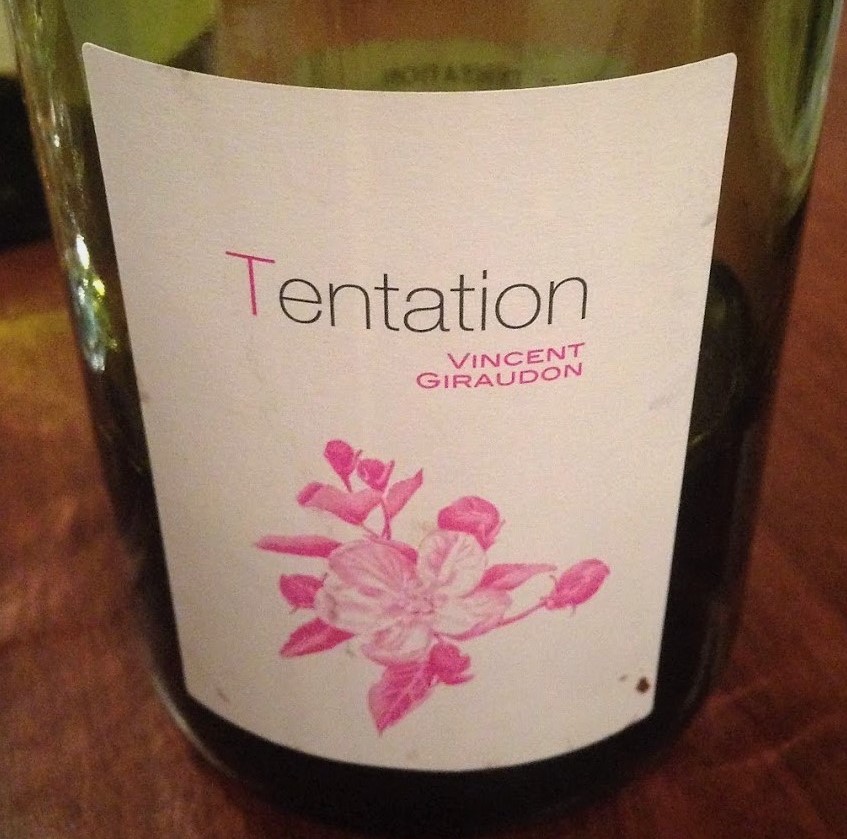
Fun nose: candied raspberry, slate, dried peppermint, clay mud, jalapeño. Light- to medium-bodied, with juicy ripe fruit, a mineral underlay, featherweight tannins, luminous acidity and an appealing earthy streak. Good length. Very, very drinkable. Every time I start wondering whether I’ve reached peak Gamay, a wine like this comes along. (Buy again? Um, yes.)
WMG September 14th tasting: flight 6 of 9
A serious vin plaisir
TN 2015, Tinto Natural, Partida Creus ($27.45, private import, 6 bottles/case)
A blend of biodynamically farmed Merlot, Cabernet Sauvignon and Garrut (aka Mourvèdre). Very little technical information to be found on this but André “Vinealis” Papineau describes Partida Creus as one of the most natural winemakers around, so manual harvesting, fermentation with indigenous yeasts, non-interventionist wine-making and no filtering, fining or added sulphur. 13.5% ABV. Quebec agent: Vinealis.

Red berries, slate, peppery spice and some background funk. Medium-bodied and quite dry, though, as André notes, there’s some “sucrosité” on the attack as well as a hint of carbon dioxide. In contrast to other red quaffers from, say, the Loire valley, there’s a solar quality to the fruit. Fresh acidity adds buoyancy while the fine, tight tannins turn a little raspy on the long finish. Built around a core of red cherry but as savoury as it is fruity: a serious vin plaisir as it were. Quite popular with the assembled masses. (Buy again? Yep.)
WMG September 14th tasting: flight 5 of 9
Vinho de joaninha
 Vinho Mesa Tinto 2011, Quinta da Serradinha ($23.70, 13286861)
A blend of Baga (35%), Castelão (30%), Touriga Nacional (20%) and Alfrocheiro (15%) from organically farmed vines planted in 1954 on the limestone slopes of the Serra de Aire massif, near Leiria, about 20 km from the temperature-moderating Atlantic. Manually harvested. The destemmed grapes are placed in open vats and foot-trod three times a day. Fermentation lasts 10 days. Matured two years in neutral oak barrels. Unfiltered and unfined. An embossed ladybug (joaninha in Portuguese) sits atop the bottle’s capsule, invariably prompting a second look. Reducing sugar: 1.8 g/l. 13% ABV. Quebec agent: Rézin.
Unusual, intriguing nose: slightly candied plum and black raspberry, fragrant blossoms (peony?) and camphor-like fresh herbs. There’s some ink or slate in there too. In the mouth, it’s medium- heading toward full-bodied. The dark flavours (plummy fruit, slate dust, old wood) and grainy density are riddled with – almost contradicted by – zingy acidity. While the tannins seem roundish and resolving at first, a fine astringency fills the mouth and lingers long after the flavours have disappeared. Earthy yet light on its feet, this smoothed and sweetened as it breathed, so it’s definitely carafable. Cool-climate Portuguese wines clearly merit further investigation. (Buy again? Sure.)
The return of a favourite
 Emilia Rosso 2015, Trebbiolo, La Stoppa ($24.85, 11896501)
A blend of Barbera (60%) and Bonarda (40%) from organically farmed vines ranging up to 25 years old. Fermented with indigenous yeasts. Matured five months in stainless steel. Unfiltered and unfined. A small squirt of sulphur dioxide is added at bottling. Reducing sugar: 1.5 g/l. 13% ABV. Quebec agent: oenopole.
Black raspberry candy, plum, earth, cedar sawdust, leather, slate and a whiff of distant barnyard. Medium-bodied. An almost imperceptible spritziness is apparent after a bite of something acidic. The ripe fruit seems sweet on entry, an impression soon shredded by the trenchant acidity, light but drying tannins and savoury flavours. Spice, dried herbs and minerals colour the mildly astringent finish. Perhaps a tad lighter and less rustic than the classic 2014 but still authentic, food-friendly* and fun. (Buy again? Yep.)
*As I said about the 2014: “Virtually begs for casual fare – think pizza, sausages, grilled pork – and can handle tomato with aplomb. Just don’t serve it too warm.” My bottle made a perfect pairing for cubed pork shoulder browned in olive oil and stewed with a whack of smothered onions, garlic, dried chile, white wine and San Marzano tomatoes, with cooked black-eyed peas added for the last half hour of simmering.

 Brett happens