Posts Tagged ‘Under 13 percent’
Ward & associés tasting (3/9)
Steirerland Landwein, “Trauben, Liebe und Zeit”, Weiss No. 7, Strohmeier ($50.73, private import, 6 bottles/case)
Trauben, Liebe und Zeit means “grapes, love and time” and is the name given to the estate’s line of natural wines. Mainly Pinot Blanc with some Chardonnay from the 2014 and 2015 vintages. The grapes are estate-grown, organically farmed and manually harvested. Fermented with indigenous yeasts. Matured 11 months in neutral 500-litre barrels. No added anything, including sulphur. Unfiltered and unfined. 11.5% ABV. Quebec agent: Ward & associés.
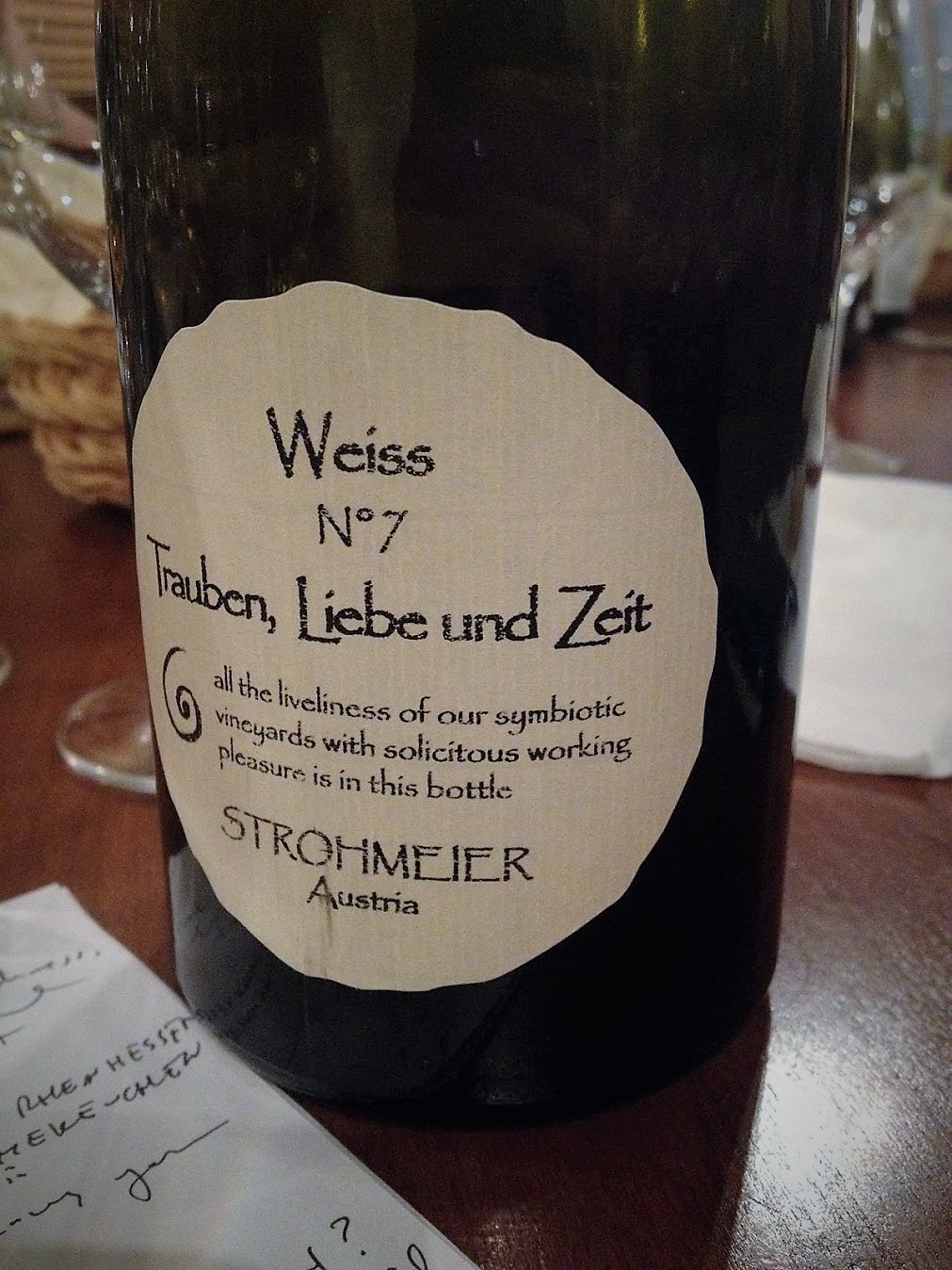
Cloudy light green-gold in the glass. Nose of white pepper, lemon, “sour orange,” lees and more besides. In the mouth, it’s soft textured and a bit spritzy. A wallflower at first though chewing reveals all kinds of complexity – including pear, herbs and chalk – and some depth. Comments from the peanut gallery: “like a gueuze,” “tastes like scrapes” (which, as I learned, are light metal shavings), “stealth acidity.” The long finish is faintly bitter and sour. Unique, fascinating and delicious. I was ready to lay down my money until I saw the price… (Buy again? Only if feeling flush, alas.)
MWG February 2, 2017, tasting: flight 3 of 9
Ward & associés tasting (2/9)
Located near Bockenheim in the Palatinate, the 20-something Brand brothers took over the estate from their father in 2004. Farming practices, rigorously sustainable since 1994, were certified organic in 2015. The wine-making is non-interventionist.
Pfalz 2015, Riesling trocken, Vom Berg, Weingut Brand ($23.53, private import, 12 bottles/case)
The estate’s entry-level line. 100% Riesling from estate-owned organically farmed vines. Fermented in stainless steel tanks. Screwcapped. 13% ABV. Quebec agent: Ward & associés.
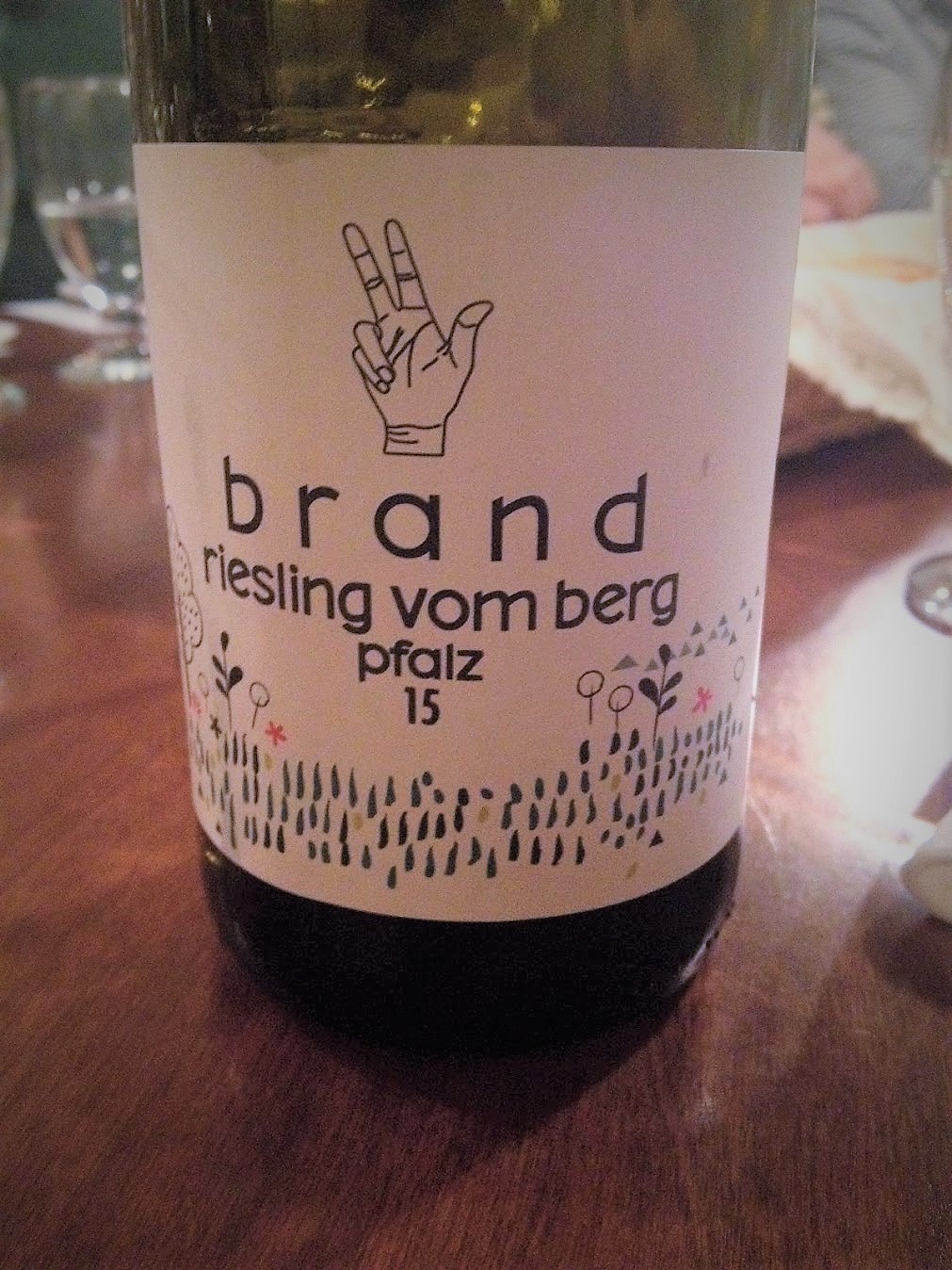
Initially sulphurous nose (not uncommon with screwcapped Rieslings) gives way to slate, lemon-lime and green apple overtoned with honeysuckle. Dry and fruity with nipping acidity, tons of crushed minerals and the faintest hint of caramel. Long, savoury and alive. Like Germany meets Alsace in a glass. Great QPR. Deservedly one of the hits of the tasting. (Buy again? Multiples.)
Pfalz 2015, Weissburgunder trocken, Weingut Brand ($26.37, private import, 12 bottles/case)
Inspired by a similar drawing on the cornerstone of a local church, the front label’s raised hand indicates this is part of the Schwurhand (oath-taking) line of wines made using grapes from the estate’s top vineyards 100% Weissburgunder (aka Pinot Blanc) from organically farmed vines. Manually harvested. Gently pressed and briefly macerated. Fermented with indigenous yeasts. No added anything. Unfiltered and unfined. Screwcapped. 12.5% ABV. Quebec agent: Ward & associés.
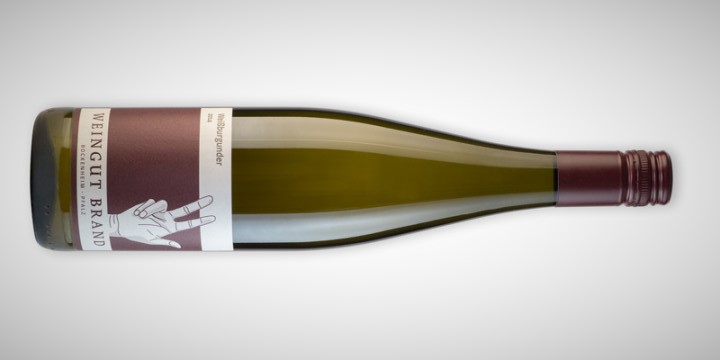
Intriguing nose of chalk, gooseberry/quince, green tea and coriander seed. Equally intriguing in the mouth with a texture that has people grapsing for descriptors like “soft oily velour.” Lactic, bitter and faintly fruity (“like bad plum”) threads intertwine with dusty minerals and soft acidity. A distant mustardy note chimes on the long finish. Complex, savoury and satisfying. If you think Pinot Blanc makes only facile wines, think again. (Buy again? Yes.)
MWG February 2, 2017, tasting: flight 2 of 9
Ward & associés tasting (1/9)
In early February, David Ward paid the Mo’ Wine Group a visit to present some of his eponymous agency’s new arrivals. “Drinkability first” is the agency’s credo and all the wines poured emphatically met that criterion. The tasting also featured winemakers, grapes and even regions that most of us had little if any experience with. No surprise then that a large order followed. Note that while some of the wines are still available, others are in very short supply.
We began with one of the less unconventional wines in the lineup.
Bourgogne Aligoté 2015, Sarnin-Berrux ($32.89, private import, 12 bottles/case)
With the exception of one cuvée, all Sarnin-Berrux wines are made from purchased grapes. The firm works closely with the growers, insisting on organic methods and often picking the grapes themselves. The wine-making is non-interventionist and based on the lunar calendar. The grapes for this 100% Aligoté are manually harvested. After slow pneumatic pressing, the must is clarified by settling. Fermentation with indigenous yeasts lasts four to six months. Unfiltered and unfined. No additives other than a tiny shot of sulphur. 11.5% ABV. Quebec agent: Ward & associés.

Somewhat muted nose: faint lemon/citronella, quartz and “pear flower.” Quite dry and buttery textured with lively but not trenchant acidity. Russet apples and honey up front, minerals (flint and chalk) on the finish. A white pepper note – as much a sensation as a flavour – lingers. Subtly complex and very civilized. If only it were a few dollars less. Then again, Ente’s 2014 Bourgonge Aligoté currently lists for $33 at the SAQ while De Villaine’s 2014 Bouzeron Aligoté runs a buck shy of $40, so maybe it’s not so pricey after all. (Buy again? Hmm…)
MWG February 2, 2017, tasting: flight 1 of 9
Loire cousins
Chinon 2014, Expression, Alain Lorieux ($19.85, 00873257)
100% Cabernet Franc from vines rooted in flinty clay. The grapes are destemmed. Macerated and fermented in stainless steel tanks for around five weeks with daily pumpovers. Reducing sugar: 1.8 g/l. 12.5% ABV. Quebec agent: Rézin.
Blackberry, raspberry, hints of ash, leather and greenery. A supple, medium-bodied, oh-so-dry mouthful of sweet-tart fruit, bright acidity and light tannins set against a darker, minerally backdrop. “More leafy” than the Saint Nicolas. Good clean finish that has you aching for another sip. Quaffable in the extreme. (Buy again? Yes.)
Saint-Nicolas-de-Bourgueil 2014, Les Mauguerets – La Contrie, Pascal et Alain Lorieux ($22.45, 00872580)
100% Cabernet Franc from vines rooted in gravelly soil in Les Mauguerets and La Contrie, two adjacent lieux-dits. The gravel retains heat and facilitates ripening. The grapes are destemmed. Macerated and fermented in stainless steel tanks for four to six weeks with daily pump-overs. Reducing sugar: 1.7 g/l. 12.5% ABV. Quebec agent: Rézin.
Faintly funky nose of dark berries, spice and tobacco leaf. Compared with the Chinon, “more earthy” and complex as well as a notch richer, more structured and more dimensional. The fruit is a little sweeter and juicier too and the mineral component is if anything stronger. With its scents of black tea leaves, the long finish only adds to the impression of sauvity. This textbook example of Loire Cab Franc doesn’t shout but has real presence. (Buy again? For sure.)
MWG January 12, 2017, tasting: flight 4 of 7
Greek trio
Crete 2015, Vilana, Lyrarakis ($14.05, 11607553)
100% Vilana from vineyards in Alagni, central Crete, south-southeast of Heraklion. Manually harvested. Half the grapes were whole-cluster pressed; the other half were destemmed and cold-macerated on the skins for several hours. Fermentation took place in temperature-controlled (17-19°C) stainless steel tanks. Screwcapped. Reducing sugar: 1.9 g/l. 12.5% ABV. Quebec agent: Focus Cellars.
Chalk, quartz, matches and a hint of dried herbs. Clean, light and smooth in the mouth, with citrusy, Sauvignon Blanc-like fruit, good acidity and a decently long, clean, minerally finish. Certainly drinkable but also somewhat simple and a bit anonymous. Would like to taste the more upscale bottling. (Buy again? Maybe.)
Patras 2015, Roditis, Tetramythos Winery ($15.80, 12484575)
100% Roditis from organically farmed vines in limestone-soil vineyards located about 10 km south and 800 metres above the Gulf of Corinth. The manually harvested grapes are destemmed and pneumatically pressed. The must is gravity-fed into small, temperature-controlled stainless steel tanks for fermentation (with indigenous yeasts) and maturation. Reducing sugar: 1.9 g/l. 12% ABV. Quebec agent: oenopole.
Expressive nose of candied white berries, quartz dust and a hint of jalapeño. The fruity extract and lemon overtones notwithstanding, minerally – even rainwatery – on the palate, an impression only heightened by the brisk acidity. Ripe-sweet upfront, dry on the long, saline finish. Direct and to the point. Experience shows this really comes into its own with a selection of meze or a grilled porgy. (Buy again? Yes.)
Markopoulo 2015, Savatiano, Vieilles Vignes, Domaine Papagiannakos ($16.55, 11097451)
100% Savatiano from unirrigated 50-year-old vines in rocky, limestone soil a few kilometres east of Athens airport. Manually harvested. Fermented with selected yeasts in temperature-controlled (16-18°C) stainless steel tanks. Matured on the lees for three months. Reducing sugar: 2.0 g/l. 12.5% ABV. Quebec agent: oenopole.
The nose’s combination of floral notes, sandy beach, lemon curd and white peach is unique. Lemon with hints of tropical fruit, a mineral substrate and bright but unaggressive acidity mark the palate. A bitter thread weaves through the long finish. Probably the most versatile of the trio. As the 2008 Estate bottling tasted last summer showed, Savatiano is capable of improving with age. (Buy again? Yes, including a couple of bottles to cellar for five or six years.)
MWG January 12, 2017, tasting: flight 2 of 7
Odd couple
As is the Mo’ Wine Group’s longstanding tradition, our first tasting after the holidays focused on inexpensive and affordable bottles.
Vino da Tavola 2014, Il Brut and the Beast, Valli Unite ($25.35, private import, 6 bottles/case)
Based in Costa Vescovato in southern Piedmont, Valli Unite is a 35-year-old organic cooperative whose members grow local grape varieties as well as grains, fruits, vegetables and livestock. Accurate information on this wine is hard to find. It’s not listed on the coop’s website and online reviewers tend to be all over place about its constituent grape varieties, production method (some say it’s a filtered Charmat-method sparkler) and stopper (some say it’s a cork). For all I know, there may be more than one bottling. This much seems clear: the wine we tasted was made from Cortese and may also contain some Favorita. The biodynamically farmed grapes were manually harvested. The wine was fermented with indigenous yeasts and bottled unfiltered and unfined. No sulphur was added during the wine-making process. The fizz is the result of natural, in-bottle fermentation. Vegan-compatible. Crown cap. 13% ABV. Quebec agent: La QV.
Pale straw. Hazy in all the glasses though the last glass or two also contained a lot of brown-coloured lees. Interesting, leesy nose of lemon, sour apple, chalk and “bonbon de banane.” Soft but ticklish effervescence. There’s some fruit on the attack (one taster described it as “fruité austère”), lots of chalky minerals and fair acidity. A lactic note sounds on the long finish. Somehow the elements don’t coalesce into a whole and, as the wine breathes, the alcohol becomes noticeable and the wine seems “oxidized” and a bit “flat.” Not the hit that the 2011 was. I suspect our just-off-the-boat bottle was travel-shocked or otherwise upset. (Buy again? To give it another chance in a few months, yes.)
Crémant d’Alsace, Extra Brut, Paul-Édouard, Domaine Bott-Geyl ($26.00, 13032845)
A blend of Pinot Blanc (50%), Chardonnay (30%) and Pinot Noir (20%). The hand-picked grapes are purchased from growers, all of whom are converting to organic practices. This traditional-method sparkler was matured in the bottle for 24 months before disgoring. Reducing sugar: 5.1 g/l. 12.5% ABV. Quebec agent: LVAB.
Straw heading toward bronze with a fine bead and next to no foam. Outgoing nose eliciting descriptors like white strawberry, honey, acacia, stone fruit and, surprisingly but accurately, jalapeño. Round and rich in the mouth. The bubbles are low-key, the ripe fruit has a slightly honeyed quality, the minerals are dusty. Soft acidity and hints of lemon provide some welcome freshness. A whiff of yeasty brioche colours the long finish. Impeccable though not what you’d call lively. (Buy again? Personally, I’d go for something tenser but several tasters were quite taken with this.)
MWG January 12, 2017, tasting: flight 1 of 7
Gamay/Poulsard, Gewürz, Gamay
Cerdon, Méthode Ancestrale, Demi-sec, Gérald Dubreuil ($30.00, private import, 6 bottles/case)
An ancestral method sparkler made from Gamay and Poulsard. The estate uses no pesticides, favours green cover over herbicides and turns to fungicides only on an as-needed basis. Immediately after harvest, the grapes are pressed and the must is fermented in tanks with indigenous yeasts. When the alcohol level reaches about 6%, the wine is chilled to near freezing, then filtered and bottled. Fermentation resumes as the wine warms, with the by-product carbon dioxide creating the sparkle. Residual sugar: 55 g/l. 8% ABV. Quebec agent: Mon Caviste.
Exuberantly fruity nose of “strawberry and strawberry greens” with a bit of black pepper. In the mouth, it’s smooth and softly effervescent, full of tart fruit, dusty minerals and bright acidity but no tannins to speak of. Not exactly dry but far from sweet. Long. A fun summer sipper that can also work as an aperitif, accompany lightly sweetened fruit-based desserts and pair beautifully with mild- to medium-hot Punjabi dishes. Would love to try the “sec,” which has 20% less residual sugar. (Buy again? Irrespective of price, yes, though maybe not when I can get single bottles of the excellent Renardat-Fâche for $6 less.)
Alsace 2012, Gewürztraminer, Tradition, Domaine Pfister ($39.00, private import, 6 bottles/case)
100% Gewürztraminer from two parcels in the Silberberg lieu-dit. 12.5% ABV. Quebec agent: Mon Caviste.
Classic nose and palate, marked by rose, litchi, candied orange peel and white spice. Technically a demi-sec but quite light on its feet and not too sweet. Stone fruit and minerals add complexity to the palate, with soft-glow acidity deftly balancing the residual sugar. The clean, faintly honeyed finish has Gewürztraminer’s telltale bitter edge. Impressive for its purity, balance and pleasurability though the price of admission seems a tad high. (Buy again? Sure.)
Coteaux Bourguignons 2014, Philippe Gavignet ($31.00, private import, 6 bottles/case)
The Coteaux Bourguignons AOC replaced the Bourgogne Grand Ordinaire AOC in 2011. The estate is based in Côtes-de-Nuits. 100% Gamay from 40-year-old vines; farming is close to organic. The juice is macerated on the skins for four or five days. Fermentation in tanks is followed by 12 months’ maturation. 12% ABV. Quebec agent: Mon Caviste.
Served last in the tasting after all the champagnes and a semi-sweet Gewürztraminer, which didn’t make sense until we took a sip and found it woke up the palate like a slap to the face. Red and black berries, minerals and a whiff of sap. Medium-bodied yet fleshy/chewy. Clean and bright fruit with darker mineral shadings. Lively acidity, light but firm tannins (had I not been told otherwise, I would have guessed there was some Pinot Noir in the blend). So focused and energetic. One of the most vibrant Gamays I’ve tasted in ages. (Buy again? Absolutely.)
MWG November 10, 2016, tasting: flight 9 of 9
A Crémant de la Loire and a Prosecco
Crémant de la Loire, Symphonie de la Désoucherie, Domaine de la Désoucherie ($26.00, private import, 6 bottles/case)
A traditional method sparkler made from a 50-50 blend of Menu Pineau (aka Arbois) and Chardonnay from Cheverny. 12% ABV. Quebec agent: Mon Caviste.
Quiet nose showing hints of apple, yeast and lees and a floral note. Softly effervescent. More minerally than fruity, with brilliant acidity and an intriguing bitterness on the long finish. Not remarkably complex but very tasty and so refreshing. (Buy again? Yes.)
Prosecco, Amor, Canto alla Moraia ($29.00, private import, 6 bottles/case)
100% Glera from organically farmed vines. The estate is based in Tuscany but, per appellation rules, the grapes for this wine were grown in the Veneto and Friuli-Venezia Giulia regions. The grapes are direct-pressed and the juice immediately separated from the skins. After alcoholic fermentation, the wine is translated to airtight stainless steel tanks for low-temperature secondary fermentation using the Charmat method. Under three bars of pressure. Flip-top stopper. Residual sugar: 14 g/l. 11% ABV. Quebec agent: Mon Caviste.
Hazy light straw and a fine bead. Savoury nose marked by floral, jalapeño, honey and “peaty” aromas but not a lot of fruit. Light, bright and flavourful in the mouth with a fine, tickling fizz, browning apple and pear, a dusting of chalky minerals and a long, faintly sour-edged finish. Drier than the residual sugar level might lead you to believe. Fresh and appetizing. (Buy again? Yes, though I wouldn’t complain if it cost a few dollars less.)
MWG November 10, 2016, tasting: flight 8 of 9
Two white Burgs from Jean-Jacques Girard
Founded in 1529, Domaine Jean-Jacques Girard is one of the oldest estates in Savigny. It has 18 hectares of vines in the communes of Savigny-lès-Beaune, Pernand-Vergelesses, Aloxe-Corton, Volnay, Pommard and Beaune.
Bourgogne Aligoté 2014, Jean-Jacques Girard ($26.00, private import, 12 bottles/case)
100% Aligoté from three parcels in the Hautes-Côtes. Mechanically harvested. Fermented and matured (for around 10 months) in foudres. Residual sugar: <0.5 g/l. 12% ABV. Quebec agent: Mon Caviste.
Appealing nose of white fruit, herbs and minerals. Smooth and not particularly fruity in the mouth, with sleek acidity, a strong mineral component and a sourish finish. A penetrating Aligoté that doesn’t give itself airs – just the way I like ‘em. (Buy again? Gladly.)
Pernand-Vergelesses 2012, Les Belles Filles, Jean-Jacques Girard ($46.00, private import, 6 bottles/case)
100% Chardonnay from the Les Belles Filles lieu-dit; the site is quite steep and the soil is very chalky clay. Manually and mechanically harvested. Alcoholic fermentation takes place in 50-hectolitre vats, after which the wine spends 10 months in 228-litre oak barrels (15% new) for malolactic fermentation and maturation, with weekly stirring of the lees until March of the year following harvest. The wine is lightly sulphured and bottled in July and August. Residual sugar: <0.5%. 13% ABV. Quebec agent: Mon Caviste.
Outgoing nose of tropical fruit and peach against a mineral background. The rich, faintly buttery texture is counterbalanced by great acidity, while the clean fruit sits on a chalky substrate and slow-fades through a surprisingly savoury finish. Beautiful though light years removed from, say, a flinty Chablis. (Buy again? Yes.)
MWG November 10, 2016, tasting: flight 7 of 9
A Pinot Blanc-Auxerrois blend
Alsace 2013, Pinot Blanc, Domaine Pfister ($31.00, private import, 6 bottles/case)
Actually a blend of Pinot Blanc and Auxerrois, probably in near equal proportion, from several small plots of 25-year-old vines on marly Osthoffen hillsides. The estate’s viticultural practices lean organic. The grapes are manually harvested. The juice from the crushed fruit is gravity-fed into stainless steel tanks for fermentation with indigenous yeasts, which can last from three to eight weeks depending on the vintage. Temperature control is limited to avoiding heat spikes. Small doses of sulphur are applied at pressing, post fermentation and at bottling. 12.5% ABV. Quebec agent: Mon Caviste.
Dried white peach, Meyer lemon zest, white flowers. Mouth-filling, even chewy, yet also graceful. Pure-fruited yet also dry and savoury, with mineral underpinnings and crisp but rounded acidity. There’s more depth than one usually associates with this grape and good length too. Delightful if a bit pricey (a while back the wine went for around $23 at the LCBO). The estate appears to be one worth keeping an eye on. (Buy again? Yes.)
MWG November 10, 2016, tasting: flight 6 of 9

 Brett happens