Posts Tagged ‘Under 13 percent’
Rebel without applause
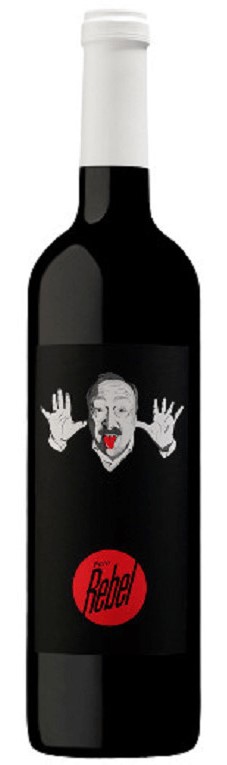 (More like without wild applause actually but the pun was irresistible.) As much as I appreciate swimmers against the current, the label’s bad boy posing almost convinced me to buy something else. On the other hand, I was making a Portuguese dish (pork chops pan-fried with whole garlic cloves and lemon wedges), was in the mood for a light red and this bottle from the father of Filipa Pato, whose wines I’ve enjoyed in the past, was the only Portuguese red at my local SAQ that was under 13%.
Beira Atlântico 2015, Pato Rebel, Luis Pato ($21.50, 13184419)
Baga (90%), Touriga Nacional (9%) and Bical (1%). The idea being to tame the ferociously tannic Baga, the grapes are macerated only briefly and fermented in temperature-controlled tanks. Reducing sugar: 1.7 g/l. 12.5% ABV. Quebec agent: Pot de vin.
Blackberryish fruit, iron, dried blood, dark chocolate, background fern and bog. Medium-bodied and supple. The ripe fruit quickly fades leaving minerals and earthy savour but not a lot else. Structured by fresh acidity and fine tannins that swell astringently on the super-dry finish. Slate, old wood, old leather and vine sap linger. Somewhat austere and not particularly deep but a perfectly good food wine. Not beguiling though unlike anything else and involving in its somewhat inscrutable way. (Buy again? Sure.)
Blank slate
Burgenland 2014, Weisser Schiefer, Winebau Uwe Schiefer ($24.35, 13349543)
A former sommelier turned winemaker, Uwe Schiefer, whose last name means slate in German, has earned the reputation of a bad boy of Austrian wine. Located in southern Burgenland, his eponymous estate focuses on Austrian varieties, in particular Blaufränkisch. As of a few years ago, it was said to be organic converting to biodynamic though I’ve not found any recent information about that. The grapes for this “white slate” blend of Welschriesling (90%), Grüner Veltliner (5%) and Pinot Blanc (5%) came from vineyards in the Eisenberg, Hannersdorf and Kohfidisch DACs. Fermented with indigenous yeasts in large wood vats. Malolactic fermentation and maturation on the lees in neutral barrels lasted 11 months. Unfiltered. 12% ABV. Quebec agent: Tocade.
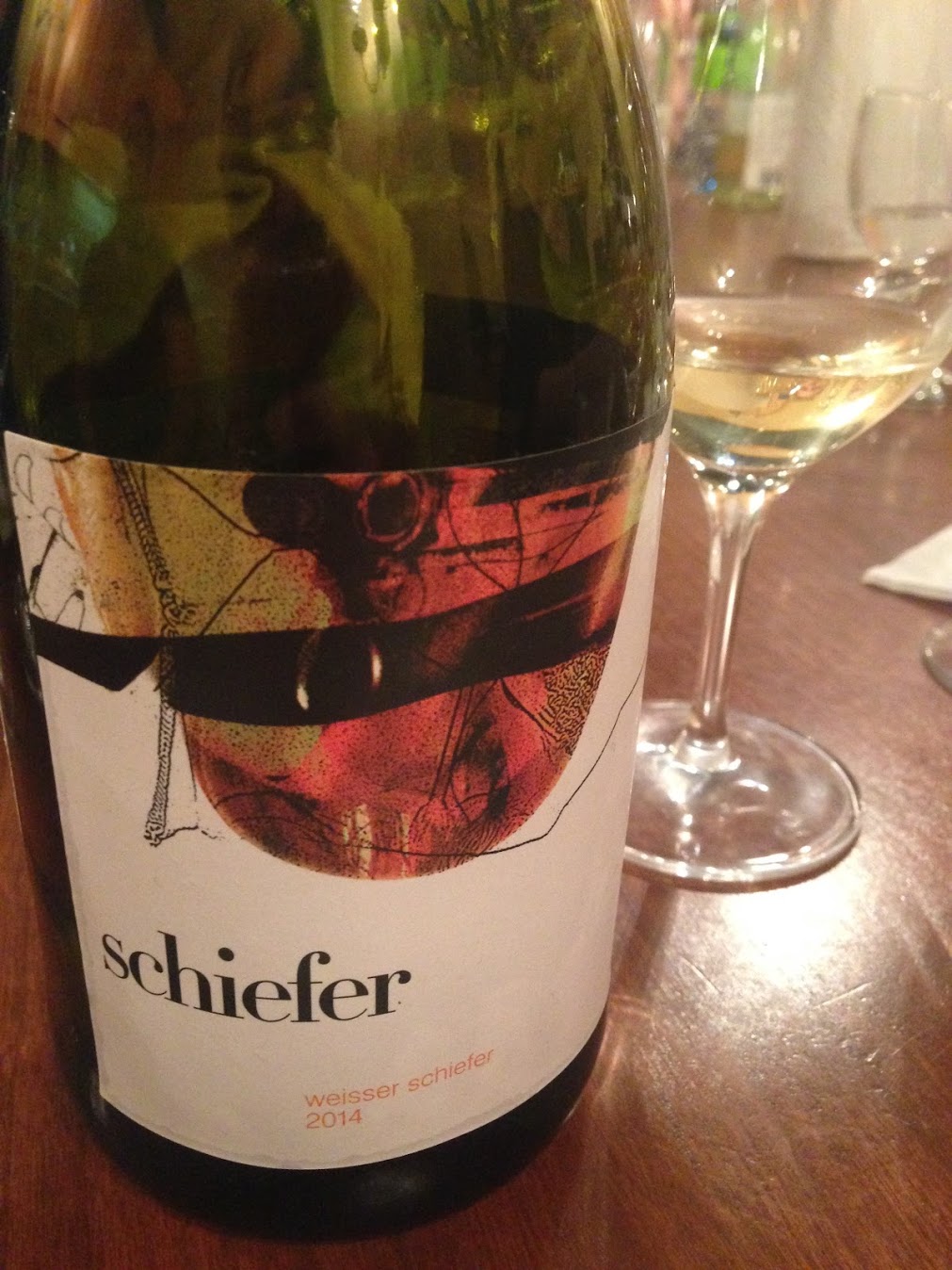
A faint reductive note blows off, leaving a distant, elusive nose that has the assembled tasters grasping for descriptors: “yogurty stuff,” “wet fur,” “sour grape,” “quince.” Shows a similar lack of presence in the mouth, the texture watery (“lacks glycerol” notes one taster), the acidity incognito and the flavours bland, a final hint of marzipan being the only exception. Chewing reveals minerals, pith, stone fruit and a little more dimensionality. Tasted the next day, the tail end had lost whatever mojo it once had. Something of a wallflower, then. Passing through a phase? Proof that, on its own, Welschriesling is, as some claim, best suited for sweet, botrytized wines? In any case, only two of us were intrigued enough to say we’d buy another bottle. In the past, the group has been impressed by Schiefer’s reds (April 2016, February 2012) but this didn’t generate anywhere near the same excitement. (Buy again? Maybe. Or maybe wait for the next vintage.)
Cidereal
Located in Franklin, Quebec, and founded in 2010, Entre Pierre et Terre is run by the husband and wife team of Loïc Chanut and Michelle Boyer. An oenologist by training, Chanut began working at La Face cachée de la pomme and for a while was a partner in Domaine des Salamandres. Production is limited to a range of still and sparkling apple and pear ciders, still fruit wine and apple-based vermouth. Cortland, Golden Russet and Macintosh are the estate’s backbone apple varieties though trials are being conducted with others, including some old northern French varieties. All the sparklers are made using the traditional method.
Poiré mousseux, Entre Pierre et Terre ($19.95, 12120579)
A pear cider made from mid-season fruit. The juice takes several weeks to ferment. Matured and sparkled in the bottle for a minimum of nine months. Sulphur use is limited to a small shot at disgorging. Reducing sugar: 27 g/l. 7% ABV. Quebec agent: Rézin.
Applesauce, pear compote and hay stubble. Fine effervescence. The flavour is clearly though not intensely pear, with a bit of white pepper adding intrigue. Clean and verging on off-dry but drying on the finish. While it’s a tad sweeter than I remember earlier bottles being, it’s still a pleasant sipper. (Buy again? Sure.)
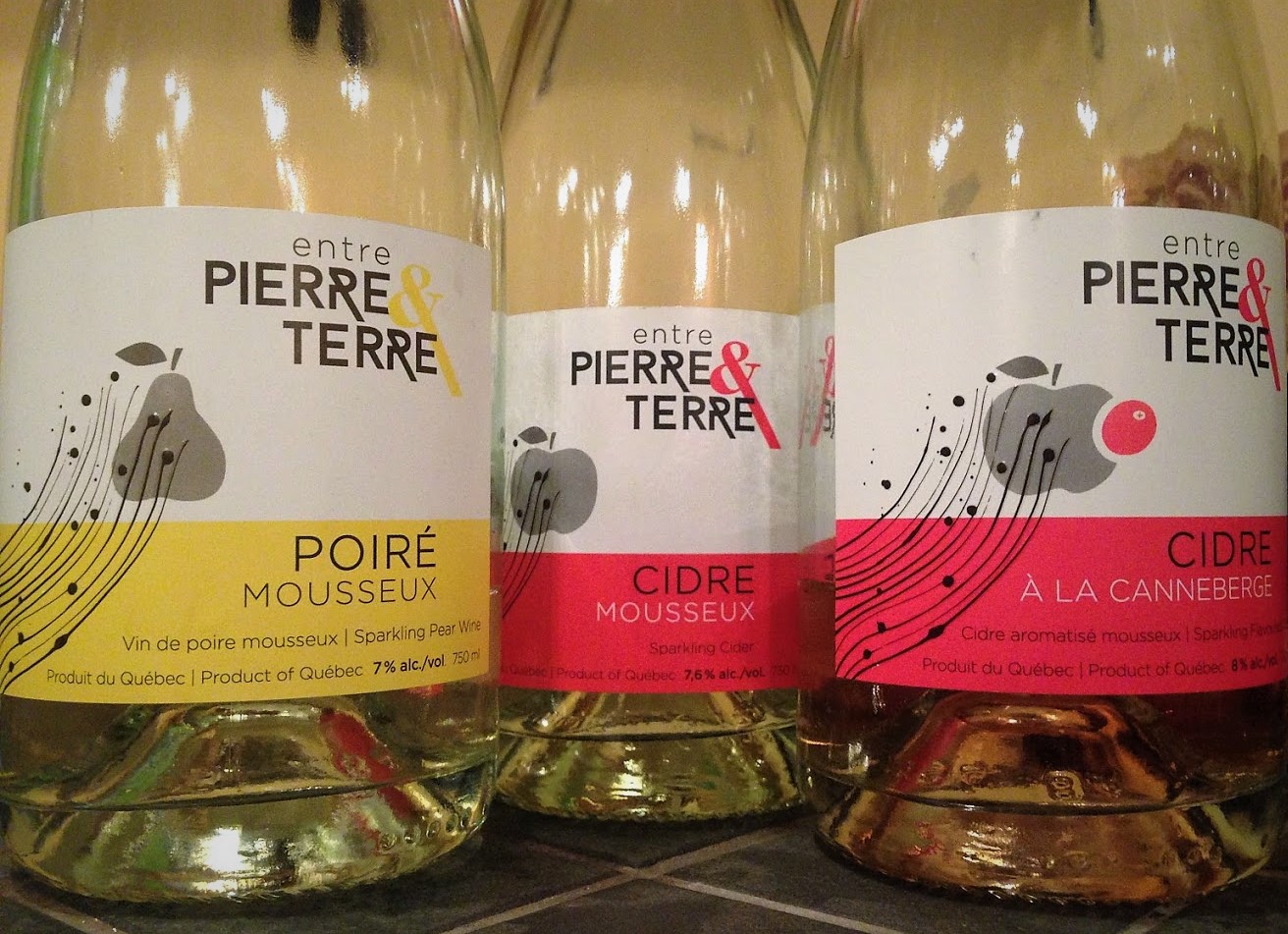
Cidre mousseux, Entre Pierre et Terre ($18.90, 11957043)
The apples for this cider are harvested over two months, then pressed together. The juice is concentrated by exposure to the cold of winter. Primary and secondary fermentation (the latter in bottles on lattes) last a minimum of 10 months. Reducing sugar: 18 g/l. 7.6% ABV. Quebec agent: Rézin.
A nose more subtle than the poiré’s: green pear and apple. Dryish and elegant in the mouth, the effervescence understated. A mineral streak joins the savoury fruit joined while smooth acidity keeps things lively. Clean finishes. (Buy again? Sure.)
Cidre à la canneberge, Entre Pierre et Terre ($16.25, 12030291)
Cranberries are macerated in the cider before bottling. The bottles spend at least nine months on lattes before disgorging. 8% ABV. Quebec agent: Rézin.
Fresh and baked apple, wild red berries and a hint of cheese. Clean and not especially fruity. Dry with bright, even trenchant acidity. A faint saline undertow lasts well into the long finish. Somewhat to my surprise, the most complex and nuanced of the trio. Would make an excellent Thanksgiving aperitif and could probably continue right on through the meal. (Buy again? Yes.)
MWG July 27th tasting: flight 1 of 7
Cook’s Chard
 The latest installment in the ongoing search for a white wine that’s affordable enough for cooking and good enough for the cook to sip while doing the mise en place.
Côtes de Gascogne 2016, Chardonnay, Domaine La Hitaire ($10.20, 12699031)
The estate’s 110 hectares of vineyards are located in the hills around Eauze, capital of the Bas-Armagnac region in the Gers department. (The producer also makes armagnac under the Château du Tariquet label.) Technical information for this wine appears to be non-existent and there’s probably a reason for that. This much is clear: it’s 100% Chardonnay and part of the wine is matured in French oak barrels. Screwcapped. Reducing sugar: 3.3 g/l. 12% ABV. Quebec agent: Mosaiq.
Pleasant nose of subtle tropical fruit, lemon, chalk and a hint of green. On the lighter side of medium-bodied. Round and fruity (though not exuberantly) on the attack, drying as it moves through the mouth. A dusting of minerals adds interest while hints of vanilla and a touch of bitterness colour the peach-scented finish. Not particularly deep, long or memorable but fresh and fluid – not galpumphing – and it doesn’t taste industrial. (Buy again? Sure though not in preference to its cheaper, fresher, more characterful Les Tours sibling).
Wowzer
 Juliénas 2016, Rézin Collection, Lapierre + Pacalet Cousins ($29.90, 13286802)
Christophe Pacalet and Mathieu Lapierre are cousins (who knew?) and this is, as far as I know, their first joint effort. 100% Gamay from organically farmed 70-year-old vines rooted in the granite and schist of a single parcle on the Côte de Bessay. Vinified in the traditional Beaujolais manner, using carbonic maceration for 30 days. Matured in 228-litre French oak barrels for six months. No added anything, including yeasts and sulphur. Reducing sugar: 2.6 g/l. 12.5% ABV. Quebec agent: Rézin.
Those who pour the first glasses from the bottle complain of an off-putting aroma but, getting around to it 20 or 30 minutes later, I detect nothing of the sort. Instead, a classic if rich Gamay nose of sappy, ripe red berries with a noticeable mineral streak and that typical floral note reminiscent of peonies. In the mouth, the wine is juicy, dense with fruit yet light on its feet. Bright acidity lends just a hint of tartness and the tannins are sleek and pliable. There’s a slatey backdrop but no greenness. Finishes long, clean and lip-smackingly. Wow. Not as obviously structured (and ageable?) as some Juliénases but great for drinking now and over the next few years. Actually, I’d have a hard time keeping my hands off any bottles in my possession. (Buy again? Def.)
Soave sia il Veneto…
 Veneto 2015, Masieri, Bianco, La Biancara ($22.20, 12846741)
Founded in 1999, Angeiolino Maule’s nine-hectare estate is located in Gambellara in the foothills of the Soave region. The estate-grown Garganega and Trebbiano grapes in this 80-20 blend come from biodynamically farmed vines rooted in volcanic soil. Manually harvested. Direct pressed. Vinified in stainless steel in small batches. Fermented with indigenous yeasts. No additives except a tiny amount of sulphur at bottling. Unfiltered and unfined. Reducing sugar: <1.2 g/l. 11% ABV. Quebec agent: Labelle Bouteille.
Hazy straw yellow to the eye. Discreet, fresh nose: quartz, sand, distant white fruit and the faintest hint of asafoetida. Leaner than your typical Soave: less pear, more lemon along with some green apple and a touch of lees. Smooth, transparently integrated acidity. Lots of chalky minerals and a faint almond overtone from the mid-palate on, joined by hints of watermelon fruit, rind and seeds on the bitter-tinged finish. A subtle, nuanced wine – a pleasure to spend time with – and a QPR winner. This bottle was singing from the get-go but others have needed several minutes of breathing to find their voice, so carafing is advisable. (Buy again? Definitely.)
(Musical accompaniment and origin of the title’s pun: Così fan tutte: “Soave sia il vento” – Mozart.)
Cab Franc three ways
Though they don’t come from a wine-making family, brothers Fabien and Cyril Boisard founded Domaine du Mortier in 1996 when they both were in their teens. Their holdings comprise around 12 hectares of vineyards in Saint-Nicolas-de-Bourgueil and a recently acquired three hectares in Bourgueil. Farming is organic-leaning-biodynamic, harvesting is by hand and none of the wines is chaptalized.
Saint-Nicolas-de-Bourgueil 2015, Les Sables, Domaine du Mortier ($27.23, private import, 12 bottles/case)
100% Cabernet Franc from seven parcel of mostly young vines in sandy soil. Whole-bunch fermentation takes place in 70 hl concrete vats. Lees from earlier vintages are used to start the fermentation. Pump-overs with minimum oxygen uptake are performed for five or 10 minutes a day. Matured on the lees for about six months. Unfiltered and unfined. A tiny amount of sulphur (16 mg/l) is added at bottling. 12.27% ABV. Quebec agent: WINO.
Red and black berries, coffee, dried meat, slate, pepper, distant barnyard. Medium-bodied and so very drinkable. A mouthful of tart fruit, dark minerals, lively acidity, super-supple tannins. Dry and wonderfully pure. Nothing deep or complex (a function of soil and vine age), just good, clean fun. The easiest-drinking Cabernet Franc I’ve encountered in a coon’s age. (Buy again? Done!)

Saint-Nicolas-de-Bourgueil 2014, Dionysos, Domaine du Mortier ($32.89, private import, 6 bottles/case)
100% Cabernet Franc from 30-year-old vines rooted in gravel over tuffeau. Manually harvested. Gently destemmed, gently pressed and given around 25 days’ maceration on the skins. Barrel-fermented using indigenous yeasts. Matured eight months in old oak barrels. 13.35% ABV. Quebec agent: WINO.
Darker nose of red berries and slate with meat and vegetal notes. Full and round in the mouth, packed with remarkably juicy fruit. Firm tannins bestow a velour-like texture, bright acidity a bit of a bite. The bedrock minerality rumbles through the long, spicy finish. The winemakers feel this often needs a couple of years before it hits its stride and drinks well for six to eight years beyond that. (Buy again? Yes.)
Vin de France 2014, 180 jours, Domaine du Mortier ($63.79, private import, 6 bottles/case)
VdF because the brothers feel it wouldn’t be accepted by the AOC authorities and because it leaves them free to supplement Saint-Nicolas grapes with fruit from their holdings in Bourgueil. Cabernet Franc from 60- to 70-year-old vines in tuffeau. Whole-bunch fermented and macerated in old barrels for 180 days, with the barrel being tightly closed, not topped-up and turned once daily during fermentation; after 180 days, the barrel is taken apart so the wine and skins can be transferred to the press. After pressing, the wine is matured in new barrels for another 180 days. Unfiltered and unfined. No added sulphur. 13.5% ABV. Due to the small quantities made, the wine is normally sold only at the winery, a limit of 12 bottles per customer is imposed and, reportedly, none is exported. Bravo to Martin Landry for scoring a few cases for Quebec. Quebec agent: WINO
Much darker and denser than its flightmates. Complex, funky nose: old wood, dark fruit and minerals, “animale,” “green olives,” “the stuff you scoop out of a squash” and more. Rich and dark yet somehow fresh. So complex and layered, so plush and chewy. Superbly structured with velvety tannins, glowing acidity and mineral depth. Great length. Complete, elegant, accessible. A big wine but so not the overextracted monster I was fearing it would be. Just wow. (Buy again? Just yes.)
MWG July 13th tasting: flight 7 of 9
Gamay de soif
Touraine 2015, Gamay, Domaine Courtault Tardieux ($22.45, private import, 12 bottles/case)
After stints as a university student and briefly as a social worker, winemaker Simon Tardieux, who had spent time as a teenager working at the late, lamented Clos Roche Blanche, teamed up with Alain Courtault, a neighbour who had vines and was converting to organic agriculture. Located due east of the Thésée post office and less than a mile from the Cher river, the 15-hecatre estate specializes in vins de soif, thirst quenchers made from Cabernet Franc, Côt, Gamay, Pineau d’Aunis and Sauvignon Blanc. This 100% Gamay comes from organically farmed 50-year-old vines. Manually harvested. Whole-bunch maceration and fermentation took place in stainless steel tanks with indigenous yeasts. A small amount of sulphur dioxide was added at bottling. Bottled in March 2016. 12% ABV. Quebec agent: WINO.
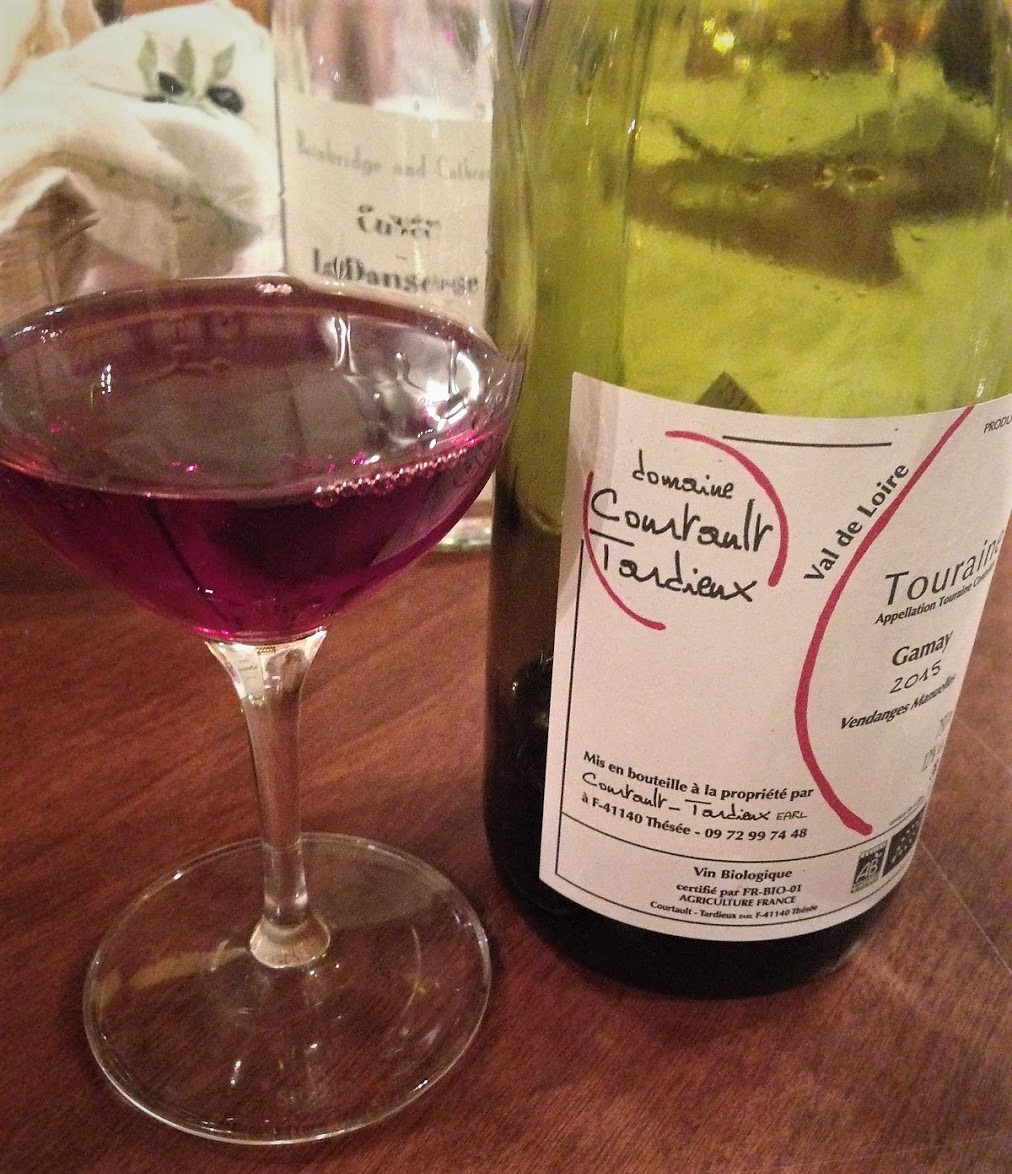
Light, winey, floral nose showing some sour berries and leaves and background funk. Light- to medium-bodied, gauzy tannined and acid bright. Not as plush-fruity as, say, a Morgon, but remarkably minerally and fluid, especially on the mid-palate. A faint lactic note on the finish prompts “cherry yogurt” from one of the assembled. Fresh, clean, tasty and so, so drinkable. Definitely a Gamay but definitely not a Beaujolais. (Buy again? Um, it’s irresistible.)
MWG July 13th tasting: flight 6 of 9
Château Landra, take two
Ventoux 2016, Pur Jus Rosé, Château Landra ($25.86, private import, 12 bottles/case)
Cinsault (70%) and Grenache (30%) from organically farmed vines averaging 15 years old; the blend sometimes includes Syrah but not, it appears, in 2016. Manually harvested. Direct pressed. Fermented with indigenous yeasts at low-temperatures and matured in stainless steel tanks. Lightly filtered. Unfined. No added sulphur. 12% ABV. Quebec agent: WINO.

Watermelon pink. Hard-to-pin-down and initially subdued nose of quartz, “hibiscus,” “pink grapefruit or blood orange,” “Swedish berries” and strawberry. On the palate it’s rich (“really meaty” per one taster) yet fluid, a mouthful of, yes, juicy fruit and crunchy minerals buoyed by smooth acidity. The complex set of savoury flavours, including what I pegged as yeast but another called “a cured meat nuttiness,” lasts well into the finish. Likeable. (Buy again? Sure.)
MWG July 13th tasting: flight 5 of 9
Winey dancer
Vin de France 2015, La Danseuse, Bainbridge and Cathcart ($32.34, private import, 6 bottles/case)
British expat Tony Bainbridge and his American wife Julie worked in wine and ESL in Burgundy before moving to the Loire, where Tony initially held a job at Domaine Mosse. In 2007, with the help of Ali and Rob Cathcart, the couple acquired 4.2 hectares of vineyards in Faye d’Anjou and Chavagnes les Eaux. Total production is around 6,500 bottles. This rosé sparkler is 100% Grolleau from organically farmed grapes. The grapes are manually harvested, given a short maceration on the skins and fermented with indigenous yeasts. Fermentation continues in the bottles, which are riddled and eventually disgorged. Unfiltered, unfined and, like all the estate’s wines, bottled in a clear champagne bottle and closed with a crown cap. The name (“the dancer”) refers to the barrel of wine that, back in the day, a vigneron would set aside for his mistress. 11.5% ABV. Quebec agent: WINO.
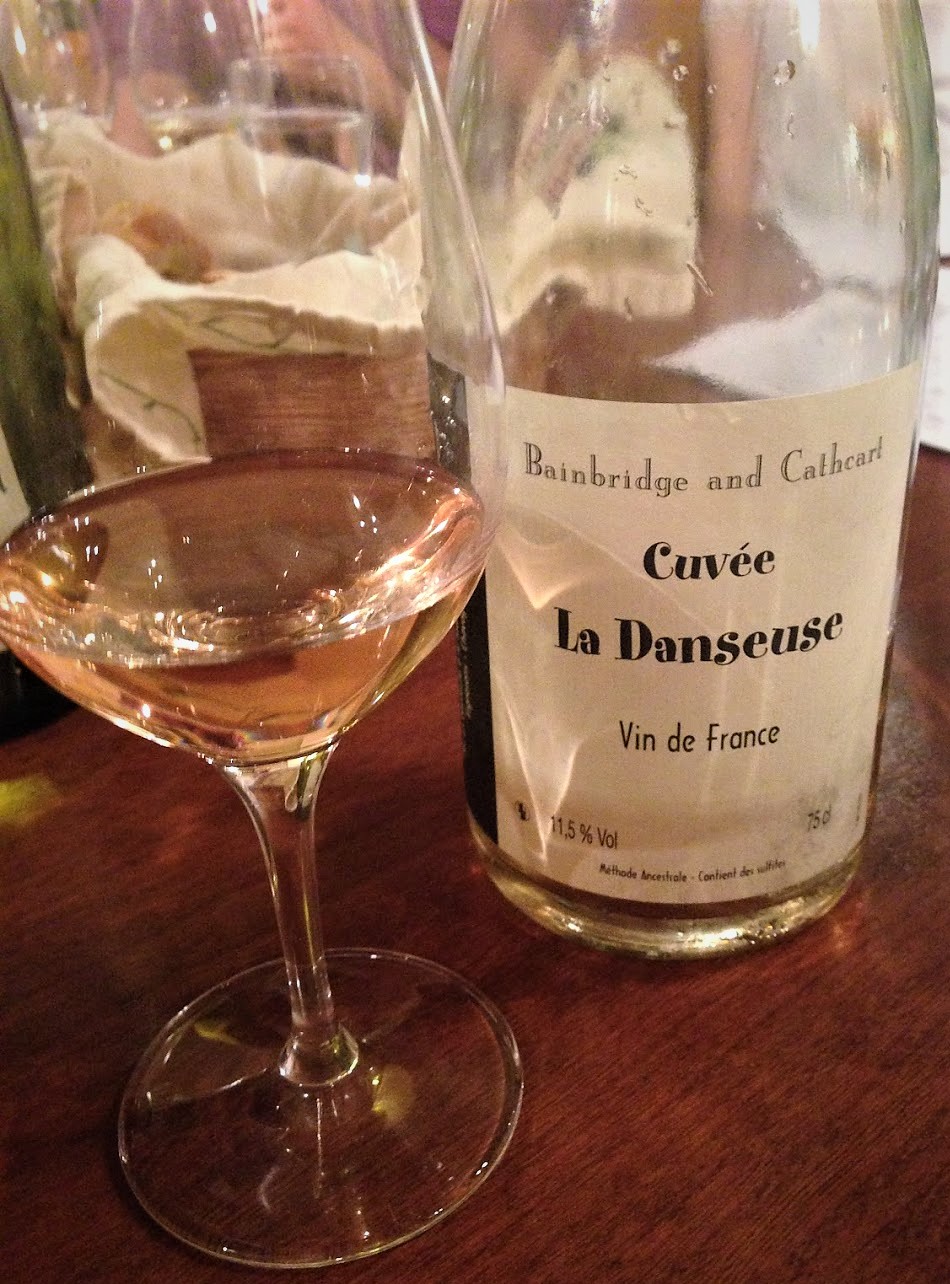
Delightful nose of strawberry pastry, “rugelach” (per another taster), a touch of arugula and yeast. Clean and dryish in the mouth, with bright-verging-on-tart acidity cutting any residual sugar. Tiny prickly bubbles add texture and lift. The load of minerals makes the wine taste more white than red, despite the beguiling strawberry overtones. Some caramel cream creeps in on the finish. Fresh, lip-smacking and super-drinkable. (Buy again? Yep.)
MWG July 13th tasting: flight 4 of 9

 Brett happens