Posts Tagged ‘Ward & associés’
Ward & associés tasting (3/9)
Steirerland Landwein, “Trauben, Liebe und Zeit”, Weiss No. 7, Strohmeier ($50.73, private import, 6 bottles/case)
Trauben, Liebe und Zeit means “grapes, love and time” and is the name given to the estate’s line of natural wines. Mainly Pinot Blanc with some Chardonnay from the 2014 and 2015 vintages. The grapes are estate-grown, organically farmed and manually harvested. Fermented with indigenous yeasts. Matured 11 months in neutral 500-litre barrels. No added anything, including sulphur. Unfiltered and unfined. 11.5% ABV. Quebec agent: Ward & associés.
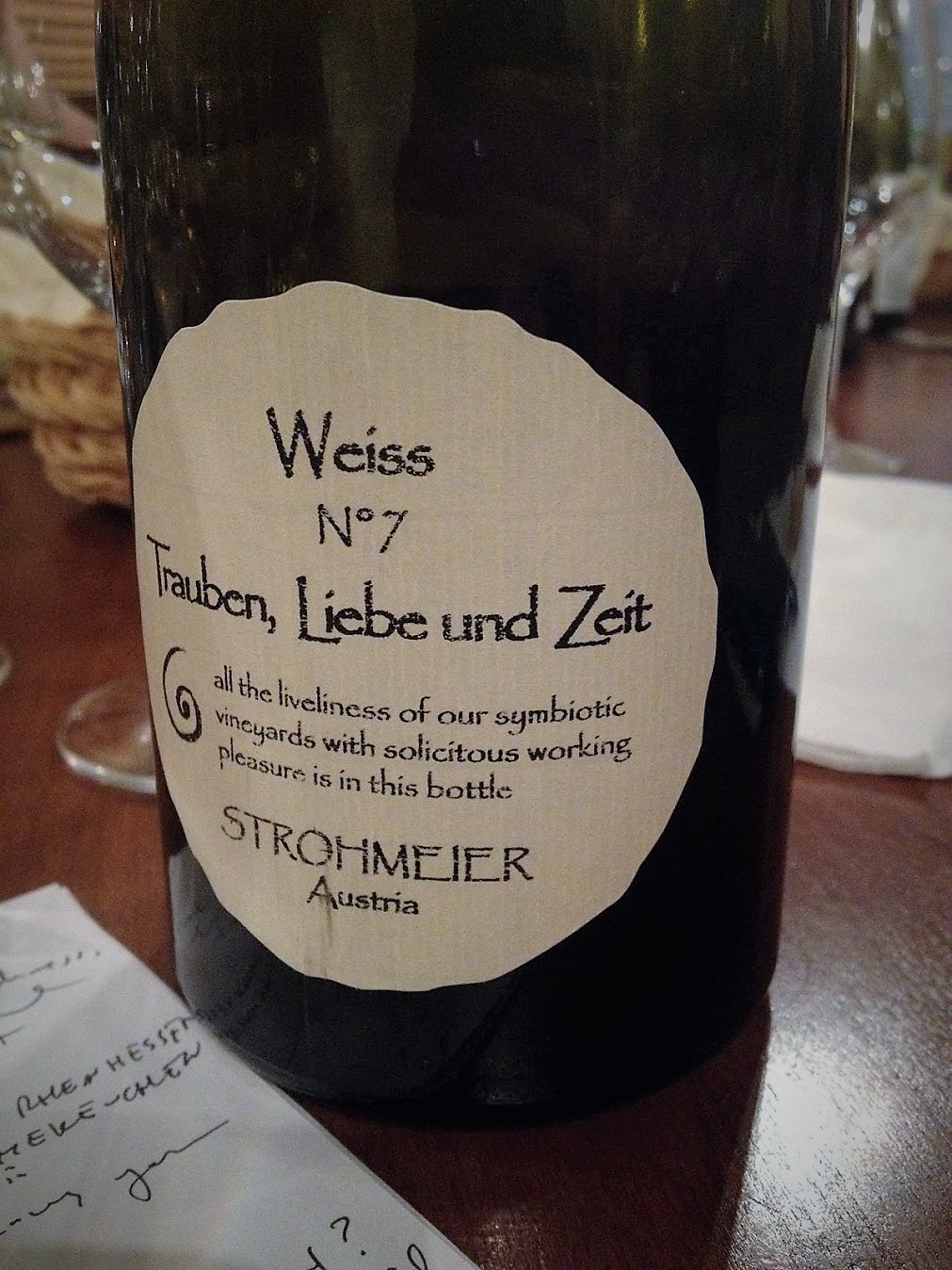
Cloudy light green-gold in the glass. Nose of white pepper, lemon, “sour orange,” lees and more besides. In the mouth, it’s soft textured and a bit spritzy. A wallflower at first though chewing reveals all kinds of complexity – including pear, herbs and chalk – and some depth. Comments from the peanut gallery: “like a gueuze,” “tastes like scrapes” (which, as I learned, are light metal shavings), “stealth acidity.” The long finish is faintly bitter and sour. Unique, fascinating and delicious. I was ready to lay down my money until I saw the price… (Buy again? Only if feeling flush, alas.)
MWG February 2, 2017, tasting: flight 3 of 9
Ward & associés tasting (2/9)
Located near Bockenheim in the Palatinate, the 20-something Brand brothers took over the estate from their father in 2004. Farming practices, rigorously sustainable since 1994, were certified organic in 2015. The wine-making is non-interventionist.
Pfalz 2015, Riesling trocken, Vom Berg, Weingut Brand ($23.53, private import, 12 bottles/case)
The estate’s entry-level line. 100% Riesling from estate-owned organically farmed vines. Fermented in stainless steel tanks. Screwcapped. 13% ABV. Quebec agent: Ward & associés.
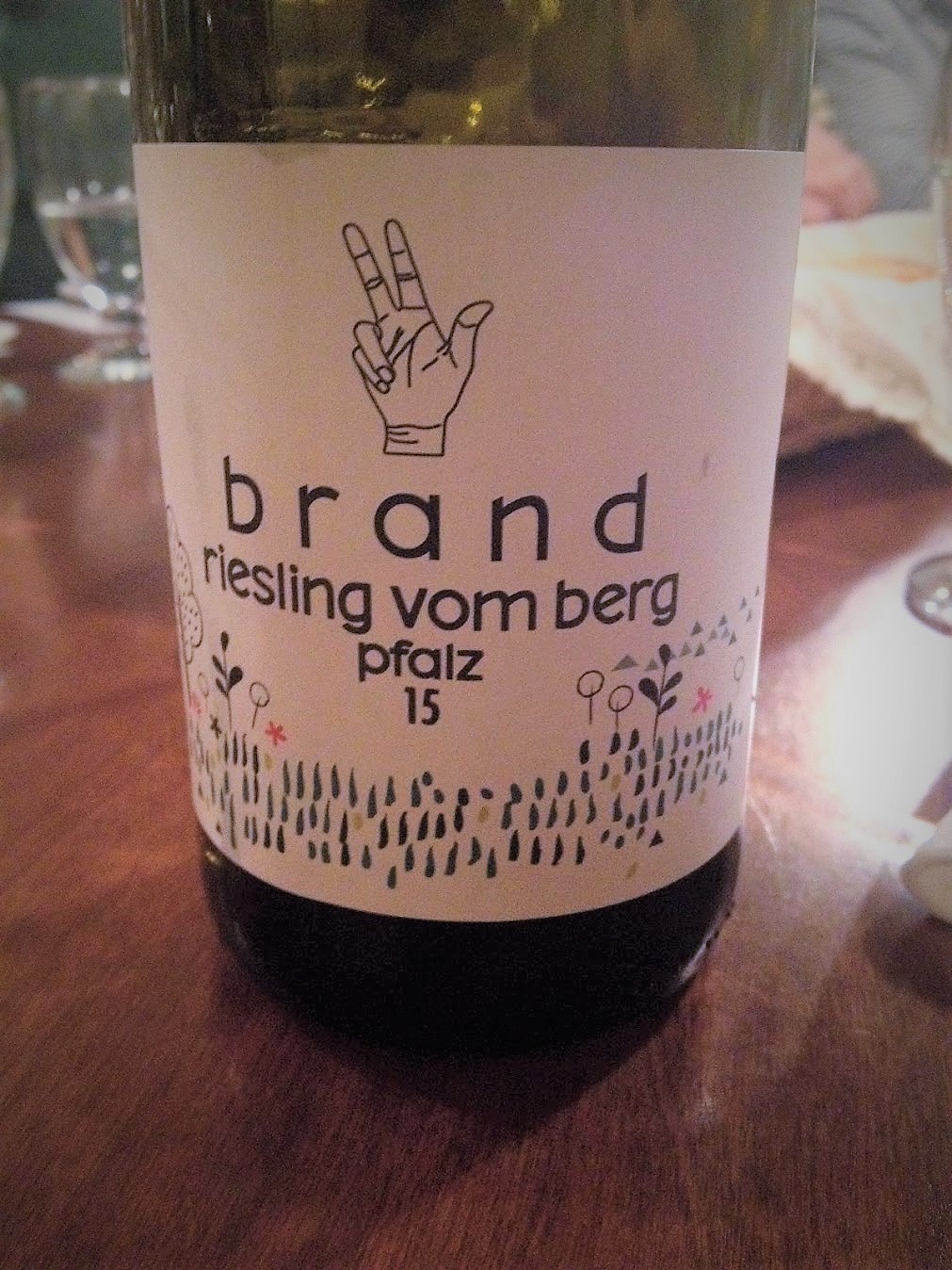
Initially sulphurous nose (not uncommon with screwcapped Rieslings) gives way to slate, lemon-lime and green apple overtoned with honeysuckle. Dry and fruity with nipping acidity, tons of crushed minerals and the faintest hint of caramel. Long, savoury and alive. Like Germany meets Alsace in a glass. Great QPR. Deservedly one of the hits of the tasting. (Buy again? Multiples.)
Pfalz 2015, Weissburgunder trocken, Weingut Brand ($26.37, private import, 12 bottles/case)
Inspired by a similar drawing on the cornerstone of a local church, the front label’s raised hand indicates this is part of the Schwurhand (oath-taking) line of wines made using grapes from the estate’s top vineyards 100% Weissburgunder (aka Pinot Blanc) from organically farmed vines. Manually harvested. Gently pressed and briefly macerated. Fermented with indigenous yeasts. No added anything. Unfiltered and unfined. Screwcapped. 12.5% ABV. Quebec agent: Ward & associés.
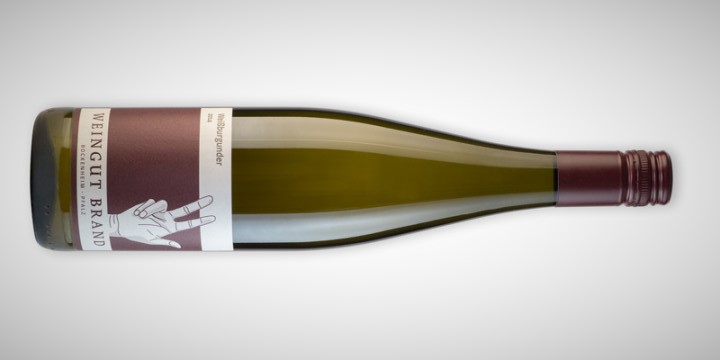
Intriguing nose of chalk, gooseberry/quince, green tea and coriander seed. Equally intriguing in the mouth with a texture that has people grapsing for descriptors like “soft oily velour.” Lactic, bitter and faintly fruity (“like bad plum”) threads intertwine with dusty minerals and soft acidity. A distant mustardy note chimes on the long finish. Complex, savoury and satisfying. If you think Pinot Blanc makes only facile wines, think again. (Buy again? Yes.)
MWG February 2, 2017, tasting: flight 2 of 9
Ward & associés tasting (1/9)
In early February, David Ward paid the Mo’ Wine Group a visit to present some of his eponymous agency’s new arrivals. “Drinkability first” is the agency’s credo and all the wines poured emphatically met that criterion. The tasting also featured winemakers, grapes and even regions that most of us had little if any experience with. No surprise then that a large order followed. Note that while some of the wines are still available, others are in very short supply.
We began with one of the less unconventional wines in the lineup.
Bourgogne Aligoté 2015, Sarnin-Berrux ($32.89, private import, 12 bottles/case)
With the exception of one cuvée, all Sarnin-Berrux wines are made from purchased grapes. The firm works closely with the growers, insisting on organic methods and often picking the grapes themselves. The wine-making is non-interventionist and based on the lunar calendar. The grapes for this 100% Aligoté are manually harvested. After slow pneumatic pressing, the must is clarified by settling. Fermentation with indigenous yeasts lasts four to six months. Unfiltered and unfined. No additives other than a tiny shot of sulphur. 11.5% ABV. Quebec agent: Ward & associés.

Somewhat muted nose: faint lemon/citronella, quartz and “pear flower.” Quite dry and buttery textured with lively but not trenchant acidity. Russet apples and honey up front, minerals (flint and chalk) on the finish. A white pepper note – as much a sensation as a flavour – lingers. Subtly complex and very civilized. If only it were a few dollars less. Then again, Ente’s 2014 Bourgonge Aligoté currently lists for $33 at the SAQ while De Villaine’s 2014 Bouzeron Aligoté runs a buck shy of $40, so maybe it’s not so pricey after all. (Buy again? Hmm…)
MWG February 2, 2017, tasting: flight 1 of 9
Three lighter reds
Württemburg 2014, Trollinger, Without All, Weingut Knauss ($28.00, private import, NLA)
100% Trollinger from organically farmed though uncertified vines. Fermented with indigenous yeasts. No added anything, whence the “without all.” Unfiltered and unfined. 9.5% ABV. Screwcapped. Quebec agent: Ward & associés.
A bit spritzy and reduced at first, then sour berries, slate and developing clay and animale notes. Light and fluid on the palate. Airframe tannins and bright acidity provide some structure and faint minerals some depth but this is mainly about the pure fruit. Lip-smacking, sweet and sour finish. Light-bodied almost to the point of lacking substance and yet refreshing and ultra-drinkable, this ethereal wine was a hit with several around the table, despite its high price. (Buy again? Gladly.)
Côtes du Forez 2014, La Volcanique, Cave Verdier-Logel ($21.80, private import, 12 bottles/case)
Based in Marcilly-le-Châtel, the certified organic 17-hectare estate grows Gamay and a little Pinot Gris and Viognier. This cuvée is 100% Gamay from old vines rooted in basalt soil. Manually harvested. Macerated 21 days at around 20°C. Fermented with indigenous yeasts. Lightly filtered (earth filters) before bottling. 12% ABV. Quebec agent: La QV/Insolite.
Sappy in the way of a good Beaujolais, though the red berries are a little candied and shot through with some greenness. Supple and tasty. Juicy fruit and sustained acidity play against a schisty backdrop while the tannins turn a little bitey on the sustained finish. Finely balanced yet appealingly rustic. To my surprise, this didn’t create the same sensation that the 2013 did (different contexts?). (Buy again? Yes.)
Quebec 2012, Pinot Noir Réserve, Domaine les Brome ($26.00, 12685879)
100% Pinot Noir according to the winery’s website (SAQ.com says the wine contains 7% Maréchal Foch). Macerated and fermented in stainless steel tanks. Matured 12 months in oak barrels. Reducing sugar: 1.9%. 12% ABV. Quebec agent: Univins.
A nose that tasters described as “electrical fire,” “cordite” and simply “weird.” Reactions to the taste were similar, “copper penny” being the one I noted. The not very pinot-ish fruit is brightened by good acidity but deflated by saggy tannins and muddied by extraneous flavours. Odd-tasting finish. I’m hoping ours was an off bottle. (Buy again? Unlikely.)
This flight was built around the Trollinger and the other two wines were chosen in the hope that they might be close to its light body. Neither was. In fact, I’ve encountered only one wine recently that is: Domaine de la Pinte’s 2012 Arbois “Poulsard de l’ami Karl,” which we tasted back in October.
MWG November 12th tasting: flight 4 of 6
MWG April 17th tasting (4/6): The Greek, the Beauj’ and the Funky
Naoussa 2012, Jeunes vignes de Xinomavro, Domaine Thymiopoulos ($18.70, 12212220)
100% biodynamically farmed Xinomavro from ten-year-old vines. Manually harvested. 80% destemmed, 20% whole cluster pressed. Very gentle pressing. Fermented with indigenous yeasts and no pump-overs. Macerated about one week, then matured nine months in stainless steel tanks. Bottled unfiltered. 13.5% ABV.
A bit stinky on opening, as sometimes happens with this wine. That quickly blew off, leaving a charming nose of slate, candied red berries and spice. Denser than some earlier vintages but still fresh and supple, the fruit pure, the acidity bright and the tannins light and just a little raspy. Dried herbs, spice and minerals add savour. Finishes clean and tangy. Yet another winner from Thymiopoulos. (Buy again? In multiples.)
Morgon 2012, Marcel Lapierre ($30.50, Rézin, NLA)
This was the “nature” bottling available through the private import channel, not the filtered and more heavily sulphured SAQ bottling. 100% organically farmed Gamay from 60-year-old vines. Manually harvested late in the season. Whole-cluster fermentation with indigenous yeasts at low temperatures lasts ten to 20 days. Matured nine months on the fine lees in old Burgundy oak barrels. Bottled unfiltered, unfined and with minimal sulphur. 12.5% ABV.
Cherry, stones, vine sap and faint spice. Silky fruit, bright acidity, supple tannins and that Lapierre trick of being both etherial and intense. Slow-fade finish with lingering scents of minerals, berries and flowers. Classic and delicious. I’m guessing this will peak in two to three years. (Buy again? Yes.)
Vino da tavola 2011, Rosso frizzante, Sottobosco, Ca’ de Noci ($24.00, Ward & associés, NLA)
A blend of organically farmed Lambrusco Grasparossa (30%), Lambrusco di Montericco (30%), Malbo Gentile (20%) and Sgavetta (20%) from ten-year-old vines. Manually harvested. The grapes are macerated for around ten days on their skins and fermented with indigenous yeasts. Refermentation in the bottle (to produce the sparkle) is also natural. Unfiltered and unfined. 11% ABV.
Popped and poured. The wildly funky nose elicited all kinds of reactions, including the descriptor fetid. The miasma lifted some as the wine breathed, allowing hints of slate and red and black fruit to emerge. (A taster who had previously encountered the wine said ours was an unusually stinky bottle.) In the mouth, it’s bone dry, tart and astringent. The light fizz adds a mild creaminess that polishes, if only a little, the coarse texture. Surprisingly mouth-filling fruit and earthy flavours last well into the finish. Despite everything, good enough to make you think a cleaner bottle might have a genuine rustic appeal. (Buy again? With my fingers crossed.)
The common thread in this flight was wines that would work with charcuterie. Our cured meats came in the form of duck prosciutto and pork and duck rillettes from Pork Futures and a gifted dry sausage whose provenance I don’t recall. While all three wines proved up to the task, I found the Naoussa best with the prosciutto, the Morgon best with the fatty, mild rillettes and the Sottobosco best with the prosciutto and the dark flavoured sausage.

 Brett happens