Posts Tagged ‘Wow’
Northern exposure
Terre Siciliane 2015, Versante Nord, Eduardo Torres Acosta ($35.00, 13387380)
Nerello Mascalese with 20% other varieties, including Nerello Capuccio and possibly Alicante Bouschet and Grenache from vines in two co-planted parcels (Pietramarina and Crasa, totalling 1.5 ha) at 550 to 750 metres in elevation on the north-facing side of Mount Etna, hence the bottling’s name. The vines average 45 to 50 years old, with the oldest being about 80. The manually harvested grapes were transported to Arianna Occhipinti’s winery in Vittoria. Some clusters were destemmed, others left whole. Fermented with indigenous yeasts and macerated on the skins for 15 days in a cement tank with no temperature control. Matured 16 months in 750-litre Slavonian oak botti. Minimally sulphured. The 2015 is the second vintage of the wine. Total production: 6,000 bottles. 13.5% ABV per the label, 12% ABV per the SAQ. Quebec agent: oenopole.
The expected cherry and plum plus cedar, blood and stone. No more than medium-bodied. Structured by silky acidity and gossamer tannins, the fruit seems shot through with minerals. The sustained finish brings a light astringency and a dusty aftertaste. So pure and savoury, so effortlessly complex. A pleasure to drink. (Buy again? Yes.)

Terre Siciliane 2015, Pirrera, Eduardo Torres Acosta ($59.00, 13387371)
The blend is similar to the Versante Nord but with 90% Nerello Mascalese. All grapes come from the high-altitude (850 metres) Pirrera vineyard on the north slope of Mount Etna, which had been abandoned until Acosta began rehabilitating it. The vines average 50 years old and the soil is sandy with volcanic ash and stones. The wine-making was identical to that for the Versante Nord. The 2015 is the second vintage of the wine. Total production: 1,100 bottles. 13.5% ABV per the label, 12% ABV per the SAQ. Quebec agent: oenopole.
Inexhaustible nose of spice, cedar, old wood, forest floor, background dried cherry, floral and balsamic notes and more. Richer than the Versante but still medium-bodied and silky. There’s a pure core of fruit, racy but integrated acidity, an airframe tannic structure, minerals galore, a feathery astringency and a very long, subtly inflected cherry marzipan finish. More serious than its flightmate yet still so fresh. A flawless, complex, engaging, delicious wine. (Buy again? Yes.)
Soon after the wines’ release, a MWG member who was wondering which if any to buy asked a well-regarded SAQ wine advisor for input. The advisor said he was enamoured with the Versante Nord but felt the Pirrera wasn’t worth the extra outlay. The member bought some of the Versante and gave the Pirrera a pass. At the tasting a few days later, our experience was more the opposite: both wines were delightful but the Pirrera was the standout. The member made a beeline to the SAQ and scored a couple of bottles.
MWG September 28th tasting: flight 7 of 7
Mainlining Assyrtiko
Santorini 2013, Pure, Volcanic Slopes Vineyards ($45.50, 13109697)
Run as a separate operation, Volcanic Slopes Vineyards is a second label of sorts of Argyros Estate. It is the brainchild of Argyros’ winemaker and commercial director, Stefanos Georgas. The idea is to make as pure an expression of Santorini Assyrtiko as possible using a hands-off approach. This 2013 is the first vintage of what is, so far, its only cuvée. Assyrtiko (100%) from 80- to 150-year-old ungrafted vines in two parcels: one with pumice soil in Episkopi Gonias, the other with basalt soil in Megalochori. Manually harvested. Half of the must is free-run juice, the other half is juice from gently pressed whole clusters. Fermented with indigenous yeasts. Matured 14 months on the lees with frequent stirring in a naturally temperature-controlled underground concrete tank in the old Argyros winery. 13.5% ABV. Quebec agent: oneopole.
Multifaceted nose that prompts descriptors like lemon, quartz dust, “sour fuzzy peach,” “distant honey,” bay leaf and lingering apple. Imposing and enthralling from the first sip: a “decadent” yet austere amalgam of clementine and incredible minerality and salinity. The rich extract and electric acidity are in breathtaking balance. There’s great breadth, depth and length – every dimension, in fact. Pure is no exaggeration, no marketing gimmick. A stunning wine, “like mainlining Assyrtiko.” It will be fascinating to see how this evolves over the next three to five years and maybe beyond. Surely one of the great white wines of Europe and, as such, more than fairly priced. The 2013 is almost sold out. Tasted at the winery in July 2016, two days after it had been bottled, the 2014 seemed every bit its equal. (Buy again? Imperatively – even the group’s white wine skeptic felt compelled to run out and acquire a couple of bottles.)

Santorini 2016, Assyrtiko, Hatzidakis ($28.50, 11901171)
The estate’s entry-level bottling. Sadly, 2016 was Haridimos Hatzidakis’s last vintage. 100% Assyrtiko from organically farmed, ungrafted vines up to a century old in Pyrgos, Megalochori, Akrotiri and Vourvoulos. The manually harvested grapes were direct-pressed. The must was clarified by settling, then fermented with indigenous yeasts in temperature-controlled (18°C) tanks. Stayed on the lees for 40 days. Matured in stainless steel tanks. Lightly filtered and dosed with sulphur dioxide before bottling. Reducing sugar: 1.9 g/l. 13.5% ABV. Quebec agent: oneopole.
Lemony, “ferny” nose with notes of “modelling clay,” peach and distant sea shore. In the mouth, the dense extract and unctuous texture are counterpointed by crystalline minerals, vibrant verging on trenchant acidity and a fundamental dryness. Fruitier (lemon and quince) than in some earlier vintages. The saline finish brings some dried herb notes. Not as deep, broad or long as the (older and much more expensive) Pure, though hardly lacking dimension. Almost too rich for an aperitif; probably best thought of as a food wine (to date, it has made a matchless match for spaghetti with leeks, olive oil, lemon juice and zest and bottarga and for oysters on the half shell). (Buy again? Multiples.)
MWG September 28th tasting: flight 4 of 7
Irrepressible
Moonlighting from his daytime gig at Rézin, the irrepressible Steve Beauséjour returned to the Mo’ Wine Group in August to lead another of his sui generis wine and food tastings. It goes without saying that the assembled masses enjoyed themselves. Our tastings start at 7 p.m. and normally end between 9:30 and 10; this one finished after midnight.
While the wines weren’t really served in flights, I’ve organized them that way for reporting purposes.
Québec 2016, Seyval-Chardo, Nature SSA, Les Pervenches (ca. $19)
A private bottling of the estate’s regular Seyval-Chardonnay blend. The wine went directly from the barrel into the bottle, with no filtering, fining or added sulphur. While I don’t have the exact proportions of the grape varieties, they’re normally 80% Seyval Blanc and 20% Chardonnay from biodynamically farmed vines. Manually harvested. Fermented with indigenous yeasts. Undergoes malolactic fermentation. Matured in neutral French oak barrels. 11.7% ABV. While this bottling was never retailed, the estate’s other wines are (though they usually sell out a few weeks after their release) at the winery, at a few area food stores specializing in local products (e.g. Dans la côte, Fromagerie Hamel) and through the Quebec agent, La QV.

Clean nose of lemon, chalk and mowed fields. Fresh and pristine in the mouth. Medium-bodied. The pure fruit lends some sweetness that’s immediately checked by the incisive – not harsh – acidity and dancing minerality. Gains breadth and depth as it breathes. Finishes clean, fresh and long. A bracing, super-drinkable and, yes, irrepressible wine with “lots of energy” (quoting another taster). I’d buy a case if I could. (Buy again? Please!)
MWG August 11th tasting: flight 1 of 9
Wowzer
 Juliénas 2016, Rézin Collection, Lapierre + Pacalet Cousins ($29.90, 13286802)
Christophe Pacalet and Mathieu Lapierre are cousins (who knew?) and this is, as far as I know, their first joint effort. 100% Gamay from organically farmed 70-year-old vines rooted in the granite and schist of a single parcle on the Côte de Bessay. Vinified in the traditional Beaujolais manner, using carbonic maceration for 30 days. Matured in 228-litre French oak barrels for six months. No added anything, including yeasts and sulphur. Reducing sugar: 2.6 g/l. 12.5% ABV. Quebec agent: Rézin.
Those who pour the first glasses from the bottle complain of an off-putting aroma but, getting around to it 20 or 30 minutes later, I detect nothing of the sort. Instead, a classic if rich Gamay nose of sappy, ripe red berries with a noticeable mineral streak and that typical floral note reminiscent of peonies. In the mouth, the wine is juicy, dense with fruit yet light on its feet. Bright acidity lends just a hint of tartness and the tannins are sleek and pliable. There’s a slatey backdrop but no greenness. Finishes long, clean and lip-smackingly. Wow. Not as obviously structured (and ageable?) as some Juliénases but great for drinking now and over the next few years. Actually, I’d have a hard time keeping my hands off any bottles in my possession. (Buy again? Def.)
Cab Franc three ways
Though they don’t come from a wine-making family, brothers Fabien and Cyril Boisard founded Domaine du Mortier in 1996 when they both were in their teens. Their holdings comprise around 12 hectares of vineyards in Saint-Nicolas-de-Bourgueil and a recently acquired three hectares in Bourgueil. Farming is organic-leaning-biodynamic, harvesting is by hand and none of the wines is chaptalized.
Saint-Nicolas-de-Bourgueil 2015, Les Sables, Domaine du Mortier ($27.23, private import, 12 bottles/case)
100% Cabernet Franc from seven parcel of mostly young vines in sandy soil. Whole-bunch fermentation takes place in 70 hl concrete vats. Lees from earlier vintages are used to start the fermentation. Pump-overs with minimum oxygen uptake are performed for five or 10 minutes a day. Matured on the lees for about six months. Unfiltered and unfined. A tiny amount of sulphur (16 mg/l) is added at bottling. 12.27% ABV. Quebec agent: WINO.
Red and black berries, coffee, dried meat, slate, pepper, distant barnyard. Medium-bodied and so very drinkable. A mouthful of tart fruit, dark minerals, lively acidity, super-supple tannins. Dry and wonderfully pure. Nothing deep or complex (a function of soil and vine age), just good, clean fun. The easiest-drinking Cabernet Franc I’ve encountered in a coon’s age. (Buy again? Done!)

Saint-Nicolas-de-Bourgueil 2014, Dionysos, Domaine du Mortier ($32.89, private import, 6 bottles/case)
100% Cabernet Franc from 30-year-old vines rooted in gravel over tuffeau. Manually harvested. Gently destemmed, gently pressed and given around 25 days’ maceration on the skins. Barrel-fermented using indigenous yeasts. Matured eight months in old oak barrels. 13.35% ABV. Quebec agent: WINO.
Darker nose of red berries and slate with meat and vegetal notes. Full and round in the mouth, packed with remarkably juicy fruit. Firm tannins bestow a velour-like texture, bright acidity a bit of a bite. The bedrock minerality rumbles through the long, spicy finish. The winemakers feel this often needs a couple of years before it hits its stride and drinks well for six to eight years beyond that. (Buy again? Yes.)
Vin de France 2014, 180 jours, Domaine du Mortier ($63.79, private import, 6 bottles/case)
VdF because the brothers feel it wouldn’t be accepted by the AOC authorities and because it leaves them free to supplement Saint-Nicolas grapes with fruit from their holdings in Bourgueil. Cabernet Franc from 60- to 70-year-old vines in tuffeau. Whole-bunch fermented and macerated in old barrels for 180 days, with the barrel being tightly closed, not topped-up and turned once daily during fermentation; after 180 days, the barrel is taken apart so the wine and skins can be transferred to the press. After pressing, the wine is matured in new barrels for another 180 days. Unfiltered and unfined. No added sulphur. 13.5% ABV. Due to the small quantities made, the wine is normally sold only at the winery, a limit of 12 bottles per customer is imposed and, reportedly, none is exported. Bravo to Martin Landry for scoring a few cases for Quebec. Quebec agent: WINO
Much darker and denser than its flightmates. Complex, funky nose: old wood, dark fruit and minerals, “animale,” “green olives,” “the stuff you scoop out of a squash” and more. Rich and dark yet somehow fresh. So complex and layered, so plush and chewy. Superbly structured with velvety tannins, glowing acidity and mineral depth. Great length. Complete, elegant, accessible. A big wine but so not the overextracted monster I was fearing it would be. Just wow. (Buy again? Just yes.)
MWG July 13th tasting: flight 7 of 9
It’s a white! It’s a red! It’s Brutal!!!
Brutal!!! 2015, Partida Creus (ca. €10-15/$15-20 in Barcelona, importation valise)
Apparently, the wine is sin denominación, demoninationless. In any case, it’s a blend of several Catalan grape varieties (probably Vinyater, Subirat Parent, Xarel·lo, Cartoixa Vermell and Blanc de Sumoll) from biodynamically farmed vines planted in clayey-calareous soil. Manually harvested. The varieties are vinified separately and blended before bottling. Fermented with indigenous yeasts. Matured seven months in stainless steel tanks. Unfiltered, unfined. No added sulphur. 11% ABV.

Cloudy pink to the eye. Spicy/funky nose of dough, distant sweet berries, “pink peppercorns” and an evanescing whiff of volatile acidity that one taster describes as “latex gloves.” A bit spritzy in the mouth. Lightly fruity and quite dry but tangy like “kambucha” and “hibiscus.” The tannins are light while the acidity is electric. So refreshing and drinkable and such energy! Like nothing else I’ve tasted yet also like an instant old friend. Wow. (Buy again? By the case.)
On the Raw Wine website, Partida Creus describes themselves thus: “We are winegrowers and winemakers in the Massis de Bonastre terroir of Catalunya, working with our own production of grapes and with rescued ancient vineyards with interesting native variety of grape. All the vines are organic farming, our organic and natural wines express the terroir with its variety typicity. We try to put in the bottles our deep respect and love for wild and Mediterranean landscape, nothing else. A tribute to nature and biodiversity, our work is a way of life making wine. Certified organic by CCPAE Consell catalá de la Producció Agraria Ecologica.”
Partida Creus is represented in Quebec by Vinealis. A Brutal inquiry to the agency’s prime mover, André Papineau, elicited the following reply: “Oui je bosse avec Partida Creus depuis presque 4 ans maintenant. Quantités confidentielles au départ et de bons volumes maintenant. Par contre le Brutal a longtemps été seulement disponible pour le Bar Brutal; il est un peu cher, se vendrait @ ± 36 $ la bouteille le carton de 6, alors j’hésite un peu. Par contre j’aurai beaucoup de différents vins en août : VN blanco et tinto, BN blanco, TN Tinto, et les grandes cuvées de Vinyater, Cartoixa Vermell, Xarel-lo. Toutes les bulles sont réservées pour le groupe Joe Beef…” [Yes, I’ve been working with Partida Creus for nearly four years. Tiny quantities at the start and good volumes now. However, the Brutal!!! was available only at the Bar Brutal [in Barcelona] for the longest time. It’s kind of expensive, going for around $36 a bottle, case of six, so I’m hesitant. On the other hand, I’ll have a bunch of other Partida Creus wines in August: VN blanco and rojo, BN (white), TN (red) and the top wines, made from Vinyater, Cartoixa Vermell and Xarel-lo. All the sparklers are reserved for the Joe Beef group…”]
MWG June 22nd tasting: flight 4 of 7
Notes from the edges
Vin de Sologne 2014, Quartz, Domaine Étienne Courtois ($39.25, private import, 6 bottles/case)
Located in the Sologne, Étienne and his father Claude make wines exclusively using ancestral methods and sometimes run afoul of authorities. Farming is strictly organic and biodynamic. This 100% Sauvignon Blanc comes from 15-year-old vines. Manually harvested, destemmed and gently pressed. Fermented (with indigenous yeasts) and matured in oak barrels for 12 to 24 months. 11.7% ABV. Quebec agent: La QV.
Striking, complex nose of turpentine, “eucalyptus,” “wild ginger,” California bay leaf, dried lemon, quartz crystals and parafin. A core of fruit (“candied lemon”) and more (“braised fennel”) wrapped in salt, energized by bright acidity. Good balance and length and real mineral depth. “The best Sauvignon Blanc I’ve ever had,” declares one taster. That said, I don’t imagine most people tasting it double-blind would guess it’s a Sauvignon Blanc. Whatever. It’s spellbinding. (Buy again? Oh, yes.)

Bourgogne Aligoté 2015, Troma-Onirique, François Écot ($38.15, private import, 12 bottles/case)
Based in Mailly-le-Château in the Yonne department of northeastern Burgundy, François Écot not only runs, with his American wife, a natural wine agency in New York City, he makes wines using grapes from an abandoned one-hectare vineyard that he resurrected. This 100% Aligoté, however, comes from purchased biodynamically and organically farmed (though not certified) grapes. Manually harvested. Vinified and matured eight months in foudres, fûts and amphorae. No added anything, including sulphur. Unfiltered and unfined. 12.5% ABV. Quebec agent: La QV.
The nose prompts comments along the lines of chalk quarry, “match stick,” “waxy” and lemon juice. A sip reveals a rich and minerally wine with a mouthfeel as much like a Chardonnay’s as an Aligoté’s. There’s some surprisingly juicy fruit, bright but smooth acidity, impressive purity and depth and a long, minerally finish. It’s still a surprise to see a $40 price tag on an Aligoté, but that’s what the top wines go for these days. And this is definitely a top wine. (Buy again? Yes.)
Coteaux Bourguignons 2015, Pinot Beurot, Domaine Bouillot Salomon ($32.20, private import, 12 bottles/case)
This admirable northern Rhône estate recently acquired 2.7 hectares of vineyards west of Dijon. 100% Pinot Beurot (aka Pinot Gris) from biodynamically farmed vines rooted in clayey-calcareous soil. Manually harvested. Non-interventionist wine-making with no added anything, including sulphur. Matured in stainless steel and cement tanks. 13.5% ABV. Quebec agent: La QV.
Pear, minerals and more than a hint of reduction, which other tasters describe as “durian” and “cow piss and camomile.” Smooth, round and dry in the mouth. Soft acidity enlivens the verging-on-unctuous texture and brings welcome freshness. There’s a certain minerality and some white spice and butter on the long finish. Not a wine that will have Alsace quaking in its boots but more than just a curiosity. Carafe it at least a couple of hours before serving if drinking now or hide it in the cellar for a two or three years. (Buy again? Sure.)
MWG June 8th tasting: flight 4 of 6
Doubleheader
Côtes du Jura 2014, Naturé, Domaine de l’Aigle à Deux Têtes ($29.00, 13200183)
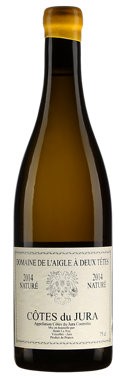 Located in Vincelles in the southern Jura, Henri Le Roy’s micro estate has been making wines since 2005. 100% Naturé (aka Savignan) from organically farmed vines. Fermentation (with indigenous yeasts) and maturation (on the fine lees) took place in old barrels. As Le Roy is not a fan of oxidized wines, the barrels were kept topped up. No added anything, including sugar, except for a tiny squirt of sulphur dioxide. Wax capsule. Reducing sugar: <1.2 g/l. 12.5% ABV. Quebec agent: Ward & associés.
The fragrant nose draws you in: browning yellow apple, drying hay, limestone, hints of wax, honey, butter and marzipan. A sip reveals a complex, exquisitely balanced wine. While Savagnin’s pronounced acidity structures, it here is softened by the richness of the fruit, so ripe it almost convinces you the wine isn’t bone dry, when in fact it is. And yet this isn’t a fruit-forward wine. The minerality is of a kind normally associated with Chablis or Santorini. The very long, pear-scented finish brings what the French call des beaux amères, a subtle complex of bitter notes, in this case including citrus pith. Unullaged Savagnin is often – and deliciously – done in a bold and bracing style; this adopts another approach, less primary colours, more pastels. A gorgeous wine and a certifiable bargain. (Buy again? Imperatively.)
Busch babies
Based in Pünderich on the banks of the Mosel River, Clemens Busch took over his family winery in 1984. Starting with the original two hectares, he has expanded the estate’s holdings to 25 hectares, mostly in the 1980s by buying vertiginously steep, hard-to-work vineyards from neighbours who abandoned them to plant faddish Pinot Noir on the much flatter plains above the slopes. Sixteen of the hectares are in the Pünderich Marienburg vineyard, south-facing and considered one of the top Mosel sites. Though a 1971 law consolidated all the hillside’s parcels under the Marienburg name, Busch vinifies them on a parcel by parcel basis and bottles his top cuvées under the original names.
The farming is organic (since 1986) and biodynamic (since 2004). The wine-making is non-interventionist, with no fining and nothing added except a small squirt of sulphur dioxide at bottling for most cuvées. Most of the wines are dry, though small quantities of sweet and botrytized wines are also made.
The estate’s website features some impressive, full-screen photographs of the vineyards and winery.
Mosel 2015, Riesling, (alter)native, Clemens Busch ($32.00, private import, 12 bottles/case)
This is an unfiltered, low-sulphur bottling. Nearly the entire production goes to Quebec, though a little also makes its way to New York and Japan. 100% organically and biodynamically farmed Riesling from the Marienburg vineyard. Manually harvested. Macerated 12 to 24 hours on the skins. Spontaneous fermentation lasted until the end of December. Matured 15 months on the lees with no stirring in large (1,000-litre), old (50 years) wooden barrels. Unfiltered and unfined. A tiny amount of sulphur was added at bottling. Residual sugar: under 4 g/l. 11.5% ABV. Quebec agent: Ward & associés.
Hazy to the eye. The nose elicits descriptors like “pear cider,” “blanche-ish,” bread dough and lemon apples. Mouth-filling, bone dry and clean, with a slightly chewy texture and acidity that’s more puckery than crisp. Apple and mineral flavours last through the long finish. Fuzzier than – not as precise or delineated as – its flightmate and not a traditional Mosel Riesling by any means, but on its own terms it absolutely works. (Buy again? Yes.)
Ordered at Marconi a couple of nights after the tasting, a glass of the Mosel 2015, Riesling Trocken, LS, Clemens Busch (ca. $32.00, private import, 6 bottles/case) – the LS (or <s on at least some labels) stands for “low sulphur” and the wine contains only about a third of the already low amount of sulphur dioxide used in the regular bottlings – was in many ways similar to the (alter)native but clearer and a little more focused if also slightly more conventional. It elicited an “Oh, wow” from my Riesling-loving dining companions, whose first Busch wine it was.


Mosel 2015, Riesling, Marienburg GG, Clemens Busch ($61.34, private import, 3 bottles/case)
100% organically and biodynamically farmed Riesling from 25- to 60-year-old vines rooted in the grey slate section of the original Marienburg vineyard. Manually harvested in late October and early November. Macerated 12 to 24 hours on the skins. Spontaneous fermentation. Matured 12 months on the lees with no stirring in large (1,000-litre), old (50 years) wooden barrels. The barrels are not topped-up for the first month to encourage a little oxidative complexity. Unfiltered and unfined. A tiny amount of sulphur was added on bottling. Residual sugar: under 6 g/l. 12.5% ABV. Quebec agent: Ward & associés.
Classic Mosel nose of green apple, lime, slate and a touch of petrol. In the mouth, it’s astoundingly pure, focused, complex and balanced. Bone dry but with compensating fruit and layered minerals that, in combination with the lithe acidity, give the wine a strong though not rigid backbone. Very long. Doesn’t stop evolving in the glass, pointing to a long ageing potential (five to 20 years per Ward’s Alex Boily). A complete and beautiful wine. (Buy again? Oh, yes.)
The GG stands for Großes Gewächs (“great growth”), an unofficial designation for top-level dry wines from selected sites that is increasingly used in the Mosel by the members of the Bernkasteler Ring and elsewhere (except the Rheingau) by the members of the VDP growers’ association. Busch makes four GG cuvées: the Marienburg, Marienburg Rothenpfad, Marienburg Fahrlay and Marienburg Falkenlay.
MWG April 6th tasting: flight 3 of 7
Ward & associés tasting (2/9)
Located near Bockenheim in the Palatinate, the 20-something Brand brothers took over the estate from their father in 2004. Farming practices, rigorously sustainable since 1994, were certified organic in 2015. The wine-making is non-interventionist.
Pfalz 2015, Riesling trocken, Vom Berg, Weingut Brand ($23.53, private import, 12 bottles/case)
The estate’s entry-level line. 100% Riesling from estate-owned organically farmed vines. Fermented in stainless steel tanks. Screwcapped. 13% ABV. Quebec agent: Ward & associés.
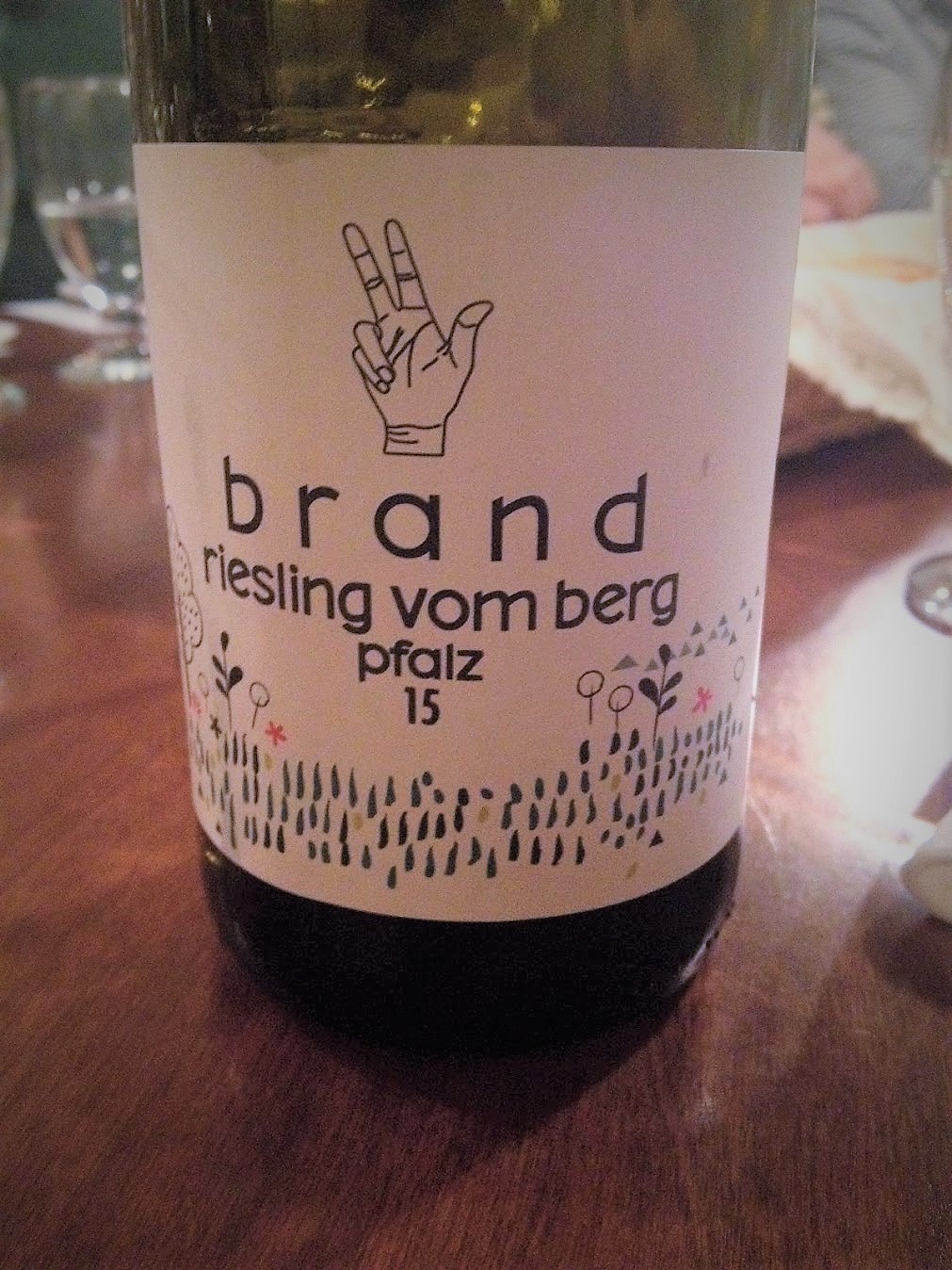
Initially sulphurous nose (not uncommon with screwcapped Rieslings) gives way to slate, lemon-lime and green apple overtoned with honeysuckle. Dry and fruity with nipping acidity, tons of crushed minerals and the faintest hint of caramel. Long, savoury and alive. Like Germany meets Alsace in a glass. Great QPR. Deservedly one of the hits of the tasting. (Buy again? Multiples.)
Pfalz 2015, Weissburgunder trocken, Weingut Brand ($26.37, private import, 12 bottles/case)
Inspired by a similar drawing on the cornerstone of a local church, the front label’s raised hand indicates this is part of the Schwurhand (oath-taking) line of wines made using grapes from the estate’s top vineyards 100% Weissburgunder (aka Pinot Blanc) from organically farmed vines. Manually harvested. Gently pressed and briefly macerated. Fermented with indigenous yeasts. No added anything. Unfiltered and unfined. Screwcapped. 12.5% ABV. Quebec agent: Ward & associés.
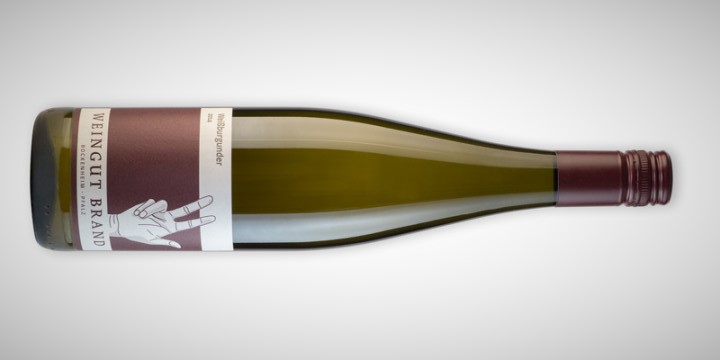
Intriguing nose of chalk, gooseberry/quince, green tea and coriander seed. Equally intriguing in the mouth with a texture that has people grapsing for descriptors like “soft oily velour.” Lactic, bitter and faintly fruity (“like bad plum”) threads intertwine with dusty minerals and soft acidity. A distant mustardy note chimes on the long finish. Complex, savoury and satisfying. If you think Pinot Blanc makes only facile wines, think again. (Buy again? Yes.)
MWG February 2, 2017, tasting: flight 2 of 9

 Brett happens