Posts Tagged ‘White wine’
Data-free sparklers
Prince Edward County 2011, Blanc de blancs, Culmination, Traditional Method, Lighthall Vineyards ($35.00 at the winery)
Good luck finding technical information about this wine; the winery appears to think only the wines currently available for purchase online deserve mention. 100% Chardonnay. May have been fermented in French oak barrels. May have been matured on the lees in French oak barrels. 12% ABV.
Subdued nose: lemon, “boxwood,” yeast, yellow apple, puff pastry. Assertively fizzy (“almost harsh the bubbles”) but otherwise light, even ethereal. Clean, dry, brightly acidic with just enough fruit and a long tart finish. (Buy again? Sure.)
Canada 2011, Blanc de noirs, À la volée, The Old Third (c. $45.00 at the winery a few years ago)
No mention of this wine is made on the winery’s website. 100% Pinot Noir from the estate’s Prince Edward County vineyard. May have spent 18 months to three years on the lees. May have been manually riddled and disgorged. May be undosed. 12.5% ABV.
Brioche, almond croissant, yellow apple, pear and an oxidized note that one taster termed “rancio.” Rich but not heavy. Softly effervescent with fine bubbles. Rounder, smoother, deeper and better balanced than the Lighthall – technically speaking the better of the two wines – but, oddly, not more interesting. Still, one of the few New World sparklers that can stand comparison with champagne. (Buy again? Sure.)
MWG August 12th tasting: flight 2 of 8
Back in 2012, I wrote:
Trying to find technical information on PEC wines is an exercise in frustration. Want to know if a wine was aged in barrels, what the barrels were made from, who they were made by, what percentage was new? Curious about what grapes in what proportion went into the wine? Wondering what kind of agricultural practices are used? Whether a wine is filtered, fined or sulphured? You probably won’t find many if any answers to those and other technical questions on the winery’s website. Yes, some of these are tiny operations. But others aren’t (looking at you, Norman Hardie). And anyway, winemakers, you have this information. It can be typed up in five minutes. It doesn’t have to be nicely presented; the people interested in it don’t give a damn about formatting. What’s important is that it be available. As things stand now, we’re forced to scour the Web for reviews and reports on winery visits, and even when we find information on blogs or in articles, it’s incomplete and often contradictory.
How discouraging to see the situation remains unchanged.
Maverick Malagousia
Achaia 2014, Malagousia, Domaine Tetramythos ($18.50, 12910335)
100% organically farmed Malagousia from vines grown at just under 1,000 m. Manually harvested. Destemmed. Macerated on the skins for 30 hours. Only the free-run juice is used. Fermented in temperature-controlled (18°C) stainless steel tanks with indigenous yeasts for 100 days. Undergoes full malolactic fermentation. Reducing sugar: 1.8 g/l. 12.5% ABV. Quebec agent: oenopole.
Aromatic but not exaggeratedly so: floral (jasmine, lily), fruity (pineapple, peach, lemon), minerals (chalk, quartz) and a hint of green herbs. Fresh and lively in the mouth. Very dry. Most present on the attack, the fruit quickly gives way to crystalline minerals. The long citric finish has a lingering bitterness and touch of heat that I don’t recall from a bottle tasted at the winery six weeks earlier. A bit more rustic than I remember, too, not that there’s anything wrong with that. Well chilled, an aperitif wine par excellence; slightly warmer, a fine accompaniment to grilled prawns with a herby pineapple salsa. (Buy again? Done!)
More subdued, acidic and minerally than is usual for this grape, a fact the winemaker attributes above all to the vineyard’s altitude.
MWG August 12th tasting: flight 1 of 8
Serious whites
Bourgogne 2013, Les Bigotes, Domaine de Chassorney/Frédéric Cossard ($58.15, private import, 6 bottles/case)
100% Chardonnay from organically farmed vines. The manually harvested whole clusters are sorted and placed directly in a pneumatic press, then slowly and gently pressed. The free-run and pressed juice is transferred to the same vat, then racked into large barrels. Low-temperature (c. 12°C) fermentation with indigenous yeasts lasts three to six months; in some years, malolactic fermentation finishes before alcoholic fermentation does. The wine remains on its lees, with no stirring or racking, until the contents of all barrels are racked into a single vat, allowed to rest one month and then gravity-bottled without filtering or fining. 12.5% ABV. Quebec agent: Rézin.
Surprisingly fresh nose of ripe yellow fruit (“mango skins” per one taster), golden raisins and light brown sugar. Smooth, rich and round in the mouth but in no way heavy, with complex flavours, a mineral matrix and just enough acidity. Good depth and length complete the picture. In short, a textbook white Burgundy whose only downside is its price (Cossard blames it on the cost of grapes and the high overhead associated with his version of natural winemaking), though that’s true for many wines from the region these days. (Buy again? If feeling flush, yes.)
Anjou 2014, Domaine Thibaud Boudignon ($46.64, private import, 6 bottles/case)
Bordeaux native Thibaud Boudignon is head of operations at Château Soucherie. On the side, he makes wine under his own name from two hectares of vineyards in Anjou and Savennières. This 100% organically farmed Chenin Blanc comes from vines averaging a third of a century old and grown in shallow soils on grey schist, ryholite and sand. The grapes are manually harvested and gently pressed. The must is fermented with indigenous yeasts in French and Austrian oak barrels of various volumes. Does not undergo malolactic fermentation. Matured eight to 12 months in second- and third-fill 225-litre barrels and new 500-litre barrels. 13% ABV. Quebec agent: Rézin.
Ashy oak, quince, quartz, chalk dust. Remarkably pure fruit, sleek acidity and crystalline minerality fill the mouth. A saline tang colours the extremely long finish. Quintessential Chenin. A little less dazzling than the 2012, at least for now, but oh, so beautiful and full of potential. (Buy again? Done!)
MWG July 15th tasting: flight 7 of 8
Impeccable
Vouvray 2013, Brut, Domaine Vincent Carême ($26.05, 11633591)
100% Chenin Blanc from organically farmed vines. Manually harvested. Alcoholic fermentation took place in temperature-controlled fibre vats and was stopped when 28 g/l of sugar remained; in-bottle fermentation of that residual sugar created the effervescence. Reducing sugar: 4.7 g/l. 13% ABV. Quebec agent: Rézin.
Dusty minerals, pear, a little peach and an earthy, maybe even cheesy note. Fine effervescence. In the mouth, it’s dry, round, quite complex and delightfully fresh. The fruit – here tending to apple and lemon – and minerals intertwine with a thread of bitterness and are lit up by crisp-verging-on-trenchant acidity. Long, clean finish. Impeccable. (Buy again? Definitely.)
MWG July 15th tasting: flight 5 of 8
Loire et blanc
Cheverny 2014, La Bodice, Domaine du Moulin/Hervé Villemade ($35.34, private import, 6 bottles/case)
Sauvignon Blanc (70%) and Chardonnay (30%) from organically farmed, 34-year-old vines. Manually harvested. Fermented with indigenous yeasts and no chaptalization. Matured on the lees in 550- and 228-litre barrels. Unfiltered. Minimal sulphur. Residual sugar: < 2 g/l. 13.5% ABV. Quebec agent: Rézin.
Rice Krispies, pear, under-ripe lemon, hints of white cardamom, arak, powdered ginger and oxidation and, eventually, white pepper and kalonji. Medium-bodied and round, dry and satin-textured. Great balance between the sleek acidity and the dense fruit and minerals. Clean, precise and long, a pleasure to drink. (Buy again? Yes, despite wishing it were under $30.)
Touraine 2014, La Tesnière, Puzelat-Bonhomme ($33.33, private import, 6 bottles/case)
Among Thierry Puzelat’s négociant wines was a line made with a friend and former apprentice at Clos du Tue-Bœuf, Pierre Olivier Bonhomme. As Pierre Olivier has bought all of Thierry’s shares in the business, future vintages will be labelled with only Bonhomme’s name. This Touraine is made from purchased, organically farmed Menu Pineau (aka Arbois, 75%) and Chenin Blanc (25%) grown in flinty clay over hard limestone near the hamlet of La Tesnière. Fermented with indigenous yeasts in 228- and 500-litre vats. Matured 12 months in barrel. Sulphur use is kept to a minimum. 13% ABV. Quebec agent: Rézin.
Powdered ginger again, “packing tape,” apple, pear and a whiff of something funky/cidery likened by some to “citronella” and “turpentine.” Great presence in the mouth: round, minerally and smoothly acidic from the attack through the long finish, with its lingering notes of honey, white spice and a faintly medicinal/floral aroma reminiscent of crushed marigold. A bite of smoked salmon on rye brings out the fruit, which tends to apple and lemon. Complex and engaging. If only it cost a few dollars less. (Buy again? Yes.)
MWG July 15th tasting: flight 2 of 8
A dangerously drinkable Sauvignon Blanc
In mid-July the Mo’ Wine Group again welcomed the irrepressible Steve Beauséjour to lead a tasting of recent and impending arrivals – mostly private imports – from Rézin, often in combination with food pairings as brilliant as they were surprising. We started with a Sauvignon Blanc from the Loire.
Vin de France 2015, P’tit blanc du Tue Bœuf, Clos du Tue Bœuf ($24.00, private import, 12 bottles/case)
Clos du Tue Bœuf is owned and operated by the Puzelat brothers, with Thierry in charge of production. Besides making Touraine and Cheverny AOC wines from their own grapes, they produce a set of négociant wines, labelled Vin de France, using grapes purchased from growers who share Thierry’s philosophy. The P’tit Blanc is 100% Sauvignon Blanc from organically farmed vines between four and 20 years old in vineyards in the Cher valley. The grapes are pressed and the must is chilled and allowed to clarify by settling. Fermented with indigenous yeasts. Matured four to six months in stainless steel tanks. Very lightly filtered. A tiny amount of sulphur is added at bottling. 13% ABV. Quebec agent: Rézin.
Striking nose of grapefruit and cheesy feet segueing to chalk, faint apricot, melon and pink peppercorn. The expected Sauvignon Blanc aromas of boxwood and cat pee are absent at first but dominant about an hour after the wine is opened. One of the most saline wines I’ve tasted, especially on the attack. Very dry, extracted and unctuous, with glowing acidity, melon and apple flavours and good length. “Gras yet refreshing,” remarked one taster. “Dangerously drinkable,” declared another. An astoundingly synergistic match for an umami-rich quartet of seaweeds drizzled with ponzu-soy sauce dressing. (Buy again? Def.)
The wine is expected to arrive – and show up on Rézin’s website – in late August or September.
MWG July 15th tasting: flight 1 of 8
Roberto’s Alagna
Passerina del Frusinate 2014, Alagna, Marcella Giuliani (c. $25.00, private import, 12 bottles/case)
100% Passerina from sustainably farmed vines in a two-hectare vineyard located near Anagni (whose ancient name, mentioned in Dante’s Purgatorio, was Alagna), about 60 km due east of Rome. Manually harvested. The grapes are chilled to 5-6°C and macerated on the skins for seven to eight hours. Alcoholic fermentation in stainless steel tanks is at a cool 12-13°C and can last up to a month. (The idea behind the extended maceration and slow fermentation is to draw flavour and aroma compounds from what can be a fairly neutral grape.) Does not undergo malolactic fermentation. Matured in the bottle before release. 12.5% ABV. Quebec agent: Mon Caviste, Côté Vignes.
Light gold with a bronzish core and yellow glints. A nose initially somewhat closed but opening as the wine breathes: “pumpkin,” “apples” and a “herby note” (quoting other tasters), a hint of lemon too, then freshly mown flowery meadow, then spicy honey and beeswax. In the mouth, it’s extracted and fruity, though dry. A soft spritzy tingle lasts maybe five minutes after opening. The unctuous texture is enlivened by soft, sustained acidity. Minerals abound, especially on the crescendoing, bitter-edged finish. Evolves wonderfully in the glass, gaining straw and anise notes. Long, savoury, unique, delicious. A winner. (Buy again? If there’s any left, yes.)
One of the standouts at the MWG’s Mon Caviste tasting in May was a Cesanese from the same producer. Agent Roberto De Lisi was so sure we’d enjoy the estate’s white, he comped this bottle with our subsequent order. He was right.
Bottiglia di Custoza
Bianco di Custoza 2015, Albino Piona ($19.50, 12469383)
A blend of Garganega (30%), Tocai (aka Sauvignonasse and Sauvignon Vert, 25%), Trebbiano (25%) and Cortese (20%). The varieties are vinified separately. Destemmed, chilled, given a short maceration on the skins, then gently pressed. The must is allowed to clarify by settling, then fermented in temperature-controlled tanks. Maturation on the lees also takes place in tanks. Syncorked. Reducing sugar: 4.2 g/l. 12.5% ABV. Quebec agent: Les vins Dupré.
Given the varieties involved, surprisingly aromatic: white grapes, lemon, yellow apple, a suggestion of peach, lots of chalk dust and a whiff of clean sweat. Smooth and elegant in the mouth. Round and fruity but dry, with soft-glow acidity. Minerals run throughout and swell on the finish, where they are joined by a saline note and a faint Szechuan peppery numbingness. Nothing complex but a pleasure to drink and the kind of white that only Italy can make. Fine as an aperitif and the best wine yet with a tricky pairing: blanched, chopped rapini sautéed in olive oil with garlic, anchovy and chile, with small scallops added for just a few seconds at the end. (Buy again? Yep.)
The heavy bottle, which weighs about twice as much as a lightweight glass bottle, is an unecological and, for case lifters, unergonomic anachronism that should be ditched. It doesn’t lend the product prestige; on the contrary, it subtracts from it.
And, yes, the post’s title is a pun.
Saumur blanc times two
Saumur 2013, Clos de Guichaux, Domaine Guiberteau ($29.65, 11461099)
The Clos de Guichaux is a monopole, meaning Guiberteau owns the entire vineyard and makes all the wine that comes from it. The chalky clay subsoil is covered by a thin layer of topsoil. About 1.5 hectares of the total 3 hectares has been planted, entirely to Chenin Blanc from massale cuttings taken from the estate’s best old vines in Brézé. As the cuttings were planted in 2003 and 2004, this is a young vines cuvée. All farming is organic. The grapes were manually harvested and whole-cluster pressed. Fermentation was with indigenous yeasts and no chaptalization. Maturation lasted ten months and took place in second- to fourth-fill 600-litre oak barrels. The wine was lightly filtered before bottling. Reducing sugar: < 1.2 g/l. 13.5% ABV. Quebec agent: LVAB.
Classic nose of honey, quince, linden, wax and quartz. Extracted and mouth-filling yet finely balanced. Bone-dry yet far from arid. Animated by streaming acidity and set against a backdrop of minerals, the rich fruit fairly glows. The wine’s tension and energy are spellbinding. One of the best Chenins in its price range. (Buy again? You bet!)
Saumur 2013, Collection Rézin, Château Yvonne ($29.75, 10689665)
100% Chenin Blanc from organically farmed vines between 12 and 80 years old. Manually harvested. Fermented with indigenous yeasts, matured in oak barrels (80% new) for 12 months and in tanks for six moths. Unfiltered and unfined. Reducing sugar: 2.5 g/l. 13.5% ABV. Quebec agent: Rézin.
Outgoing, complex, savoury nose marked by yellow fruit (apple, citrus, stone, tropical), chalky minerals and a hint of resin. In the mouth, it’s rich, dry, acidic and balanced yet with a wild edge and a touch of oxidation. Young but already showing some depth and considerable breadth and length. More rustic and less finessed than the Clos de Guichaux (not that there’s anything wrong with that) but, if anything, with even greater presence. (Buy again? Yes.)
MWG April 14th tasting: flight 3 of 6
Selbach-Oster times two
Mosel 2014, Zeltinger Himmelreich, Riesling Kabinett Halbtrocken, Selbach-Oster ($19.95, 00927962)
100% Riesling from the Himmelreich vineyard (Zeltinger is the name of the adjacent, riverside village). Manually harvested. Made in tanks and large neutral barrels. Screwcapped. Reducing sugar: 17 g/l. 11% ABV. Quebec agent: Rézin.
“Lemon-flavoured Greek yogurt” (quoting another taster), chalk, quartz and eventually green apple and a whiff of petrol. Light and lean in the mouth. The sugar, in no way saccharine to begin with, is held in check by trenchant acidity. The fruit seems subdued, at least for now, while the pervasive minerals have yet to crystallize. Enjoyable enough as is but, based on experience with earlier vintages, I’m guessing this still has some knitting together to do and will show better in a year or two. Cannot imagine why anyone, especially sushi eaters, would choose Kung Fu Girl when this is around. (Buy again? Sure.)
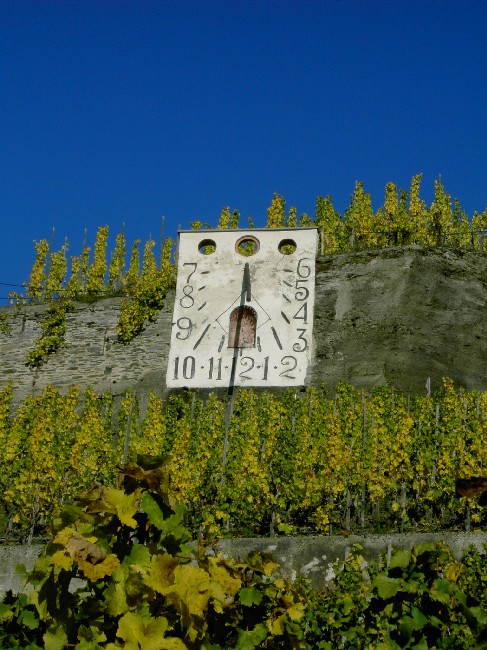
Mosel 2012, Zeltinger Sonnenuhr, Riesling Spätlese Trocken, Selbach-Oster ($29.35, 00904243)
100% Riesling from the Sonnenuhr vineyard. Manually harvested. Made in tanks and large neutral barrels. Reducing sugar: 7.7 g/l. 12% ABV. Quebec agent: Rézin.
Apples, faint citrus, chalk and slate. Elegant and transparent, with a rainwatery weight and texture. Fruity and residual sugary but basically dry. Minerals abound. The acidity is crisp though less razor-sharp than the Halbtrocken’s. Good length, with some stone fruit and spice joining the lemon and slate. A wine of great purity, this is drinkable now but will reward cellaring for another five years at least. (Buy again? Yes.)
Sorry to say the estate continues the German tradition of providing few specifics about its vine-growing and wine-making. The above two wines may or may not come from old, ungrafted vines and may or may not have been fermented with indigenous yeasts. No info about filtering, fining or added sulphur (though you can usually take the last for granted).
MWG April 14th tasting: flight 2 of 6

 Brett happens