Posts Tagged ‘White wine’
WINO tasting (1/6)
The Mo’ Wine Group’s latest agency tasting was led by the affable Martin Landry from WINO. Around three years old, the agency specializes in wines that are, at a minimum, organic or biodyamic and often “natural.” You’ll find them on the lists at many of the city’s hipper restaurants and wine bars, including Diplomat, Pullman, Rouge Gorge and Moleskine (to name a few recent sightings).
We got things rolling with a classy sparkler from Limoux.
Blanquette de Limoux 2015, Monsieur S./Étienne Fort ($25.33, private import, 12 bottles/case)
Fort is a barely 30-something vigneron who works the family’s two hectares of vines at the Château Saint Salvadou in Bourliège in the Aude department. In 2011, he decided to stop selling his fruit to the local co-op and to start making his own wines. The grapes for this 100% Mauzac come from organically and biodynamically farmed, 30-year-old vines rooted in deep clayey limestone. Manually harvested. Made without additives of any kind. Fermented in stainless steel. Sparkled using the traditional method. Matured 12 months on the lees. Undosed, unfined, unfiltered. Spent 12 months in the bottle on lattes. 12% ABV. Quebec agent: WINO.
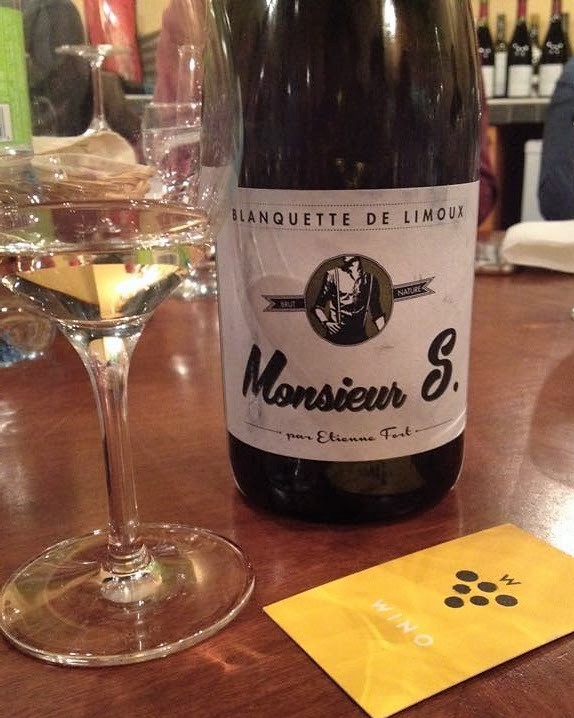
Yeasty, leesy nose with quartz and lemon notes. Tiny, tingling verging on prickly bubbles. Bone dry, crisp and clean. Trenchant and minerally upfront with lemon and gooseberry emerging on the mid-palate. A pithy thread runs throughout. The long, savoury, fairly complex finish has a touch of salinity. This bracing and refreshing sparkler would make a fine aperitif or, as Martin suggested, a dashing companion to oysters on the half shell. (Buy again? Yes.)
MWG March 23rd tasting: flight 1 of 6
Greek winery tour: Tselepos (Arcadia)
[Hover over pics to display captions and credits; click to embiggen.]
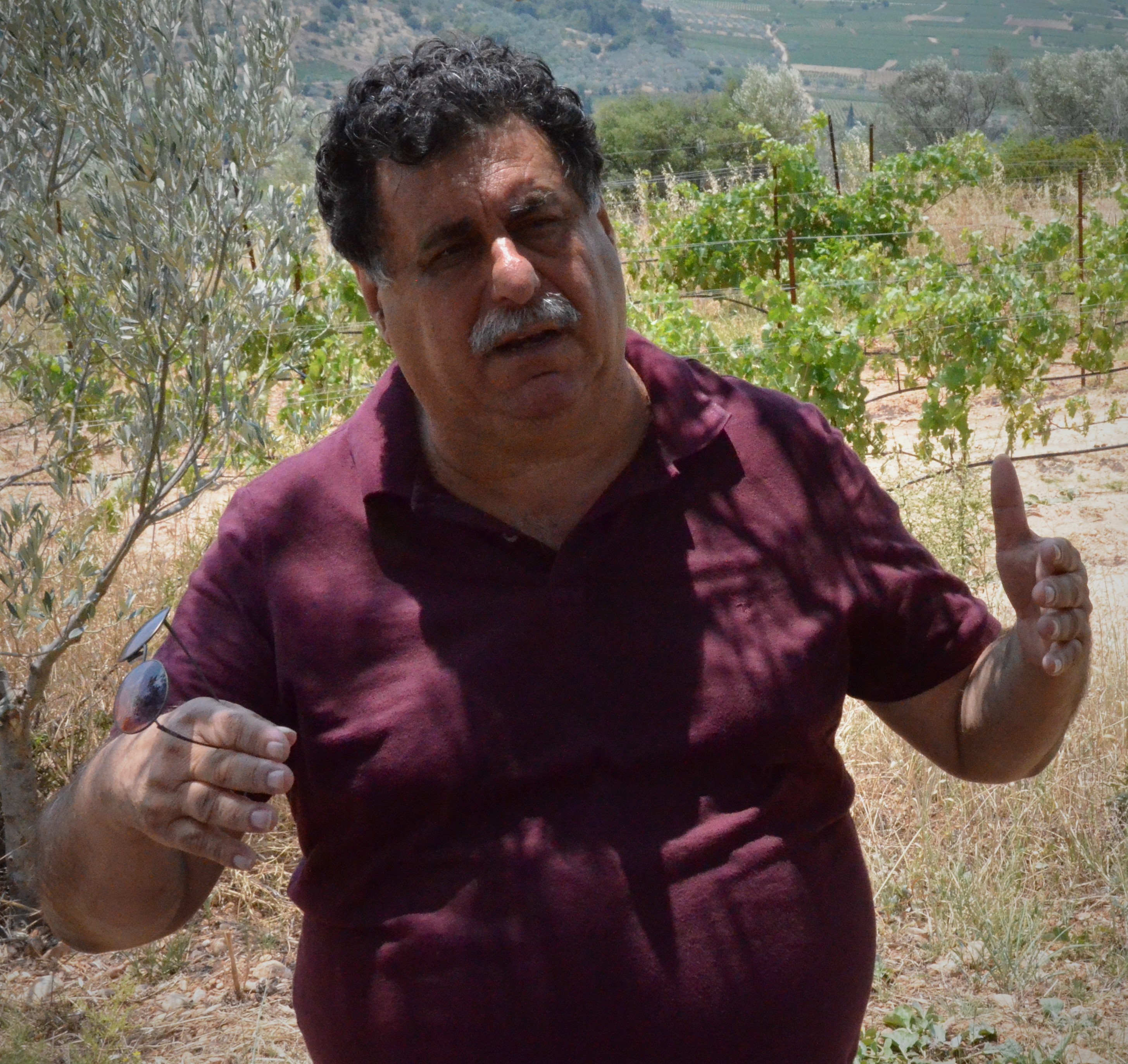 One of the leaders of the Greek wine renaissance and the modern day king of the ancient Moscofilero variety, Yiannis Tselepos is a phenomenon. A Cypriot by birth, he studied oenology at the Université de Bourgogne in Dijon and, after graduating, spent a couple of years working at several Burgundy estates. He then moved to Arcadia in the eastern Peloponnese, where he found employment as a consulting oenologist, married a local girl, Amelia, and with her founded the eponymous winery. The Tseleposes currently own two estates and have an interest in a third.
Located in Rizes, central Arcadia, Ktima Tselepos is the larger and older of the two estates, dating back to 1999. It sits on a plateau on the eastern flank of Mount Parnon. While the main buildings are surrounded by 30 hectares of vineyards, the estate’s holdings actually total some 240 hectares.  The soil here tends to shale and rocky clay and the average elevation is 750 metres, helping ensure the all-important wide difference in day and night temperatures. The handsome winery is built in the traditional local architectural style; less flashy and touristy than some, it feels like a facility whose main vocation is wine production. Although around two-thirds of its output is devoted to Moscofiliero, the estate makes a wide range of wines, from sparklers to still dry reds and whites to sweet wines, from international as well as local grape varieties. With a total annual production of 350,000 bottles, half of which is exported, this is no small operation.
 In 2003, Tselepos acquired a second property, Ktima Driopi, an 8.5-hecatre plot of 50-year-old vines rooted in steep clay soil in Kousti, near Nemea, about an hour’s drive to the north-northwest. The estate specializes in Agiorgitiko, another ancient indigenous variety. A small winery has since been built to handle the estate’s output. The estate’s striking labels, as classy as its wines, feature a dormant tree in silhouette.
Tselepos’s latest project is a joint venture with the Chryssou family on Santorini. The Chryssous provide the grapes (from 12 hectares of ungrafted 50- to 100-year-old vines in Pyrgos and Emporio) while Yannis provides the wine-making expertise. Dubbed Canava Chryssou Tselepos Santorini, the estate currently produces around 12,000 bottles a year of a single wine, a 100% Assyrtiko.
At all three estates, the viticultural practices are enlightened without being full-bore organic. In Arcadia, the vines are trained on wires, a virtual necessity in the region’s humid climate. On arid, wind-blasted, sun-stroked Santorini, the vines are coaxed into nest-like spirals that lie close to the ground, the better to protect the fruit and preserve precious water. Irrespective of the estate, the grapes are manually harvested in the cool of the early morning and transported to the winery in small crates.  Though the facilities are outfitted with state-of-the-art equipment, Yiannis views technology as limited to a supporting role. “Good technology makes for good wine, but only the right vineyard will yield a great wine,” he says.
One aspect of this balancing act between technology and terroir was the focus of an interesting exchange during our technical tasting. A member of our party, a professional sommelier with an impressively acute palate, wondered why Tselepos used selected instead of indigenous yeasts since, he felt, the former scalp and compress wines. Yiannis countered with “I have 17 families besides my own who depend on the winery’s success. I’m not going to put their livelihoods at risk.”
I can see both sides of the argument. Obviously, indigenous yeasts – the yeasts native to a place – are a factor in terroir. And many other winemakers have shown that fine wines can reliably be made using them. So it seems a little paradoxical that the winery, which proudly describes its central wine-making philosophy as “to grow Greek varieties within their specific native ecosystem” and which, as the following notes show, does indeed make terroir-expressive wines, doesn’t go all the way down the terroir path.
Then again, Yiannis is clearly more than just a winemaker. He’s also a successful businessman, a player in the local community and a standard bearer for the wines of his region and country. His Moschofileros and Agiorgitikos are widely viewed as models for what the grapes can achieve. His Mantinias have almost single-handedly put that appellation on the map. One of the reasons this has happened is the wines’ consistency. Why, then, tinker with a winning formula? Why introduce another variable into the process? Why do anything that could undermine the livings of so many and the reputations of a business and a region?
More than just a winemaker? Yes. But still a winemaker at heart, as the following story shows. At one point, Yiannis told us how he came to chose oenopole to represent his wines in Quebec. One day this Greek-Canadian showed up, introduced himself as Theo Diamantis and explained that he was setting up an agency dedicated to selling “real,” terroir-driven wines with a high drinkability quotient, wines made not by industrial producers but by vignerons. Which was why he wanted Tselepos in the portfolio. “It was the first time anybody called me a vigneron,” Yiannis beamed, “and it was all I needed to know. I was ready right then to sign on the dotted line.”
You’ll find my notes on all the day two wines after the jump. For details about where we stayed and ate and what we ate and saw, including some of Tselepos’s vineyards, see the Day Two report on carswelliana.
INTRODUCTION
PAPAGIANNAKOS (ATTICA)
♦ TSELEPOS (ARCADIA)
MERCOURI (ELIS)
TETRAMYTHOS (ACHAEA)
THYMIOPOULOS (MACEDONIA)
ARGYROS (SANTORINI)
Buxom blend
Epanomi 2016, Estate White, Ktima Gerovassiliou ($18.65, 10249061)
The village of Epanomi is located about 25 km southeast of Thessaloniki in central Macedonia. A 50-50 blend of Malagousia and Assyrtiko from estate-grown vines After a brief maceration, the grapes are pressed and the juice is fermented in temperature-controlled (18-20°C) stainless steel tanks. Does not undergo malolactic fermentation. 12.5% ABV. Quebec agent: Le Maître de Chai.
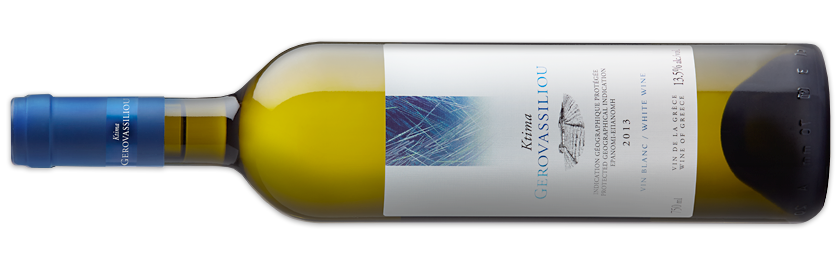
Redolent of flowers, fruit and something green: jasmine, orange blossom, grapefruit, lime, stone fruit, lemon grass and maybe a little kiwi and mint. Round in the piehole, fresh with aromatic fruit and bright acidity. A minerally vein runs well into the long finish where it’s joined by an appealing salty bitterness. The Malagousia’s exuberance makes this seem less dry than it actually is, while the Assyrtiko’s acidity and minerals provide welcome structure. Fans of New Zealand Sauvignon Blanc looking to broaden their horizons should make a bee line. Food-friendly by nature, this made a fine match for herb-roasted salmon with a squeeze of lemon. (Buy again? Sure.)
Revelatory
MWG member Nick spent the holidays down under. While he didn’t make it to Clare Valley as originally planned, he did bring back a fascinating trio of new vintage, dry Clare Valley Rieslings, which he kindly shared with the group.
Clare Valley 2016, Riesling, Watervale, Gully View Vineyard, Koerner ($27.00, importation valise)
100% Riesling from 17-year-old vines rooted in the red clay and limestone soil of the Gullyview vineyard. Manually harvested in two passes a week apart. The first pass grapes were pressed immediately; the second pass grapes were given 24 hours of skin contact before pressing. In both cases, a small amount of sulphur was added to the press tray. The juice was cold-settled for about a week. Fermentation with indigenous yeasts in ceramic eggs and stainless steel tanks lasted about three weeks. Matured five months on the fine lees. Bottled unfiltered and unfined but with a small squirt of sulphur dioxide. Vegan compatible. Screwcapped. 12% ABV.
Classic, open nose of white flowers, apple, lime, quartz, flint. A sleek textured mouthful of grapefruit and “apricot” that seems almost sweet upfront but proves quite dry. Chewing brings out the crisp acidity and plenty of minerals. Lime, green apple and spice notes and a lingering bitterness mark the finish. A delicious gush on opening, this had lost some of its oomph by the time we got around to it a hour or so later. (Buy again? At least another bottle for research purposes.)
Clare Valley 2016, Riesling, Watervale, Gullyview Vineyard, Adelina ($23.00, importation valise)
No, it’s not a typo; Koerner and Adelina do indeed spell the vineyard name differently. 100% Riesling from vines planted in 1977 and 2001 in red loamy clay over limestone. The grapes were manually harvested and whole cluster-pressed. The juice was cold-settled then fermented in stainless steel tanks with selected yeasts. Fermentation was halted with around 5 g/l of sugar remaining. The wine was then clarified and bottled. Screwcapped. 11.5% ABV. Only about 2,400 bottles made.
Hazy and one of the least coloured wines I’ve seen. Complex nose of white gas, lemon-lime zest, “white lily,” minerals, rainwater and “ground cherry.” Light and fresh in the mouth, fruity yet dry, ethereal yet dimensional. Flavours tend to citrus, green apple and a chalky tutti-fruitiness one taster likens to “love hearts.” Turns savoury on the long, minerally finish. Full of energy and lots of fun. Excellent QPR. (Buy again? Yes.)
Clare Valley 2016, Riesling, Polish Hill, Grosset ($55.00, importaton valise)
The 36th vintage of this wine. 100% Riesling from organically farmed vines in the 8 ha Polish Hill vineyard. The soil is shallow shale and a thin crust of clay marl over slate. Yields are extremely low, giving the equivalent of two bottles per vine. The grapes were hand-picked. A small portion of whole clusters were set aside; the rest of the grapes were crushed and destemmed. The fruit was gently pressed and the free-run juice was chilled to near freezing and allowed to settle and clarify in a tank for five days. Low-temperature fermentation and maturation took place in stainless steel tanks. Blended just before bottling in July 2016. Vegan compatible. Screwcapped. 12.7% ABV. A few bottles of the excellent and more approachable 2012 ($50.00, 10956022) remain at the SAQ. Quebec agent (per the Grosset website): Elixirs.
Closed yet profound nose: lime, chalky quartz, eventually linden flower. Rich, racy, structured, deep and long. The fruit, minerals and acidity are in perfect taut balance. A bone-dry Riesling with every positive quality, including heft and presence. Needs time. Deserves a place alongside such giants as Ostertag’s Muenchberg and Nikolaihof’s Steiner Hund. (Buy again? Yes.)
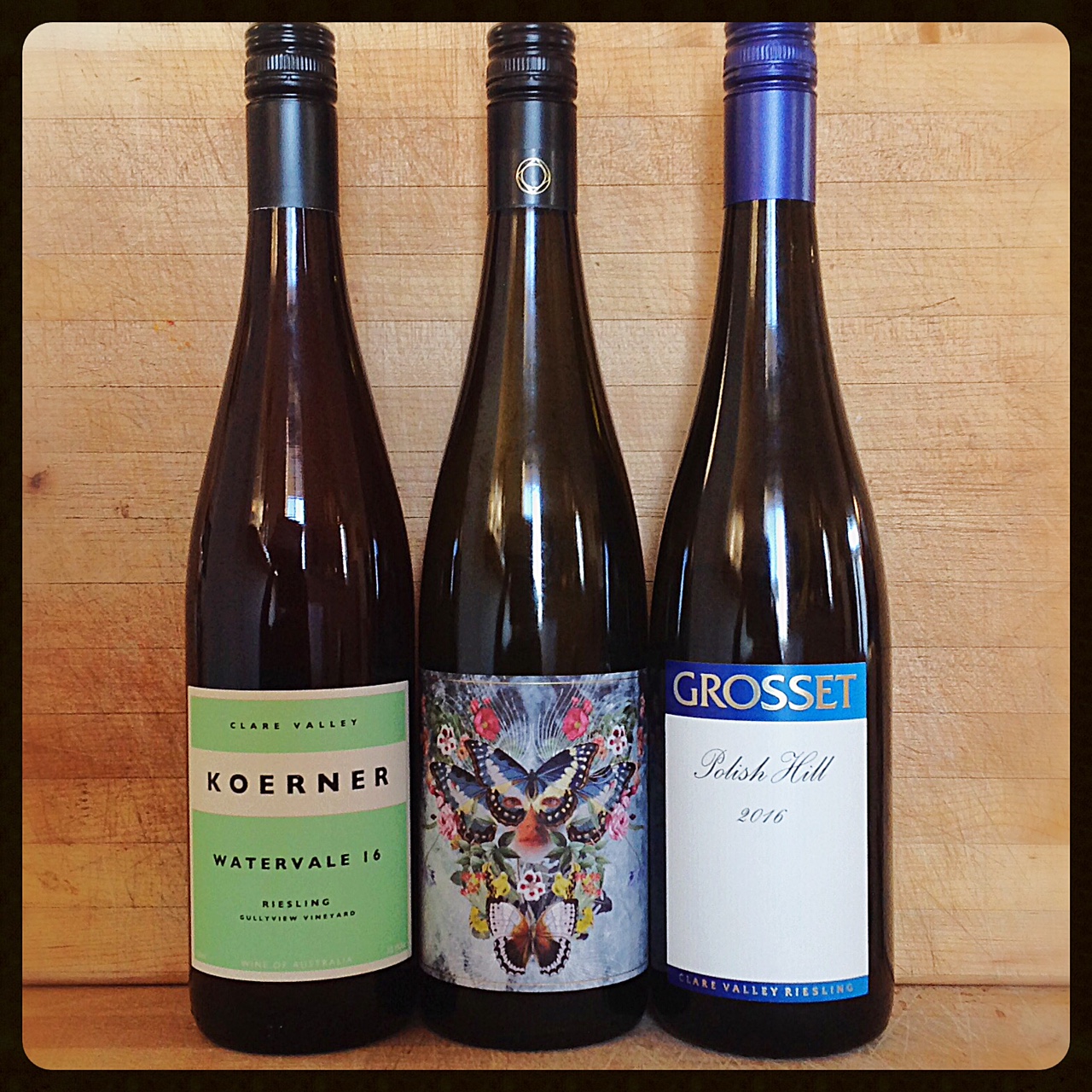
As usual, the wines were served double-blind. While the grape variety was soon deduced, no one guessed the provenance and several tasters were astounded to learn that Australia is producing such engaging, fleet and minerally whites. In short, to quote one taster, “a revelatory flight.”
MWG February 17, 2017, tasting: flight 3 of 6
Two Galicians and an ugly duckling
Ribeiro 2014, Coto de Gomariz ($26.95, 13075554)
A blend of Treixadura (70%), Albariño (10%), Godello (10%) and Loureiro (10%) from biodyanmically and organically (non-certified) farmed vines grown in granite, schist and clay on slopes and terraces near the village of Gomariz. The grapes are hand-picked, destemmed, crushed and lightly pressed. The juice is cold-settled and fermented in stainless steel tanks at low temperatures. Bottled from the tank on demand and always on a flower day. Vegan-compatible. Reducing sugar: 2.2 g/l. 13.5% ABV. Quebec agent: Vintrinsec.
Promising nose dominated by white grapefruit along with apple, pear, pineapple and background herbs and stone. Smooth and suave in the mouth. Quite dry. Brisk acidity lightens the somewhat viscous texture. Marked by sweet fruit upfront but minerals and dried fruit on the long finish. A sensation – faintly biting, like pepper can be (though the flavour isn’t at play) – that I suspect results from a combination of acid, mineral bitterness and maybe stealth tannins lingers after the fruit has disappeared, adding intrigue. (Buy again? Sure.)


Rias Baixas 2015, Lagar de Cervera ($27.40, 13159272)
100% Albariño from estate vineyards in O Rosla and Cambados. The manually harvested grapes were destemmed and macerated on the skins for 10 hours, followed by gentle pressing at 10C in an inert-gas atmosphere to prevent oxidation. After settling and racking, the must was fermented at 15C. One quarter of the wine underwent malolactic fermentation. Matured on its fine lees with occasional stirring. Saw only stainless steel until bottling. Reducing sugar: 2.8 g/l. 12.5% ABV. Quebec agent: Vinicolor.
Straightforward nose of grapefruit and quartz with faint white flower notes. In the mouth, the wine is middle-weighty, clean and as minerally as fruity. The smooth acidity barely ramps up the tension. A touch of bitterness on the fairly long finish adds welcome intrigue. Tasted twice – first at the store, then at the tasting – with consistent impressions, this well-made but somewhat listless wine was a disappointment, especially in view of the estate’s reputation and the glowing reviews the wine received in the media. Would likely show better alongside grilled fish. (Buy again? Meh.)
Bierzo 2013, La del Vivo, La Vizcaína, Raúl Pérez ($57.00, 12332045)
A relatively new project, La Vizcaína (“the Biscayan”) produces five wines – four reds and this white – using fruit from vineyards around cult winemaker Raúl Pérez’s hometown of Valtuille de Abajo. This is a blend of Doña Blanca (80%), Godello (10%) and Palomino (10%) from organically farmed vines, some planted as long ago as 1916. The manually harvested grapes are handled in two ways. Around 80% are pressed and racked into 500- and 700-litre French barrels for fermentation and maturation; they are left untouched for one year. The remainder are fermented on the skins in clay amphorae for one year, again untouched. The two parts are blended and the wine is bottled unfiltered and unfined. 13% ABV. Quebec agent: Vintrinsec.
The wine in our bottle was double-carafed about an hour before we tasted it. Gold bronze in the glass. Complex nose of straw, chalk, honey and a faintly acrid note that several tasters found off-putting, at least initially. Improved with time, developing scents of white spice, “sage,” “late corn field,” “yellow flowers” and “faint nuts.” A sip shows it to be rich, extracted, broad, just acidic enough, dry and not particularly fruity, and what fruit there is is candied. Wax, bitter, mineral and oxidative threads intertwine, most apparently on the long finish. Still, some tasters wanted nothing to do with it and “interesting” was about the best any of us could say. However, those of us who kept our glasses until the end of the tasting – four or five hours after the double-carafing – were amply rewarded, as the acridity had vanished and the wine had deepened, sweetened and become beautifully layered and coherent. Memorable. (Buy again? Yes.)
MWG February 17, 2017, tasting: flight 2 of 6
Spark plug
Twenty-Mile Bench VQA 2014, Limestone Ridge Riesling, Spark, Tawse Winery ($24.00, 13216880)
100% Riesling from organically and biodynamically farmed vines in the Limestone Ridge vineyard parts of which were planted as far back as 1999. Manually harvested. Whole-cluster pressed. Fermented in stainless steel tanks. Sparkled using the traditional method. Residual sugar: 12 g/l. 12% ABV. Quebec agent: Delaney Vins & Spiritueux.
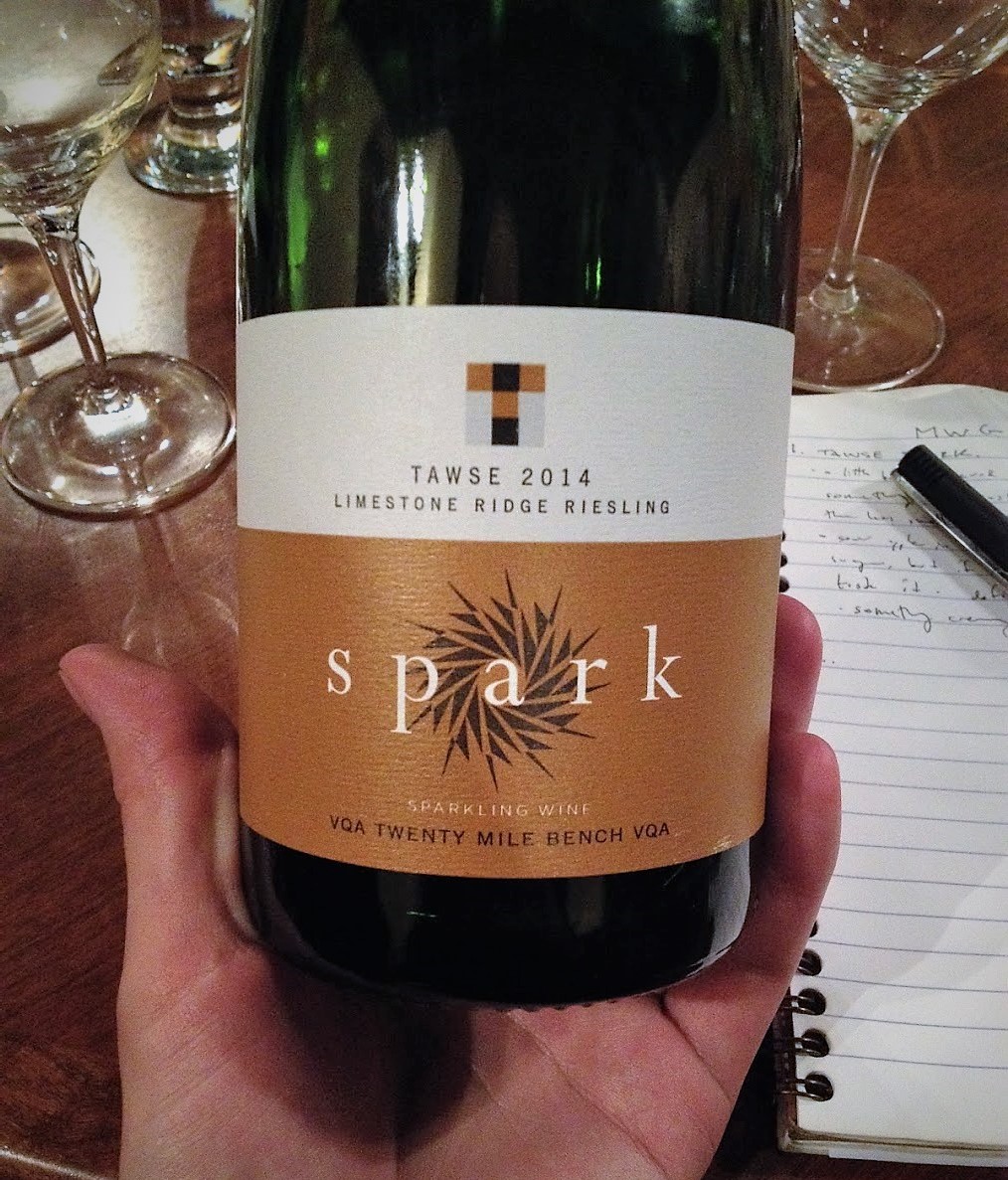
Very pale gold with sunshine glints and a fine bead. Straightfoward nose of apple/pear, lemon zest, lees, pastry cream and pie crust. In the mouth, the mix of fruit (mostly sour apple) and chalk is buoyed by soft fine bubbles. A touch of residual sugar is checked by zingy acidity, which in turn is softened by the light sweetness. Dry and clean on the finish with a lingering briny note. Fresh and uncomplicated, this would make a fine aperitif or summer deck wine. Not exactly a hit with the assembled tasters but I found it bright, bracing, sui generis and enjoyable. (Buy again? Yes, especially at the LCBO, where it runs $20.95.)
MWG February 17, 2017, tasting: flight 1 of 6
Ward & associés tasting (4/9)
Moravie 2014, Klasika, Hibernal, Milan Nestarec ($31.33, private import, 12 bottles/case)
100% Hibernal from estate-owned, organically farmed, 14-year-old vines grown in southern Moravia in the Czech Republic. Fermented and matured for 13 months in 600-litre barrels, one-third of which were new. No clarification or filtration. 11.5% ABV. Quebec agent: Ward & associés.

Rich gold-bronze in the glass. Refulgent nose that, notes of “sesame oil” and “dried orange peel” notwithstanding, you could be forgiven for thinking belonged to a sweet Tokaji. Dry and unctuous on the palate, the lively acidity softened by the dense extract. Flavours are a beguiling mix of “canned peaches,” “apricot jam” yellow apple and dusty minerals. Great breadth, good length and not a lot of depth, making this a here-now wine. Unique and memorable, especially for the bouquet. (Buy again? Yes.)
MWG February 2, 2017, tasting: flight 4 of 9
Ward & associés tasting (3/9)
Steirerland Landwein, “Trauben, Liebe und Zeit”, Weiss No. 7, Strohmeier ($50.73, private import, 6 bottles/case)
Trauben, Liebe und Zeit means “grapes, love and time” and is the name given to the estate’s line of natural wines. Mainly Pinot Blanc with some Chardonnay from the 2014 and 2015 vintages. The grapes are estate-grown, organically farmed and manually harvested. Fermented with indigenous yeasts. Matured 11 months in neutral 500-litre barrels. No added anything, including sulphur. Unfiltered and unfined. 11.5% ABV. Quebec agent: Ward & associés.
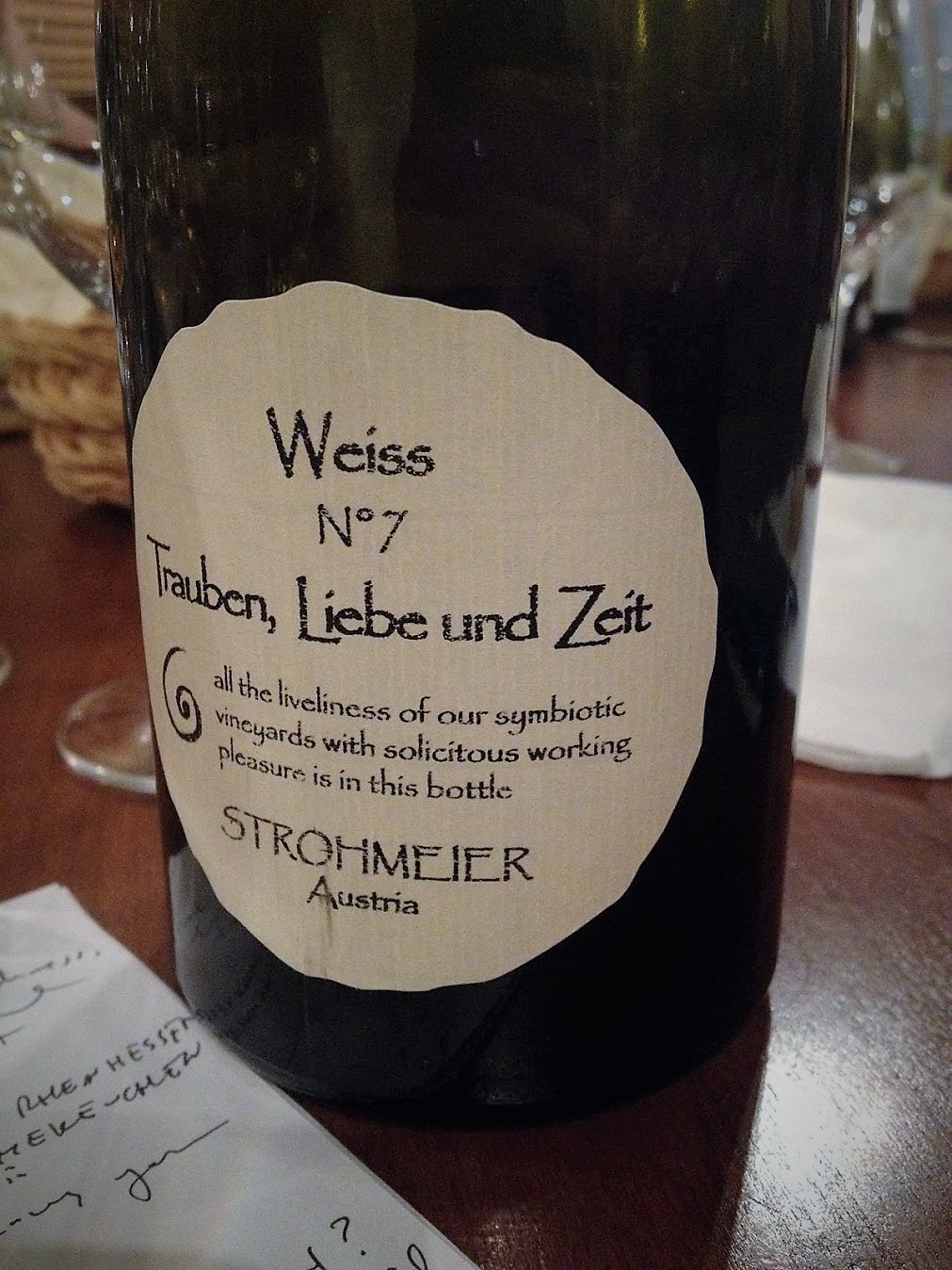
Cloudy light green-gold in the glass. Nose of white pepper, lemon, “sour orange,” lees and more besides. In the mouth, it’s soft textured and a bit spritzy. A wallflower at first though chewing reveals all kinds of complexity – including pear, herbs and chalk – and some depth. Comments from the peanut gallery: “like a gueuze,” “tastes like scrapes” (which, as I learned, are light metal shavings), “stealth acidity.” The long finish is faintly bitter and sour. Unique, fascinating and delicious. I was ready to lay down my money until I saw the price… (Buy again? Only if feeling flush, alas.)
MWG February 2, 2017, tasting: flight 3 of 9
Ward & associés tasting (2/9)
Located near Bockenheim in the Palatinate, the 20-something Brand brothers took over the estate from their father in 2004. Farming practices, rigorously sustainable since 1994, were certified organic in 2015. The wine-making is non-interventionist.
Pfalz 2015, Riesling trocken, Vom Berg, Weingut Brand ($23.53, private import, 12 bottles/case)
The estate’s entry-level line. 100% Riesling from estate-owned organically farmed vines. Fermented in stainless steel tanks. Screwcapped. 13% ABV. Quebec agent: Ward & associés.
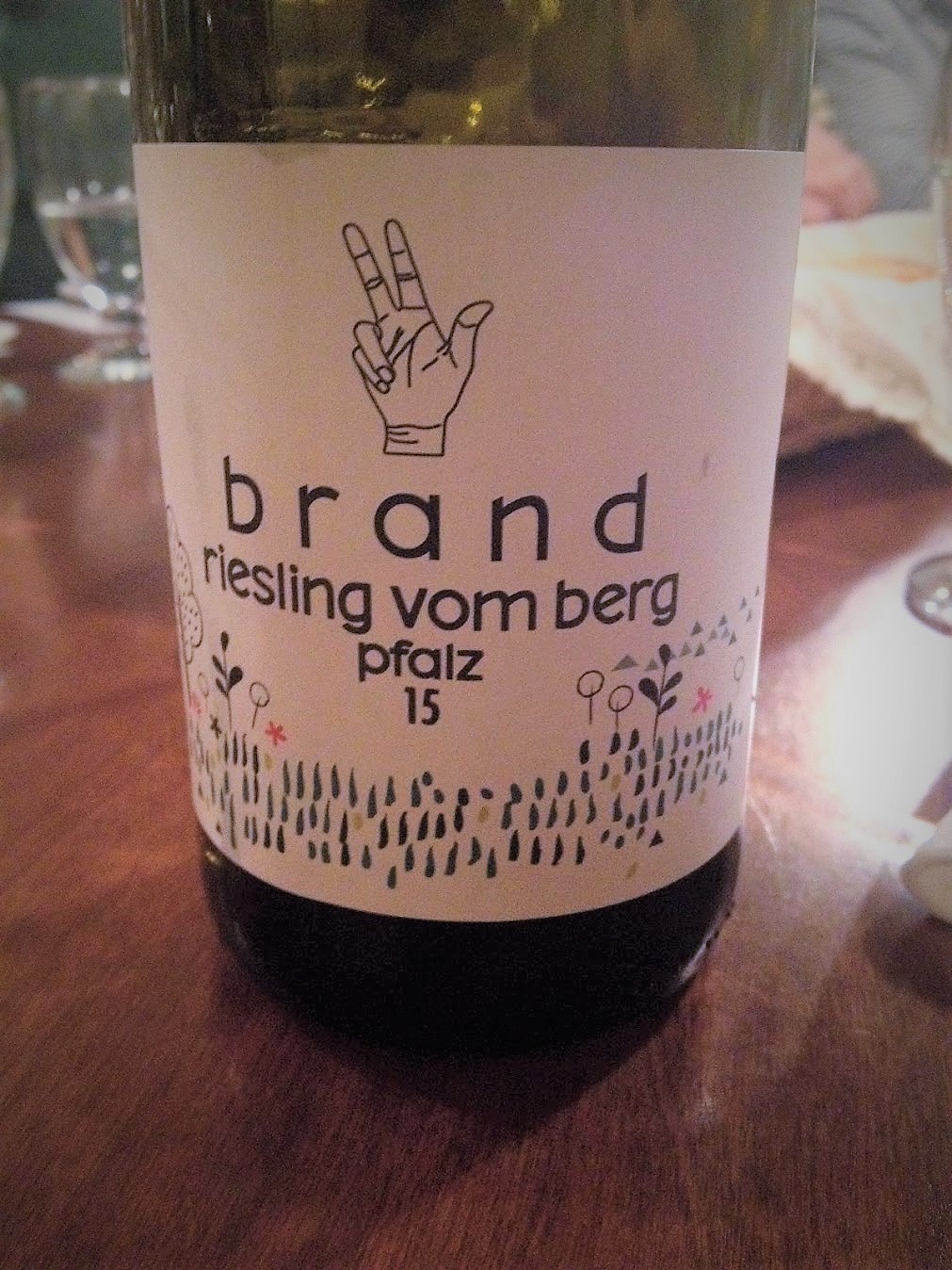
Initially sulphurous nose (not uncommon with screwcapped Rieslings) gives way to slate, lemon-lime and green apple overtoned with honeysuckle. Dry and fruity with nipping acidity, tons of crushed minerals and the faintest hint of caramel. Long, savoury and alive. Like Germany meets Alsace in a glass. Great QPR. Deservedly one of the hits of the tasting. (Buy again? Multiples.)
Pfalz 2015, Weissburgunder trocken, Weingut Brand ($26.37, private import, 12 bottles/case)
Inspired by a similar drawing on the cornerstone of a local church, the front label’s raised hand indicates this is part of the Schwurhand (oath-taking) line of wines made using grapes from the estate’s top vineyards 100% Weissburgunder (aka Pinot Blanc) from organically farmed vines. Manually harvested. Gently pressed and briefly macerated. Fermented with indigenous yeasts. No added anything. Unfiltered and unfined. Screwcapped. 12.5% ABV. Quebec agent: Ward & associés.
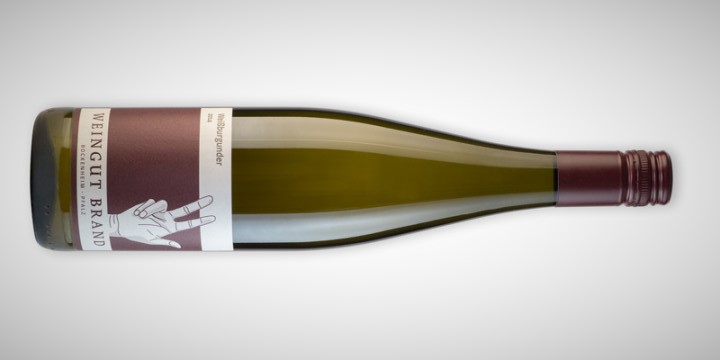
Intriguing nose of chalk, gooseberry/quince, green tea and coriander seed. Equally intriguing in the mouth with a texture that has people grapsing for descriptors like “soft oily velour.” Lactic, bitter and faintly fruity (“like bad plum”) threads intertwine with dusty minerals and soft acidity. A distant mustardy note chimes on the long finish. Complex, savoury and satisfying. If you think Pinot Blanc makes only facile wines, think again. (Buy again? Yes.)
MWG February 2, 2017, tasting: flight 2 of 9
Ward & associés tasting (1/9)
In early February, David Ward paid the Mo’ Wine Group a visit to present some of his eponymous agency’s new arrivals. “Drinkability first” is the agency’s credo and all the wines poured emphatically met that criterion. The tasting also featured winemakers, grapes and even regions that most of us had little if any experience with. No surprise then that a large order followed. Note that while some of the wines are still available, others are in very short supply.
We began with one of the less unconventional wines in the lineup.
Bourgogne Aligoté 2015, Sarnin-Berrux ($32.89, private import, 12 bottles/case)
With the exception of one cuvée, all Sarnin-Berrux wines are made from purchased grapes. The firm works closely with the growers, insisting on organic methods and often picking the grapes themselves. The wine-making is non-interventionist and based on the lunar calendar. The grapes for this 100% Aligoté are manually harvested. After slow pneumatic pressing, the must is clarified by settling. Fermentation with indigenous yeasts lasts four to six months. Unfiltered and unfined. No additives other than a tiny shot of sulphur. 11.5% ABV. Quebec agent: Ward & associés.

Somewhat muted nose: faint lemon/citronella, quartz and “pear flower.” Quite dry and buttery textured with lively but not trenchant acidity. Russet apples and honey up front, minerals (flint and chalk) on the finish. A white pepper note – as much a sensation as a flavour – lingers. Subtly complex and very civilized. If only it were a few dollars less. Then again, Ente’s 2014 Bourgonge Aligoté currently lists for $33 at the SAQ while De Villaine’s 2014 Bouzeron Aligoté runs a buck shy of $40, so maybe it’s not so pricey after all. (Buy again? Hmm…)
MWG February 2, 2017, tasting: flight 1 of 9

 Brett happens